








By: Emily Parker
Measuring the Wrong Thing for Decades
For as long as most people in workforce development can remember, success has been measured by enrollment and completion. Those are real numbers, and they are not meaningless, but they tell us almost nothing about whether a person’s life actually got better because they went through a program. Steven C. Taylor has spent more than two decades working in postsecondary education and workforce systems, and the structural flaw he kept running into was the same one in every context: we were tracking how much assistance we were providing rather than whether that assistance was helping people become economically independent. Together We Climb is built on the conviction that those two things are very different, and that the difference between them is the difference between a system that manages poverty and one that ends it.
What Virginia Did Differently
Virginia’s FastForward program made a structural change that produced an immediate and measurable result. It charged students one-third of the cost of a workforce credential and told colleges they would only receive full funding when the student completed the program and earned the credential. That single shift in accountability changed what colleges did next. They started building real relationships with employers. They started making sure that graduates had job interviews waiting. They stopped treating enrollment as the finish line. The result was a fifty percent jump in median wages within twelve months. Steve cites this alongside Colorado’s use of anonymized state wage records to track earnings before and after programs like CrossPurpose as examples of what outcome-focused accountability looks like in practice. When providers have skin in the game, students can trust that something real is waiting on the other side.
The Credential That Actually Changes a Life
The standard model for adult education in America asks people with the least financial cushion to leave the workforce for four years, often closer to six, borrow significant amounts of money, and hope the degree pays off. Only about six in ten people who start a bachelor’s degree finish within six years. More than forty-three million adults have some college and no credential, and many of them are still paying off the debt. For a single parent earning twenty-one thousand dollars a year, a welding certificate or a medical assistant credential that gets them hired in twelve weeks, with the option to keep learning, is worth far more than a degree they never get to finish. Workforce Pell, which became law in 2025, moves in that direction by requiring programs to demonstrate a seventy percent placement rate before they qualify for funding. That is the kind of accountability structure Steve has been arguing for throughout his career.
The Benefits Cliff as a Policy Failure
Tiffany worked thirty hours of overtime during the Christmas rush at the post office. Five hundred dollars before taxes. After the housing authority recalculated her rent and back-charged her, she netted forty-seven dollars. That is about a dollar fifty per hour of overtime worked. Her situation was not unusual. Nearly one in five low-wage workers receiving public assistance has encountered a benefits cliff, the point at which earning more money leaves a family worse off because they lose benefits faster than they gain wages. In Jefferson County, Kentucky, a single mother with two kids has fewer total resources at forty-five thousand dollars a year than at twenty-two thousand, because she loses SNAP, childcare assistance, and Medicaid in the transition. The fix is to phase benefits out gradually as earnings rise rather than cutting them off at thresholds that punish exactly the behavior the system is supposed to encourage.
What the Return on Investment Actually Looks Like
Muskogee, Oklahoma, has run a Bridges Out of Poverty initiative for eleven years, helping hundreds of families increase incomes, move off public assistance, and become homeowners. The community estimates a return of nine dollars for every dollar invested. CrossPurpose’s six-month, twenty-four-thousand-dollar intervention generates roughly $125,000 in social value within three years. Those numbers are not presented in Together We Climb as fundraising material. They are presented as evidence that the Mountain Model produces outcomes that the current system is not producing, and that the gap between what the system spends and what it achieves is not a funding problem. It is a design problem. The resources exist. The coordination and accountability structures to deploy them effectively are what have been missing.
What Changes When Someone Is Responsible for the Whole Journey
The deepest structural argument in Together We Climb is that the American poverty system fails because no one is responsible for the whole journey. Agencies measure their own outputs. Programs track their own completion rates. The person navigating all of it bears the burden of connecting the pieces. Steve’s proposal is not to eliminate the existing system but to redesign its accountability structure so that someone is responsible for whether a family actually gets out. Utah has been running that model since the mid-1990s through its single Department of Workforce Services, and the results over three decades support the case. When a single navigator knows the whole person, stays with them through setbacks, and measures success by whether the family reaches the next stage of the mountain rather than whether they completed a program, the outcomes are different. That difference is what Together We Climb is ultimately arguing for.
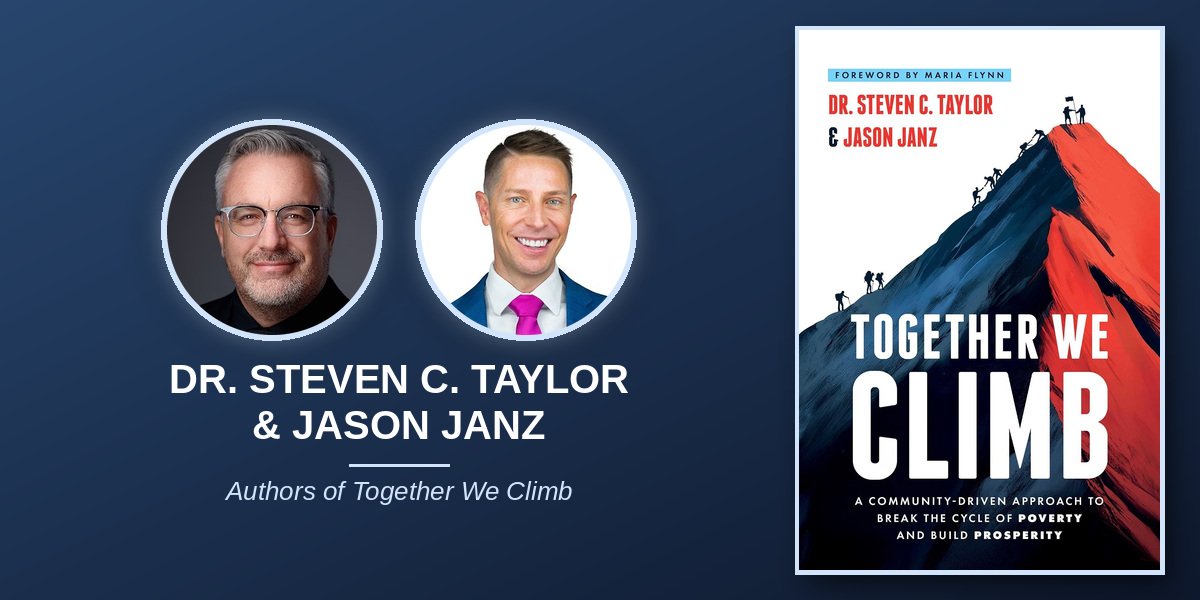
Pick up your copy of Together We Climb by Steven C. Taylor, Jason Janz, with Foreword by Maria Flynn on Amazon today.


