







By: Jenny Johnson
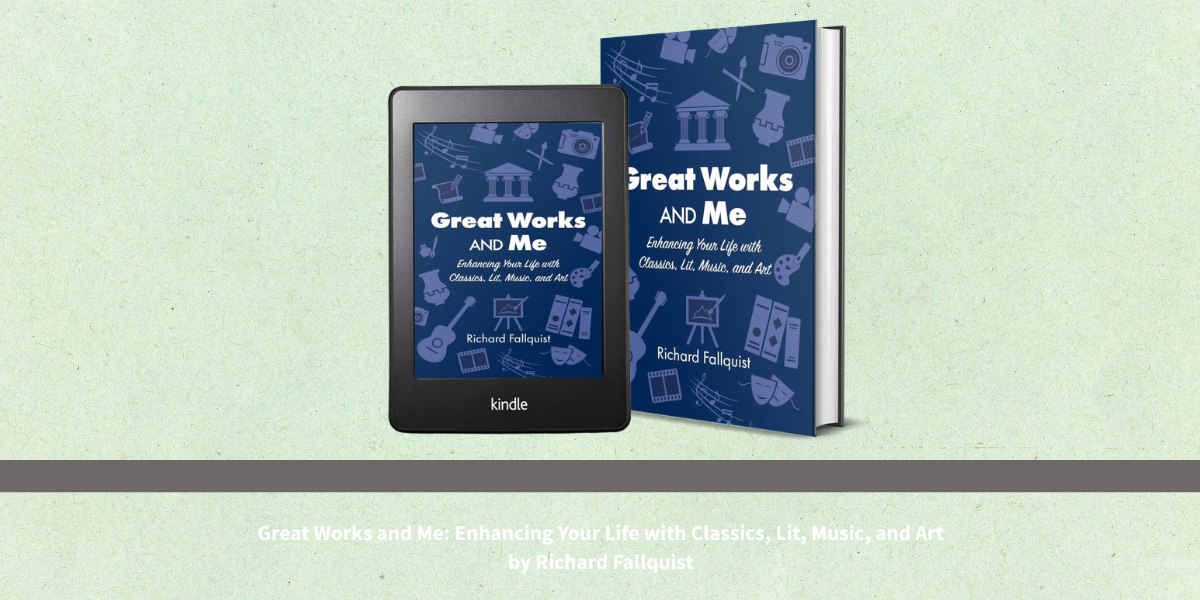
Here is the thing about great works of art and literature and music that nobody in the business of cultural education seems eager to admit: most of the intimidation surrounding them is manufactured. The works themselves are not intimidating. They are human. They are made by people who were afraid and hopeful and confused and in love and angry about the same things that people today are. The intimidation comes from the infrastructure that has grown up around them, the academic apparatus, the cultural gatekeeping, the implication that you need a particular kind of preparation before you are allowed to show up. Richard Fallquist has written a book that quietly dismantles all of that and hands you the door directly. It is one of the most valuable things a cultural guide has ever done.
Reading Great Works and Me evokes a distinct sense of doors opening. Not all at once and not with any fanfare, but steadily and generously, the way a good teacher opens things rather than the way an institution does. Fallquist writes from his own experience of coming to these works as an adult, without the scaffolding of a formal humanities education, and finding that they were not only accessible but deeply, personally meaningful in ways he had not anticipated. That experience of genuine surprise and genuine connection is present on every page and it communicates itself to the reader in a way that is considerably more effective than any amount of scholarly authority.
The themes he weaves through the practical content of the book are ones that feel genuinely important in a moment when the question of what connects us to the long human story behind us is not always easy to answer. Fallquist believes that the great works are not relics or monuments. They are living resources, available to anyone willing to engage with them, capable of doing things for a contemporary reader that nothing else can do in quite the same way. He makes that belief feel less like a cultural conservative’s nostalgia and more like a reader’s honest testimony, and the difference between the two is everything.
His structure is a genuine contribution. The curated lists organized by century and form, the summaries that give you enough to find your footing without replacing the experience of the works themselves, the resource lists that point you toward lectures and recordings and further reading, all of it reflects a careful and affectionate intelligence at work on the reader’s behalf. You finish each section knowing where you want to go next, which is exactly what a guide is supposed to accomplish.
This is the book to give someone who has always wanted to read Dostoevsky or hear Beethoven properly or understand what they are actually looking at in a great painting but has never known where to begin. It is the book to give yourself if you are that person. Fallquist has done something generous and important here and it deserves to be read widely.
If you are ready to stop feeling like the great works of human creativity are somehow not meant for you and start experiencing what they can actually do for your life, Great Works and Me by Richard Fallquist is exactly where that shift begins. Pick up your copy on Amazon and find out what has been waiting for you on the other side of that intimidation all along.


