








By: Cameron Wells
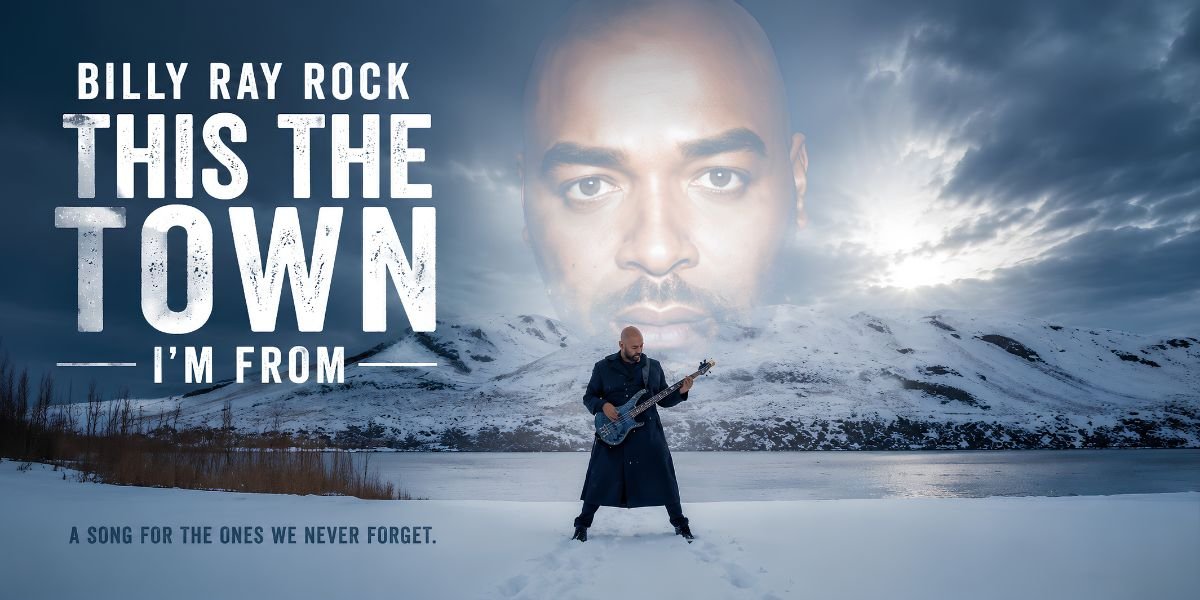
There are hometown songs designed to make crowds throw their arms around one another and shout the name of a city. Then there are hometown songs that make you stare out the window and remember people who aren’t there anymore. Billy Ray Rock’s “This the Town I’m From” belongs firmly to the latter category.
The Fresno, California, artist isn’t interested in transforming his hometown into some mythical American paradise. His Fresno has poverty, crowded houses, and people who disappear with time. But it also has kids playing outside, relatives filling rooms, homemade food, county fairs and the kind of neighborhood memories that seemed insignificant while they were happening.
Years later, they’re priceless.
“This the Town I’m From” begins from that understanding. Rock remembers growing up on Tuolumne Street in a house packed with family, recalling a childhood in which there wasn’t much money but seemingly no shortage of characters. His lyrics move through memories of sitting on the porch, playing with the water hose, walking barefoot to the store, drinking moonshine in the backyard, and eating his mother’s oxtails and greens.
It’s the specificity that saves the song from becoming another generic ode to hometown pride. Rock doesn’t tell listeners that his childhood was special. He shows them why it was special to him.
The central refrain, “This the town I’m from / It’s small but made me strong”, provides the emotional thesis. Home isn’t presented as perfect. It is important because of what surviving it, enjoying it, and eventually leaving parts of it behind did to him.
Musically, Rock’s approach reflects an upbringing in which genre walls apparently weren’t particularly useful. His influences stretch across R&B, soul, rock, hip-hop, blues and country storytelling. That broad musical vocabulary gives “This the Town I’m From” the feeling of an American roots song without requiring it to fit neatly beneath the Americana umbrella.
Rock’s voice is the binding agent. There’s lived-in weight to his delivery, an absence of the conspicuous vocal dramatics that could easily turn this material syrupy. He sounds less like a performer recreating childhood than a man suddenly remembering it.
And then grief enters the room.
Rock has explained that the song and its accompanying video held enormous emotional significance for his late wife. The video revisits his Fresno upbringing, including the house and surroundings that formed his earliest memories, and his wife found the experience so affecting that she struggled to watch it.
Following her death, the song changed.
What had already been a meditation on parents, siblings and people who had passed through Rock’s life gained another layer of absence. Yesterday was no longer merely childhood. It now included the woman with whom he’d built an adult life.
That context makes the song’s later observations about time particularly devastating. Rock reminds listeners that children grow quickly, loved ones disappear, and time refuses to accommodate anyone’s desire for another afternoon, another conversation, or another ordinary day.
The sentiment could easily become greeting-card material. Instead, Rock’s biography gives it teeth.
His greatest achievement, he says, isn’t musical. It’s raising his children. Fatherhood has also changed his songwriting, pulling his attention away from whatever might be trending and toward whatever is actually happening inside him. Loss has accelerated that recalibration.
Rock has spoken about once enjoying the “shine” that comes from creating a successful song. These days, he cares less about the spotlight and more about whether the music does something for the person hearing it. Fame fades. Emotional connection has a better chance of surviving.
“This the Town I’m From” sounds like the work of an artist arriving at precisely that realization.
There’s something quietly radical about refusing to make nostalgia glamorous. Rock grew up poor, and he doesn’t disguise that fact. Instead, he recognizes how scarcity shaped his adult understanding of abundance. Experiences that other people might consider ordinary can still register as luxury because he remembers when ordinary wasn’t guaranteed.
The same philosophy informs his memories of childhood entertainment. Without today’s endless digital distractions, Rock and the neighborhood kids had to invent their own fun. Those games developed an imagination that he believes followed him into his creative life.
So perhaps “This the Town I’m From” isn’t really about Fresno after all.
Or rather, Fresno is the door.
Walk through it, and the song becomes about the strange mathematics of adulthood: how the smallest childhood memory can eventually outweigh the biggest professional achievement; how a house can belong completely to you until suddenly strangers live there; how the people we assumed would always populate our lives gradually become photographs, stories and songs.
Billy Ray Rock doesn’t offer a solution to any of that.
He offers gratitude.
The song asks listeners to look backward without becoming trapped there, to remember the people and places that constructed them and then carry something worthwhile from those memories into whatever comes next.
That’s what makes “This the Town I’m From” more than another hometown anthem. Rock isn’t planting a flag in Fresno and demanding everyone admire it.
He’s standing on an old street, surrounded by ghosts and memories, figuring out how to keep walking.
Rating: 4 out of 5 stars.


