










Not all requirements are created equal. Some will stop your application outright. Others make approval easier or improve your pricing. A few are nice extras. Knowing which is which keeps you from spending hours on minor details while overlooking something fatal.
Here are the requirements for a credit card processing loan, sorted into three tiers.
Tier One: The Non-Negotiables
Without these, most providers can’t proceed.
1. An Active Merchant Account
This product is built on card sales, so you’ll need a functioning way to accept them, either a traditional merchant account or a payment platform.
Proof: Recent merchant statements or platform payout reports.
Common obstacle: A recently closed or frozen merchant account. If a processor has terminated you, it might place your business on an industry match list, which can seriously limit options.
2. Sufficient Processing History
Providers want enough months of data to forecast your sales.
Typical expectation: Several months at minimum, frequently three to twelve.
Common obstacle: A recent processor change. Provide statements from both the old and new processors, so your history appears continuous.
3. Sufficient Card Volume
Typical expectation: A minimum of several thousand dollars per month, with larger offers for higher volume.
Common obstacle: Owners tend to quote total revenue when only card sales count toward certain programs. Before applying, check which figure applies. A page describing Fundivi point-of-sale financing can help you see what volume and history details matter.
4. A Verified Business and Owner
Proof: EIN, formation documents, business address, and government-issued IDs for main owners.
Common obstacle: A name on the merchant account that doesn’t match your legal entity. Correct this with your processor if needed.
5. A Business Bank Account
Funds need somewhere to land, and many funders will look at your statements in addition to merchant reports.
Proof: Three to six months of complete statements and a voided check or bank letter.
6. A Workable Collection Method
Repayment must be possible through a split, lockbox, or ACH debit.
Common obstacle: A processor that doesn’t support splits. Call your processor before you apply, and ask whether it can remit a percentage to an outside financing company and how long that takes.
Tier Two: The Strong Influencers
You might still be approved without these, but they’ll shape the size and price of your offer.
7. Consistent Sales
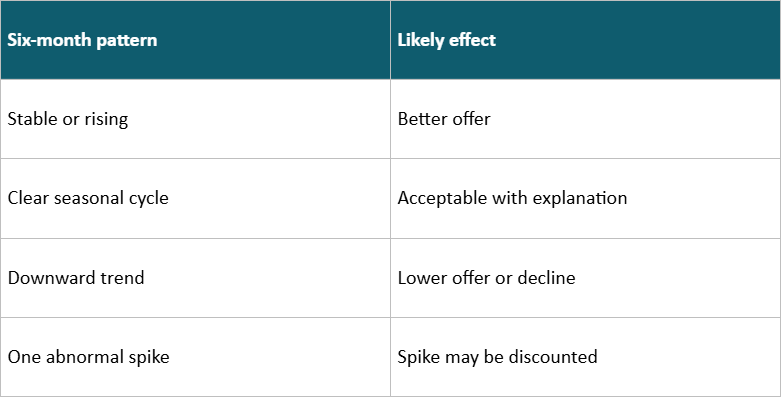
8. A Broad Base of Transactions
Many small transactions are generally better than a few large ones. Calculate your average ticket by dividing volume by the number of transactions.
9. Low Chargebacks and Refunds
High chargeback ratios can suggest customer disputes or even possible processor termination. Card networks operate monitoring programs for merchants with excessive disputes.
What to do: Lower disputes by using clear billing descriptors, sending receipts, and responding to customers quickly. Keep a brief record of what you’ve changed.
10. Good Bank Account Behavior
Reviewers count negative days and returned payments, since these can suggest an inability to manage a reduced cash inflow.
11. Limited Existing Debt
Most providers don’t want to share card receipts with someone else already collecting from them. Disclose all existing financing.
What to do: Calculate your total debt payments as a percentage of monthly sales. If you’re already paying a large share, more debt may be neither available nor wise.
12. Acceptable Credit
Personal credit is reviewed by many providers but often carries less weight. Lower scores tend to mean higher costs. Reading a list of the best small business funding options can help you see how approval odds are discussed in the wider market.
13. Clean Public Records
Tax liens, judgments, and bankruptcies can hurt. Some providers will accept documented payment plans. Be ready to supply these documents.
Tier Three: The Helpful Extras
These rarely decide the outcome, but they can smooth the process or strengthen a borderline file.
14. A Specific Purpose
Stating “new POS system and summer inventory” tells a reviewer more than “working capital.” It also forces you to think about return.
15. A Current Lease
Retail and restaurant businesses may be asked for one. A lease that expires soon could raise concerns about continuity.
16. Multiple Payment Channels
Having both in-store and online sales can show diversified revenue. Be sure every channel’s records are included.
17. Time in Business Beyond the Minimum
Longer operating history can improve your terms, even after you’ve met the basic standard.
18. A Prior Successful Funding
Having paid off a previous advance or loan on time helps, particularly with that same provider. Keep your payoff letters. Developments in this space, including a NewsBreak article on card-based lending, show how providers are still refining what they ask for.
How the Tiers Work Together
Imagine three merchants:
Merchant A has all of Tier One, a strong Tier Two, and little of Tier Three. Likely result: a good offer, possibly quickly.
Merchant B has all of Tier One and a mixed Tier Two: stable sales, but high chargebacks and a low credit score. Likely result: a smaller, pricier offer.
Merchant C has everything except a workable collection method, since the processor refuses a split. Likely result: delay, a processor change, or a switch to ACH collection.
Tier One issues must be resolved. Tier Two issues should be improved if time allows. Tier Three issues are worth addressing only after the others.
Timing: Which Requirements Cause Delays?
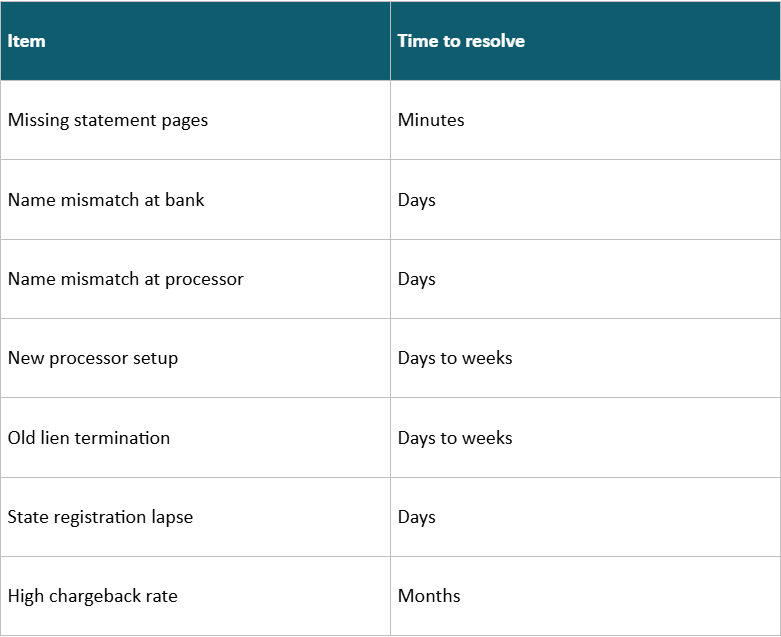
If you need funds within 24 hours, focus on those items that can be solved within minutes and avoid any path requiring a new merchant account.
The Requirement No One Lists: Can You Afford It?
A funder may conclude that you qualify. Only you can decide whether the deal works.
Calculate the following:
- Average daily card sales
- Proposed split percentage
- Daily dollars collected
- Daily costs that must still be paid
For instance, $3,000 in average daily card sales with a 12% split means $360 per day. If rent, labor, and supplies require $2,800 per day, then you’re left short by $160 on an average day, before you pay yourself. The funding would need to increase sales or reduce costs for the numbers to work.
Verifying What You Read
Several websites compare providers and may help you decide who to contact. The BusinessLoansEngine.com processing loan search is one place to begin a list, but always verify any provider independently. Avoid anyone asking for an advance payment before funding, and read the contract fully.
Preparing Your File in the Right Sequence
Take your statements in order. Confirm Tier One first, since a single gap there ends the application. Next, review your Tier Two figures and write a short note about any weak spot. Leave Tier Three for last. Once everything is collected, put your merchant statements, bank statements, and identification into one folder, then apply early on a weekday.
Frequently Asked Questions
How many months of processing history do I need?
Many providers want at least three to six, and some longer. New merchants generally have limited options.
Do online-only businesses qualify?
Often. Payment platform records can establish volume, depending on the program.
Can I qualify if I recently changed processors?
Yes, in many cases. Provide statements from both processors so your history is complete.
Does my processor need to approve?
If repayment is through a split, its cooperation is often required. ACH repayment avoids that step.
Will my processor know I took this loan?
With a split or lockbox, yes. With ACH debits, it may not be directly involved.
What’s a terminated merchant match list?
It’s a database used by processors to flag accounts closed for reasons like excessive chargebacks or fraud. Being listed can limit your options.
Do cash sales help me qualify?
They usually don’t count for card-based sizing, but deposits in your bank account can support the overall review.
Is a personal guarantee required?
Often, yes. Read it carefully to see exactly what you’d be responsible for.
What if my processor charges a fee for a split?
Some do. Ask up front, and include that charge in your total cost.
Do I need a lease?
Only some funders ask.


