








The Global Embodied Intelligence Summit hosted by MagicLab Robotics in Silicon Valley served as the central platform for the company’s latest product announcements and strategic updates. The event gathered industry participants, researchers, and technology partners to observe demonstrations of new robotics systems designed for real-world applications across multiple environments.
During the summit, MagicLab Robotics positioned its embodied AI direction as a full-stack integration of hardware and software systems, emphasizing its internal development capabilities across robotics engineering and artificial intelligence infrastructure. The company presented its product ecosystem as spanning humanoid and quadruped robotics platforms, each designed to address different operational needs in commercial, industrial, and consumer contexts.
The summit format combined product unveiling sessions with technical presentations, highlighting how the company structures its robotics portfolio around task-oriented applications. These applications include service automation, logistics operations, industrial inspection, and research-focused deployments. The event also provided an overview of how the company intends to scale these systems across international markets where robotics adoption continues to expand.
MagicLab Robotics also used the summit to communicate its long-term commercialization pathway, referencing its broader strategy for scaling embodied AI systems into widespread use cases. The company outlined how its robotics systems are designed to transition from controlled demonstrations into operational environments where adaptability and precision are required.
New Embodied AI Systems and Core Robotics Hardware
At the center of the announcements were three key technologies: the Magic-Mix world model, the H01 dexterous robotic hand, and the MagicBot X1 humanoid robot. Each system was introduced as part of an integrated robotics architecture aimed at enabling coordinated perception, manipulation, and decision-making in dynamic environments.
The Magic-Mix world model was presented as a foundational AI system designed to support robotic understanding of real-world environments. It is positioned as part of the company’s broader effort to unify perception and action systems under a single computational framework. The model is intended to assist robotic platforms in interpreting spatial conditions and executing tasks in structured and unstructured settings.
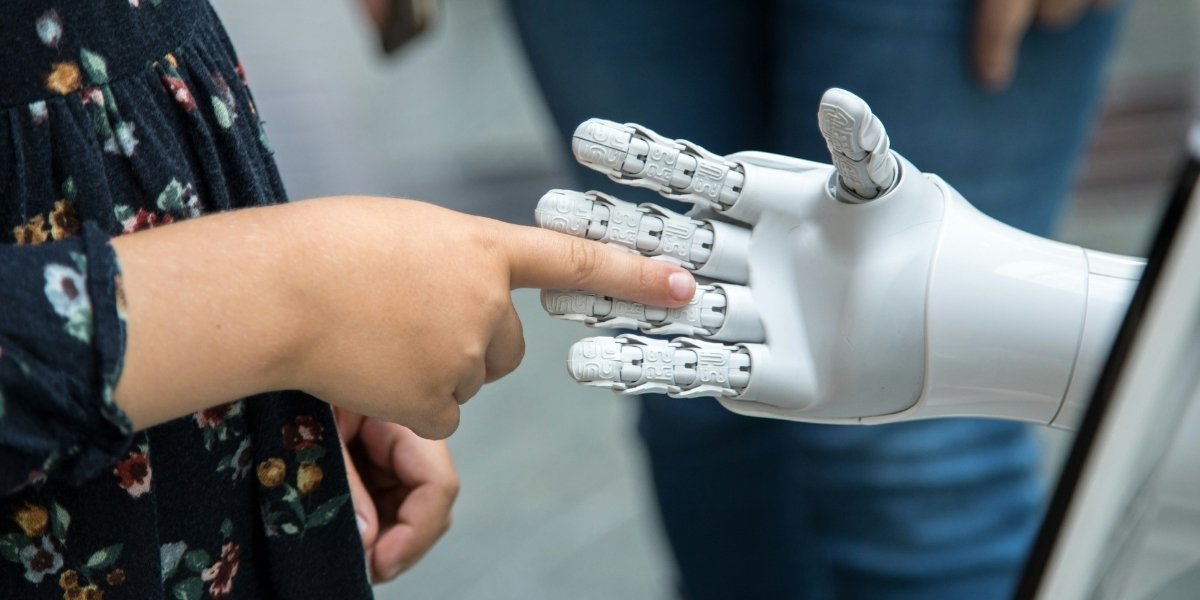
The H01 dexterous hand was introduced as a hardware component focused on fine motor control and object manipulation. Its design reflects the company’s emphasis on enabling robotic systems to perform tasks requiring precision handling, particularly in environments where interaction with varied objects is required. The development of such components is aligned with industrial automation and service robotics applications.
The MagicBot X1 humanoid robot was showcased as the company’s flagship platform for general-purpose embodied AI applications. It is designed for deployment across multiple sectors, where human-like mobility and interaction are required. The system represents an integration of the company’s AI models, mechanical design, and control systems into a unified humanoid structure.
Expansion Across 50+ Countries and Global Operations
MagicLab Robotics reported that its international operations now extend across more than 50 countries and regions, reflecting its ongoing expansion beyond its primary development base. The company indicated that a significant portion of its commercial activity is now generated outside domestic markets, with international sales accounting for a majority share in recent reporting cycles.
The expansion strategy is tied to the deployment of embodied AI solutions across diverse sectors, including manufacturing, logistics, and service-based industries. The company’s robotics systems are positioned for adaptation to different regulatory environments and operational requirements across global markets.
In its presentation, MagicLab Robotics emphasized that its global presence is supported by distributed deployment of robotics systems across both industrial and consumer-facing environments. These deployments are structured to accommodate varying levels of automation maturity in different regions.
The company’s operational footprint includes applications in smart logistics systems, inspection environments, and service-oriented robotics functions. Each deployment is designed to align with local industry requirements while maintaining a consistent underlying technological framework.
Strategic Partnerships and Ecosystem Development Initiative
During the summit, MagicLab Robotics announced a structured ecosystem development initiative designed to support long-term growth in embodied AI applications. The initiative includes strategic collaborations with multiple Silicon Valley-based AI companies, focusing on joint development and secondary innovation frameworks.
The “Co-Create 1000 Initiative” was introduced as a mechanism for expanding developer participation in robotics system development. Through this program, the company aims to support external innovation on top of its robotics platforms, enabling additional layers of application development and system integration.
The initiative is accompanied by a planned investment commitment of $1 billion over the next five years, targeted at building a developer ecosystem centered on robotics technologies. This ecosystem is intended to facilitate collaboration between hardware developers, AI researchers, and application engineers working across embodied AI systems.
The company outlined that this ecosystem strategy is designed to accelerate the adoption of robotics solutions in both industrial and consumer contexts. By enabling external developers to build on its platforms, MagicLab Robotics aims to expand the range of applications supported by its underlying systems.
This approach reflects a broader industry trend toward modular robotics architectures, where core systems are extended through third-party development and integration.
Application Scenarios and Industrial Deployment Strategy
MagicLab Robotics presented a structured set of application scenarios where its embodied AI systems are currently deployed or being developed for deployment. These scenarios span nine core areas, including healthcare services, industrial manufacturing, inspection and security, smart guidance systems, public safety operations, logistics, entertainment environments, education and research settings, and residential use cases.
Each application category reflects different operational requirements for robotic systems, ranging from precision tasks in controlled environments to adaptive performance in dynamic public settings. The company emphasized that its robotics platforms are designed to function across these varied contexts through adaptable hardware and AI integration.
In industrial manufacturing and logistics, robotics systems are positioned for repetitive task execution and environmental monitoring. In service-oriented environments, such as public-facing guidance systems and entertainment venues, the focus shifts toward interaction capabilities and mobility.
In research and education, the systems are intended to support experimentation and learning in embodied AI, providing platforms for testing new robotic behaviors and control methods. In residential environments, the emphasis is placed on assistive functions and task support within home settings.


