MagicLab Robotics Debuts New AI Models at Silicon Valley Summit

The Global Embodied Intelligence Summit hosted by MagicLab Robotics in Silicon Valley served as the central platform for the company’s latest product announcements and strategic updates. The event gathered industry participants, researchers, and technology partners to observe demonstrations of new robotics systems designed for real-world applications across multiple environments.

During the summit, MagicLab Robotics positioned its embodied AI direction as a full-stack integration of hardware and software systems, emphasizing its internal development capabilities across robotics engineering and artificial intelligence infrastructure. The company presented its product ecosystem as spanning humanoid and quadruped robotics platforms, each designed to address different operational needs in commercial, industrial, and consumer contexts.

The summit format combined product unveiling sessions with technical presentations, highlighting how the company structures its robotics portfolio around task-oriented applications. These applications include service automation, logistics operations, industrial inspection, and research-focused deployments. The event also provided an overview of how the company intends to scale these systems across international markets where robotics adoption continues to expand.

MagicLab Robotics also used the summit to communicate its long-term commercialization pathway, referencing its broader strategy for scaling embodied AI systems into widespread use cases. The company outlined how its robotics systems are designed to transition from controlled demonstrations into operational environments where adaptability and precision are required.

New Embodied AI Systems and Core Robotics Hardware

At the center of the announcements were three key technologies: the Magic-Mix world model, the H01 dexterous robotic hand, and the MagicBot X1 humanoid robot. Each system was introduced as part of an integrated robotics architecture aimed at enabling coordinated perception, manipulation, and decision-making in dynamic environments.

The Magic-Mix world model was presented as a foundational AI system designed to support robotic understanding of real-world environments. It is positioned as part of the company’s broader effort to unify perception and action systems under a single computational framework. The model is intended to assist robotic platforms in interpreting spatial conditions and executing tasks in structured and unstructured settings.

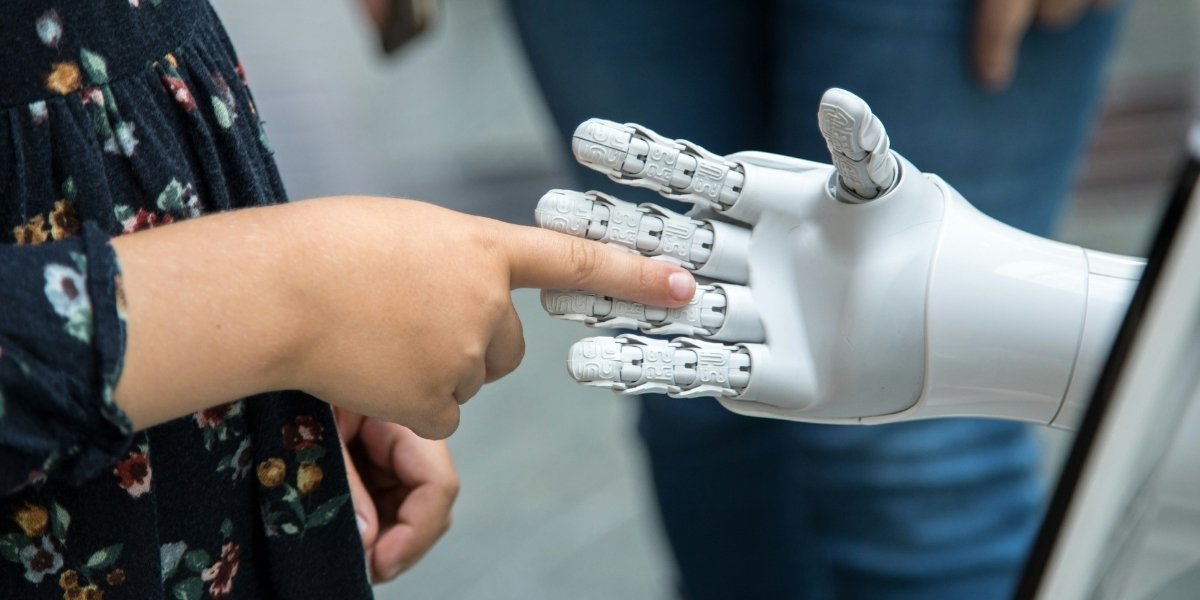
The H01 dexterous hand was introduced as a hardware component focused on fine motor control and object manipulation. Its design reflects the company’s emphasis on enabling robotic systems to perform tasks requiring precision handling, particularly in environments where interaction with varied objects is required. The development of such components is aligned with industrial automation and service robotics applications.

The MagicBot X1 humanoid robot was showcased as the company’s flagship platform for general-purpose embodied AI applications. It is designed for deployment across multiple sectors, where human-like mobility and interaction are required. The system represents an integration of the company’s AI models, mechanical design, and control systems into a unified humanoid structure.

Expansion Across 50+ Countries and Global Operations

MagicLab Robotics reported that its international operations now extend across more than 50 countries and regions, reflecting its ongoing expansion beyond its primary development base. The company indicated that a significant portion of its commercial activity is now generated outside domestic markets, with international sales accounting for a majority share in recent reporting cycles.

The expansion strategy is tied to the deployment of embodied AI solutions across diverse sectors, including manufacturing, logistics, and service-based industries. The company’s robotics systems are positioned for adaptation to different regulatory environments and operational requirements across global markets.

In its presentation, MagicLab Robotics emphasized that its global presence is supported by distributed deployment of robotics systems across both industrial and consumer-facing environments. These deployments are structured to accommodate varying levels of automation maturity in different regions.

The company’s operational footprint includes applications in smart logistics systems, inspection environments, and service-oriented robotics functions. Each deployment is designed to align with local industry requirements while maintaining a consistent underlying technological framework.

Strategic Partnerships and Ecosystem Development Initiative

During the summit, MagicLab Robotics announced a structured ecosystem development initiative designed to support long-term growth in embodied AI applications. The initiative includes strategic collaborations with multiple Silicon Valley-based AI companies, focusing on joint development and secondary innovation frameworks.

The “Co-Create 1000 Initiative” was introduced as a mechanism for expanding developer participation in robotics system development. Through this program, the company aims to support external innovation on top of its robotics platforms, enabling additional layers of application development and system integration.

The initiative is accompanied by a planned investment commitment of $1 billion over the next five years, targeted at building a developer ecosystem centered on robotics technologies. This ecosystem is intended to facilitate collaboration between hardware developers, AI researchers, and application engineers working across embodied AI systems.

The company outlined that this ecosystem strategy is designed to accelerate the adoption of robotics solutions in both industrial and consumer contexts. By enabling external developers to build on its platforms, MagicLab Robotics aims to expand the range of applications supported by its underlying systems.

This approach reflects a broader industry trend toward modular robotics architectures, where core systems are extended through third-party development and integration.

Application Scenarios and Industrial Deployment Strategy

MagicLab Robotics presented a structured set of application scenarios where its embodied AI systems are currently deployed or being developed for deployment. These scenarios span nine core areas, including healthcare services, industrial manufacturing, inspection and security, smart guidance systems, public safety operations, logistics, entertainment environments, education and research settings, and residential use cases.

Each application category reflects different operational requirements for robotic systems, ranging from precision tasks in controlled environments to adaptive performance in dynamic public settings. The company emphasized that its robotics platforms are designed to function across these varied contexts through adaptable hardware and AI integration.

In industrial manufacturing and logistics, robotics systems are positioned for repetitive task execution and environmental monitoring. In service-oriented environments, such as public-facing guidance systems and entertainment venues, the focus shifts toward interaction capabilities and mobility.

In research and education, the systems are intended to support experimentation and learning in embodied AI, providing platforms for testing new robotic behaviors and control methods. In residential environments, the emphasis is placed on assistive functions and task support within home settings.

What a Gilded Buddha Taught John Chachas About Investing, and Why It Led Him Back to Gump’s

By Zach Miller

Every Christmas, John Chachas and his parents traveled from Ely, Nevada to San Francisco for the holidays. Ely sits in a remote stretch of the Great Basin, roughly six hours from the Bay Area by the roads of the time, and the trips were an event. Of all the sights the city offered a boy from the Nevada high desert, one made the deepest impression: a nearly eight-foot gilded Buddha standing in the center of Gump’s ground floor, surrounded by jade, silver, and imported Asian art.

“That Buddha made such an impression on me growing up,” Chachas recalled decades later.

It wasn’t the last impression Gump’s would make on him.

A Nevada Boy and the Store He Never Forgot

Gump’s had been a San Francisco institution since 1861, when brothers Solomon and Gustave Gump opened it as a mirror-and-frame shop near what would become Union Square. The store rebuilt after the 1906 earthquake, shifted its identity toward Asian art and luxury goods, and spent the following century outfitting the homes of the California wealthy. Franklin D. Roosevelt bought ship models and smoking jackets there. Sarah Bernhardt found a bronze snake for her Cleopatra role. Items from Gump’s buying trips through the Far East ended up at William Randolph Hearst’s San Simeon estate.

By the time Chachas was making his childhood Christmas visits, the store had been through several ownership changes and was one of the few remaining places in American retail where the merchandise told a coherent story about taste. The Buddha on the ground floor was a Qing dynasty piece. The store had acquired it during a 1957 buying trip in Kyoto for roughly $800.

Chachas left Ely, went to Columbia, then Harvard Business School, and built a career in investment banking at First Boston, Merrill Lynch, and Lazard. By 2005, he was a deal banker with three decades of experience structuring transactions in media and adjacent industries. When Hanover Direct, which had owned Gump’s since the 1990s, decided to sell, Chachas assembled a group of investors and put together an $8.5 million bid, including $500,000 of his own money.

The Fee He Never Got Paid

The deal closed. Then came the question of his arrangement fee.

In lieu of the $250,000 fee for arranging the transaction, he asked a different question: how about giving him the Buddha instead?

Jed Pogran, the former Gump’s president, later recalled it as an afterthought, a way to close the paperwork without writing a check. “I don’t think anyone realized how fine a thing this was,” he said. Chachas had a clearer sense of what he was getting. The store had paid $800 for it in 1957. A 2007 appraisal put its value at $240,000, roughly what he had asked for in cash. The arrangement came with one condition: the Buddha had to stay put. Chachas agreed, and pledged to swap in a replica if he ever removed the original.

“I think they were just happy not to have to write me a check,” he recalled. “So they said, ‘Fine.'”

His instinct was consistent with how he approaches deals generally. In nearly three decades of advising on transactions including the $18 billion buyout of Clear Channel Communications and Disney’s sale of ABC Radio, his work has centered on separating what a company is actually worth from the structure of how it has been run. Other investors looked at a Qing dynasty Buddha sitting on a retail floor and saw a decorative fixture. Chachas looked at it and saw a negotiable asset, one that would be worth considerably more than the fee he had been unable to collect in cash.

From $225,000 to $4 Million

Gump’s went through more ownership changes in the years that followed. Sales slumped under pressure from e-commerce and catalog competitors. The store filed Chapter 11 bankruptcy in August 2018 and began liquidation. Two days before Christmas, after 157 years on Post Street, the doors closed.

The Buddha, as agreed, had no sale tag. Chachas arranged a $25,000 replica through a 3D printing company in Utah, made the swap, and took the original home.

In May 2019, he consigned it to Christie’s in Hong Kong. The auction house described the statue as an “important and monumental” piece of religious statuary, the largest known of its type. An undisclosed buyer paid 31.3 million Hong Kong dollars, roughly $4 million. Nearly 18 times the fee Chachas had originally sought for arranging the 2005 deal.

“Sometimes it’s better to be lucky than smart,” he said.

He used the proceeds to buy Gump’s back. The price for the intellectual property, brand name, trademarks, and customer list was $650,000. He had funded a brand relaunch with an artifact he had taken instead of a paycheck fourteen years earlier.

Small on Purpose

The reopened Gump’s launched in October 2019 near its original Union Square address. The new space covered 2,400 square feet against the former flagship’s 17,000. Chachas described it from the start as a test rather than a triumphant return. “We felt the only way to really evaluate this was to take a swing at it for four months and see if our customers are there.”

Merchandise was pulled back to five categories: jewelry, gifts, home decor, entertaining, and holiday items from 65 of the store’s 125 former vendors. Furniture and apparel stayed out. His daughter Anne Chachas, who took charge of the relaunch, described the goal plainly: “Gump’s is such a remarkable company with such an amazing history, and we really want to keep that story alive.”

The customers came. The store survived COVID. As of early 2026, Gump’s continues to operate at 250 Post Street, in its 165th year in San Francisco.

What’s Actually Worth Saving

There is a consistent thread across how Chachas thinks about investment. He has spent his career in industries built on accumulated institutional trust: media, broadcasting, luxury retail. The relationship between a brand and its audience is the business. The transmitters and the inventory are how you maintain it.

This is why his concern about the destruction of local news carries the same weight as his decision to rescue Gump’s from a bankruptcy auction. When a local newspaper closes, the building and printing equipment are replaceable. The relationship between a community and a source of accountability that took a generation to build cannot be reconstructed by launching a website.

What Chachas acquired in June 2019 was a store that had survived earthquakes, wars, the Great Depression, and a century and a half of shifting tastes. In the end, it was a management team that mistook capital for strategy that brought it down. The question he tested in October 2019 was whether 158 years of accumulated trust between a retailer and its customers could survive a bankruptcy, a relaunch, a pandemic, and a city government that had stopped performing its basic functions.

So far, the answer appears to be yes. The Buddha replica, as promised, found a new home in the relaunched store.

The test continues.

Fix Auto Rocklin: Setting a Higher Standard for Collision Repair in a Sensor-Driven Automotive Age

By William Jones

Today, sensors and split-second decisions define modern vehicles, yet the structural integrity of those systems often hinges on what happens after a collision. At Fix Auto Rocklin, owner Eric Dunivan approaches repair work with a degree of precision shaped by decades around the craft and sharpened by the realities of modern automotive engineering. Every repair, Dunivan highlights, is guided by an engineering-level accountability for human safety.

Long before advanced driver assistance systems (ADAS) became standard, Dunivan recalls already developing a mechanical instinct shaped in a garage. His father, an automotive entrepreneur who built a globally recognized trim business in the 1970s, introduced him to the discipline of working with vehicles. First-generation luxury cars became formative experiences that built his technical curiosity and a respect for craftsmanship.

Yet the more time he spent with automobiles, the more he witnessed a growing contradiction within the collision repair industry. In his view, even as technical knowledge and equipment existed, the outcomes often fell short. The issue he identified fell less on capability, and more on culture. “When the culture is toxic, it shows visibly across its operations. We came up with a way where everybody is on the same team in our shop,” Dunivan says.

This cultural shift defines the core facility. Dunivan notes that some collision shops frequently operate in fragmented workflows, where technicians are pulled in five directions at once, one’s processes interrupt another, and speed gets prioritized over completeness. The downstream effect, then, he notes, is a shop floor that may run on inefficiency, missed damage, and, in worst cases, compromised safety systems.

Dunivan highlights that modern vehicles can then amplify those risks. He points to ADAS components, such as blind spot monitors, radar sensors, and lane-keeping systems, which may require vigilance measures in millimeters. “A misaligned sensor is not a minor defect; it becomes the liability,” he says. “You have people’s lives in your hands. You can’t settle for ‘good enough’ when that’s at stake.”

An example he presents underscores the stakes. “A miscalibrated system once misinterpreted a vehicle passing over a bridge as an immediate obstacle, and that triggered an emergency braking, causing a rear-end collision,” he shares. Highlighting that instance, he adds that the chain reaction can be traced back to improper calibration.

Photo Courtesy: Fix Auto Rocklin

This is where Fix Auto Rocklin’s model sets a precedent. Dunivan, alongside his brother Rick, his son Drue, and daughter-in-law Valerie, aims to eliminate such a margin for error. The facility undertakes structural changes in how work is performed, rooted in the human being doing the work. Dunivan notes how each technician operates within a specialized lane, spanning welding, paint, and structural repair, without interruption.

This segmentation, he believes, removes inefficiencies common in traditional shops, where a single technician might juggle disassembly, repair, and documentation simultaneously.

“A welder remains focused on structural integrity instead of being pulled away for unrelated tasks. A painter refines finish quality without bottlenecks,” Dunivan explains. The facility also upholds a team-first approach that mirrors his emphasis on workflow flexibility. “If a vehicle doesn’t require immediate paint, the technician may assist elsewhere to maintain throughput,” he adds.

Training reinforces that cohesion. Dunivan notes that every team member must be willing to learn and teach, establishing an internal knowledge loop that keeps pace with rapidly evolving vehicle design. New hires, often younger entrants to a shrinking talent pool, are equipped with tools and mentorship from day one. Equally critical is maintaining a controlled environment free from internal friction. Dunivan highlights how the shop entails collective accountability, where team members address performance issues directly. Persistent disruption is handled decisively to preserve operational integrity.

“A toxic piece poisons the whole pond,” Dunivan says. “You’ve got to keep it clean.”

External pressures add another layer of complexity. Dunivan observes that insurance negotiations often dictate repair budgets despite limited technical understanding from adjusters. According to him, this disconnect can force shops to advocate for correct procedures, sometimes absorbing costs to ensure repairs meet safety standards.

“We have to fight for what is right,” Dunivan explains. “Sometimes we do things we don’t even get paid for, just so we can sleep at night.” Those decisions define the difference between repair as a transaction and repair as responsibility. At Fix Auto Rocklin, the latter governs every process, from diagnostics to final calibration.

This responsibility goes further than the vehicles themselves as it ripples outwards to the community. From school supplies, food drives, galas to support local hospitals, donating a car to someone in need, and even turning their shop into an event space, the team at Fix Auto Rocklin will do everything they can to support those who need it.

The industry continues to evolve at speed, with electrification, automation, and software integration reshaping what it means to “fix” a car. Against that backdrop, Dunivan’s approach stands as a realignment of priorities, placing culture, precision, and accountability at the center of the repair process.

Because the real outcome, Dunivan acknowledges, is ultimately measured in the unseen moment when a safety system activates exactly as designed, and the people inside the vehicle never have to think twice about it.

Brondell’s Corporate Growth and West Coast Entrepreneurship in Home Wellness

The U.S. home wellness and bathroom technology category has drawn growing attention as homeowners and developers prioritize water conservation, indoor air quality, and improved bathroom hygiene. Against that backdrop, San Francisco-based Brondell has built a reputation on the West Coast as a manufacturer that pairs entrepreneurial energy with steady product innovation.

A West Coast Bidet Pioneer with a 1738 Namesake

Brondell was founded in 2003 by Dave Samuel. The name draws from J.F. Brondel, a British architect credited with inventing the first valve flush toilet in 1738. The company entered the market by introducing bidet attachments to North American consumers, who at the time had little exposure to bidet technology. Educating that market was the first hurdle. Brondell spent its early years explaining the hygiene and water-conservation benefits of bidet attachments to a skeptical consumer base.

The Mark Cuban Investment That Shifted the Company’s Trajectory

In 2005, the company received a significant boost when entrepreneur Mark Cuban invested $1.3 million. Coverage of the investment helped lend the brand credibility while supplying the capital it needed to grow, develop new products, and broaden its marketing outreach. Cuban’s involvement opened doors with retailers, business partners, and the media, helping legitimize bidet attachments as a viable category for the North American market.

Expanding from Bidets into the Broader Home Wellness Category

Through the late 2000s and into the 2010s, Brondell moved well beyond bidet attachments. It introduced smart bidet toilets, toilet seats, toilet seat filters, kitchen and bathroom faucets, showerheads, shower filtration systems, drinking water filtration, and air purifiers. The diversification was deliberate. By stepping outside the narrow bidet niche, the company set itself apart from competitors that focused on a single segment of the home wellness industry.

Leadership, Distribution, and Multi-Channel Growth

The leadership team, made up of Steve Scheer, Parker Benthin, Sarah Chase, and Brian Inami, guided the expansion with an emphasis on product innovation, operational efficiency, and distribution strategy. Dave Samuel continues to serve as Founder and a member of the Board, offering strategic oversight while the leadership team handles day-to-day operations. Brondell built its own e-commerce platform alongside relationships with national retailers and third-party online sellers. An international distribution arm complemented core domestic operations, forming a multi-channel strategy that reached different segments of the market.

Industry Recognition, Trade Shows, and Media Coverage

Brondell’s presence at trade shows like the Kitchen and Bath Industry Show (KBIS) throughout the 2010s helped strengthen its industry reputation. The events gave the company direct contact with designers, builders, and peers, alongside opportunities to showcase its product innovation. Awards followed across multiple categories, including the Good Housekeeping VIP Product Award, the Design Journal ADEX Platinum Award, the 2022 KBB Award for Best Kitchen Accessory, and the 2017 Silver CLIO Award for Product Design. The company has also received recognition from Fast Company in the Innovation by Design Awards and from KBIS through its Best of KBIS Awards in various categories.

Media coverage has reinforced Brondell’s standing in the home wellness and water technology space. SFGate has reported on the company’s role in bringing bidets to North American consumers, and TechCrunch covered the 2023 Nebia acquisition. Coverage in Forbes, TechHive, and The Malaysian Reserve in 2023 and 2024 added to the company’s profile as a manufacturer of home wellness and water technology products.

The Nebia Acquisition and a Sustainability Commitment

The 2023 acquisition of Nebia marked a defining moment in Brondell’s history. Nebia is known for shower technology that improves water efficiency through advanced spray and atomization design. Bringing Nebia under the Brondell umbrella moved the company beyond standard bathroom products and into broader residential systems centered on water efficiency and sustainability.

Social responsibility runs through the company’s operating philosophy. As a 1% for the Planet member, Brondell directs a share of its bidet attachment sales to non-profit organizations working on water conservation, ecological restoration, hunger relief, and health awareness campaigns. The company also encourages employees to take part in habitat restoration and hunger relief efforts, reinforcing its identity as a brand that values both the environment and its community, qualities increasingly valued by real estate developers and homeowners alike.

Founded in 2003, Brondell has grown from a small bidet specialist into a broader home wellness and water technology brand. Its trajectory tells a story of investor backing, product expansion, sustained presence at industry trade shows, recognition through independent design and innovation awards, and the strategic acquisition of Nebia. Brondell’s path shows how a brand can move from obscurity to industry recognition while expanding its product portfolio and weaving sustainability and social responsibility into its identity.