







By: Maya Towers
Midlife changes people. Marriages shift. Kids grow up and leave. Parents get older. Your body changes. The life that once felt familiar starts to feel different, and eventually you find yourself asking the same question a lot of people do:
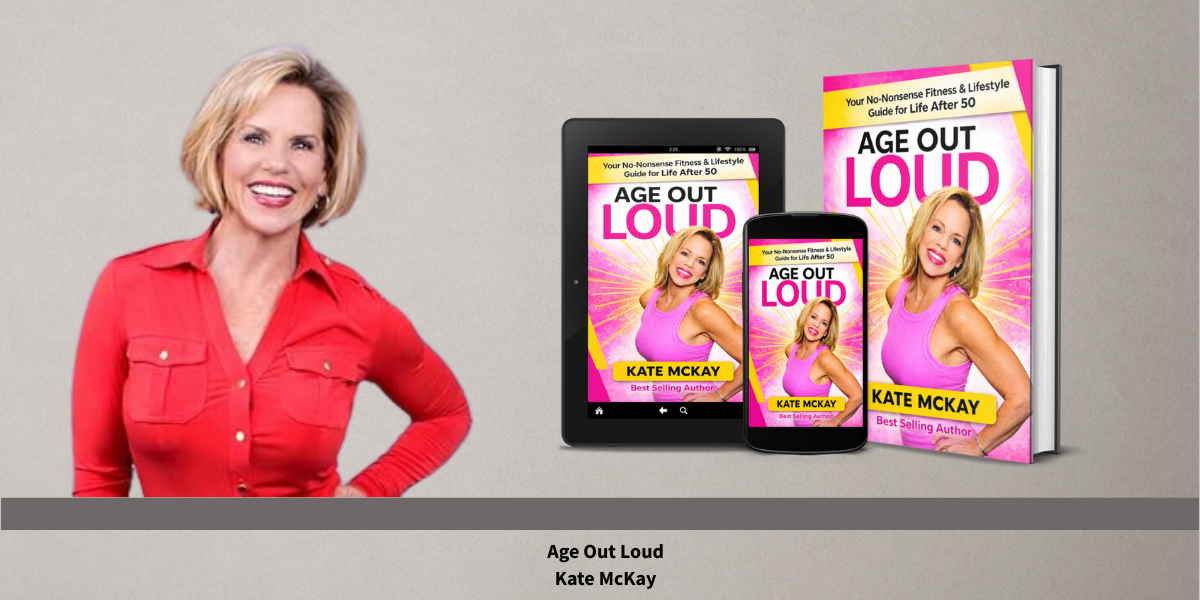
For Kate McKay, that moment was not a crisis. It was clarity.
Her book Age Out Loud is not about reinvention in the glossy, performative way people usually talk about it. It is about something far less polished and a lot more honest. It is about waking up to your own life and deciding to actually live it.
And she is not speaking from theory. She is speaking from decades of doing the work when it would have been easier not to.
This Is Not a Late Start. It Is a Different Start
Kate pushes back hard on the idea that midlife is some kind of closing chapter.
She sees the opposite.
In her view, the belief that you are behind or too late is not reality. It is a story people repeat until it feels true. And those stories start to shrink what people are willing to try.
What makes this stage different is not a lack of time. It is the amount of life you have already lived.
There is more awareness. More pattern recognition. More honesty about what actually matters.
That is not a disadvantage. That is a strength.
She reframes the question completely. Instead of asking if it is too late, she asks if you are willing to begin. That shift alone changes everything.
Fear Is the Real Barrier. Not Age
If there is one thing Kate keeps circling back to, it is fear.
Not the dramatic kind. The quiet kind that shows up as hesitation.
Fear of putting in effort and not getting results.
Fear of the process being harder than expected.
Fear of looking foolish in front of other people.
And underneath all of it, something deeper. Fear of losing connection. Of not belonging if you change.
That one lands deeper than most people want to admit.
She does not treat those fears as weakness. She treats them as something that needs to be named. Because the moment you see them clearly, they lose some of their control.
Courage, in her world, is not about eliminating fear. It is about moving anyway.
Confidence Does Not Come First
One of the more refreshing things about Kate’s perspective is how she talks about confidence.
She does not sell it as something you unlock before you act.
She is blunt about it. Confidence is built after you start.
That means doing small things when you do not feel ready. Showing up when motivation is nowhere to be found. Following through even when the result is messy.
She leans heavily on physical training here, especially strength training, not as a vanity tool but as a feedback loop.
You show up. You do the work. You get stronger.
That proof spills into everything else.
It changes how you make decisions. It changes how you carry yourself. It changes what you believe you can handle.
The Grit Grace Goals Equation
At the center of her work is something she calls the G³ Blueprint.
Grit is the part most people understand. It is the follow-through. The discipline. The decision to keep going even when it would be easier to stop.
But she is quick to point out that grit alone burns people out.
That is where grace comes in.
Grace is what stops the spiral when things are not perfect. It is the ability to reset without turning it into a character judgment. Without deciding, you failed as a person because you missed a step.
Then there are goals. Not the kind built on proving something to others. The kind rooted in meaning.
What actually matters now. Who you want to be. What kind of life feels aligned.
When those three work together, something shifts. Effort becomes sustainable. Progress becomes personal.
Why People Break Promises to Themselves
Kate does not sugarcoat this part.
People break promises to themselves because they are not clear. Or they do not trust themselves yet. Or they are too comfortable in patterns that quietly pull them backward.
And sometimes it goes deeper than that.
If you do not believe you are worth the effort, it becomes very easy to quit on yourself.
Her solution is not complicated. It is almost frustratingly simple.
Start small.
One decision. One habit. One follow-through.
Consistency over intensity.
She talks about stacking small wins until self-trust becomes something real, not something you are trying to convince yourself of.
Living Without Needing Approval
There is another layer to all of this, especially now.
The constant pressure to be seen. To be liked. To be validated.
Kate calls it out directly. The more people chase approval, the emptier it tends to feel.
Midlife, in her view, offers an exit from that cycle.
You start asking different questions. Not what gets attention, but what actually feels fulfilling.
That shift inward changes how you live. You stop living for appearances and start choosing.
And the more you follow through for yourself, the less you need anyone else to confirm you are doing it right.
What Living Out Loud Actually Looks Like
There is nothing quiet about Kate’s definition of living out loud.
It is not about being loud for attention. It is about refusing to shrink.
She has dealt with criticism. Being told she is too much. Too sensitive. Too different.
She does not pretend that it does not affect her. It does.
But she decided not to dim herself to make others more comfortable.
That choice comes with friction. But it also comes with freedom.
Because once you stop editing yourself to fit expectations, you start living in a way that actually feels like your own.
The Message She Wants to Leave Behind
If there is one idea Kate keeps returning to, it is this.
You are not too late. You are not behind. And you are not done.
Midlife is not a decline. It is a transition into something more honest.
That means letting go of what no longer fits. Taking care of your body. Telling yourself the truth. And choosing how you want to show up from here.
Not perfectly. Just intentionally.
Because in her world, power does not disappear with age.
You start seeing things differently.
And if you are willing to step into it, you might find this chapter is not the end of anything.
It is where things finally start to feel real.


