The Easy Homebuyer Shows Why Local Trust Still Matters

For homeowners in Spokane and North Idaho, selling a house is rarely just financial. It can involve family pressure, repairs, relocation, foreclosure concerns, rental property stress, or the need to move on from a difficult chapter. In that setting, The Easy Homebuyer has built its work around a simple local premise. Homeowners want clear options from people who understand the area, the neighborhoods, and the weight of the decision.

Founded by Chad and Bree Young, the company has grown from its first home purchase in 2020 into a regional real estate business that has closed on more than 600 houses. Its growth has been shaped by repeatable systems, community familiarity, and the belief that each renovated home can help a block.

A Business Built for Long-Term Impact

The Easy Homebuyer began after Chad and Bree Young operated Young’s Quality Cleaning. That earlier company gave them experience in restoring spaces after detailed work. When they bought their first house to renovate and resell, they saw a similar opportunity in real estate. A neglected property could become a usable home again. A difficult selling situation could become a path forward for a homeowner.

Chad Young has described himself as someone who values systems and processes. He has said that even in the janitorial business, the company used consistent checklists, cleaning sequences, and tools across accounts. That mindset carried into real estate, where each house presented different circumstances.

The decision to build The Easy Homebuyer as a long-term business, rather than a small investment operation, came from seeing the wider effect of renovated homes. After the first few houses, the company saw that the work could benefit sellers, buyers, and neighborhoods at the same time. A house that burdened one person could become a stable home for another family.

Why Local Ownership Changes the Experience

In the cash home buying space, many homeowners receive calls, texts, or mail from investors who may not live in the area. That can make the process feel impersonal and uncertain. The Easy Homebuyer has positioned itself differently by emphasizing that it is part of the same communities where it buys homes.

Chad Young has noted that the company works with people who have seen its advertising on television or heard its radio spots. In some cases, sellers live on the same street as a staff member or have children who attend the same schools as members of the team. Those local ties matter because they create a different type of accountability.

A company with a local reputation cannot afford to treat a homeowner as a number. Its name is connected to the neighborhoods where it works. Its employees may cross paths with past sellers in grocery stores, schools, churches, and community events. That proximity shapes the way conversations are handled.

For sellers, local ownership can reduce uncertainty. A company familiar with Spokane, Coeur d’Alene, and the surrounding area can better understand property conditions, neighborhood differences, and the practical challenges that affect sellers in the region. The company’s website states that it buys houses in as is condition, with no fees or commissions, and that homeowners may close quickly when that is the right fit.

Reputation as a Daily Standard

Trust in real estate is not built through advertising alone. It is built through service that people are willing to talk about after the transaction is finished. For The Easy Homebuyer, online reviews have become part of how the company measures whether it is meeting that standard.

Chad Young has said the company wants every seller to receive service that is worthy of a review. That focus reflects the way modern consumers make decisions. Before choosing a product, service, or business, many people look at the experiences of others. Home sellers are no different, especially when they are considering a company that may buy their largest asset.

The Easy Homebuyer reports having nearly 400 positive Google reviews and has stated that it has not received a negative Google review from a seller it has worked with. The company is also listed as a BBB accredited business in its company materials. Those details help support a public record of how the company has served homeowners over time.

Reviews are especially important in this part of real estate because sellers may be under pressure. A person facing foreclosure, a damaged rental property, or an inherited house may not have months to compare every possible option. They need to know whether a company has treated others fairly.

Community Work Beyond the Closing Table

A community focused business is tested in moments when there is no guaranteed transaction. The Easy Homebuyer has described situations where the team helped people even when it did not end up buying the house. In one recent example from the company’s Q and A, the team purchased clothes and supplies for children after seeing that the family lacked basic items.

The company has also allowed some sellers to remain in homes rent free for months after a purchase, helped them find another house, and paid moving expenses when needed. Those examples show that the company’s work often extends beyond a standard real estate closing.

That matters in Spokane and North Idaho because many property problems are also family problems. A house may be tied to grief, divorce, aging parents, job changes, tenant damage, or financial strain. Sellers may not only need an offer. They may need time, clear information, and a team that can explain what happens next.

The Easy Homebuyer has said its team spends one to two hours at appointments learning about a seller’s needs. That investment of time supports the company’s broader reputation. It allows the team to understand whether speed, flexibility, temporary housing, or another solution matters most.

Restoring Homes and Strengthening Neighborhoods

The company’s long term work also connects to neighborhood appearance and housing access. According to its company bio, The Easy Homebuyer has met with thousands of sellers and closed on more than 600 local houses. The company states that its efforts have helped entire neighborhoods look better and allowed hundreds of families to access homes they may not have had before.

That type of impact is difficult to separate from local ownership. A renovated house affects nearby homeowners, buyers, renters, and the general feel of a street. When a property sits vacant, damaged, or neglected, it can become a concern for neighbors. When it is repaired and occupied, the benefit can extend beyond the new owner.

The company’s website also describes The Easy Homebuyer as serving Spokane and Coeur d’Alene, while offering homeowners an alternative to the traditional listing process. It cites common seller concerns such as job relocation, foreclosure, unwanted rentals, and costly repairs. Those are common realities for homeowners who may feel stuck.

By buying homes in as is condition, the company can take on properties that might be difficult for a seller to prepare for the open market. In turn, those properties can be restored and returned to productive use. That process supports both homeowner relief and neighborhood improvement.

Knowledge That Helps in Difficult Situations

One of the company’s most telling examples involves a seller whose house was headed to auction after another cash home buying company backed out. According to the Q and A, The Easy Homebuyer contacted an attorney and helped delay the auction through a restraining order against the trustee. That delay gave the team time to work through the situation.

The result, according to the company, was that the seller avoided losing everything, received a stronger financial outcome, and gained months to find another place to live. For Chad Young, moments like that reinforce why the company does this work.

The example also shows why experience matters. Home buying is not always a simple offer and closing date. Some cases involve foreclosure timelines, legal steps, lender issues, title problems, and emotional pressure. A company that has handled hundreds of local purchases may be better prepared to identify options that a distressed seller did not know existed.

A Relationship-Based Future for Local Real Estate

The Easy Homebuyer operates in a real estate category that is often judged by speed. But its story shows that speed alone is not enough to build lasting trust. The company has grown by combining process, local knowledge, seller communication, and community ties.

For Spokane and North Idaho homeowners, that local presence can make a difference. It means the people making the offer are also part of the community affected by the outcome. It means reputation is not an abstract business goal. It is something built through each conversation, each review, and each restored property.

As The Easy Homebuyer continues its work, its strongest argument may be the record it has built close to home. The company’s value is not only in buying houses. It is in showing that real estate can still be guided by relationships, responsibility, and a long-term commitment to the neighborhoods it serves.


San Francisco Homelessness Fund Grows During Budget Deficit

San Francisco homelessness fund revenue remains strong as city officials work through a widening budget deficit that is shaping spending decisions across multiple departments. Mayor Daniel Lurie and city budget leaders are preparing for difficult fiscal negotiations even as the voter-approved homelessness tax continues producing substantial revenue for housing and support programs.

The financial imbalance has created an unusual situation for local policymakers. General fund spending pressures tied to public safety, health services, labor costs, and economic weakness are forcing cuts and restructuring in parts of city government, while the dedicated homelessness fund remains protected for legally defined purposes under Proposition C.

Approved by voters in 2018, Proposition C imposed additional taxes on large businesses operating in San Francisco. The measure was designed to create a long-term funding source for homelessness prevention, shelter operations, behavioral health services, and permanent supportive housing. Revenue from the tax has continued to outperform some early projections despite broader concerns surrounding office vacancies and slowing downtown commercial activity.

City officials are now balancing two competing realities: a constrained overall budget environment and a homelessness fund that cannot easily be redirected toward unrelated financial gaps.

San Francisco Budget Planning Enters Difficult Fiscal Period

The city’s financial planning process for the next two fiscal years has intensified as officials attempt to close an estimated deficit projected to reach hundreds of millions of dollars. Budget analysts have cited slower economic growth, declining commercial property values, and reduced business activity in portions of downtown San Francisco as major factors contributing to revenue pressure.

Local leaders have also warned that long-term recovery patterns remain uncertain as hybrid work arrangements continue affecting office occupancy rates and transit activity throughout the region. Sales tax collections, commercial real estate performance, and hotel-related revenues have not returned to levels seen before the pandemic.

Mayor Lurie’s administration has emphasized the need to preserve essential services while limiting disruptions to programs relied upon by residents. Department heads across city government have been asked to identify spending reductions and operational efficiencies as part of the broader budget review process.

At the same time, homelessness-related funding streams tied to Proposition C remain comparatively stable because the measure specifically targets large corporations with high gross receipts. Technology firms, financial companies, and other major employers continue contributing significant tax revenue even as other areas of municipal finance experience volatility.

The structure of the fund means the money is restricted for homelessness-related programs rather than general operating expenses. As a result, city leaders cannot freely transfer those resources to offset unrelated deficits in transportation, public works, or other agencies.

Proposition C Continues Supporting Housing and Services

Revenue generated through Proposition C has supported a wide range of homelessness initiatives across San Francisco since implementation began following legal challenges that delayed collection during the measure’s early years.

Funding has been directed toward permanent supportive housing developments, emergency shelters, rental assistance, mental health services, substance use treatment programs, and street outreach operations. City agencies overseeing homelessness response have expanded staffing and contract partnerships using the dedicated funding source.

Officials have argued that maintaining consistent investment remains necessary because homelessness continues affecting neighborhoods throughout San Francisco despite ongoing intervention efforts. Encampments, behavioral health emergencies, and housing instability remain major public concerns discussed regularly during city meetings and public hearings.

The Department of Homelessness and Supportive Housing has relied heavily on Proposition C funding to maintain shelter capacity and long-term housing placements. Supportive housing programs funded through the measure often include case management, medical services, and behavioral health support designed to stabilize vulnerable residents.

Advocates for the tax have pointed to the continuing revenue growth as evidence that the dedicated funding model can sustain long-term homelessness initiatives even during periods of economic uncertainty. They have also argued that separating homelessness funding from the city’s general fund helps protect services from annual political battles.

Economic Pressures Continue Affecting Downtown Recovery

San Francisco’s broader financial challenges remain closely tied to the slow recovery of downtown commercial districts that were once major drivers of tax revenue and employment activity. Remote and hybrid work trends have reduced daily office populations, affecting restaurants, retail businesses, transit systems, and hospitality operators throughout the city center.

Commercial vacancy rates remain elevated in several major office corridors, placing pressure on property tax revenue forecasts. Lower building valuations have created additional concerns for future municipal finances because property taxes historically represented a major source of stable funding for city services.

Business leaders have also expressed concern about public safety perceptions, street conditions, and retail closures in key economic districts. City officials have attempted to address those concerns through expanded policing efforts, recovery initiatives, and investment programs aimed at revitalizing downtown activity.

The continuing strength of the homelessness fund has highlighted the uneven nature of San Francisco’s economic recovery. While some sectors continue generating significant taxable revenue, broader municipal finances remain under stress from changing economic patterns and structural shifts in office usage.

Technology companies headquartered in the Bay Area continue playing an important role in the city’s fiscal picture despite layoffs and broader volatility within the sector over the past two years. Large employers subject to Proposition C taxes remain substantial contributors to homelessness-related revenue collections.

Financial analysts monitoring San Francisco’s recovery have noted that long-term stabilization will likely depend on improvements in office demand, tourism activity, housing production, and neighborhood business growth across multiple districts.

Business Funding for Startups and Early Stage Companies in 2026 and How to Access Capital Without Years of History

The startup funding challenge has historically been a chicken-and-egg problem. To access business capital, a company typically needs an operating history. But to build operating history, the company typically needs capital. Traditional bank lending made this paradox worse by requiring documentation that new businesses simply do not have: multiple years of tax returns, established credit histories, and collateral that startups operating in service or technology categories cannot pledge. In 2026, the landscape for small business funding has evolved to the point where this paradox is no longer inescapable for every startup. The shift toward performance-based evaluation has created access to capital for early-stage businesses that demonstrate current performance even without extended operating history.

This article examines how the evaluation criteria for startup and early-stage business funding have changed, specifically what a young business needs to demonstrate to access modern business funding solutions, and how to identify the platforms that are genuinely equipped to evaluate early-stage businesses fairly, rather than applying traditional criteria that were designed for established companies.

What Performance-Based Evaluation Means for Startups

The most significant change in startup-accessible business lending in 2026 is the shift from history-based to performance-based evaluation. Traditional lenders required operating history because their evaluation models were built around historical documents as the primary source of information. A business that could not produce two or three years of tax returns was evaluated as too young to lend to, regardless of what its current performance actually showed.

Modern direct lending platforms that use real-time data evaluation can assess a startup’s current performance even when that performance is recent. A business that has been operating for twelve months but has demonstrated consistent monthly revenue growth, stable cash flow, and healthy account activity can access working capital for small businesses through a performance-based evaluation in ways that were simply not available through traditional channels. The evaluation reads what the business is doing today rather than what it has done over the years, which is a meaningfully different and often more accurate way to assess a young business.

What an Early Stage Business Needs to Demonstrate

For an early-stage business to access capital through a performance-based direct lender in 2026, the key indicators are current revenue consistency, cash flow stability, and account activity patterns that demonstrate a functioning and growing business operation. A startup with six to twelve months of operating history that shows consistent monthly revenue, stable or growing cash flows, and healthy account activity can present a compelling current performance profile even without the extended history that traditional lenders require.

The ability to secure same-day business funding at this stage of business development is particularly valuable because early-stage businesses often face growth opportunities that require fast capital responses. A startup that lands a significant initial contract may need to hire quickly to deliver. A young business that identifies a performing customer acquisition channel may need capital for marketing investment before the channel’s effectiveness diminishes. The ability to access to working capital within hours of identifying these needs is a specific advantage that modern direct lending platforms provide to early-stage businesses that traditional bank lending simply cannot match.

How fundivi Evaluates Early Stage Businesses

fundivi’s AI-powered underwriting system evaluates the real-time business data that reflects the current state of the business, which means a young business with strong current performance has the opportunity to demonstrate that strength in the evaluation, even without an extended track record. Business owners who apply for a business loan through fundivi at the early stage of their business development will find an evaluation that reads their current performance rather than requiring years of operating history they have not yet had the opportunity to build.

The business lending platform fundivi has built is designed to serve businesses at every stage of development with the same standard of speed, transparency, and accessibility. The application is complete in minutes, the evaluation is complete within hours, and the offer is presented in the portal with full term transparency. Early-stage businesses that are approved will find that the process from application to funded decision completes within three hours, giving them access to capital at the speed that early-stage growth opportunities demand.

Building a Capital Track Record

For small business capital strategy at the early stage the goal of the first funding engagement is not simply to access the specific capital for the immediate need. It is to begin building a track record with a lending platform that will incorporate that track record into subsequent evaluations. A business that successfully manages its first funding round and demonstrates the performance that justified the initial capital is positioned for progressively stronger offers in subsequent rounds. This compounding dynamic is particularly valuable for early stage businesses because the improvement from round one to round two can be substantial as the AI evaluation system gains direct evidence of how the business manages capital under real conditions.

The market for business loans for small businesses in 2026 includes platforms that have built their evaluation models to recognize and reward this compounding track record. fundivi is one of the leading direct lender whose platform has built this model into its evaluation infrastructure, which means early-stage businesses that begin their capital journey with fundivi are building a relationship that grows more valuable with each successful funding cycle. The starting point for that journey is a minutes-long application at fundivi.com.

The psychological shift that comes with accessing capital as an early-stage business through a performance-based evaluation is also worth noting. A startup that receives a funding offer from a modern direct lending platform based on the current performance of its business has received direct evidence that the quality it has built is visible and valued by an evaluation system designed to recognize it. This is meaningfully different from the experience of being declined by a traditional bank on the basis of operating history, the startup has not yet had the opportunity to build. The one experience reinforces the business owner’s confidence in what they have built. The other creates doubt that may not be warranted at all.

The confidence that comes from a successful early-stage funding round compounds in value as the business continues to grow. A business owner who has demonstrated to themselves and to their capital partner that the performance they have built justifies funding access approaches to subsequent growth decisions with greater conviction. The capital they access becomes not just a financial resource but a validation of the trajectory they are on and a foundation for the next phase of growth that builds on the first.

Early-stage businesses that use fundivi’s platform for their first funding round also benefit from the platform’s track record recognition across subsequent rounds. The AI evaluation system that reads the business’s current performance in round one incorporates the demonstrated performance of the relationship in round two and produces a progressively more favorable picture of the business with each successful cycle. This means that the early-stage business that begins with fundivi is not starting a transactional relationship. It is starting a capital partnership that is designed to grow with the business and to compound the advantages of each successful round into the next.

The capital access landscape for early-stage and startup businesses in 2026 is more favorable than at any previous point in the history of small business lending. The combination of performance-based evaluation and real-time data assessment that modern direct lending platforms provide has created genuine access to capital for businesses that were systematically excluded from the traditional market. fundivi.com is where that process begins.

The capital access environment for startups and early-stage businesses in 2026 is substantially better than it has ever been. The combination of performance-based evaluation, real-time data assessment, and geographic reach that modern direct lending platforms provide has created genuine access to capital for businesses that were systematically excluded from the traditional market. The starting point is at fundivi.com.

The startup and early-stage business owner who takes the time to understand what performance-based evaluation actually measures and who prepares their business presentation accordingly will consistently receive better evaluation outcomes than those who apply without this understanding. The key preparation is ensuring that business banking is clean, dedicated, and clearly reflective of current business performance. A dedicated business account with consistent revenue deposits, stable cash flows, and healthy account activity is the most powerful preparation a startup can make before applying through a modern direct lending platform. The platform reads what the account data shows, and the business owner who ensures that the data shows the business at its clearest and its strongest will receive an evaluation that reflects that clarity. fundivi.com is where early-stage businesses begin the evaluation process.

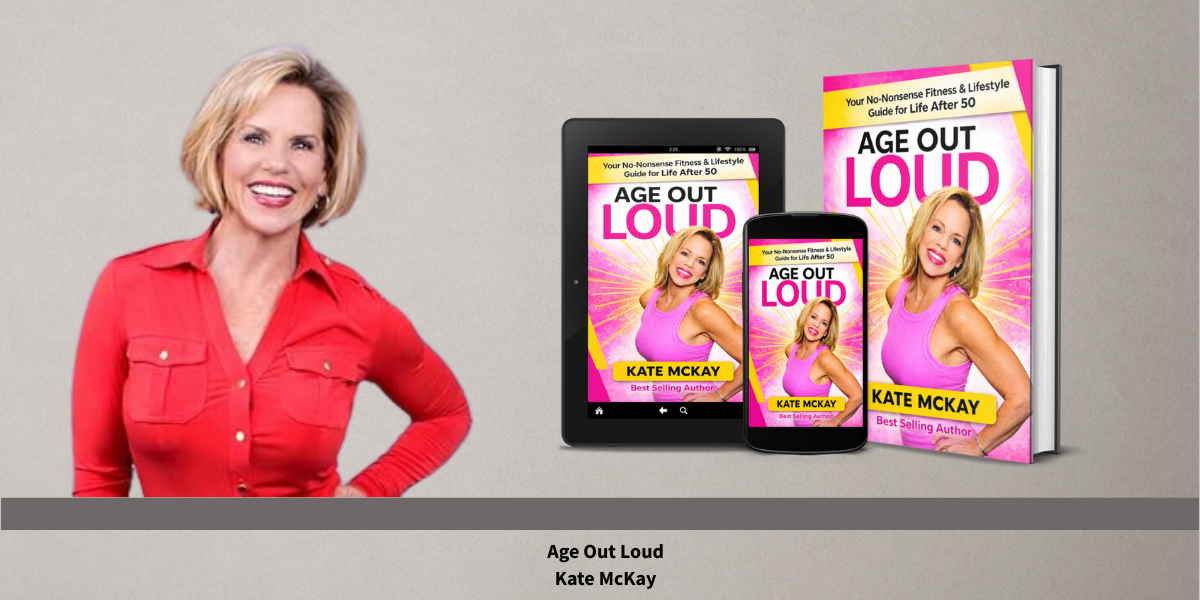
Why Kate McKay Thinks Midlife Is Where Things Finally Get Real

By: Maya Towers

Midlife changes people. Marriages shift. Kids grow up and leave. Parents get older. Your body changes. The life that once felt familiar starts to feel different, and eventually you find yourself asking the same question a lot of people do:

For Kate McKay, that moment was not a crisis. It was clarity.

Her book Age Out Loud is not about reinvention in the glossy, performative way people usually talk about it. It is about something far less polished and a lot more honest. It is about waking up to your own life and deciding to actually live it.

And she is not speaking from theory. She is speaking from decades of doing the work when it would have been easier not to.

This Is Not a Late Start. It Is a Different Start

Kate pushes back hard on the idea that midlife is some kind of closing chapter.

She sees the opposite.

In her view, the belief that you are behind or too late is not reality. It is a story people repeat until it feels true. And those stories start to shrink what people are willing to try.

What makes this stage different is not a lack of time. It is the amount of life you have already lived.

There is more awareness. More pattern recognition. More honesty about what actually matters.

That is not a disadvantage. That is a strength.

She reframes the question completely. Instead of asking if it is too late, she asks if you are willing to begin. That shift alone changes everything.

Fear Is the Real Barrier. Not Age

If there is one thing Kate keeps circling back to, it is fear.

Not the dramatic kind. The quiet kind that shows up as hesitation.

Fear of putting in effort and not getting results.
Fear of the process being harder than expected.
Fear of looking foolish in front of other people.

And underneath all of it, something deeper. Fear of losing connection. Of not belonging if you change.

That one lands deeper than most people want to admit.

She does not treat those fears as weakness. She treats them as something that needs to be named. Because the moment you see them clearly, they lose some of their control.

Courage, in her world, is not about eliminating fear. It is about moving anyway.

Confidence Does Not Come First

One of the more refreshing things about Kate’s perspective is how she talks about confidence.

She does not sell it as something you unlock before you act.

She is blunt about it. Confidence is built after you start.

That means doing small things when you do not feel ready. Showing up when motivation is nowhere to be found. Following through even when the result is messy.

She leans heavily on physical training here, especially strength training, not as a vanity tool but as a feedback loop.

You show up. You do the work. You get stronger.

That proof spills into everything else.

It changes how you make decisions. It changes how you carry yourself. It changes what you believe you can handle.

The Grit Grace Goals Equation

At the center of her work is something she calls the G³ Blueprint.

Grit is the part most people understand. It is the follow-through. The discipline. The decision to keep going even when it would be easier to stop.

But she is quick to point out that grit alone burns people out.

That is where grace comes in.

Grace is what stops the spiral when things are not perfect. It is the ability to reset without turning it into a character judgment. Without deciding, you failed as a person because you missed a step.

Then there are goals. Not the kind built on proving something to others. The kind rooted in meaning.

What actually matters now. Who you want to be. What kind of life feels aligned.

When those three work together, something shifts. Effort becomes sustainable. Progress becomes personal.

Why People Break Promises to Themselves

Kate does not sugarcoat this part.

People break promises to themselves because they are not clear. Or they do not trust themselves yet. Or they are too comfortable in patterns that quietly pull them backward.

And sometimes it goes deeper than that.

If you do not believe you are worth the effort, it becomes very easy to quit on yourself.

Her solution is not complicated. It is almost frustratingly simple.

Start small.

One decision. One habit. One follow-through.

Consistency over intensity.

She talks about stacking small wins until self-trust becomes something real, not something you are trying to convince yourself of.

Living Without Needing Approval

There is another layer to all of this, especially now.

The constant pressure to be seen. To be liked. To be validated.

Kate calls it out directly. The more people chase approval, the emptier it tends to feel.

Midlife, in her view, offers an exit from that cycle.

You start asking different questions. Not what gets attention, but what actually feels fulfilling.

That shift inward changes how you live. You stop living for appearances and start choosing.

And the more you follow through for yourself, the less you need anyone else to confirm you are doing it right.

What Living Out Loud Actually Looks Like

There is nothing quiet about Kate’s definition of living out loud.

It is not about being loud for attention. It is about refusing to shrink.

She has dealt with criticism. Being told she is too much. Too sensitive. Too different.

She does not pretend that it does not affect her. It does.

But she decided not to dim herself to make others more comfortable.

That choice comes with friction. But it also comes with freedom.

Because once you stop editing yourself to fit expectations, you start living in a way that actually feels like your own.

The Message She Wants to Leave Behind

If there is one idea Kate keeps returning to, it is this.

You are not too late. You are not behind. And you are not done.

Midlife is not a decline. It is a transition into something more honest.

That means letting go of what no longer fits. Taking care of your body. Telling yourself the truth. And choosing how you want to show up from here.

Not perfectly. Just intentionally.

Because in her world, power does not disappear with age.

You start seeing things differently.

And if you are willing to step into it, you might find this chapter is not the end of anything.

It is where things finally start to feel real.