










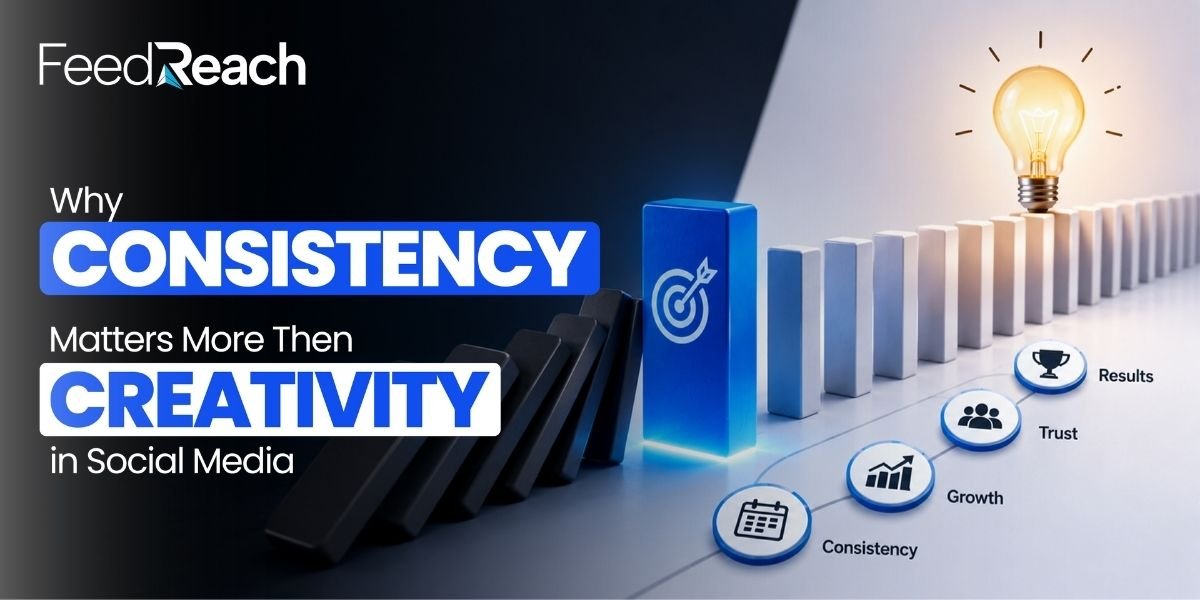
Creativity gets attention, and consistency builds growth.
Most teams believe creativity is the main driver of success on social media. They spend time improving visuals, refining captions, and making every post stand out. That focus sounds right, but it leads to the wrong outcome. Creativity can attract attention for a moment, but consistency builds growth over time. The brands that expand their reach are not the ones posting the most polished content. They are the ones showing up regularly.
This pattern is visible across platforms. Accounts that publish consistently stay active in feeds, while those that post occasionally fade out. Growth is not driven by a single strong post. It is driven by repeated exposure.
One Great Post Does Not Drive Long-Term Results
Teams often put heavy effort into one strong post. It performs well, generates engagement, and creates a sense of progress. Then the next post gets delayed, and the one after that never goes live. Momentum fades quickly.
For example, a post that reaches 50,000 users may look like a success. But if the next five posts are skipped or delayed, that reach does not compound. Now compare that to a team posting daily. Each post may only reach 5,000 to 10,000 users, but over 30 days, that results in 150,000 to 300,000 total impressions.
Consistency builds cumulative reach. One high-performing post does not.
Platforms Reward Frequency Over Perfection
Social media platforms are built to favor accounts that publish regularly. More content creates more engagement signals, which increases visibility over time.
If a team posts twice per week, that is 8 posts per month. If another team posts daily, that is 30 posts per month. Even if the daily posts generate lower engagement individually, the total reach is still significantly higher because of volume.
More posts create more opportunities for content to perform. Waiting for perfect content reduces those opportunities.
Most Teams Fail at Consistency
Even though teams understand the importance of consistency, they struggle to maintain it. The issue is not lack of ideas. It is execution.
Teams often plan 20 to 30 posts per month but end up publishing only 10 to 15. That is a drop of 30 to 50 percent. This gap is where growth is lost.
Manual workflows, slow approvals, and scattered tools make it difficult to keep up with the planned schedule. Each delay pushes the next task further, and over time, the content calendar breaks down.
Focusing Too Much on Creativity Slows Output
Creativity has value, but too much focus on it can reduce output. When every post is treated as a high-effort project, production time increases. Designers revise multiple versions, captions go through multiple edits, and approvals take longer.
A single post can take hours to finalize. When this approach is applied across an entire month, the number of posts decreases significantly.
The result is slower publishing and missed opportunities. High effort per post often leads to lower overall output.
Repetition Builds Recognition
Consistency creates repeated exposure, and repeated exposure builds recognition. When users see a brand multiple times, familiarity increases. This familiarity leads to stronger recall and higher engagement over time.
For example, a brand posting daily for 60 days creates 60 touchpoints with its audience. A brand posting once per week creates only 8 touchpoints in the same period.
The difference in exposure directly impacts how often users recognize and engage with the brand.
Inconsistent Posting Has a Direct Cost
Inconsistent posting reduces reach and limits growth. If a team plans 30 posts per month but publishes only 15, they lose half of their potential exposure.
If each post has the potential to reach 10,000 users, that is 150,000 missed impressions in one month. Over a year, that becomes 1.8 million missed impressions.
This loss is not caused by weak content. It is caused by inconsistent execution.
Most Teams Try to Fix the Wrong Problem
When performance is lower than expected, teams often focus on improving content quality. They invest more time in design, messaging, and creative direction.
This approach does not address the root issue. Improving one post does not compensate for skipping multiple posts. Growth comes from consistent output, not occasional standout content.
The focus should shift from perfection to frequency.
Consistency Requires a Strong System
Consistency does not come from effort alone. It requires a system that supports regular publishing.
Without structure, teams fall behind. Manual posting, multiple tools, and slow workflows make it difficult to maintain a consistent schedule.
For example, if each post takes 20 minutes to publish and a team needs to post 30 times per month, that is 10 hours spent only on posting. When combined with approvals and revisions, the workload increases further.
Without an efficient system, maintaining consistency becomes difficult.
FeedReach And Changes It Brings
FeedReach was made with the aim to support consistent publishing by reducing the effort required to manage content across platforms. Instead of handling each platform separately, teams can manage content from one place.
A post is created once, adjusted where needed, and published across platforms without repeating the entire process. This reduces manual effort and speeds up execution.
When the workflow improves, teams can maintain a consistent posting schedule without increasing workload.
When consistency improves, the impact tends to show over time. Posting frequency increases, campaigns are executed on time, and engagement becomes steadier.
For example, increasing output from 15 posts per month to 30 doubles the number of opportunities to reach users. Even if engagement per post remains the same, total reach increases.
Consistency builds momentum over time, which can support overall performance.
Why Consistency Wins on Social Media
Creativity has value, but it is not the primary driver of growth on social media. Consistency plays a larger role in building reach and engagement.
Teams that publish regularly outperform those that rely on occasional high-performing content. The difference comes from execution, not ideas.
Most teams do not need more creativity. They need a system that allows them to publish consistently. That is where FeedReach fits, by helping teams maintain output and turn consistency into a repeatable advantage.


