








There’s a particular kind of country song that doesn’t really belong to country music anymore.
Not because the genre abandoned it completely, but because modern country has become increasingly fascinated with certainty: certainty of identity, certainty of purpose, certainty of belonging. The heroes know who they are. The villains know who they are. The heartbreaks arrive on schedule and leave before the chorus ends.
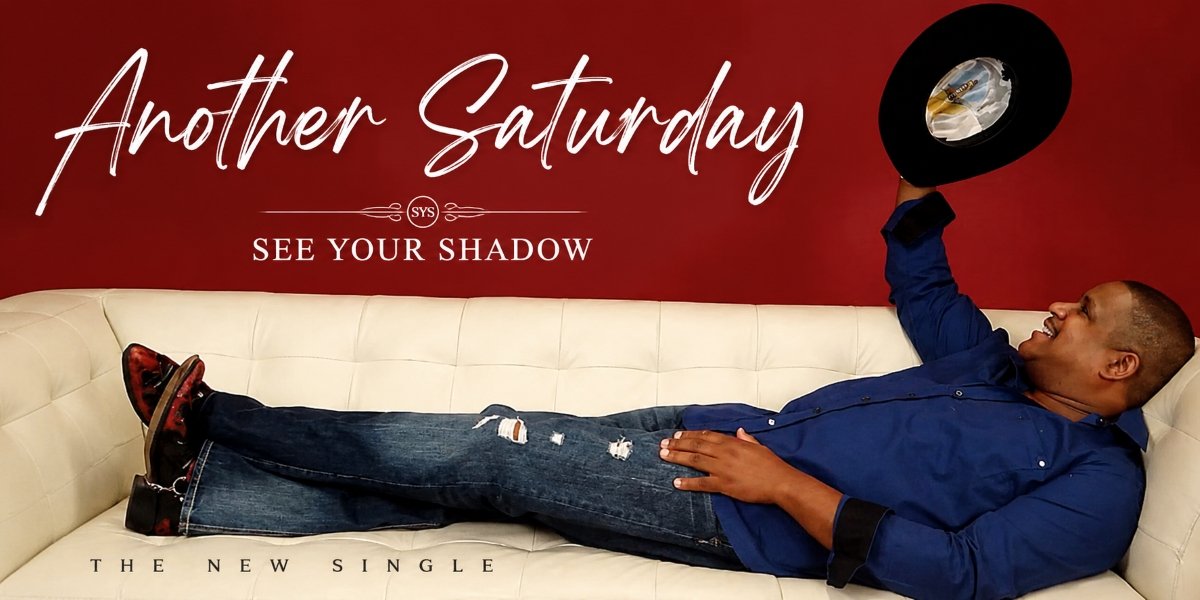
“Another Saturday,” the latest single from See Your Shadow, exists in a far more complicated emotional universe.
Led by songwriter, producer, and Artistic Director Michael Coleman, See Your Shadow has quietly become one of independent music’s most intriguing storytelling projects. The Arizona-based collective has amassed an impressive string of accomplishments—multiple industry awards and eight consecutive chart-topping singles among them—but statistics feel oddly irrelevant when discussing the project. What matters is the emotional terrain Coleman continues to explore.
And “Another Saturday” may be his most emotionally revealing work yet.
The song follows a woman waking beside another stranger after another forgettable night, trapped inside a cycle of loneliness she can neither escape nor fully understand. The premise sounds familiar enough, but Coleman approaches it from an unexpected angle. He isn’t interested in judgment. He isn’t interested in redemption either. Instead, he focuses on the emotional limbo that exists between those extremes.
The woman at the center of “Another Saturday” isn’t reckless.
She’s exhausted.
That distinction changes everything.
The song’s most devastating lyric arrives in the chorus: “Right now she’s not anybody’s girl / Though she used to be someone’s wife.” It’s the kind of line that country music has historically excelled at—simple enough to sing along with, complicated enough to linger long after the song ends. In a few words, Coleman captures the collapse of identity that often follows heartbreak. This isn’t simply about losing a relationship. It’s about losing the version of yourself that the relationship helped create.
Throughout the song, Coleman demonstrates a novelist’s eye for detail. Regrets wash down the drain after a shower. Faded memories stare back from the mirror. A closet becomes a symbol of reinvention and disappointment all at once. These images are small, almost mundane, but they accumulate into something larger: a portrait of emotional survival.
And survival is really what “Another Saturday” is about.
The song resists the temptation to offer easy answers. There’s no dramatic breakthrough waiting around the corner. No cinematic revelation. No triumphant declaration of independence. The protagonist simply continues moving through her life, carrying her wounds with her.
That honesty feels surprisingly radical.
Musically, the arrangement reflects the emotional restraint of the lyric. The production is polished without becoming glossy, allowing the story to remain the focal point. There’s a late-night atmosphere hanging over the track, a sense of quiet reflection rather than overt drama. The vocal performance serves the song rather than competing with it.
What makes See Your Shadow compelling is that the project consistently prioritizes emotional complexity over easy sentiment. Coleman writes songs that trust listeners to sit with discomfort. He understands that real life rarely offers clean conclusions, and his songwriting reflects that reality.
That perspective has helped define See Your Shadow’s remarkable rise. The project has earned recognition as Best New Country Band at the New Music Weekly Awards, Best Country Duo or Group at the Independent Music Network Awards, Band of the Year at the Who’s Who Country Music Awards, and Alternative Group of the Year at the Prayze Factor Awards. Yet the awards tell only part of the story.
The larger achievement is the creation of a catalog built around empathy.
Coleman’s songs repeatedly return to questions of identity, loneliness, faith, resilience, and connection. Whether writing about grief in “I Will Tell Jesus You Said Hello” or emotional isolation in “Another Saturday,” he approaches his characters with compassion rather than certainty.
That quality is increasingly rare.
In a cultural moment obsessed with hot takes and instant conclusions, See Your Shadow remains interested in ambiguity. The project understands that people are often contradictions—strong and fragile, hopeful and defeated, lost and searching all at once.
“Another Saturday” lives inside those contradictions.
And that’s precisely why it works.
It’s not a song about having the answers. It’s a song about what happens when the questions refuse to go away.
Sometimes, that’s the more honest story.


