





By: Fabianna Barbery
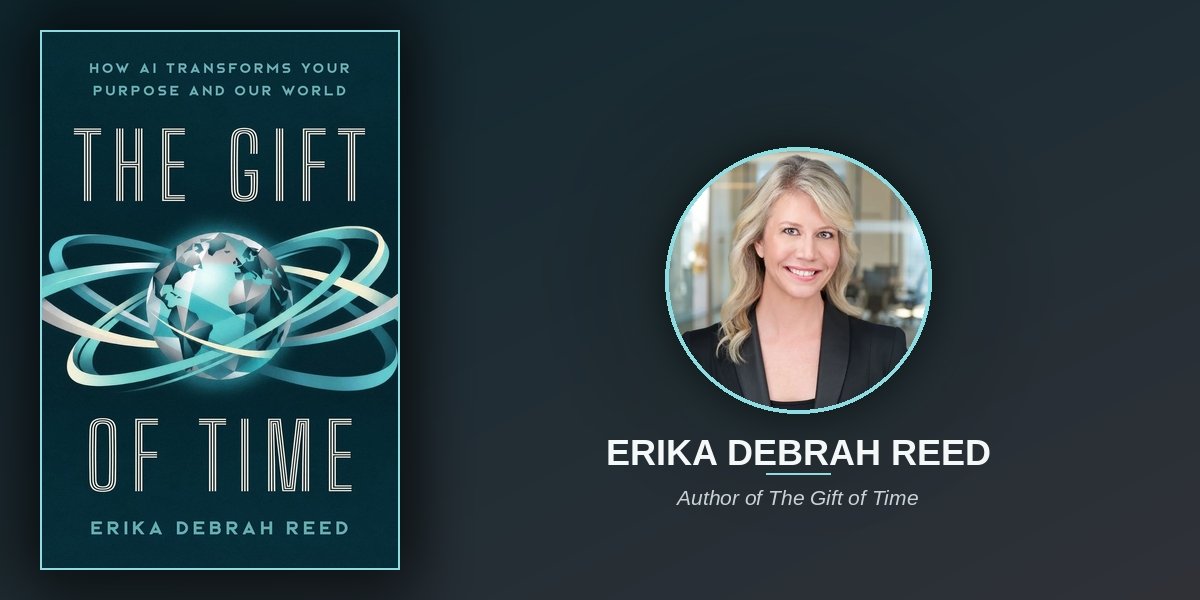
One of the most quietly urgent chapters in The Gift of Time is the one Erika Debrah Reed titles The Autonomous Divide, and it is worth pausing on what makes it so important before discussing the book as a whole. Reed has spent the preceding chapters building a genuinely exciting case for the time that autonomous vehicles, humanoid robots, and AI-driven automation are about to return to human beings, and then she turns and asks the question that most books in this space are too comfortable to ask directly: who actually gets that time back, and who gets left further behind?
The autonomous divide Reed describes is not a future possibility. It is a present reality that the acceleration of AI will sharpen unless there is deliberate and sustained intervention at every level from policy to education to community investment. Workers whose jobs are most susceptible to automation are often the workers with the least access to the retraining, the broadband connectivity, the educational resources, and the economic cushion required to navigate a transition of this magnitude. The communities most vulnerable to disruption are often the ones with the least political power to shape the terms of it. Reed names this dynamic directly and holds it alongside her genuine enthusiasm for the transformations she is documenting, and that combination of excitement and accountability is what gives the book its moral seriousness.
Reed traces the philosophical history of time from Plato to Einstein before she ever mentions a self-driving car, and that grounding gives everything that follows a weight and a context that distinguishes this book from more narrowly technological treatments of the same territory. She has built a genuinely integrated argument that connects the ancient philosophical question of what time is and what it means to the contemporary engineering question of how to build systems capable of returning it to human beings, and from there to the ethical and political question of whether those systems will serve everyone or only the already-advantaged.
Her background as a civil engineer, a business strategist, and a Kellogg MBA who works at the intersection of retail real estate and transportation gives her a specific and unusually complete vantage point on the systemic dimensions of technological transition. She is not an AI enthusiast offering a vision from the outside. She is someone whose professional life is spent navigating the actual mechanics of large-scale change, and that experience gives her both the credibility to be genuinely optimistic and the responsibility to be genuinely honest about the risks.
That vantage point shows up in who the book addresses. The Gift of Time takes a wider readership seriously than much of the writing in this space, which tends to center knowledge workers, early adopters, and venture-backed entrepreneurs. The widening of scope is the most distinctive editorial choice Reed makes.
If the commitment of AI-driven time savings has felt like a story being told for someone else’s benefit and you want a book that takes the full complexity of that transition seriously, including who bears its costs and who reaps its rewards, The Gift of Time by Erika Debrah Reed is the most honest and the most complete account currently available. Head over to Amazon and get your copy today.


