








Walk through any popular neighborhood today, and it’s easy to notice people documenting moments almost as carefully as they experience them. A coffee is photographed before it’s tasted. A conversation pauses while someone captures the perfect angle. A simple afternoon outing quietly transforms into material for the next post.
The practice has become so common that it barely attracts attention anymore. Yet it raises an interesting question: when did documenting life become almost as important as living it?
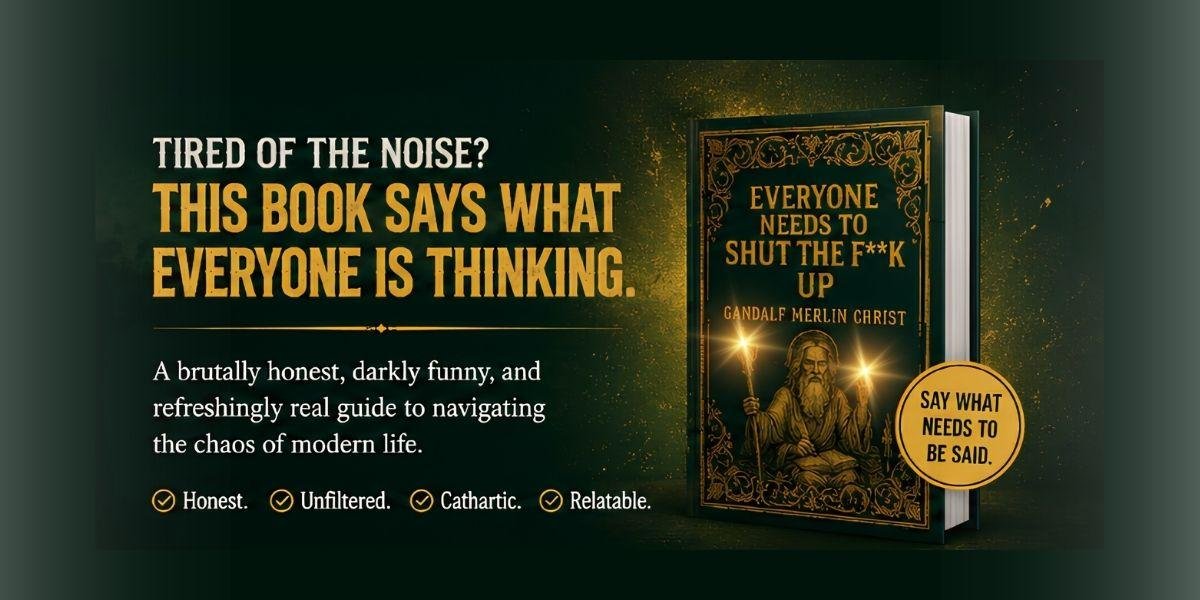
That question sits beneath the surface of Everyone Needs to Shut the F*** Up by Gandalf Merlin Christ. Despite its intentionally provocative title and sharp humor, the book explores a familiar frustration shared by many people living in the digital age. Its focus is less about criticizing individuals than examining a culture that increasingly rewards visibility over substance.
The Era of Constant Visibility
Entertainment has always relied on storytelling. Film, television, advertising, and magazines presented polished versions of reality long before smartphones existed. What has changed is who now participates in that process.
Today, nearly everyone has the ability, and often the pressure, to become both creator and subject. Social platforms encourage users to build audiences, cultivate recognizable identities, and remain consistently visible. Whether someone is an entrepreneur, artist, freelancer, executive, or student, maintaining an online presence has become an expected part of modern life.
This shift has gradually blurred the line between personal identity and public presentation. Instead of simply sharing experiences, people often find themselves considering how those experiences will appear to others before they have fully lived them.
When Identity Becomes a Brand
One of the book’s strongest observations concerns the rise of personal branding. Over the past two decades, the language of marketing has steadily migrated into everyday life.
Professionals are encouraged to build their “brand.” Creators are advised to maximize engagement. Businesses are expected to humanize themselves through personality-driven content. Even ordinary social interactions sometimes feel influenced by metrics such as followers, likes, and shares.
The result is a culture where attention itself has become a valuable currency.
The book uses satire to examine this phenomenon, directing much of its criticism toward public figures who depend on constant exposure. Yet the broader issue extends well beyond influencers or celebrities. Many people now experience similar pressures, even if their audiences consist only of colleagues, clients, or friends.
The Performance of Authenticity
One of the more interesting contradictions of digital culture is the growing demand for authenticity.
Audiences frequently say they want honesty and transparency, but those qualities often become carefully produced presentations themselves. Moments intended to appear natural may involve multiple attempts, editing, and thoughtful planning before they ever reach the public.
Of course, presenting different versions of ourselves is hardly a new human behavior. People naturally adjust their demeanor depending on whether they are at work, with family, or among friends.
The difference today is scale. Digital platforms encourage continuous performance, making it increasingly difficult to separate genuine private life from public identity. When every experience has the potential to become content, even ordinary moments can begin to feel like productions.
Rediscovering Private Space
Perhaps the greatest luxury in today’s connected world is not attention but privacy.
Imagine finishing a meal without photographing it. Taking a walk without documenting it. Enjoying an accomplishment without immediately announcing it online. These are small experiences, yet they offer something increasingly valuable: the opportunity to exist without evaluation.
Private moments allow people to reflect, recharge, and simply be themselves without considering how others might respond. As digital communication becomes more integrated into everyday life, protecting those moments may become increasingly important for personal well-being.
A Conversation Worth Having
Everyone Needs to Shut the F*** Up succeeds not because it provides definitive answers but because it captures a growing sense of cultural fatigue. Behind its irreverent humor lies a broader question about modern society: have we confused being constantly visible with being genuinely connected?
The answer will likely differ from person to person. Social media has created remarkable opportunities for creativity, entrepreneurship, education, and community. At the same time, many people are beginning to reconsider how much of themselves they truly want to place before an audience.
Perhaps the book resonates because it reminds readers of something surprisingly simple, that not every opinion needs an audience, not every memory requires documentation, and not every meaningful experience needs to become content.
In a world that rarely stops talking, there is still value in moments that belong to no one but ourselves.


