









By: Marissa Coleman
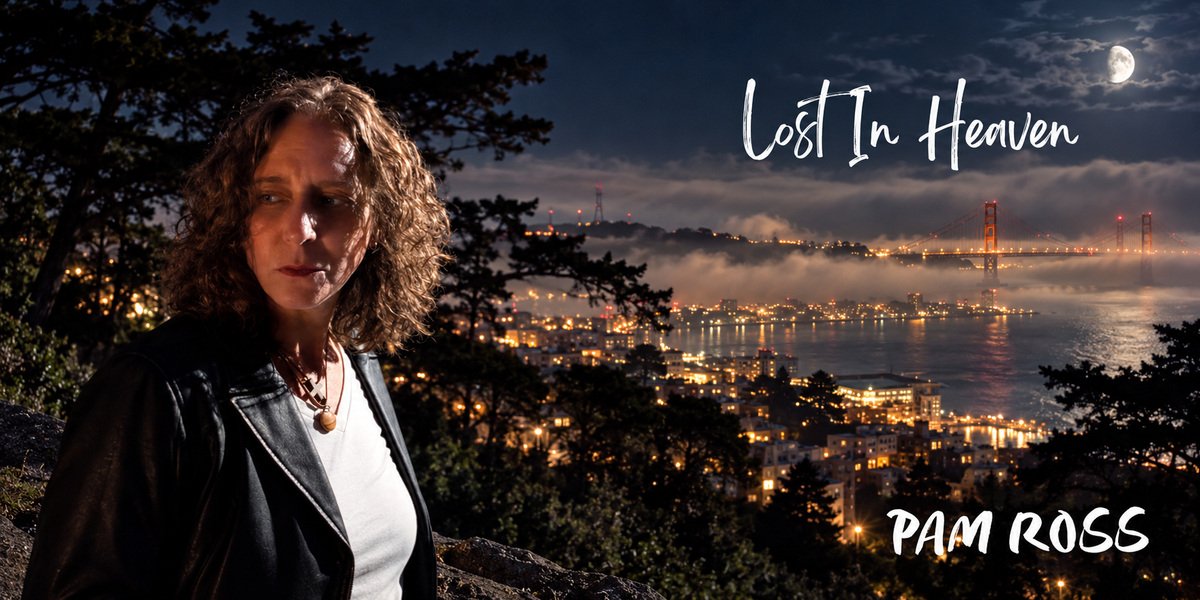
San Francisco has always understood that transcendence and temptation can occupy the same street. This is a city where cathedral bells drift toward crowded bars, where fog softens the edges of neon signs, and where generations of musicians have searched for something sacred inside decidedly earthly experiences. Pam Ross’s “Lost in Heaven” arrives from North Carolina, but its collision of romance, desire and spiritual imagery feels perfectly suited to the Bay Area’s famously open mind.
Released September 11, “Lost in Heaven” blends country, Americana and Southern rock into a warm, confident celebration of attraction. Ross does not waste time pretending her narrator is uncertain. The music is loud, the night is open, and the person dancing in faded jeans has already changed the temperature of the room. When Ross compares that effect to a day in late June, she establishes the song’s physical immediacy.
That heat creates an appealing contrast with San Francisco’s cool evening air. Imagine the track playing during a nighttime drive through the hills, windows cracked as fog moves across the roadway and distant lights shimmer below. The song carries its own weather. It brings Southern humidity, moonlit woods and the promise of staying awake until morning.
Ross’s lyrical world initially appears far removed from the urban Bay Area. The lovers are hidden by pines, surrounded by stars and protected by a full moon that “won’t tell anybody.” Yet San Francisco has its own tradition of slipping beyond the city’s public face into private pockets of freedom. A secluded overlook, a dark stretch near the Presidio or a quiet road north of the Golden Gate could easily provide the setting for Ross’s secret encounter.
The song’s central phrase gives the romance more dimension. “Lost in heaven” suggests surrender, but not confusion. Ross’s narrator knows where she is emotionally, even if she has stopped caring about the way back. The person beside her feels like a prayer coming true and a temptation she cannot resist. Those opposing ideas, holiness and hunger, salvation and danger, create the song’s most compelling tension.
Ross heightens that tension with the image of angels singing while simultaneously blushing at the view. It is playful, but it also reveals something important about her songwriting. She refuses to separate physical desire from emotional meaning. The encounter may be sensual, but it is not shallow. For the narrator, intimacy becomes a form of revelation.
That perspective connects naturally with San Francisco’s long musical history. From psychedelic rock and folk revivalism to punk, roots music and experimental pop, the city has repeatedly welcomed artists who challenge imposed boundaries. Ross’s genre-blending approach follows the same instinct. She is not interested in choosing whether the song belongs to country, Americana or rock. She lets each tradition contribute what it does best.
Country gives “Lost in Heaven” its direct storytelling and familiar images. Americana lends atmosphere and a strong sense of place. Southern rock supplies the song’s heat, attitude and physical momentum. Together, those elements create a sound that feels accessible without becoming overly polished or predictable.
The verses build through sensory details: music turned up, bodies moving, stars overhead and inhibitions slowly disappearing. The pre-chorus briefly suspends the action, drawing the listener into the privacy of the pines. Then the chorus opens with its declaration of surrender. The structure mirrors the experience itself, moving from anticipation to seclusion and finally to emotional release.
The most revealing line arrives not at the height of the night, but the following morning. When Sunday finds the lover still lying beside the narrator, the song quietly shifts from flirtation toward commitment. What seemed like a secret adventure now contains the possibility of permanence. Morning does not expose the night as a mistake; it validates it.
That transition is crucial. Without it, “Lost in Heaven” might simply be an effective song about desire. With it, Ross creates something more tender. The narrator is exhilarated by attraction, but she is ultimately moved by presence, the fact that someone remains when darkness gives way to daylight.
Ross’s vocal performance needs to hold those contrasting emotions together: confidence, amusement, wonder and vulnerability. Her genre-crossing identity gives her the right tools. She can lean into the song’s rock edge without losing its conversational intimacy, and she can embrace romance without allowing the performance to become sentimental.
Named Female Multi-Genre Artist of the Year at the 2024 Josie Music Awards, Ross has built her artistic identity around freedom from narrow labels. “Lost in Heaven” shows that this range is not a marketing strategy; it is part of how she understands emotion. Desire rarely arrives in one clean category, so the music does not either.
From a San Francisco perspective, that refusal to conform may be the single’s most attractive quality. The Bay Area has never needed its artists to fit neatly into established boxes. It has preferred songs that follow their own internal logic, particularly when they transform personal experience into something expansive.
“Lost in Heaven” may begin beneath Carolina pines, but it travels easily to the Pacific coast. Beneath San Francisco’s fog, its moonlight still shines, its heat still rises and its promise of intimacy feels just as irresistible.


