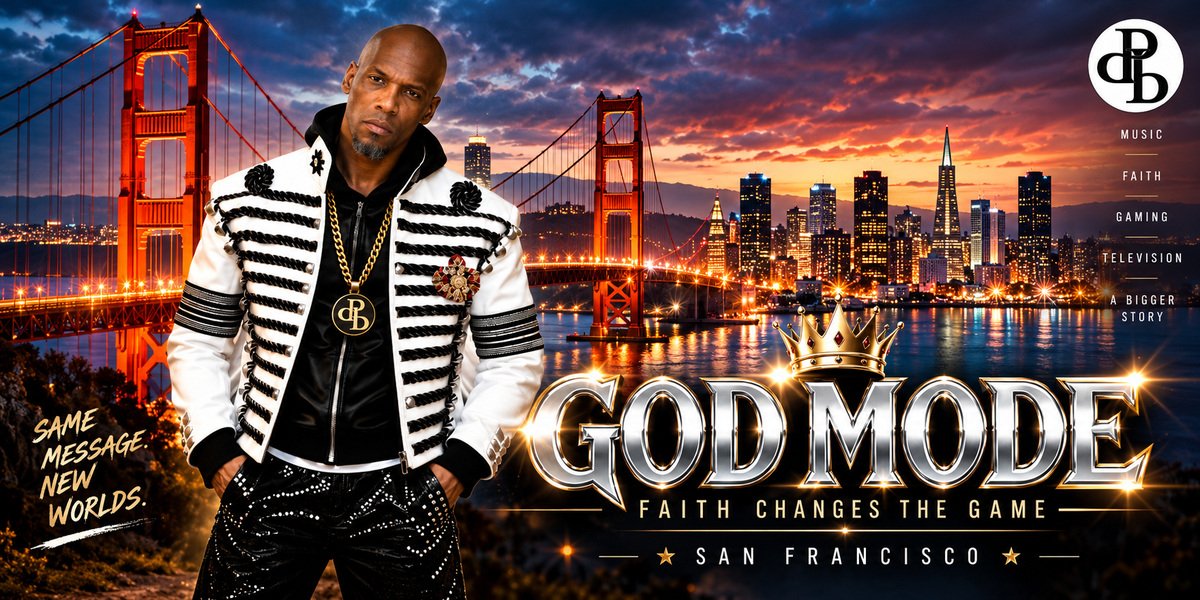
DPB’s “God Mode” Kicks Down the Door Between the Sanctuary and the Arcade

By: Leslie Duvall

There are records that politely request your attention, and then there are records that grab you by the collar, drag you across the room and demand to know what the hell you’re waiting for. DPB’s “God Mode” belongs enthusiastically to the second category.

This is Christian hip-hop with absolutely no interest in behaving itself.

DPB, David Paul Brooks, veteran rapper, minister, entrepreneur and indefatigable believer in the transformative possibilities of music, has taken one of gaming culture’s great fantasies and turned it into a theological battle cry. In video games, God Mode is where mortality gets switched off. Bullets bounce away. Enemies become inconveniences. The rules everybody else follows suddenly don’t apply.

DPB hears that phrase and thinks: Christianity.

Naturally.

And somehow, the crazy thing works.

“God Mode” originally surfaced in 2022 before being resurrected as part of DPB’s 2026 album Undefeated and receiving a renewed radio push. It has since become one of the defining statements of the project, climbing to No. 2 on Christian Music Weekly’s Rhythmic Airplay chart.

But forget the chart for a minute.

Listen to the attitude.

“Jesus Christ is the God Code.”

There’s your song.

There’s practically your entire review.

It’s a wonderfully audacious line because it compresses two universes that aren’t supposed to fit together, Sunday morning salvation and Saturday-night gaming, into six words. You can almost hear a thousand theology professors simultaneously reaching for their red pens.

DPB doesn’t care.

He’s already on to the next declaration.

Healing. Deliverance. Freedom. Revival.

“God Mode” doesn’t develop like a carefully argued sermon. It erupts like a tent revival happening inside an arcade while somebody outside has parked a car with subwoofers large enough to alter weather patterns.

And repetition is the weapon.

DPB hammers his phrases until they stop being lyrics and become slogans, then keeps hammering until the slogans become chants. This is one of those places where hip-hop and church music reveal that they’ve been distant cousins all along. Repetition isn’t laziness when you understand how crowds work. It’s ritual.

James Brown knew it.

Preachers know it.

Rappers know it.

Say something once and people hear you. Say it five times and they start saying it with you.

DPB has been around long enough to understand the difference.

More than three decades into his journey through Christian hip-hop, he isn’t approaching “God Mode” like a young rapper desperately auditioning for relevance. There’s something liberating about hearing an artist who has stopped asking whether he’s invited to the party.

DPB brought his own party.

The song reportedly originated after Brooks prayed for direction and subsequently had a dream carrying the idea that Christians were waiting for God to give them something they already possessed: spiritual authority.

Whether you’re Christian, atheist, undecided or presently worshipping at the Church of Sunday Football, that’s an interesting premise because underneath the theology is a recognizable human disease.

We wait.

For permission.

For success.

For somebody to notice us.

For conditions to become perfect.

For Monday.

For January.

For our lives to finally begin.

DPB’s response is basically: What if they’ve already begun?

That’s where “God Mode” becomes more interesting than the average inspirational record. There’s no mistaking its theology; DPB isn’t disguising Jesus behind some generic language about “the universe,” but the emotional mechanism travels remarkably well.

The track isn’t asking you to admire DPB.

It’s trying to activate you.

Which makes the next part almost inevitable.

DPB has been exploring the possibility of turning “God Mode” into a video game, along with discussions surrounding a potential television extension of the concept. And normally, hearing that a song might become a multimedia franchise would inspire visions of marketing executives rubbing their hands together around a conference table.

Here, though?

It actually makes sense.

The damn song already thinks it’s a video game.

It has a title, a code, a mission, obstacles, power and a worldview. Half the conceptual work is sitting there waiting for somebody to pick up a controller.

A “God Mode” game could turn DPB’s central argument into literal action: characters facing adversity, making decisions, discovering abilities and learning that real power isn’t necessarily the brute-force variety. Television could expand the same idea into characters and stories.

Whether either project ultimately reaches screens remains to be seen, but the possibility reveals something important about DPB.

He’s still restless.

That’s impressive.

A lot of artists spend their later careers defending whatever they did 20 years earlier. DPB seems more interested in asking what he hasn’t done yet. Music leads to film. Film leads to gaming. Gaming leads who knows where.

Maybe that’s why Undefeated is such an appropriate album title.

Survival in music isn’t glamorous. It means watching formats die. Labels disappear. Radio change. Audiences fragment. Genres mutate. Technologies arrive promising salvation and leave carrying everybody’s lunch money.

DPB has survived anyway.

And “God Mode” doesn’t sound like a survivor limping toward nostalgia. It sounds like somebody charging into whatever comes next.

Is it excessive?

Absolutely.

Is it corny sometimes?

Of course.

So was Little Richard. So were KISS. So are tent revivals, superhero movies, professional wrestling and every truly magnificent thing that understands restraint is occasionally the enemy of fun.

“God Mode” doesn’t whisper its convictions because DPB isn’t whispering anything.

He believes.

He raps.

He repeats.

The beat hits.

And somewhere between the pulpit and the PlayStation, the whole ridiculous, sincere, gloriously over-the-top machine catches fire.
Warriors Honor Don Nelson With ‘Nellie Night’ at Chase Center

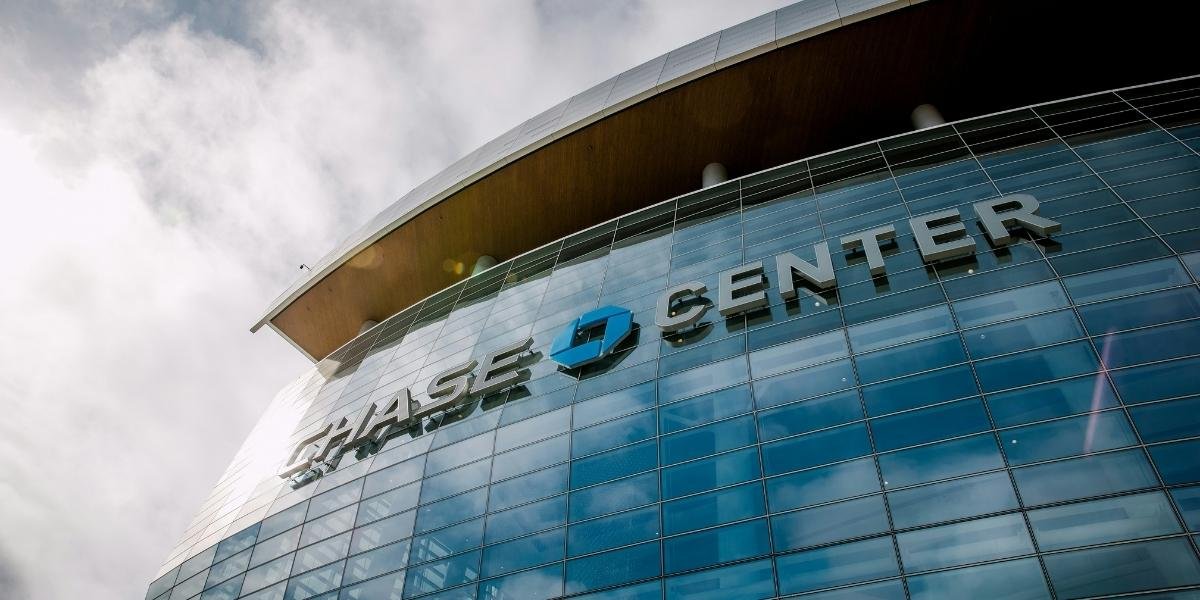
Warriors Nellie Night brought several generations of Golden State basketball together at Chase Center on Oct. 6, as the franchise honored former coach Don Nelson before a 124-98 preseason victory over the Los Angeles Lakers. The ceremony connected Nelson’s Run TMC years, the 2007 “We Believe” team and Stephen Curry’s arrival in Golden State.

Key Takeaways

  • Golden State defeated the Los Angeles Lakers 124-98 during “Nellie Night” at Chase Center on Oct. 6
  • Don Nelson coached the Warriors for 11 seasons across two separate stints and finished his NBA coaching career with 1,335 regular-season victories
  • Stephen Curry played his 2009-10 rookie season under Nelson and spoke during the pregame tribute
  • Former Warriors Chris Mullin, Stephen Jackson and Matt Barnes were among those who participated in the event
  • Golden State debuted a yellow “Nellie” memorial patch that the team plans to wear throughout the 2026-27 season

Warriors Nellie Night gave Golden State an opportunity to connect its current San Francisco chapter with basketball history created largely across the Bay in Oakland.

Before Tuesday’s preseason game, Curry addressed the Chase Center crowd as the Warriors recognized Nelson, who died Aug. 9 at age 86. Nelson spent 11 seasons as Golden State’s head coach across two stints, from 1988 to 1995 and again from 2006 to 2010.

His 1,335 regular-season coaching victories rank second in NBA history.

The evening carried an additional connection for Curry. Golden State selected him seventh overall in the 2009 NBA Draft, making his rookie campaign Nelson’s final season as an NBA head coach.

Curry previously described Nelson’s role in his arrival with the Warriors in unusually direct terms.

“One of the big reasons I was drafted by the Warriors was because of Don Nelson,” Curry said in a statement released after Nelson’s death.

The connection placed one of the defining players of Golden State’s current era alongside a coach whose influence stretched across several earlier versions of the franchise.

Warriors Nellie Night Connects Run TMC and We Believe

Don Nelson’s first Golden State tenure became closely associated with Run TMC, the high-scoring trio of Tim Hardaway, Mitch Richmond and Chris Mullin.

Those Warriors developed a reputation for playing at speed and using lineups that differed from the larger, more traditional configurations common around the NBA at the time. Nelson’s approach frequently emphasized versatile personnel and offensive flexibility.

Mullin returned for Tuesday’s tribute, representing one of the most recognizable periods from Nelson’s first run with Golden State.

Nelson’s second stint produced another major chapter in the franchise’s Bay Area history.

The 2006-07 Warriors reached the playoffs as the Western Conference’s eighth seed before defeating the top-seeded Dallas Mavericks in the opening round. The team became widely known as the “We Believe” Warriors.

Stephen Jackson and Matt Barnes, both members of that team, were among the former players present at Chase Center for Nellie Night.

Bringing those figures into the Warriors’ current San Francisco arena placed multiple generations of the organization in the same setting. Similar Bay Area sports events have also demonstrated how major teams and competitions can create connections that extend across individual cities within the region.

For Golden State, that regional connection is particularly visible. Much of Nelson’s Warriors history was created at the Oakland Coliseum Arena and later Oracle Arena. The franchise moved its home games to Chase Center in San Francisco in 2019.

Tuesday’s ceremony carried that history into the team’s current home rather than treating the Oakland and San Francisco periods as separate chapters.

Curry and the Nellie Patch Extend the Tribute Into the New Season

Golden State used several elements to carry Nelson’s presence beyond the pregame ceremony.

The Warriors introduced a yellow “Nellie” patch on their uniforms and plan to wear it throughout the 2026-27 season. Fans at the game also received commemorative pins.

Visual artist Samantha Woj unveiled a portrait of Nelson during the event. Woj, who creates artwork using sports equipment, produced the piece with a basketball.

Warriors head coach Steve Kerr added another reference to Nelson during his pregame media availability by opening a beer in tribute to the former coach, who became associated with similar postgame moments during the 2007 playoff run.

The details reinforced the broader purpose of Warriors Nellie Night. The franchise was marking Nelson’s coaching record while also emphasizing his direct links to players and teams remembered across different periods of Bay Area basketball.

That kind of connection between sports, venues and regional identity remains a visible part of the Bay Area’s event calendar. Large-scale competitions have also shaped Bay Area sports culture beyond the boundaries of a single city.

For the Warriors, the season-long patch means the tribute will continue after the dedicated ceremony. Nelson’s name will remain on the uniform as Golden State moves through the new season.

Golden State Adds a 124-98 Win to the Tribute

The basketball on the floor gave the night a current storyline.

Golden State defeated Los Angeles 124-98 to move to 1-1 in the preseason. Curry scored 16 points and added five assists in 14 minutes.

Rookie Yaxel Lendeborg, the No. 11 selection in the 2026 NBA Draft, finished with 17 points and nine rebounds while shooting 7-for-11 from the field.

The Warriors scored 81 points during the first half, creating an offensive backdrop that fit the evening’s focus on Nelson and teams historically associated with high-tempo basketball.

The preseason result carries limited significance compared with regular-season games, but it provided another connection between Golden State’s past and present. Curry, the player Nelson coached during his final NBA season, shared the floor with a new generation of Warriors during a night built around that continuity.

The ceremony also illustrated the unusual span of Nelson’s association with the franchise.

Run TMC emerged during his first Warriors tenure. The “We Believe” playoff run came during his second. Curry arrived during Nelson’s final season.

Those periods unfolded decades apart, yet all three were represented at Chase Center on Tuesday.

Frequently Asked Questions

What was Warriors Nellie Night?

Warriors Nellie Night was Golden State’s Oct. 6 tribute to former head coach Don Nelson at Chase Center. The ceremony took place before and during the Warriors’ 124-98 preseason victory over the Los Angeles Lakers.

Why did the Warriors honor Don Nelson?

Nelson coached Golden State for 11 seasons across two stints and was associated with the Run TMC era and the 2007 “We Believe” playoff team. He finished his NBA coaching career with 1,335 regular-season victories, second on the league’s all-time list.

What is the Nellie patch on Warriors uniforms?

Golden State debuted a yellow “Nellie” memorial patch during the tribute game. The Warriors have said the patch will remain on their jerseys throughout the 2026-27 season.

Did Stephen Curry play for Don Nelson?

Yes. Nelson coached Curry during his rookie season in 2009-10 after Golden State selected Curry with the seventh pick in the 2009 NBA Draft. It was also Nelson’s final season as an NBA head coach.

Which former Warriors attended Nellie Night?

Chris Mullin, Stephen Jackson and Matt Barnes were among the former Warriors involved in the Chase Center tribute. Their appearances represented different periods of Nelson’s tenure and helped connect multiple eras of Golden State basketball.

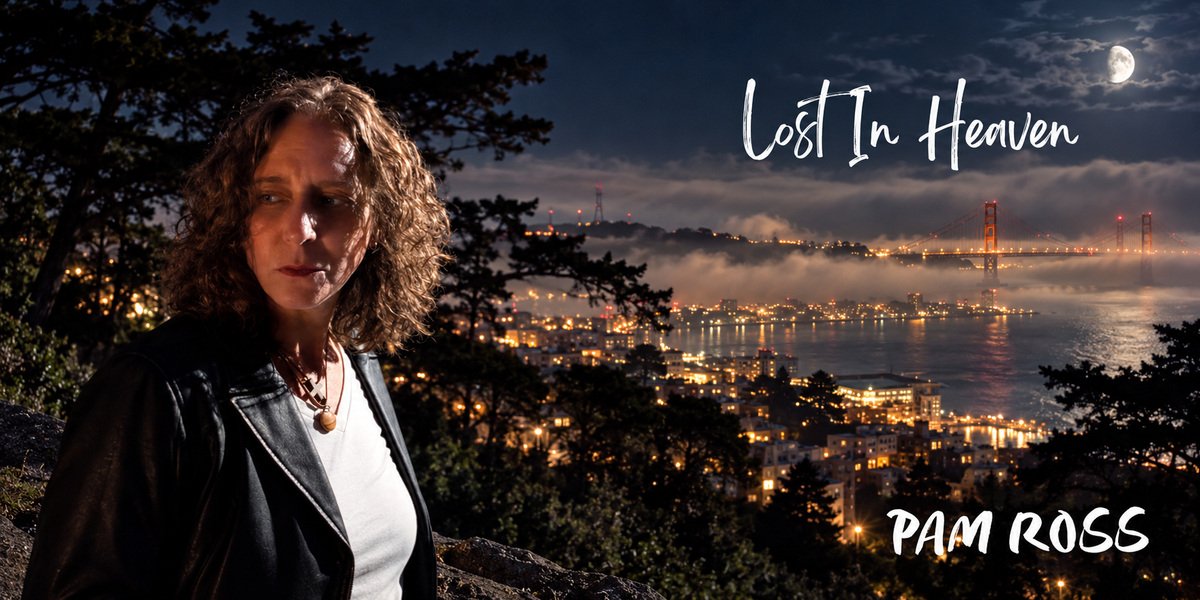
Beneath the Fog, Pam Ross Finds Her Way to “Lost in Heaven”

By: Marissa Coleman

San Francisco has always understood that transcendence and temptation can occupy the same street. This is a city where cathedral bells drift toward crowded bars, where fog softens the edges of neon signs, and where generations of musicians have searched for something sacred inside decidedly earthly experiences. Pam Ross’s “Lost in Heaven” arrives from North Carolina, but its collision of romance, desire and spiritual imagery feels perfectly suited to the Bay Area’s famously open mind.

Released September 11, “Lost in Heaven” blends country, Americana and Southern rock into a warm, confident celebration of attraction. Ross does not waste time pretending her narrator is uncertain. The music is loud, the night is open, and the person dancing in faded jeans has already changed the temperature of the room. When Ross compares that effect to a day in late June, she establishes the song’s physical immediacy.

That heat creates an appealing contrast with San Francisco’s cool evening air. Imagine the track playing during a nighttime drive through the hills, windows cracked as fog moves across the roadway and distant lights shimmer below. The song carries its own weather. It brings Southern humidity, moonlit woods and the promise of staying awake until morning.

Ross’s lyrical world initially appears far removed from the urban Bay Area. The lovers are hidden by pines, surrounded by stars and protected by a full moon that “won’t tell anybody.” Yet San Francisco has its own tradition of slipping beyond the city’s public face into private pockets of freedom. A secluded overlook, a dark stretch near the Presidio or a quiet road north of the Golden Gate could easily provide the setting for Ross’s secret encounter.

The song’s central phrase gives the romance more dimension. “Lost in heaven” suggests surrender, but not confusion. Ross’s narrator knows where she is emotionally, even if she has stopped caring about the way back. The person beside her feels like a prayer coming true and a temptation she cannot resist. Those opposing ideas, holiness and hunger, salvation and danger, create the song’s most compelling tension.

Ross heightens that tension with the image of angels singing while simultaneously blushing at the view. It is playful, but it also reveals something important about her songwriting. She refuses to separate physical desire from emotional meaning. The encounter may be sensual, but it is not shallow. For the narrator, intimacy becomes a form of revelation.

That perspective connects naturally with San Francisco’s long musical history. From psychedelic rock and folk revivalism to punk, roots music and experimental pop, the city has repeatedly welcomed artists who challenge imposed boundaries. Ross’s genre-blending approach follows the same instinct. She is not interested in choosing whether the song belongs to country, Americana or rock. She lets each tradition contribute what it does best.

Country gives “Lost in Heaven” its direct storytelling and familiar images. Americana lends atmosphere and a strong sense of place. Southern rock supplies the song’s heat, attitude and physical momentum. Together, those elements create a sound that feels accessible without becoming overly polished or predictable.

The verses build through sensory details: music turned up, bodies moving, stars overhead and inhibitions slowly disappearing. The pre-chorus briefly suspends the action, drawing the listener into the privacy of the pines. Then the chorus opens with its declaration of surrender. The structure mirrors the experience itself, moving from anticipation to seclusion and finally to emotional release.

The most revealing line arrives not at the height of the night, but the following morning. When Sunday finds the lover still lying beside the narrator, the song quietly shifts from flirtation toward commitment. What seemed like a secret adventure now contains the possibility of permanence. Morning does not expose the night as a mistake; it validates it.

That transition is crucial. Without it, “Lost in Heaven” might simply be an effective song about desire. With it, Ross creates something more tender. The narrator is exhilarated by attraction, but she is ultimately moved by presence, the fact that someone remains when darkness gives way to daylight.

Ross’s vocal performance needs to hold those contrasting emotions together: confidence, amusement, wonder and vulnerability. Her genre-crossing identity gives her the right tools. She can lean into the song’s rock edge without losing its conversational intimacy, and she can embrace romance without allowing the performance to become sentimental.

Named Female Multi-Genre Artist of the Year at the 2024 Josie Music Awards, Ross has built her artistic identity around freedom from narrow labels. “Lost in Heaven” shows that this range is not a marketing strategy; it is part of how she understands emotion. Desire rarely arrives in one clean category, so the music does not either.

From a San Francisco perspective, that refusal to conform may be the single’s most attractive quality. The Bay Area has never needed its artists to fit neatly into established boxes. It has preferred songs that follow their own internal logic, particularly when they transform personal experience into something expansive.

“Lost in Heaven” may begin beneath Carolina pines, but it travels easily to the Pacific coast. Beneath San Francisco’s fog, its moonlight still shines, its heat still rises and its promise of intimacy feels just as irresistible.