








By: Jorge Ramos
When Tim Clairmont talks about history, he does not start with dates or battles or famous speeches. He starts with something much simpler.
Choices.
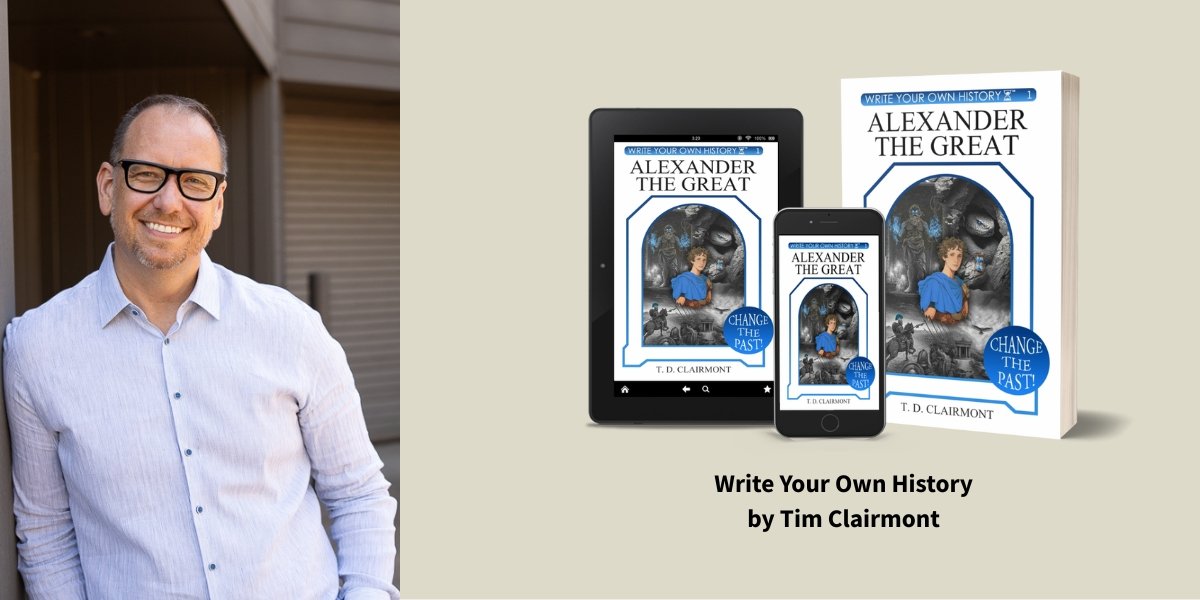
That idea sits at the center of his Write Your Own History book series, but it is also how he looks at life in general. According to Tim, history is not just something that happened in the past. It is something people are creating every single day through the decisions they make.
A Childhood Built on Stories
Tim’s path to becoming an author started early, and it started with books.
His family moved frequently when he was growing up because of his father’s work in the restaurant business. He attended multiple preschools, kindergartens, and first grades before his family finally settled in Oregon when he was in third grade.
During those years of constant change, he learned something that stuck with him for life. Books and family were the only things that stayed consistent.
He could lose friends when his family moved, but he could always keep his books. Stories became something reliable, something he could return to no matter where he lived.
That experience helped shape his love for storytelling and eventually his desire to become a writer.
A Story Collector, Not Just a Writer
Tim often describes himself as a story collector.
He loves stories in every form, books, movies, television, video games, and anything with a strong narrative. That love for storytelling followed him into his professional life as well.
As a financial advisor, he spends much of his time listening to people talk about their lives, goals, fears, and dreams. Over the years, he has heard hundreds of personal stories from clients.
Those experiences gave him a deeper understanding of human nature and decision-making, which later helped him write historical characters as real people rather than just famous names.
Why Storytelling Still Matters in a Digital World
Tim believes storytelling is more important than ever, especially for younger generations growing up surrounded by screens.
He points out that people today spend enormous amounts of time watching shows, movies, and online content. The reason certain shows or films become popular is simple. They tell compelling stories that capture attention.
He believes education can learn from that. If stories are what capture attention, then storytelling should be one of the main ways we teach and inspire young people.
That is where historical storytelling becomes powerful. Instead of reading dry facts or watching documentaries that many kids find boring, stories allow them to connect emotionally with people from the past.
When history becomes a story, it becomes memorable.
Authenticity Before Entertainment
One thing that Tim emphasizes in his books is authenticity. He wants the historical figures to feel real and human, not rewritten just to fit a fictional plot.
Many fictional portrayals of historical figures change personalities and events to make the story more dramatic. Tim wanted to approach it differently.
His goal is to understand who the person really was, what pressures they faced, and what decisions they had to make when they were young. Then he builds an interactive story around that authentic version of the person.
He believes that when authenticity comes first, and storytelling is built around it, history becomes more meaningful and more relatable for young readers.
Why Courage, Leadership, and Determination Still Matter
The historical figures featured in the series often became famous because of courage, leadership, and determination. Tim believes those qualities are still extremely important for kids today.
He believes everyone matters and every life matters. Not everyone will become famous, but everyone has the ability to live a meaningful life.
If children grow up learning to be courageous, willing to lead, and determined to keep going when things are difficult, their lives will likely become more impactful and more successful in ways that truly matter.
He believes that when more people live that way, the world improves for everyone.
Balancing Two Careers at Once
One of the biggest challenges Tim faced when he began writing books was not learning how to write or publish. It was learning how to manage his time.
He still runs a full-time financial planning practice and works about 40 hours per week in that role. That means most of his writing happens in the evenings, on weekends, while traveling, or in small pockets of free time.
Balancing both careers requires discipline and support from his family, especially his wife, who has supported him while he spends many evenings and weekends working on the books.
For Tim, the challenge is not whether he wants to write. The challenge is finding the time to do it while still maintaining the career and relationships that matter to him.
How Parents and Teachers Can Get Kids Interested in History
Tim believes the biggest mistake adults make when teaching history is focusing too much on instruction and not enough on fun.
His advice to parents and teachers is simple. Get kids interested first.
Let them pick a historical figure they are curious about. Let them enjoy the story. Once they are hooked, the learning will follow naturally.
He has already seen kids share the books with friends, talk about the stories together, and become curious about historical figures they had never thought about before.
That curiosity is exactly what he hopes the series will create.
You Are Already Writing Your Own History
If a young reader asked Tim how they could start creating their own history, his answer would be very simple.
You already are.
Every decision a person makes becomes part of their story. The past cannot be changed, but the future is shaped by the choices people make every day.
How someone spends their time, how they treat people, what goals they pursue, and what decisions they make all shape the direction of their life.
In Tim’s view, history is not only something that happened hundreds of years ago. It is something every person is building right now, one decision at a time.
And that may be the most important lesson behind the entire Write Your Own History series.
Everyone is writing a story.
The question is what kind of story it will be.
If you want to explore more of Tim’s work, visit the Write Your Own History website.


