









By: Matt Emma
San Franciscans have been hearing about sustainable home building for nearly two decades, but haven’t seen much of it materialize in their own backyards. Now, less than an hour from the city, a community just off Highway 80 is doing what California has long talked about but rarely delivered at scale: building truly sustainable neighborhoods in the midst of a permanently protected natural landscape, and selling them as fast as they can build them.
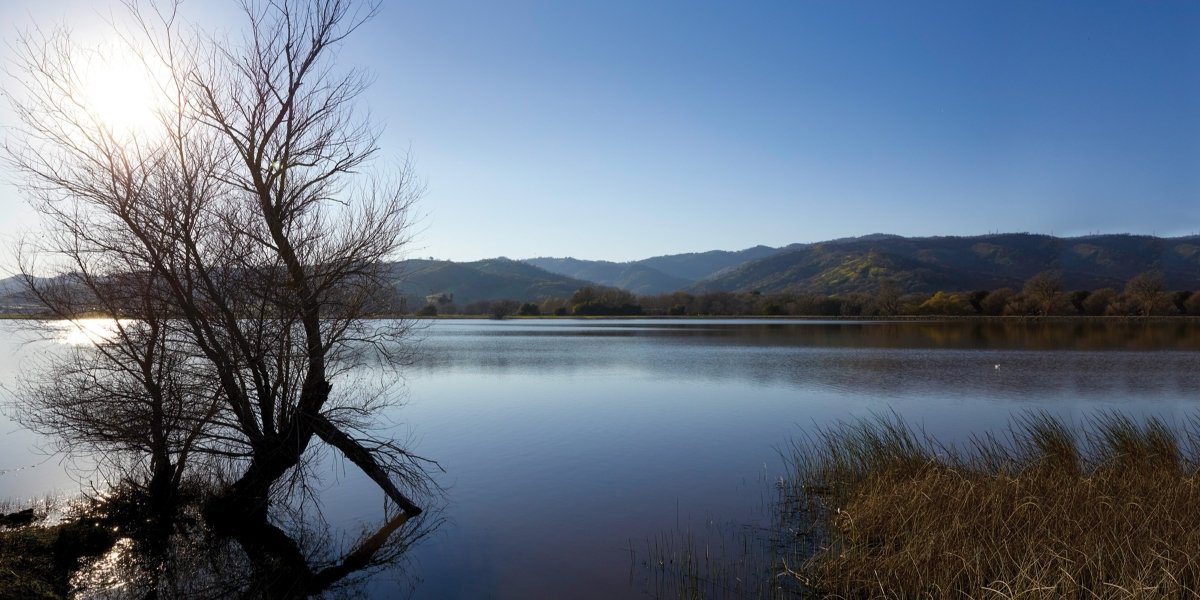
Lagoon Valley in Vacaville is the Bay Area’s first environmentally sustainable Conservation Community. More than 130 homes have been sold and the appeal isn’t hard to understand when you look at what’s actually on offer: 1,300 acres of permanently protected open space runs through the neighborhoods where the land itself, not just the architecture, offers the promise of sustainability. The community earned a U.S. Green Building Council Green Building Award for a Nature-Based Community, and the design principles that earned that distinction go far beyond solar panels and efficient appliances.
For Bay Area buyers who have long agonized over the choice between an unaffordable urban footprint and a long drive to any kind of open space, that combination is rare enough to be newsworthy in its own right.
“Nothing compares to living in a natural preserve,” says Amber, a homeowner in the community’s Lilac Ridge neighborhood. “There are places that will remain undisturbed, and we get to live among nature. Where else do you get to do that in California?”
It’s a question worth contemplating. San Francisco has always had a close but complicated relationship with nature. The city is flanked by some of the most stunning coastline and parkland in the nation, yet most people experience that beauty as a weekend destination rather than a daily backdrop. Lagoon Valley is betting buyers want something different: not a retreat from their lives into nature, but a life lived inside it every day.
Hannah, a resident in the Rosemary Grove neighborhood, says her family’s decision came down to exactly that proximity. “When we heard about this community, we were very interested, especially given the sustainability and proximity to the water at Lagoon Valley Park,” she says. Her family, she adds, simply loves the outdoors and wanted a home that reflected that rather than working against it.
For other buyers, the draw was generational. Benjamin, who lives in the community, frames the decision around his children. “What brought us to Lagoon Valley was the lifestyle change,” he says. “We wanted to put our kids in a place where they would be able to grow up outside.”
That sentiment may be part of what sets Lagoon Valley apart from many of the “green” developments that have featured in California real estate marketing over the years. Here, the conservation framing isn’t an amenity added on afterward; it shapes the structure of the community itself.
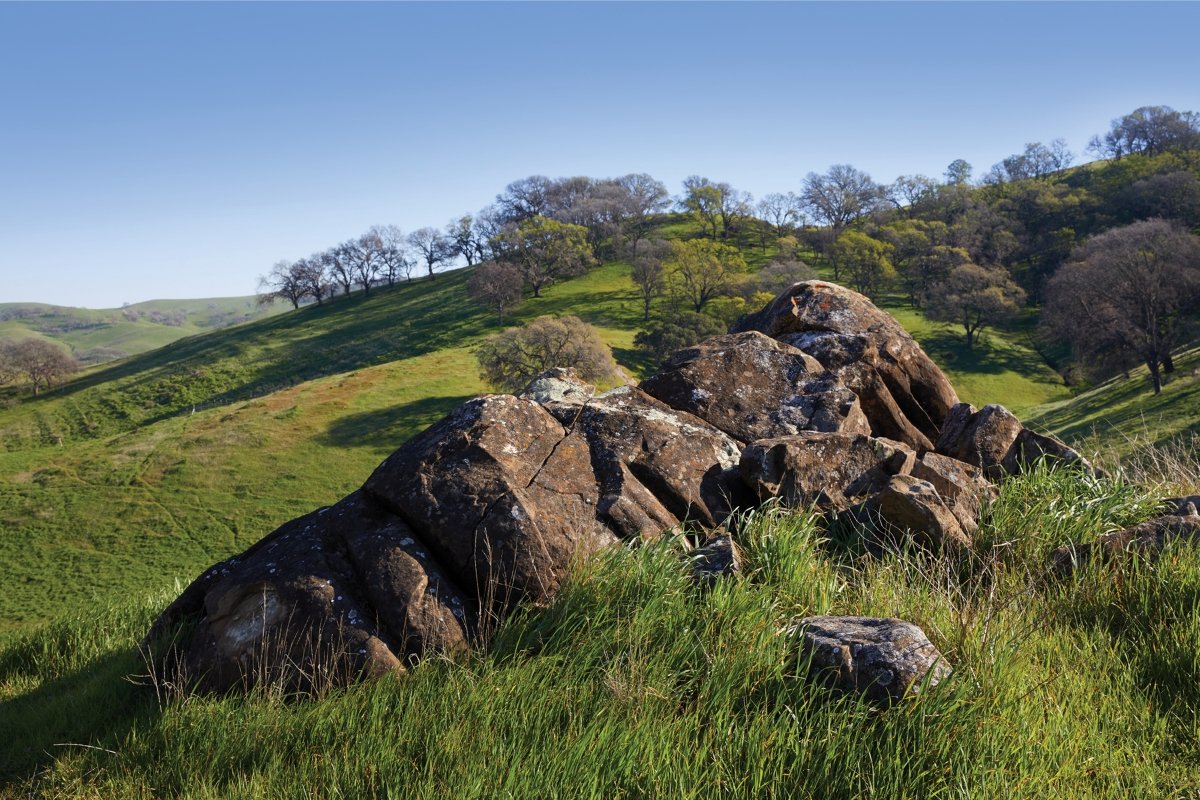
Residents enjoy a wide range of climate-conscious features as a result. A new 71-acre Wetland Park sits adjacent to the existing 400-acre Lagoon Valley Park, with local organic food supported through a Community Supported Agricultural Foundation. Reduced impervious surfaces and expanded tree canopy minimize heat-sink effects and summer energy demand, whilst enhanced photovoltaic capacity eases reliance on conventional power. All fourteen neighborhoods are linked by safe, walkable, and bikeable routes to one another, the parks, and the Town Centre, with emergency vehicle access and wildfire buffer areas protecting each one. A series of stormwater detention basins improves hydrological function, cleaning and storing water to reduce downstream flooding risk. Live-work-play land uses are strategically designed to reduce commutes and provide local access to goods, services, and recreation, with homes, offices, and common areas built around sustainable principles, including greywater reclamation for irrigation. The community also contributes significantly to the Solano Land Trust, supporting the protection of additional land beyond Lagoon Valley itself.
Once complete, fourteen separate walkable neighborhoods will be linked by paths that provide non-vehicle access to open space and neighboring villages, along with a town center, an organic farm, nearly 400 acres of parks, and an 18-hole golf course.
Three neighborhoods, Lilac Ridge and Hawthorn Hills by Lennar, and Rosemary Grove by Taylor Morrison, are currently selling, with seven model homes open for tours. Two additional neighborhoods, from K. Hovnanian and DR Horton, are scheduled to open this fall.
Lagoon Valley offers one example of what’s possible in a region where the housing conversation has, for years, often felt like a choice between density and displacement: a sign that a sustainable, nature-integrated community can grow within reach of a major metro area, not just exist as an idea in a planning document. For the families already living amid the conservation areas woven through its neighborhoods, that’s not a promise on paper, but simply the view from their own front door.
Lagoon Valley’s Visitors’ Centre is located at 200 Mount Royal Road in Vacaville, just off Highway 80, and is open Wednesday through Sunday, 10 a.m. to 6 p.m. For more information, visit Lagoon-Valley.com.


