







San Francisco ranked sixth nationally and second in California in the ParkScore 2026 assessment from Trust for Public Land. The ranking reflects the city’s strong park access, high per-resident investment, and broad network of neighborhood parks, while also identifying limits in athletic fields, median park size, and equitable distribution of park space.
Key Takeaways
- San Francisco ranked No. 6 nationally in ParkScore 2026, with an overall score of 80.0 out of 100.
- The city placed second among California cities, behind Irvine, which ranked No. 2 nationally.
- Trust for Public Land reported that 100% of San Francisco residents live within a 10-minute walk of a park.
- San Francisco received top scores for park access and investment, while acreage and athletic-field availability remained weaker areas.
- ParkScore 2026 evaluates the 100 most populous U.S. cities across access, acreage, investment, amenities, and park space equity.
San Francisco park rankings improved in the latest ParkScore 2026 assessment released by Trust for Public Land on May 20, 2026. The city ranked sixth among the 100 most populous U.S. cities and second among California cities, behind Irvine.
Washington, D.C., ranked first nationally for the sixth consecutive year, followed by Irvine, Minneapolis, St. Paul, Cincinnati, and San Francisco. San Francisco received an overall ParkScore of 80.0 out of 100.
The ranking reflects San Francisco’s strong performance in park access and investment. Trust for Public Land reported that 100% of San Francisco residents live within a 10-minute walk of a park, compared with 76% of residents across the 100 most populous U.S. cities.
San Francisco also earned a top score for investment, with park and recreation spending measured at about $476 per resident. That category reflects spending across public agencies and organizations supporting publicly accessible parks and recreation.
How Does ParkScore 2026 Evaluate City Park Systems?
Trust for Public Land uses ParkScore 2026 to compare municipal park systems using five categories: access, acreage, investment, amenities, and park space equity.
The methodology does not rank parks based on scenery, popularity, or tourism. Instead, it assigns points across 15 measures, then converts each city’s score into a ParkScore rating out of 100.
Access, Investment, And Equity
Access measures the share of residents who live within a 10-minute walk of a park. Park space equity compares access and nearby park space across income and race-based neighborhood categories.
Investment measures park spending per resident. Amenities measure the availability of seven features: basketball hoops, off-leash dog parks, playgrounds, splashpads and other water-play structures, sports fields, recreation and senior centers, and restrooms.
Acreage evaluates median park size and the percentage of city land dedicated to parks. San Francisco scored highly for the share of city land used for parks and recreation, but lower for median park size, reflecting the constraints of a dense urban environment.
What Does San Francisco’s Park Access Score Show?
San Francisco received 100 points for access in ParkScore 2026. Trust for Public Land reported that 100% of the city’s residents live within a 10-minute walk of a park.
That result reflects the city’s compact geography and large number of neighborhood parks, playgrounds, recreation areas, and open spaces. The San Francisco Recreation and Park Department manages more than 230 parks, playgrounds, and open spaces, including Golden Gate Park, Coit Tower, Dolores Park, and Lake Merced.
San Francisco also received 100 points for investment. The city’s park spending level, measured at about $476 per resident, placed it among the highest-performing cities in that category.
At the same time, ParkScore 2026 showed uneven results in other areas. San Francisco received 54 points for acreage and 66 points for park space equity. Trust for Public Land reported that residents in neighborhoods of color have access to 49% less park space than residents in white neighborhoods, while residents in low-income neighborhoods have access to 63% less nearby park space than residents in high-income neighborhoods.
Which Parks And Public Spaces Shape Daily Life In San Francisco?
San Francisco parks include a mix of major destinations, neighborhood facilities, waterfront areas, natural landscapes, and recreation centers.
Golden Gate Park remains one of the city’s best-known public spaces. The park stretches more than three miles across the western side of San Francisco and includes gardens, lakes, museums, athletic fields, trails, and cultural institutions.
Other widely used destinations include Mission Dolores Park, McLaren Park, Buena Vista Park, Twin Peaks, Crissy Field, Marina Green, and the Presidio of San Francisco. These areas provide open lawns, trails, bay views, playgrounds, picnic spaces, athletic facilities, and gathering areas.
Neighborhood parks also support daily recreation by providing basketball courts, tennis courts, dog exercise areas, playgrounds, shaded seating, walking paths, and community event space. Recent local projects, including a new public recreation space in Hunters View, reflect the city’s continued focus on smaller public spaces that serve nearby residents.
How Are Investments Supporting San Francisco Parks?
The San Francisco Recreation and Park Department oversees maintenance, programming, and capital improvements across the city’s park system.
Recent and ongoing work has included playground renovations, trail improvements, accessibility upgrades, irrigation projects, facility repairs, and modernization of athletic spaces. These projects are intended to extend the useful life of public infrastructure while improving access for residents of different ages and abilities.
Park investment also supports recreation centers, youth programs, sports leagues, senior services, fitness programs, seasonal events, and community activities. These facilities help expand the role of parks beyond outdoor recreation alone.
Community partnerships also contribute to park maintenance and improvements. Volunteer tree planting, habitat restoration, neighborhood gardening, and cleanup events help support public spaces that receive heavy use throughout the year.
What Role Do Green Spaces Play In Neighborhood Life?
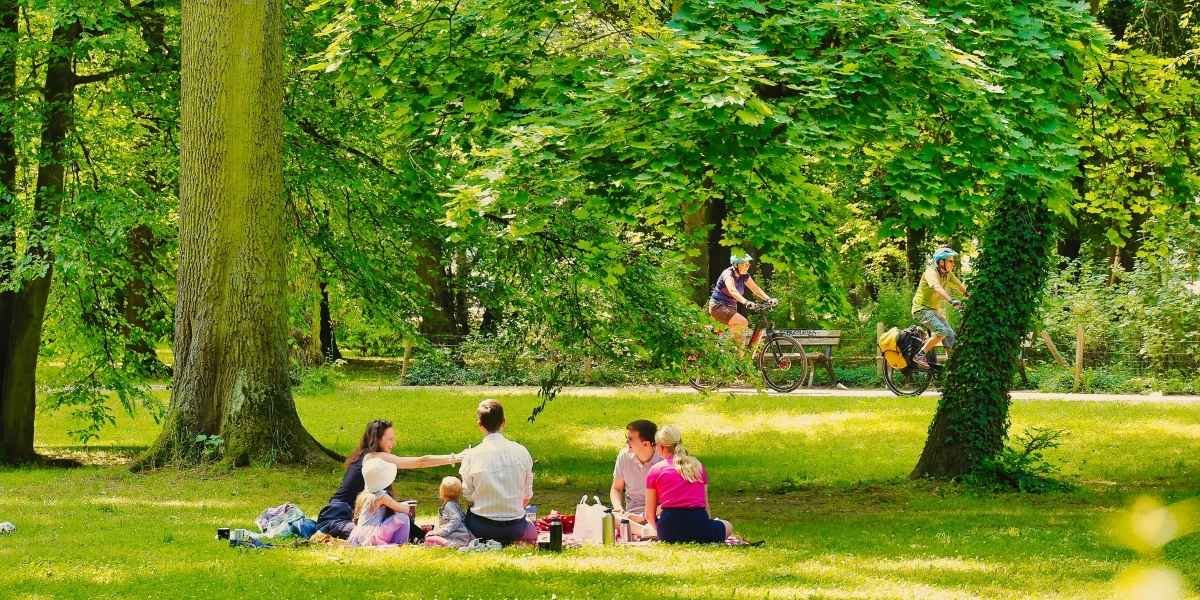
San Francisco parks provide space for walking, cycling, organized sports, outdoor fitness, family gatherings, and community celebrations.
Golden Gate Park hosts concerts, cultural events, athletic activities, and seasonal programming. Mission Dolores Park remains a heavily used neighborhood gathering place. Waterfront areas such as Crissy Field and Marina Green attract walkers, runners, cyclists, families, and visitors seeking views of San Francisco Bay.
Smaller neighborhood parks play a different but equally important role. They give nearby residents access to playgrounds, sports courts, lawns, benches, and shaded areas without requiring long trips across the city.
Public green spaces also support environmental goals. Parks contribute to tree canopy, habitat preservation, stormwater management, outdoor education, and access to natural areas within the city.
Frequently Asked Questions
How Did San Francisco Rank In ParkScore 2026?
San Francisco ranked No. 6 nationally in ParkScore 2026, with an overall score of 80.0 out of 100. It also ranked second among California cities, behind Irvine.
What Does San Francisco’s Park Access Score Mean?
Trust for Public Land reported that 100% of San Francisco residents live within a 10-minute walk of a park. This helped the city earn a top score for park access in the 2026 assessment.
What Areas Did ParkScore Identify As Challenges For San Francisco?
ParkScore 2026 identified acreage, median park size, athletic-field availability, and park space equity as weaker areas for San Francisco. The city scored strongly in access and investment, but the assessment showed that nearby park space is not evenly distributed across all neighborhoods.


