










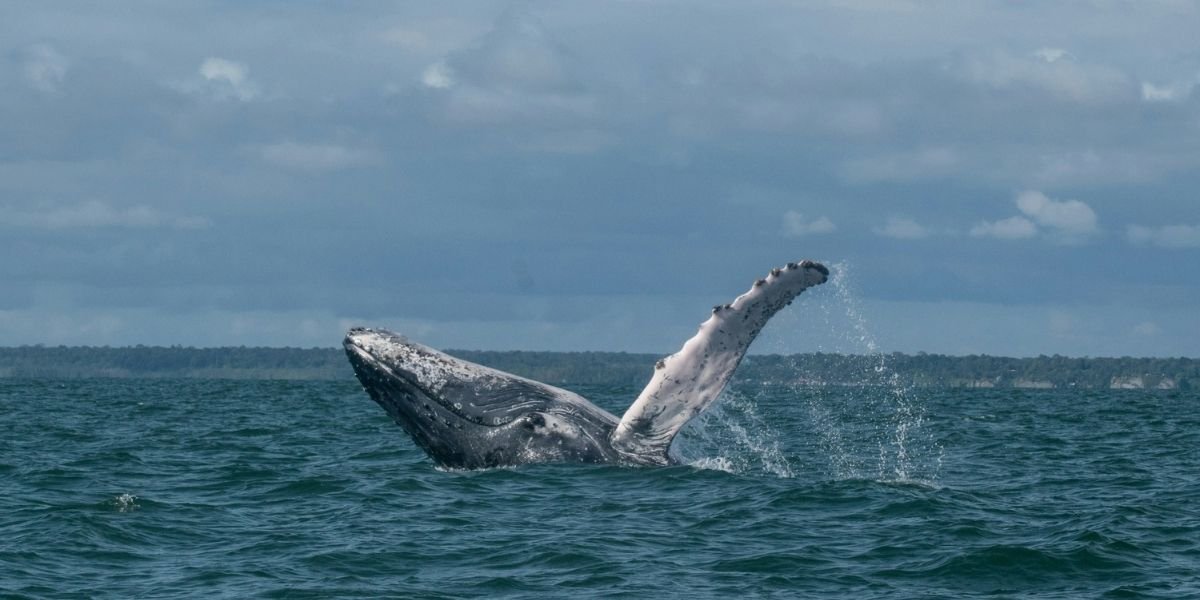
San Francisco Bay is turning to artificial intelligence as gray whales move through one of the busiest marine corridors on the West Coast. The technology, known as WhaleSpotter, uses thermal cameras and AI supported detection tools to identify whale blows and alert vessel traffic teams when a whale may be nearby.
The effort comes as gray whales have been seen more often inside San Francisco Bay during migration season. The bay carries ferries, cargo ships, tankers, fishing boats, tour vessels, and recreational traffic. When whales surface in those same waters, crews may have little time to react.
Researchers and marine response teams have tracked a high number of gray whale deaths in the Bay Area in recent seasons. While not every death can be tied to one cause, vessel strikes remain a major concern in waters where large animals and marine traffic overlap.
The system does not remove the risk. It gives people working on the water a faster warning tool when visibility, distance, or traffic make whale sightings difficult.
AI Cameras Watch for Whale Blows in Busy Bay Waters
WhaleSpotter relies on thermal imaging to detect signs of whale activity from a distance. One key target is the heat signature of a whale’s blow when it surfaces to breathe. That signal is reviewed through AI tools and marine mammal specialists before alerts are shared.
The first detection unit was placed on Angel Island, a central location with views across active bay waters. Researchers have discussed adding more locations as they study where coverage would be most useful.
San Francisco Bay is difficult for whale detection. Fog, glare, wind, waves, and vessel movement can limit visibility. Gray whales can also surface low in the water, making them hard to spot from a moving vessel.
Thermal cameras may help address part of that challenge. The system can operate during nighttime and low light periods. It does not replace crew judgment or safety procedures. It adds another source of information for crews already watching the water.
Gray Whales Are Entering Active Vessel Routes
Gray whales travel along the Pacific Coast between breeding areas off Mexico and feeding areas farther north. San Francisco Bay has not usually been viewed as a major stop on that route, but more whales have entered the bay during recent migration periods.
Researchers believe some whales may be resting or searching for food inside the bay. Changes in feeding conditions farther north may also be a factor, though scientists continue to study the pattern.
Once inside the bay, whales move through waters shaped by constant vessel activity. Ferries run between cities throughout the day. Large ships cross shipping lanes. Smaller boats travel near islands, bridges, marinas, and waterfront areas.
That creates overlap between whales and vessels. Areas near Angel Island, Alcatraz, Treasure Island, and the Bay Bridge have drawn attention because they sit near active routes and reported whale sightings.
The risk is not limited to large ships. Smaller vessels can also be dangerous if operators do not see a whale in time. A whale surfacing near a moving boat can leave little room for response.
Recent Deaths Raise Pressure for Faster Detection
Marine mammal teams have documented a notable number of gray whale deaths in the Bay Area across recent seasons. Some carcasses have shown signs consistent with vessel impact. Other cases have involved different or uncertain factors. Researchers also note that reported deaths may not reflect the full number because some animals sink or drift away before they are found.
The issue has gained urgency because gray whales are under pressure across parts of their range. Federal scientists have reported a decline in the eastern North Pacific gray whale population compared with earlier estimates. Lower calf counts have also raised concern among researchers who monitor migration patterns.
San Francisco Bay cannot explain the full population picture, but the local trend shows how quickly whale movement can create new challenges in urban waters.
Marine teams have long used public reports, boat observations, and response crews to track whale activity. Those tools remain useful, but they have limits. A whale may surface briefly. A crew may miss it. A public report may arrive after vessels have already moved through the area.
AI detection gives responders a more constant watch point. It can scan the water without depending only on chance sightings. The system also creates a record of where detections happen, which may help researchers study whale movement inside the bay.
Mariners Receive Alerts During Whale Activity
The warning system is designed for practical use on the water. When a possible whale detection is confirmed, the information can be shared with vessel traffic personnel and mariners. The goal is not to stop bay traffic. It is to give operators more awareness when whales are present.
For ferry crews, cargo operators, and other mariners, that information can support daily navigation decisions. A crew may reduce speed in a specific area, post more lookout attention, or communicate with nearby vessels.
The bay’s ferry network is an important part of the project because ferries follow regular routes through areas where whales have been reported. Placing detection equipment on a ferry could give the system a moving view of the bay rather than relying only on fixed land points.
That mobile approach may be useful if whales continue using different parts of the waterway. A fixed camera can cover a strong vantage point. A vessel mounted unit can gather information along an active route.
The system still depends on careful review. False alerts can create confusion. Missed detections can still happen. That is why the AI tool is being paired with trained marine mammal specialists before alerts are sent.


