







By: Sonia Thomas
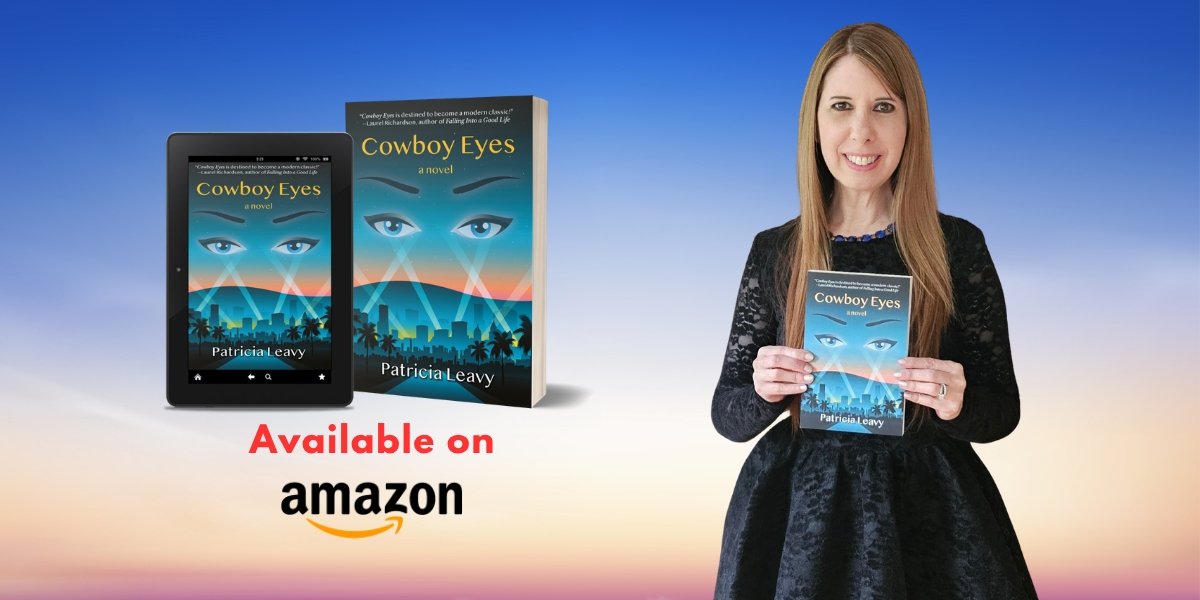
Some books get written because a writer has a story to tell. Some get written because a writer has someone to remember. Cowboy Eyes is both, and that double weight is exactly what makes it land the way it does.
Clearly written from the heart, Patricia Leavy has crafted a layered novel that is grounded and escapist, resonant and aspirational. The novel is a hopeful tale of dreams and their underside, and the friendship and love that sustain us on the journey.
Leavy lost one of her closest friends last summer. Joey. Thirty-five years of friendship, gone without warning. And in the grief of that, she did what writers do. She went to the page. What came back wasn’t a eulogy. It was a novel about two young dreamers, a crashed debutante ball, a Hollywood hustle, and the question that haunts almost every ambitious person at some point: when you spend everything chasing who you want to become, what happens to who you actually are?
The Friend Behind the Character
Leavy is clear that Colt Thatcher, the charming, scheming, deeply lovable male lead of Cowboy Eyes, is not Joey. He’s fictional. But he carries something real. The hustle, the irreverence, the coded sense of honor underneath all the scheming. The way Joey moved through rooms like someone who genuinely didn’t care what anyone thought of him, a kind of freedom Leavy watched from close range and never quite felt she had herself.
She also remembers a night when they were young, walking from town to town just talking about dreams. Hers came true. He didn’t. That asymmetry sits quietly underneath the whole book, giving it a tenderness that the plot alone couldn’t produce.
Novels need heroes, Leavy says. People do too. She built one, and she named that spirit after something she lost.
Identity Is a Process, Not a Finish Line
As both a sociologist and a novelist, Leavy has spent years thinking about the gap between who we are and who we’re trying to become. The novel puts that question directly in front of two characters who are chasing identity as much as they’re chasing success, and it doesn’t let either of them off the hook easily.
Her take is that identity isn’t a destination. It’s a process. We’re always becoming, always evolving, always letting certain things fall away. Sometimes that’s healthy, she says, shedding old ideas that no longer fit, loosening the grip other people’s opinions used to have. But sometimes we drop things we should have fought harder to keep. Hope, for instance. Optimism. The willingness to believe the effort is worth it.
That’s the territory the book moves through, not with heavy-handed messaging but through two people in their twenties trying to figure out whether the version of themselves they’re building in Los Angeles is still someone they actually recognize.
Where Ambition Crosses Into Self-Betrayal
Leavy doesn’t romanticize ambition. She respects it, lives it, but she’s also clear about where it goes wrong.
Dreaming big is brave, she says, especially for artists. Putting work out into the world invites rejection, critique, and the particular kind of exposure that makes a lot of people decide it isn’t worth it. She understands that. She’s lived it. And she still believes disappointment is easier to carry than regret.
But there’s a line. And the line is where the striving stops being about the work and starts being about the status. Where the hustle stops being joyful and starts consuming the very thing that made it worth doing. Ambition becomes self-betrayal, in her words, when someone is willing to sacrifice anything to make it, and they start losing themselves and their joy in the process.
Cassy and Colt both brush up against that line. Watching them navigate it is most of what the book is actually about.
What It Costs to Always Feel Like an Outsider
Both characters in Cowboy Eyes start the story from the outside looking in. Cassy was crashing a party she wasn’t invited to. Colt is parking cars for people who don’t see him. That position is uncomfortable, and Leavy doesn’t pretend otherwise. It takes a toll, she says. It feeds doubt and insecurity in ways that don’t just disappear when circumstances improve.
But she also knows, from her own career, that outsider status can be an asset if a person is willing to use it that way. Leavy built her reputation by merging academic and literary work, a path that put her firmly outside both worlds at different points. Now with more than 100 awards, two named after her, and more than a million books sold, it’s clear that nearly every meaningful recognition she’s received came from carving that path anyway, and watching other people follow it later.
The outsider who refuses to shrink, she believes, often ends up creating something no insider would have thought to make.
Fame Is Not the Thing
What Leavy most wanted to expose about Hollywood, and about the pursuit of fame more broadly, is the emptiness waiting at the center of it. Being an artist is worth everything, she says. The work, the craft, the meaning that comes from making something that connects. Fame is a different thing entirely, a byproduct that sometimes shows up, not a goal worth orienting a life around.
It won’t fill you up, she says. The work will.
The book tells the story of two people learning that the hard way. And somewhere underneath all of it is a night two young friends spent walking from town to town, talking about what they wanted their lives to look like.
One of them made it. This book is for the one who didn’t.
Cowboy Eyes is available on Amazon.


