








By: Conor Murray
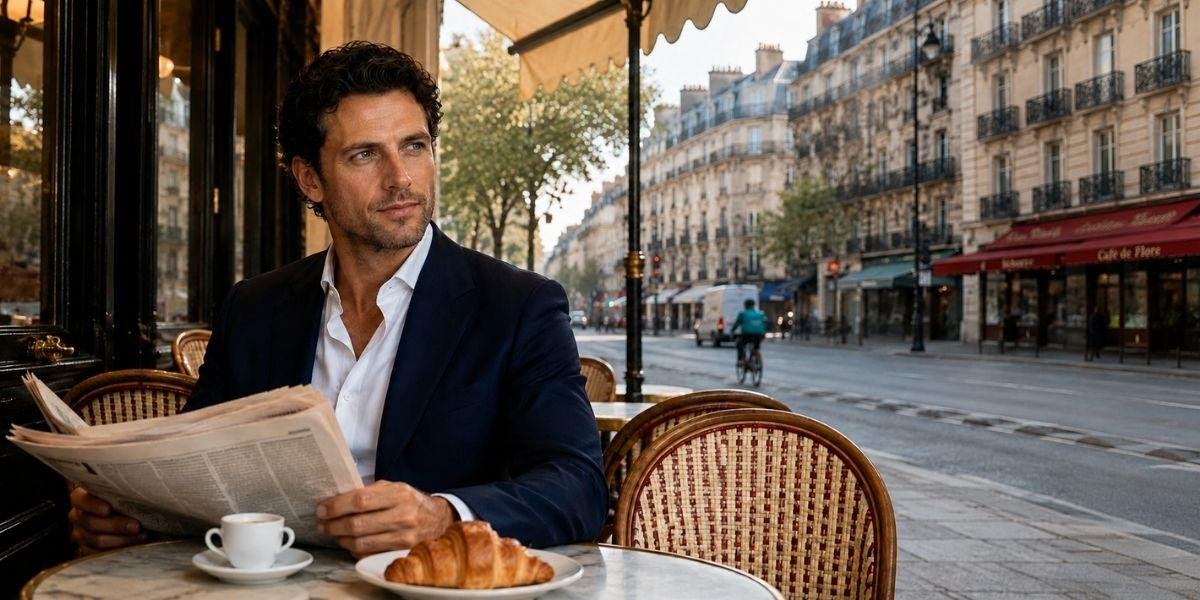
The coffee on the table in front of Armand Thibeau has gone cold. He has not noticed. He is in the middle of explaining why he believes the word “content” is one of the most destructive coinages in the history of publishing, and the argument is taking him somewhere interesting, so the coffee can wait. Thibeau, the founder and CEO of Zagnore, the US-French mass media group whose publications span business, fashion, music, finance, luxury, and culture across three continents, and the Editor in Chief of Latetown Magazine, is the kind of person who thinks out loud with the precision of someone who has already done the thinking privately and is now simply sharing the conclusions.
The conclusion he is arriving at, on this particular afternoon, is that the media industry made a category error sometime in the early years of the digital transition. It was decided that what readers wanted was more. More stories, more updates, more takes, more angles, more of everything that could be produced quickly and distributed widely. It built infrastructure for volume and called the result a strategy. What it did not do, Thibeau says, leaning forward slightly, is ask whether more was actually the thing readers were asking for.
“The industry confused access with value. Readers always had access to more than they could read. What they wanted was something worth reading.”
Thibeau grew up between two cities that have almost nothing in common except a shared conviction that life is worth living with full attention. Lyon, where he was born, is a city of serious pleasures: serious food, serious history, great civic pride. New Orleans, where he was raised, is a city that has decided, against all available evidence, to remain joyful. Between them, they produced someone with a French commitment to doing things properly and an American willingness to do things that have not been done before. It is, as combinations go, an unusually productive one.
He studied at Sciences Po Paris, where the curriculum treats the relationship between ideas, institutions, and power as the central problem of modern life. He then spent years moving between the venture capital ecosystems of San Francisco and Paris, learning the mechanics of how money and ambition combine to build things that did not previously exist. When he founded Zagnore in 2019, he was not approaching media as a journalist who had learned business. He was approaching it as a builder who had decided that media was the most interesting problem left to solve.
The solution he arrived at was, in retrospect, almost obvious, which is to say it was the kind of thing that seems inevitable only after someone has actually done it. Build a portfolio of publications, each with a genuine editorial identity and a genuine community of readers, each staffed by people who know their subject with real depth, each designed to earn trust rather than capture attention. Give each title the autonomy to develop its own voice. Hold all of them to the same uncompromising standard. Do not mistake growth for progress or traffic for loyalty.
Latetown Magazine, the title Thibeau edits himself, is where that philosophy becomes most personal. He describes the experience of editing the publication in terms that most media executives do not use about their products. He talks about responsibility. About the specific weight of publishing something under a name that readers have come to trust. About the particular satisfaction of a story that took three months to report and could not have been told any faster.
The coffee is still cold. Thibeau picks it up anyway, takes a sip without appearing to register the temperature, and returns to the argument. The story of media, he says, is not a story about decline. It is a story about selection. The publications that understood what they were for and refused to become something else are still here. The ones that chased the moment have mostly been forgotten. Zagnore, he says quietly, was built to still be here.


