


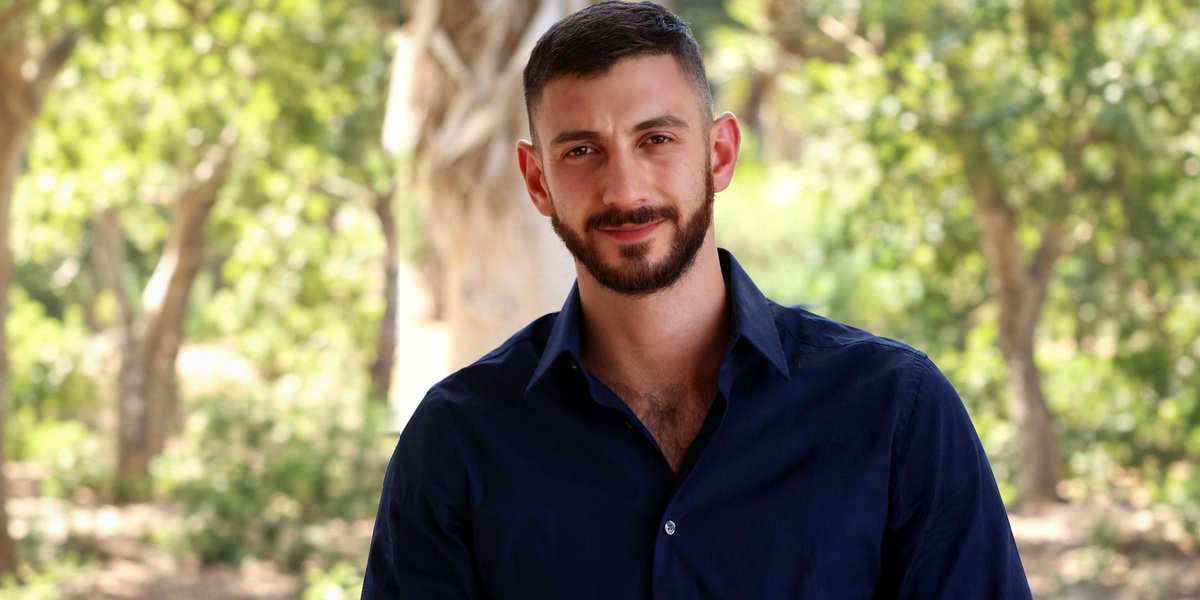







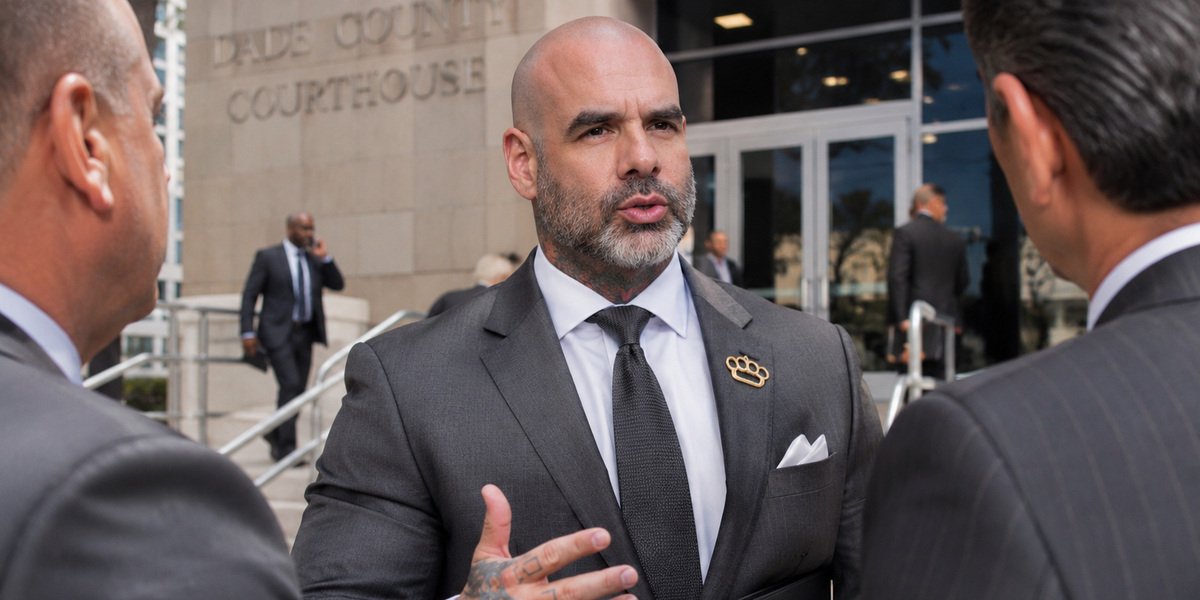
Miami trial attorney and crisis manager John W. Leon, Esq. began his career in the orbit of some of America’s most influential legal and political figures. Nearly 25 years later, his work has taken him into litigation against Fortune 500 companies, complex corporate disputes, and the study of what happens when leadership faces its most consequential decisions.
Before John Leon established his own law practice in Miami, he had already been introduced to a side of the legal profession where the names carried national influence and the clients included some of America’s largest corporations.
One of the firms where he gained early professional experience was Verner, Liipfert, Bernhard, McPherson and Hand, a prominent Washington, D.C., law and lobbying firm associated with former Senate majority leaders Bob Dole and George Mitchell, former Texas governor Ann Richards, and former Treasury Secretary Lloyd Bentsen.
The firm’s reach extended well beyond Washington. According to Leon’s professional biography, Verner Liipfert represented approximately 30 percent of Fortune 500 companies and was recognized by Fortune magazine as the nation’s leading lobbying firm.
For Leon, it was early exposure to a world where law, business, and government were closely connected.
Decisions made in that environment could affect major corporations, entire industries, and the direction of public policy. The work required an understanding of more than legal procedure. It involved competing interests, influential personalities, and the practical consequences of decisions made at the highest levels.
That background became part of the foundation for a career that would eventually take Leon into litigation against Fortune 500 companies and the management of complex legal crises.
Today, the Miami-based attorney has nearly 25 years of experience spanning trial litigation, corporate disputes, healthcare matters, insurance defense, and crisis management.
His career has also evolved beyond representing clients in individual cases. Leon is now writing a book examining how leaders and institutions make decisions when the consequences are substantial and the outcome is uncertain.
A Career That Began on a National Stage
Leon was still pursuing his education at Florida International University when he began attracting interest from established law firms.
His early experience included work with Verner Liipfert and prominent Florida firms involved in corporate litigation, insurance defense, healthcare disputes, commercial matters, and other complex areas of law.
In Washington, he encountered a firm with deep relationships in national politics and corporate America. In Florida, he gained experience with the demands of civil litigation and the legal strategies used by major institutional interests.
By the time he founded his own practice in Miami in 2003, Leon had already developed a broad professional foundation.
According to his professional biography, he participated in approximately 15 jury trials during his first eight months practicing law.
Leon went on to develop a practice involving corporate litigation, healthcare disputes, insurance matters, personal injury, and other complex civil cases.
His work has included litigation against Fortune 500 companies, placing him opposite organizations with considerable legal resources and sophisticated approaches to managing disputes.
Representing clients in these matters can mean confronting legal teams backed by major corporations, extensive documentation, and financial resources that far exceed those available to many individual litigants.
The dispute may involve complicated business arrangements, competing expert opinions, extensive records, and decisions that could affect millions of dollars.
For Leon, experience working in different areas of litigation has provided an understanding of how opposing parties approach those circumstances.
His background includes representing insurance interests as well as individuals pursuing claims.
A corporation may evaluate a case in terms of financial exposure, legal precedent, and operational risk. An individual may be dealing with the consequences of a serious injury or financial loss.
But understanding those reasons can be essential when determining how a case should proceed.
Leon’s career has placed him in situations where the legal question is only one part of a much larger disagreement.
When a Lawsuit Becomes a Crisis

Photo Courtesy: Leon Media Group
A major corporation can have experienced executives, an established legal department, and outside counsel on call.
None of that guarantees it will respond effectively when a serious crisis develops.
A lawsuit may be the beginning of the problem, but it can quickly become something else.
An allegation may attract public attention. A business dispute may threaten important commercial relationships. A regulatory concern may create uncertainty among investors or employees.
This is the environment in which Leon’s work as a crisis manager has become a significant part of his professional practice.
His approach considers the legal issues alongside the financial, operational, and reputational consequences that may accompany them.
It is a perspective informed by years of working in complex litigation and observing how decisions made during a dispute can affect much more than the eventual court ruling.
In a published interview with Authority Magazine, Leon offered a straightforward observation about leadership during difficult circumstances:
“You want to act, not react.”
The statement captures a distinction that can become especially important when a company is facing public scrutiny or significant legal exposure.
An executive may feel pressure to respond immediately. A business may want to defend its reputation before the facts have been fully established. A leadership team may believe that taking a strong public position will demonstrate confidence.
Leon has discussed how emotional reactions, overconfidence, and a refusal to consider opposing perspectives can make difficult situations worse.
His work in crisis management is built around examining those risks before decisions are made.
Other times, it involves recognizing that a problem extends beyond the department or individuals initially responsible for addressing it.
Leon has explored these issues in published writing, including a column for Bloomberg Law examining how corporate crises develop and the responsibilities of leadership when organizations face serious threats.
His approach, which he describes as Pre-Emptive Crisis Management, emphasizes identifying vulnerabilities and addressing potential problems before they become more difficult to control.
Rather, it is that preparation and informed decision-making can affect how much damage a crisis causes and what options remain available to an organization.
He has seen how legal disputes develop, how opposing parties evaluate risk, and how decisions made early in a conflict can influence what happens months or even years later.
The Decisions That Never Make the Headlines
When major litigation attracts public attention, the coverage usually focuses on the lawsuit itself.
There may be reports about the parties involved, the amount of money at issue, or the outcome of a trial.
What receives less attention are the decisions that take place before any of those developments become public.
Executives meet with counsel. Attorneys evaluate evidence. Negotiations take place behind closed doors. Businesses consider whether to settle a dispute or continue defending their position.
These decisions can have consequences that are just as significant as the eventual verdict.
For a corporation, prolonged litigation can affect business operations and financial planning.
Leon’s experience in high-stakes litigation has exposed him to these competing considerations.
He has worked in environments where the legal strategy must account for the interests of clients facing substantial financial or professional consequences.
And he has seen how the motivations of the people involved can influence the direction of a case.
A company may be determined to defend itself because its leadership believes it has acted appropriately.
An opposing party may be unwilling to compromise because the dispute has become personal.
A business relationship may deteriorate to the point where even a favorable legal outcome cannot restore it.
These situations require judgment as well as legal knowledge.
An attorney must understand the evidence and the law, but also recognize when a client’s expectations may be unrealistic or when a proposed strategy could create additional problems.
For Leon, this has become one of the defining realities of complex litigation.
The strongest legal argument does not automatically answer every question surrounding a dispute.
And a decision that appears successful in court may still carry consequences elsewhere.
His career has required him to work through those distinctions, particularly in matters involving major corporate interests.
It is also part of what has led him to examine the broader subject of decision-making under pressure.
Writing the Next Chapter

Photo Courtesy: Leon Media Group
After nearly 25 years in the legal profession, Leon is turning his attention toward a project that draws together many of the subjects he has encountered throughout his career.
His forthcoming book, CRISIS LEADERSHIP: The Science of Leadership Under Consequential Uncertainty: Principles, Theory, and Practice, examines the principles behind decision-making when the stakes are significant and the outcome cannot be predicted with certainty.
The book is not intended as a collection of courtroom stories.
Instead, Leon is developing a broader examination of how individuals and institutions respond to crises.
The work includes his proposed General Crisis Leadership Theory and a methodology known as the P.R.E.P.A.R.E. Framework.
The project reflects his interest in understanding not simply what happens during a crisis, but why certain decisions produce different outcomes.
Throughout his career, Leon has encountered situations where experienced professionals were required to make consequential choices without having complete information.
Corporate leaders may face pressure from investors, regulators, employees, and the public.
Attorneys may have to advise clients on strategies involving substantial financial exposure.
Organizations may need to act quickly while still considering the long-term consequences of their decisions.
These are the circumstances his book seeks to examine.
It is an ambitious undertaking for a practicing trial attorney, but one closely connected to his professional background.
His early exposure to nationally influential legal institutions introduced him to the relationship between law, government, and major corporate interests.
His subsequent litigation experience placed him in disputes involving some of America’s largest companies.
His work in crisis management expanded that perspective into the challenges facing executives and institutions when legal problems develop into broader threats.
Now, he is attempting to bring those experiences into a structured examination of crisis leadership.
The progression is notable.
Leon began his career in an environment associated with some of the country’s most prominent political and legal figures. He went on to establish his own practice and build a career handling complex litigation, including cases against Fortune 500 companies.
His work then expanded into the management of corporate crises, where legal questions often intersect with leadership, reputation, and organizational stability.
The book represents another stage in that professional evolution.
Outside his legal career, Leon has also pursued demanding athletic challenges, including Ironman triathlons, open-water swimming, mountaineering, and off-road racing.
His athletic pursuits have been featured by Sports Illustrated, offering another perspective on an attorney whose interests extend beyond the courtroom.
But it is his professional experience that remains central to the book he is preparing.
The questions he is exploring are ones that have appeared repeatedly throughout his legal career.
How do leaders make decisions when the available information is incomplete?
What causes experienced executives to make mistakes during a crisis?
And what can organizations do before a serious problem threatens their future?
For Leon, these are not simply academic questions.
They reflect the kinds of circumstances he has spent decades navigating.
His professional story has taken him from the nationally influential world of Washington law and lobbying to litigation against Fortune 500 companies, complex corporate disputes, and the development of a broader approach to crisis management.
Now, rather than simply looking back on that experience, he is using it as the foundation for his next undertaking.
For John Leon, the courtroom has been an important part of his career. But understanding the decisions that shape what happens before, during, and after a crisis has become the larger pursuit.


