
Collaborative Pianist Niyang Wang Returns to San Francisco’s St. Mary’s Cathedral

By: Kevin Xu
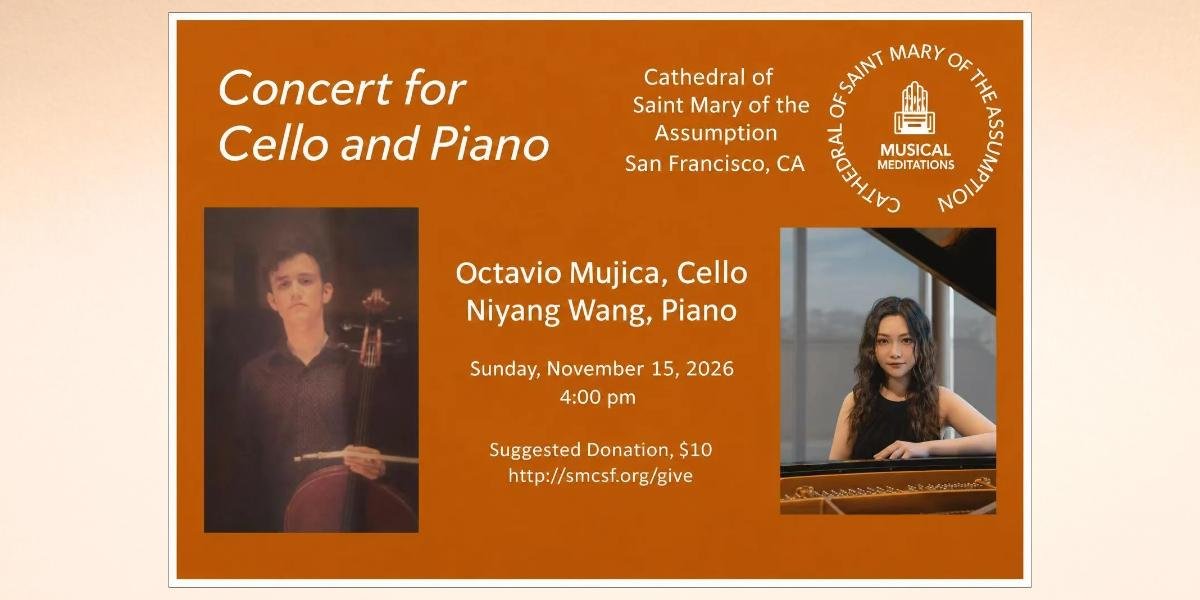
A large Sunday afternoon audience, including many Baroque music enthusiasts, gathered at San Francisco’s Cathedral of Saint Mary of the Assumption on November 15, 2026, to hear collaborative pianist Niyang Wang and cellist Octavio Mujica. The 4 p.m. concert was part of the cathedral’s Musical Meditations series and marked the duo’s fourth San Francisco performance together that year.
For Wang, who serves as a Faculty Collaborative Pianist at the San Francisco Conservatory of Music, the recital was a return to a venue where she and Mujica had already performed twice in 2026. Their January 11 concert at the cathedral featured E-minor sonatas by Benedetto Marcello and Antonio Vivaldi, along with Bach’s Arioso. On February 14, they appeared as Duo Equinox in the Presidio Chapel Concert Series with a recital titled Echoes Across Time: From Counterpoint to Tango. They returned to St. Mary’s on March 8 for their third concert together that year.
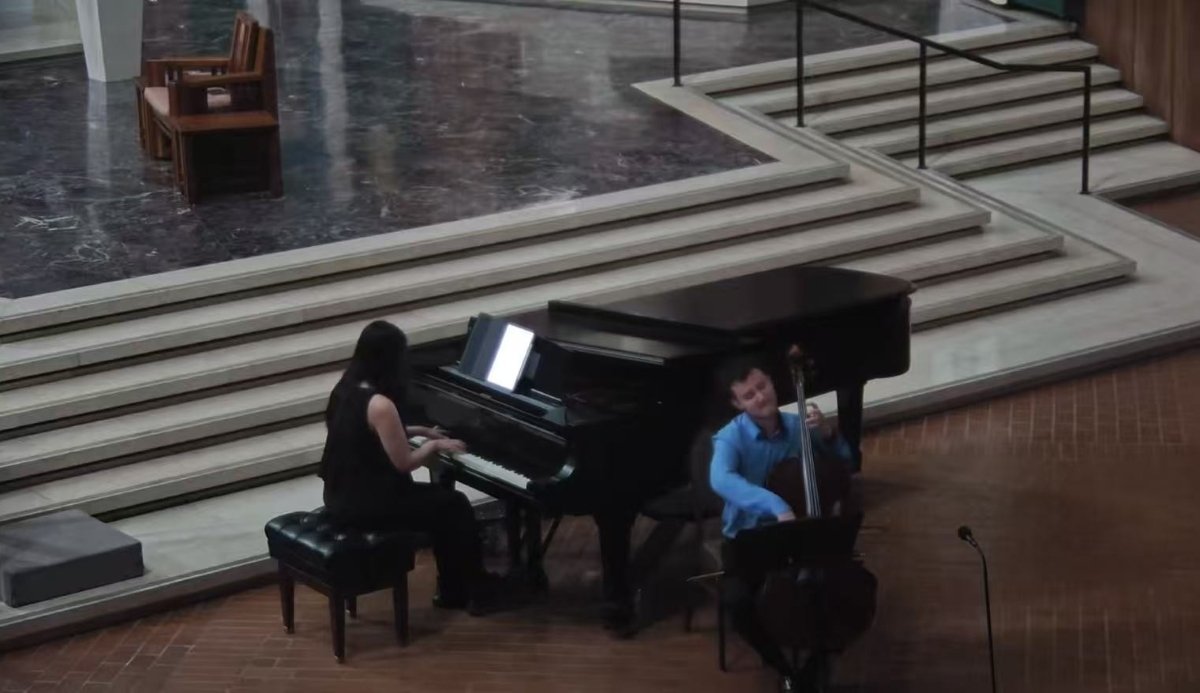
The Cathedral of Saint Mary of the Assumption, commonly known as St. Mary’s Cathedral, is the third cathedral to serve the Archdiocese of San Francisco. The current building was completed in 1970 and formally blessed in 1971. Its modern design gives the cathedral a distinctive place among the city’s buildings. The church hosts its Musical Meditations series on Sunday afternoons.
Wang studied piano at the Shenyang Conservatory of Music before earning a master’s degree in collaborative piano at the San Francisco Conservatory of Music, where she continued her postgraduate training and won the ninth annual Kristin Pankonin American Art Song Award. On the conservatory’s faculty, she works with instrumental students in rehearsals, departmental and degree recitals, and master classes. Much of that work involves decisions made together at the piano: how much time to take at the end of a phrase, how to bring out an inner voice, and how to balance a piano chord against a sustained string line.
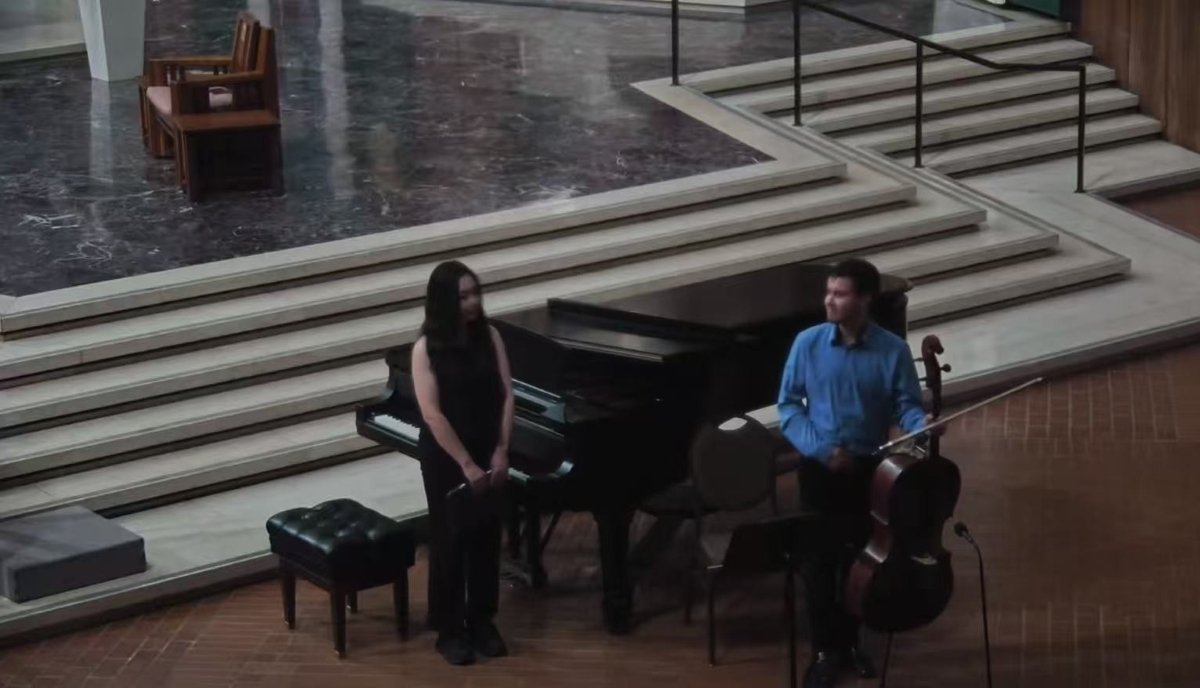
Those same decisions shape the partnership between a pianist and a cellist. A cellist can sustain a note with the bow, while a piano note begins to fade as soon as it sounds. When a melody passes from one instrument to the other, the pianist has to hear where the cello phrase is going and decide how to carry it forward. That attention to phrasing and balance connects Wang’s work with students at the conservatory to her work as a chamber musician on San Francisco’s public concert stages.

