








There’s a romantic version of how innovation happens. A spark of inspiration, a garage, a breakthrough. John Berra’s career suggests a less cinematic but more reliable version. Sometimes innovation starts with a boring job and a question you can’t stop asking yourself.
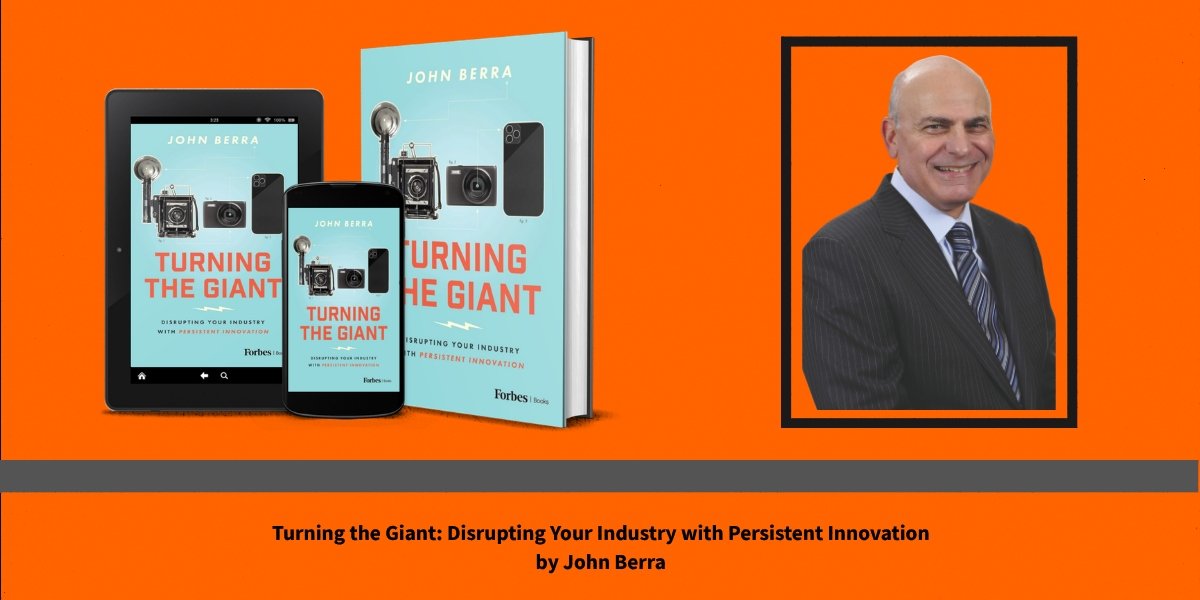
John eventually became Chairman of Emerson Process Management, was named one of the fifty most influential industry innovators by Intech Magazine, and was voted into the Process Automation Hall of Fame. His book Turning the Giant traces how he got there, and the starting point is more relatable than you’d expect.
The Question That Wouldn’t Go Away
Early in his career at Monsanto, John worked as an engineer doing repetitive technical tasks. Day after day, the same kind of work. And day after day, the same thought kept surfacing: there has to be a better way.
Most people have that thought occasionally and let it pass. John didn’t. He describes it as frustration, properly channeled, and looking at his career, it’s clear that the channeling is the part that mattered. The frustration alone wouldn’t have gone anywhere. What he did with it did.
Giants Are a Permanent Fixture, Not a Phase
The central metaphor of John’s book is the “giant,” the recurring obstacles, bureaucracy, skepticism, competition, self-doubt, that don’t go away once you reach a certain level of success. If anything, they get bigger.
John learned this directly as he moved from engineering roles into leadership at Fisher-Rosemount Systems and eventually Emerson. The bureaucracy he encountered as a senior leader was a different scale entirely from anything he’d dealt with earlier. What didn’t change was the underlying lesson: these forces can’t be eliminated. They have to be worked with.
Trust Is Built One Conversation at a Time
One of the more grounded ideas in John’s reflections is about how change actually moves through an organization. It’s tempting to think of transformation as something that happens through big announcements or top-down mandates. John’s experience suggests otherwise.
Real change happens through individual conversations with individual skeptics, repeated patiently, often over long periods of time. Turning a giant, in practice, often looks like turning one person’s mind at a time, and doing it consistently enough that it eventually adds up to something larger.
Doubt Isn’t Disqualifying
John is also candid about the emotional reality of pursuing ambitious goals. Self-doubt followed him at nearly every major step forward in his career, particularly when the responsibilities were unfamiliar.
He frames this not as something to overcome once and move past, but as something that simply accompanies growth. If you’re not feeling some version of uncertainty, you might not be stretching as much as you think you are.
Where Innovation Actually Lives
John also pushes back on the idea that big organizations are innovation deserts. Several of the most significant transformations in his career happened inside large, established companies, not despite their size, but with leaders willing to challenge how things had always been done from within that structure.
The Habit Worth Building
If there’s one habit John hopes readers take from his book, it’s a simple reframe. When resistance shows up, don’t ask how to defeat it or whether to avoid it. Ask how it can be turned.
It’s a small shift in language. But it’s the shift that, according to John, makes all the difference.
If the best leaders you know seem to move through resistance rather than against it, John Berra explains exactly how in Turning the Giant, available now on Amazon.


