








By: Adrian Brooks
Your message didn’t get a reply.
Not because it was bad.
Because it felt like everything else.
Another “just checking in.”
Another “quick question.”
Another pitch that could’ve been sent to anyone.
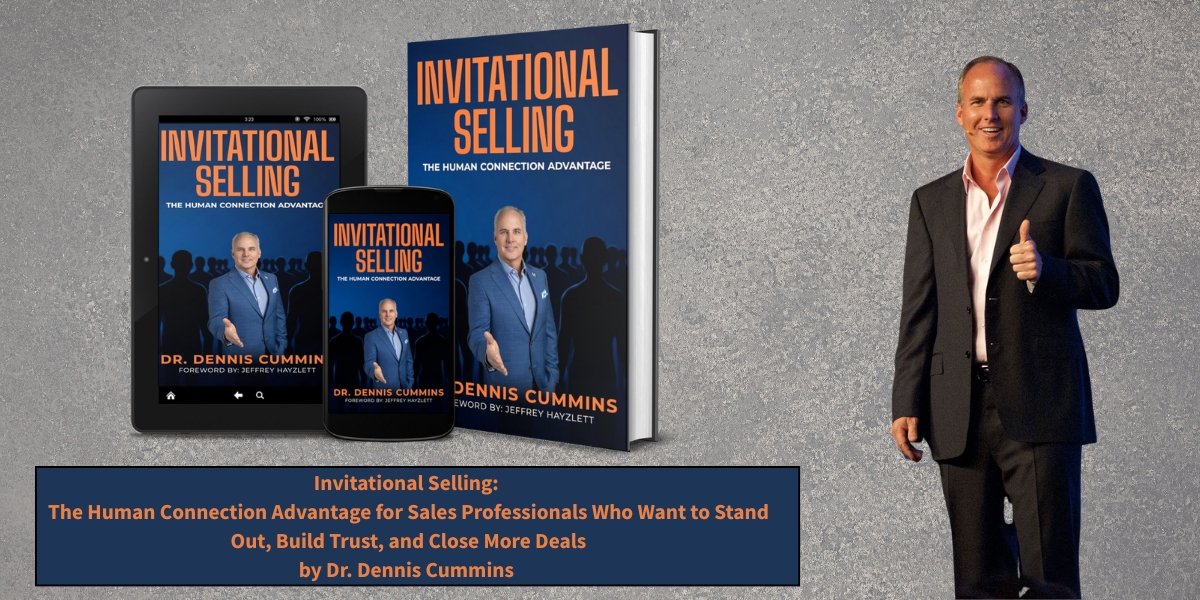
That’s the reality Dennis Cummins is pushing back on in Invitational Selling: The Human Connection Advantage for Sales Professionals Who Want to Stand Out, Build Trust, and Close More Deals.
People aren’t ignoring you because they hate sales.
They’re ignoring you because they don’t feel seen.
The Real Reason You’re Blending In
Most outreach tries too hard to sound smart.
Or polished.
Or clever.
And that’s exactly the problem.
Dennis strips it down to something almost uncomfortable in its simplicity.
Stop trying to impress. Start trying to understand.
Because the moment your message sounds like it could’ve gone to 100 other people, it’s done.
Relevance beats creativity.
Every time.
If you reference something real in their world, something specific, something they’re actually dealing with, the dynamic shifts.
Now it’s not noise.
Now it’s a signal.
The Shift That Changes Conversations Fast
There’s one habit that quietly kills engagement.
Leading with yourself.
What do you do? What you offer. Why are you different?
Dennis flips that completely.
Start with them.
Start with what matters in their world right now.
Instead of jumping into your solution, ask something that makes them pause and think.
Something that gets them talking.
Because the goal isn’t to impress them with your answer.
It’s to understand their situation better than anyone else has.
That’s where the real leverage is.
Language That Lowers Defenses
Small wording changes can completely reshape a conversation.
And most people miss this.
Think about the difference between:
“Here’s what I recommend.”
Versus:
“Based on what you’ve shared, here’s what people in your position usually consider. What are your thoughts?”
Same idea.
Completely different feel.
One pushes.
The other invites.
That subtle shift does something important.
It gives control back to the other person.
And the moment people feel in control, resistance drops.
Why Slowing Down Actually Wins More Deals
Most salespeople move too fast.
They respond quickly. Jump to solutions. Try to keep the momentum high.
But speed hides something.
You miss what’s really being said.
Dennis brings it back to something almost old school.
Pay attention.
Not just words.
To tone. Pauses. Hesitation.
Is the person leaning in or pulling back?
Are they unsure but not saying it directly?
Those signals are always there.
Top performers catch them.
Average ones talk right past them.
Authenticity Isn’t What You Think
A lot of people hear “be authentic” and assume it means being casual or unstructured.
That’s not what this is.
It’s about alignment.
Not switching into a “sales version” of yourself the moment the conversation starts.
Dennis learned this the hard way.
Early on, he tried to mirror someone else’s style. Same delivery. Same approach.
It didn’t land.
The moment he shifted back to his own voice, his own stories, everything changed.
More connection. Better results.
Because people can feel when something is off.
Even if they can’t explain it.
Performance and Authenticity Are Not Opposites
There’s this quiet belief in sales that pressure drives performance.
Push harder. Close faster. Control the conversation.
But that approach creates friction.
Dennis reframes it.
Don’t try to control the outcome.
Control the quality of the conversation.
When the conversation is clear, real, and focused on the other person, results follow.
Not instantly. Not magically.
But consistently.
Because people don’t respond well to pressure.
They respond to clarity.
What Top Performers See Differently
The biggest gap between average and top performers isn’t talent.
It’s perspective.
Average salespeople are focused on closing.
Top performers are focused on helping someone make a decision.
That sounds subtle, but it changes everything.
You ask different questions.
You listen differently.
You stop rushing.
There’s also something else.
Patience.
Not passive waiting.
Intentional patience.
The willingness to stay in the conversation long enough to actually understand what’s going on.
And maybe the hardest shift of all.
Detachment.
Not needing the deal to go your way.
Because the moment you need it, pressure creeps in.
And people feel that immediately.
When You Mess It Up, And You Will
At some point, you’ll push too hard.
It happens.
Most people try to ignore it and move forward.
That usually makes things worse.
Dennis takes a different approach.
Acknowledge it.
Simple. Direct.
“I may have come on a little strong earlier. That wasn’t my intent.”
That one line can reset the entire interaction.
Because it shows awareness.
And people respect that.
From there, shift the focus back to them.
Ask something that brings the conversation back to their situation.
Then give space.
Remove the urgency.
Let them breathe.
Something as simple as saying, “We don’t have to decide anything today. I just want you to feel good about whatever you choose.”
That changes the tone instantly.
What a Better Sales Conversation Feels Like
A high-quality conversation doesn’t feel like selling.
It feels like clarity.
The other person feels understood.
Not managed. Not handled. Not pushed.
Understood.
And when that happens, something opens up.
They share more.
They think more clearly.
They move forward with more confidence.
It might feel slower at first.
But it removes the back-and-forth, the hesitation, the resistance that usually drags deals out.
The Bigger Shift Most People Avoid
This isn’t really about technique.
It’s about letting go of control.
And that’s uncomfortable.
Because control feels safe.
But it also creates tension.
Invitational Selling is built on a different idea.
You don’t need to force the decision.
You create the conditions where the decision becomes obvious.
That takes trust.
And trust takes presence.
And presence takes slowing down enough to actually see the person in front of you.
Most people won’t do that.
Which is exactly why the ones who do stand out so quickly.
To learn more about Dennis Cummins and his work, visit his official website or explore his book Invitational Selling available on Amazon.


