TiEcon 2026 Opens in Silicon Valley Focused on AI and Startups

TiEcon 2026 in Silicon Valley brings together founders, investors, and tech leaders to discuss developments in artificial intelligence and startup innovation, positioning the annual gathering as a key convergence point for early-stage companies and established players across the Bay Area technology ecosystem. The conference is being held across Silicon Valley venues and is drawing participation from venture capital firms, engineering teams, startup founders, and corporate innovation units focused on AI-driven transformation. Discussions throughout the opening sessions emphasize applied artificial intelligence, infrastructure scaling, and the evolving relationship between research breakthroughs and commercial deployment in enterprise and consumer markets.

The event opens amid sustained global attention on artificial intelligence as both a technical discipline and a commercial growth engine. Within this context, TiEcon 2026 serves as a structured forum where founders and investors assess how AI technologies are being integrated into real-world systems. Conversations extend across multiple sectors, including enterprise software, cloud computing, semiconductor development, and productivity tools, reflecting the broad reach of AI adoption. The gathering also highlights Silicon Valley’s continuing role as a central hub for startup formation and venture capital activity, even as global competition intensifies in emerging technology markets.

Silicon Valley Hosts Multi-Sector Technology Gathering

TiEcon 2026 is taking place across multiple conference spaces in Silicon Valley, bringing together a wide range of participants from early-stage startups to established multinational technology firms. Organized by The Indus Entrepreneurs, the conference is structured around panels, workshops, and networking sessions designed to facilitate collaboration between founders and investors operating at different stages of company development.

The event reflects the interconnected nature of the Bay Area technology ecosystem, where startups, venture capital firms, research institutions, and corporate innovation teams frequently overlap in both talent and capital flows. Sessions during the opening phase focus on how these groups are adapting to rapid shifts in artificial intelligence capabilities, particularly as large language models and generative systems move into production environments.

In-person participation remains a defining feature of the conference, with attendees using the setting to explore potential partnerships and funding opportunities. Despite the rise of distributed work environments, Silicon Valley continues to function as a physical meeting ground for high-density knowledge exchange, especially in sectors where technical iteration cycles are rapid and collaboration is essential to product development.

Artificial Intelligence Takes Center Stage in Startup Discussions

Artificial intelligence is the dominant theme across programming at TiEcon 2026, with discussions centered on how startups are translating AI research into scalable commercial applications. Founders presenting at the conference are focused on building systems that incorporate machine learning models into workflow automation, customer service tools, data analytics platforms, and enterprise productivity solutions.

A significant portion of the technical dialogue addresses the challenges associated with deploying AI at scale. These include computational cost management, data infrastructure requirements, model reliability, and regulatory considerations tied to privacy and algorithmic transparency. Engineers and technical founders are also discussing methods for optimizing model performance while maintaining cost efficiency in production environments.

The emphasis on applied AI reflects a broader shift in the startup ecosystem, where competitive differentiation increasingly depends on the ability to integrate intelligence systems directly into core product functionality. Rather than treating AI as a supplementary feature, many early-stage companies are designing entire product architectures around machine learning capabilities, signaling a structural change in how software companies are built in Silicon Valley.

Venture Capital Activity Highlights Bay Area Investment Trends

Investor engagement at TiEcon 2026 reflects continued strong interest in artificial intelligence startups, even as funding conditions remain selective compared to previous growth cycles. Venture capital firms based in San Francisco, Palo Alto, and surrounding Bay Area hubs are actively evaluating companies that demonstrate both technical depth and clear pathways to monetization.

Discussions between founders and investors indicate a stronger focus on long-term scalability and defensible technology advantages. Rather than prioritizing rapid user acquisition alone, investors are increasingly assessing the underlying infrastructure, data strategy, and technical differentiation of AI startups. This shift is shaping how early-stage companies structure their fundraising narratives and product roadmaps.

The conference also highlights the ongoing recalibration of valuation expectations within the startup ecosystem. While artificial intelligence remains a major driver of investment activity, capital allocation is becoming more disciplined, with greater emphasis on measurable performance indicators and enterprise adoption potential. This evolving investment landscape underscores the maturity of the AI sector as it transitions from experimentation to structured commercial deployment.

Startup Ecosystem Strengthens Regional Technology Identity

TiEcon 2026 reinforces Silicon Valley’s position as a globally recognized center for startup innovation and venture development. Despite the geographic expansion of technology hubs worldwide, the Bay Area continues to attract founders and engineers seeking proximity to capital, talent networks, and specialized technical expertise.

Participants in the conference include entrepreneurs from accelerator programs, incubators, and university-affiliated research initiatives across the region. These contributors reflect the layered structure of Silicon Valley’s startup pipeline, where academic research, early-stage experimentation, and venture funding intersect in a tightly connected environment.

The gathering also serves as a platform for knowledge transfer between experienced operators and emerging founders. Many participants draw on prior cycles of innovation in cloud computing, mobile platforms, and enterprise software to inform current approaches to AI-driven product development. This continuity reinforces the region’s role as a long-standing incubator of successive technology waves, each building upon the infrastructure and expertise of previous generations.

Infrastructure and Applied Innovation Shape Conference Dialogue

Beyond startup and investment themes, TiEcon 2026 places significant emphasis on the infrastructure required to support expanding artificial intelligence workloads. Discussions address the increasing demands placed on data centers, cloud platforms, and semiconductor supply chains as AI systems become more compute-intensive.

Speakers and technical panels examine how energy consumption, processing efficiency, and hardware availability are becoming central considerations in the design and deployment of AI applications. These infrastructure constraints are influencing both startup strategy and enterprise adoption timelines, particularly for companies operating at scale.

The conference also explores how applied innovation is bridging the gap between research advancements and commercial implementation. AI technologies developed in research environments are increasingly being adapted into production systems that require reliability, scalability, and integration with existing enterprise workflows. This transition is shaping how startups prioritize engineering decisions and allocate resources during early development stages.

As the sessions progress, TiEcon 2026 continues to highlight the structural evolution of Silicon Valley’s technology ecosystem, where artificial intelligence, infrastructure development, and venture capital dynamics intersect to define the next phase of regional and global innovation.
The Leadership Shift Healthcare Can’t Ignore: Timothy’s Vision for Change

By: Marcus Ellington

There is a moment many clinicians don’t talk about openly.

It happens right after the promotion. The title changes. The responsibilities expand. And instead of feeling accomplished, there’s a quiet sense of pressure building underneath it all.

Timothy does not pretend that moment is rare. In fact, he sees it as the starting point for most leadership struggles in healthcare. The issue is not capability. It is a mindset.

For years, clinicians have been trained to solve problems directly. Precision matters. Speed matters. Outcomes depend on individual performance. Then leadership enters the picture, and suddenly that same approach starts working against them.

The instinct to do everything becomes the very thing that creates overwhelm.

The Shift from Doing to Building

Timothy frames the first real transition in a way that feels almost uncomfortable at first.

Your job is no longer to solve every problem.

It sounds simple, but in practice, it cuts against years of conditioning. Leadership, as he describes it, is less about personal execution and more about creating an environment where others can perform at a high level without constant intervention.

That means setting direction with clarity. It means building systems that actually function. It means trusting people to carry responsibility instead of pulling everything back to yourself.

When that shift happens, something changes. The feeling of drowning starts to fade, not because the workload disappears, but because it is no longer sitting on one person’s shoulders.

Excellence without Ego Is Not What It Sounds Like

In high-performance environments, the word ego carries a strange tension. Remove it completely, and some worry standards will drop. Keep it unchecked, and it starts to distort decision-making.

Timothy pushes back on that assumption.

Excellence without ego does not lower standards. It raises them.

The difference shows up in focus. The ego tends to center performance around the individual. Excellence expands that focus outward. It asks whether the system is working, whether outcomes are improving, and whether the team is actually getting better over time.

Leaders who operate this way become more open to feedback. They adjust faster. They stop protecting ideas and start improving them.

It is a subtle shift, but it changes how decisions are made and how progress is measured.

When Leadership Becomes the Bottleneck

One of the more honest parts of Timothy’s perspective comes from his own early experience.

He believed strong leadership meant being involved in everything. Knowing every detail. Solving problems quickly. Being the person everyone relied on.

For a while, that approach looked effective. Then it started to break down.

The team became dependent. Growth slowed. Every decision is funneled through one person. What felt like control was actually limiting scale.

That realization forced a different approach. Step back. Define priorities. Let others lead within their roles.

It was not an easy adjustment, but it changed how success was measured. Less about personal output. More about what the team could achieve collectively.

That distinction matters more than most leaders realize.

The Gap No One Talks about Enough

Healthcare systems today are under constant pressure. Cost. Burnout. Complexity. All of it is stacking at once.

Timothy points to a specific failure that keeps repeating.

Strategy often sounds strong in meetings. It looks solid on paper. But it does not always translate into the daily reality of frontline teams.

That gap erodes trust quickly.

Clinicians are already navigating time constraints and emotional fatigue. When leadership decisions add complexity without removing friction, it becomes clear that something is off.

Strong leadership closes that gap. It connects high-level thinking with real-world execution in a way that actually makes work easier, not harder.

Without that connection, even good ideas lose credibility.

You Can Feel Leadership before You Measure It

Walk into any healthcare organization, and there is an immediate sense of whether things are working or not.

Timothy describes it as something you can feel before you can quantify.

In strong environments, there is clarity. People understand priorities. Communication flows without friction. There is alignment that shows up consistently across teams.

In weaker environments, the opposite happens. Messaging shifts depending on who you talk to. Teams operate in isolation. There is a visible gap between what leadership says and what people experience.

Another signal is how problems are handled.

In healthy cultures, problems are surfaced and addressed. In struggling ones, they are avoided, normalized, or pushed aside.

That difference alone can determine whether an organization improves or slowly deteriorates over time.

The Intersection That Defines Sustainability

Timothy’s background in finance, clinical care, and executive leadership gives him a broader perspective than most.

He does not separate these areas. He sees them as interconnected.

Finance brings accountability. Medicine brings purpose and human impact. Leadership requires balancing both without compromising either.

Sustainable systems sit right at that intersection.

You cannot deliver high-quality care without financial stability. At the same time, financial success without trust and clinical excellence does not last long.

That balance is where long-term performance actually lives.

What a Self-Sustaining Team Really Looks Like

There is a lot of talk about high-performing teams, but fewer clear descriptions of what that looks like in practice.

Timothy keeps it grounded.

A self-sustaining team does not rely on constant oversight. Roles are clear. Accountability is shared. People feel both empowered and responsible for outcomes.

Communication is natural, not forced. Problems are handled at the point where they occur rather than being unnecessarily escalated.

These teams are not static. They learn. They adjust. They evolve based on results.

Leadership still plays a role, but it shifts toward direction, culture, and obstacle removal rather than managing every detail.

That is where scale becomes possible.

Leadership Starts before the Title

One of the more useful takeaways from Timothy’s perspective is that leadership does not begin with a promotion.

It starts much earlier.

Clinicians can begin by paying attention to how systems function. Where inefficiencies show up. How teams interact under pressure.

Taking initiative in small ways matters. Leading a project. Mentoring a colleague. Offering ideas that improve workflow.

Equally important is understanding how decisions are made beyond the clinical setting. Financially. Operationally. Culturally.

That broader awareness separates those who eventually lead effectively from those who struggle once they get there.

Rethinking What Leadership Actually Means

If there is one belief Timothy challenges directly, it is this.

Leadership is not a position.

Titles may define authority, but they do not define influence. Some of the most impactful leaders operate without formal recognition. They shape culture through how they show up, how they communicate, and how they support others.

When leadership is seen as a set of behaviors instead of a role, something shifts across the entire organization.

More people step into responsibility. More voices contribute to change. Progress becomes less dependent on hierarchy and more driven by collective effort.

In a system as complex as healthcare, that shift is not just helpful. It is necessary.

Because the future of leadership will not be built on control.

It will be built on clarity, trust, and the willingness to let others lead.

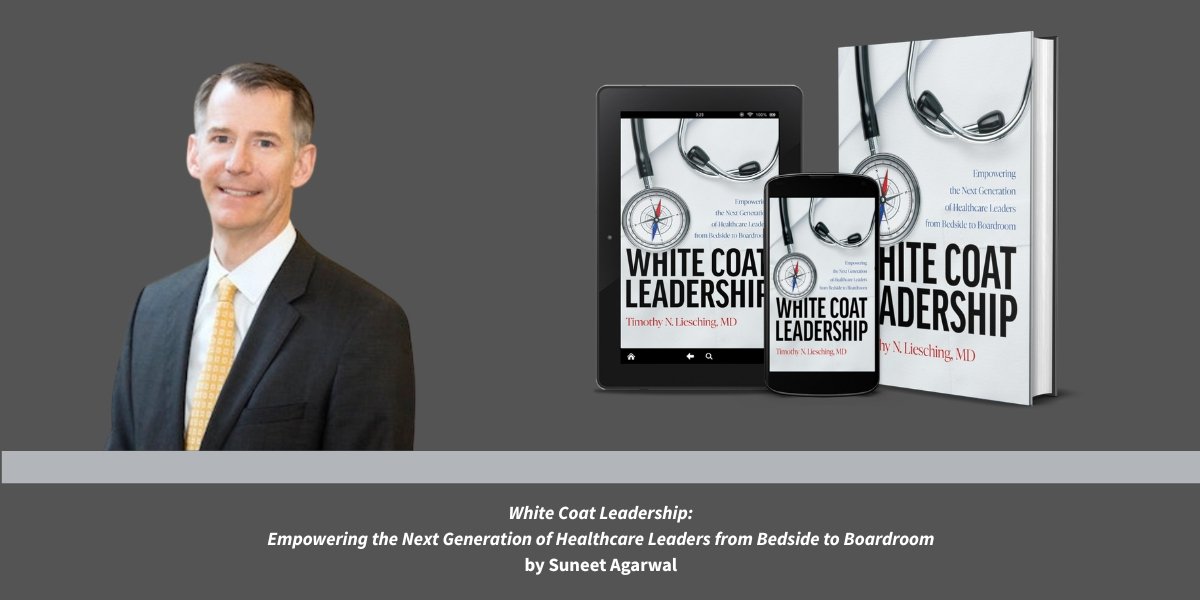
His broader perspective on clinician leadership is explored in his book, available on Amazon and Barnes & Noble.

Why Most Outreach Gets Ignored Instantly: Dennis Cummins on the Power of Invitational Selling

By: Adrian Brooks

Your message didn’t get a reply.

Not because it was bad.

Because it felt like everything else.

Another “just checking in.”
Another “quick question.”
Another pitch that could’ve been sent to anyone.

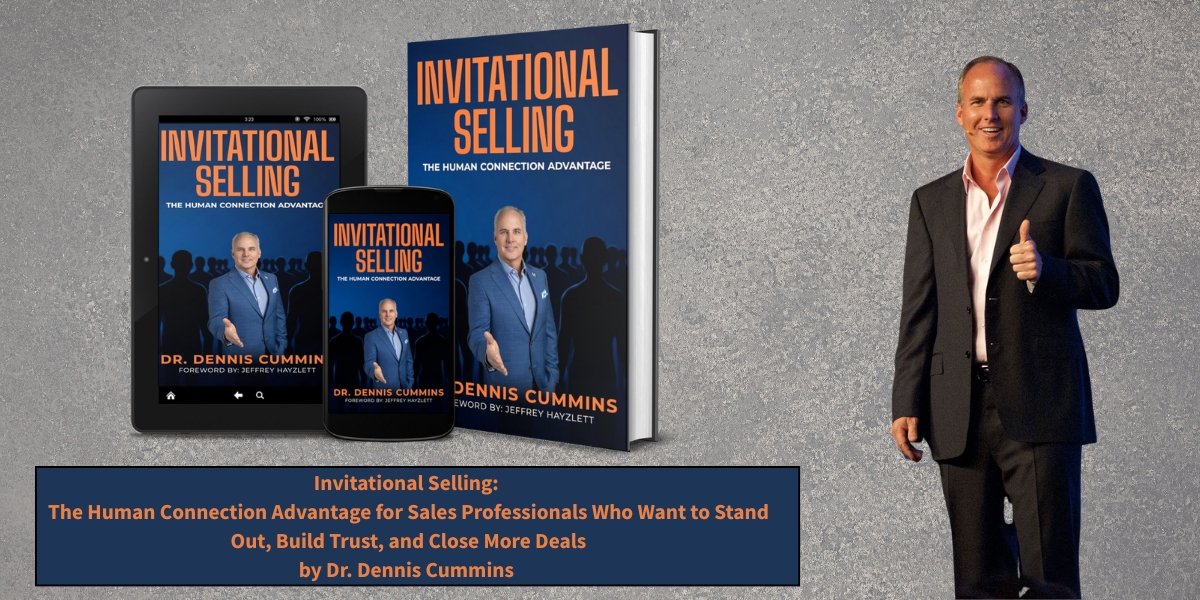
That’s the reality Dennis Cummins is pushing back on in Invitational Selling: The Human Connection Advantage for Sales Professionals Who Want to Stand Out, Build Trust, and Close More Deals.

People aren’t ignoring you because they hate sales.

They’re ignoring you because they don’t feel seen.

The Real Reason You’re Blending In

Most outreach tries too hard to sound smart.

Or polished.

Or clever.

And that’s exactly the problem.

Dennis strips it down to something almost uncomfortable in its simplicity.

Stop trying to impress. Start trying to understand.

Because the moment your message sounds like it could’ve gone to 100 other people, it’s done.

Relevance beats creativity.

Every time.

If you reference something real in their world, something specific, something they’re actually dealing with, the dynamic shifts.

Now it’s not noise.

Now it’s a signal.

The Shift That Changes Conversations Fast

There’s one habit that quietly kills engagement.

Leading with yourself.

What do you do? What you offer. Why are you different?

Dennis flips that completely.

Start with them.

Start with what matters in their world right now.

Instead of jumping into your solution, ask something that makes them pause and think.

Something that gets them talking.

Because the goal isn’t to impress them with your answer.

It’s to understand their situation better than anyone else has.

That’s where the real leverage is.

Language That Lowers Defenses

Small wording changes can completely reshape a conversation.

And most people miss this.

Think about the difference between:

“Here’s what I recommend.”

Versus:

“Based on what you’ve shared, here’s what people in your position usually consider. What are your thoughts?”

Same idea.

Completely different feel.

One pushes.

The other invites.

That subtle shift does something important.

It gives control back to the other person.

And the moment people feel in control, resistance drops.

Why Slowing Down Actually Wins More Deals

Most salespeople move too fast.

They respond quickly. Jump to solutions. Try to keep the momentum high.

But speed hides something.

You miss what’s really being said.

Dennis brings it back to something almost old school.

Pay attention.

Not just words.

To tone. Pauses. Hesitation.

Is the person leaning in or pulling back?

Are they unsure but not saying it directly?

Those signals are always there.

Top performers catch them.

Average ones talk right past them.

Authenticity Isn’t What You Think

A lot of people hear “be authentic” and assume it means being casual or unstructured.

That’s not what this is.

It’s about alignment.

Not switching into a “sales version” of yourself the moment the conversation starts.

Dennis learned this the hard way.

Early on, he tried to mirror someone else’s style. Same delivery. Same approach.

It didn’t land.

The moment he shifted back to his own voice, his own stories, everything changed.

More connection. Better results.

Because people can feel when something is off.

Even if they can’t explain it.

Performance and Authenticity Are Not Opposites

There’s this quiet belief in sales that pressure drives performance.

Push harder. Close faster. Control the conversation.

But that approach creates friction.

Dennis reframes it.

Don’t try to control the outcome.

Control the quality of the conversation.

When the conversation is clear, real, and focused on the other person, results follow.

Not instantly. Not magically.

But consistently.

Because people don’t respond well to pressure.

They respond to clarity.

What Top Performers See Differently

The biggest gap between average and top performers isn’t talent.

It’s perspective.

Average salespeople are focused on closing.

Top performers are focused on helping someone make a decision.

That sounds subtle, but it changes everything.

You ask different questions.

You listen differently.

You stop rushing.

There’s also something else.

Patience.

Not passive waiting.

Intentional patience.

The willingness to stay in the conversation long enough to actually understand what’s going on.

And maybe the hardest shift of all.

Detachment.

Not needing the deal to go your way.

Because the moment you need it, pressure creeps in.

And people feel that immediately.

When You Mess It Up, And You Will

At some point, you’ll push too hard.

It happens.

Most people try to ignore it and move forward.

That usually makes things worse.

Dennis takes a different approach.

Acknowledge it.

Simple. Direct.

“I may have come on a little strong earlier. That wasn’t my intent.”

That one line can reset the entire interaction.

Because it shows awareness.

And people respect that.

From there, shift the focus back to them.

Ask something that brings the conversation back to their situation.

Then give space.

Remove the urgency.

Let them breathe.

Something as simple as saying, “We don’t have to decide anything today. I just want you to feel good about whatever you choose.”

That changes the tone instantly.

What a Better Sales Conversation Feels Like

A high-quality conversation doesn’t feel like selling.

It feels like clarity.

The other person feels understood.

Not managed. Not handled. Not pushed.

Understood.

And when that happens, something opens up.

They share more.

They think more clearly.

They move forward with more confidence.

It might feel slower at first.

But it removes the back-and-forth, the hesitation, the resistance that usually drags deals out.

The Bigger Shift Most People Avoid

This isn’t really about technique.

It’s about letting go of control.

And that’s uncomfortable.

Because control feels safe.

But it also creates tension.

Invitational Selling is built on a different idea.

You don’t need to force the decision.

You create the conditions where the decision becomes obvious.

That takes trust.

And trust takes presence.

And presence takes slowing down enough to actually see the person in front of you.

Most people won’t do that.

Which is exactly why the ones who do stand out so quickly.

To learn more about Dennis Cummins and his work, visit his official website or explore his book Invitational Selling available on Amazon.