






By William Jones
Today, sensors and split-second decisions define modern vehicles, yet the structural integrity of those systems often hinges on what happens after a collision. At Fix Auto Rocklin, owner Eric Dunivan approaches repair work with a degree of precision shaped by decades around the craft and sharpened by the realities of modern automotive engineering. Every repair, Dunivan highlights, is guided by an engineering-level accountability for human safety.
Long before advanced driver assistance systems (ADAS) became standard, Dunivan recalls already developing a mechanical instinct shaped in a garage. His father, an automotive entrepreneur who built a globally recognized trim business in the 1970s, introduced him to the discipline of working with vehicles. First-generation luxury cars became formative experiences that built his technical curiosity and a respect for craftsmanship.
Yet the more time he spent with automobiles, the more he witnessed a growing contradiction within the collision repair industry. In his view, even as technical knowledge and equipment existed, the outcomes often fell short. The issue he identified fell less on capability, and more on culture. “When the culture is toxic, it shows visibly across its operations. We came up with a way where everybody is on the same team in our shop,” Dunivan says.
This cultural shift defines the core facility. Dunivan notes that some collision shops frequently operate in fragmented workflows, where technicians are pulled in five directions at once, one’s processes interrupt another, and speed gets prioritized over completeness. The downstream effect, then, he notes, is a shop floor that may run on inefficiency, missed damage, and, in worst cases, compromised safety systems.
Dunivan highlights that modern vehicles can then amplify those risks. He points to ADAS components, such as blind spot monitors, radar sensors, and lane-keeping systems, which may require vigilance measures in millimeters. “A misaligned sensor is not a minor defect; it becomes the liability,” he says. “You have people’s lives in your hands. You can’t settle for ‘good enough’ when that’s at stake.”
An example he presents underscores the stakes. “A miscalibrated system once misinterpreted a vehicle passing over a bridge as an immediate obstacle, and that triggered an emergency braking, causing a rear-end collision,” he shares. Highlighting that instance, he adds that the chain reaction can be traced back to improper calibration.
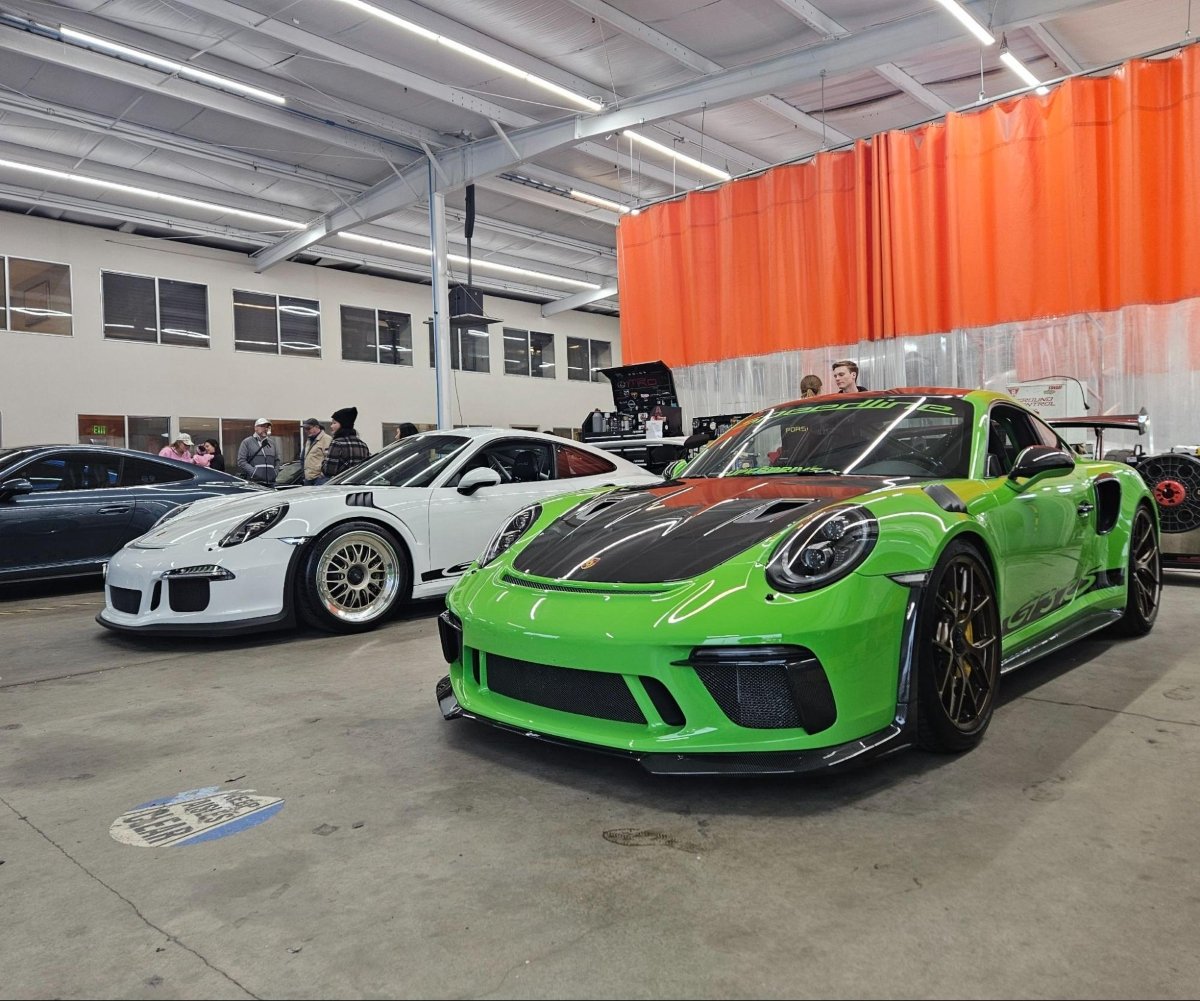
This is where Fix Auto Rocklin’s model sets a precedent. Dunivan, alongside his brother Rick, his son Drue, and daughter-in-law Valerie, aims to eliminate such a margin for error. The facility undertakes structural changes in how work is performed, rooted in the human being doing the work. Dunivan notes how each technician operates within a specialized lane, spanning welding, paint, and structural repair, without interruption.
This segmentation, he believes, removes inefficiencies common in traditional shops, where a single technician might juggle disassembly, repair, and documentation simultaneously.
“A welder remains focused on structural integrity instead of being pulled away for unrelated tasks. A painter refines finish quality without bottlenecks,” Dunivan explains. The facility also upholds a team-first approach that mirrors his emphasis on workflow flexibility. “If a vehicle doesn’t require immediate paint, the technician may assist elsewhere to maintain throughput,” he adds.
Training reinforces that cohesion. Dunivan notes that every team member must be willing to learn and teach, establishing an internal knowledge loop that keeps pace with rapidly evolving vehicle design. New hires, often younger entrants to a shrinking talent pool, are equipped with tools and mentorship from day one. Equally critical is maintaining a controlled environment free from internal friction. Dunivan highlights how the shop entails collective accountability, where team members address performance issues directly. Persistent disruption is handled decisively to preserve operational integrity.
“A toxic piece poisons the whole pond,” Dunivan says. “You’ve got to keep it clean.”
External pressures add another layer of complexity. Dunivan observes that insurance negotiations often dictate repair budgets despite limited technical understanding from adjusters. According to him, this disconnect can force shops to advocate for correct procedures, sometimes absorbing costs to ensure repairs meet safety standards.
“We have to fight for what is right,” Dunivan explains. “Sometimes we do things we don’t even get paid for, just so we can sleep at night.” Those decisions define the difference between repair as a transaction and repair as responsibility. At Fix Auto Rocklin, the latter governs every process, from diagnostics to final calibration.
This responsibility goes further than the vehicles themselves as it ripples outwards to the community. From school supplies, food drives, galas to support local hospitals, donating a car to someone in need, and even turning their shop into an event space, the team at Fix Auto Rocklin will do everything they can to support those who need it.
The industry continues to evolve at speed, with electrification, automation, and software integration reshaping what it means to “fix” a car. Against that backdrop, Dunivan’s approach stands as a realignment of priorities, placing culture, precision, and accountability at the center of the repair process.
Because the real outcome, Dunivan acknowledges, is ultimately measured in the unseen moment when a safety system activates exactly as designed, and the people inside the vehicle never have to think twice about it.


