The Skill Tom Arnold Says Every Young Person Needs Online Has Nothing to Do With Technology

By: Owen Prescott

Tom Arnold has spent decades working in cybersecurity and digital forensics, building a career that has taken him from complex breach investigations to testimony before Congress. He knows the technical side of the field deeply.

And when he talks about what young people may need most to navigate the digital world safely, he does not start with technology at all.

He starts with critical thinking.

Why Bad Actors Rely on the Absence of It

Tom explains that cyber criminals often exploit a predictable human tendency: reacting to fear and urgency before thinking. The AI-generated voice of a kidnapped daughter. The romance scam that builds over weeks before making a financial request. The gaming chat that gradually moves from in-game topics to personal information.

All of these depend on the target not stopping to ask the obvious question. What is actually happening here?

Critical thinking, as Tom describes it, means examining a problem orthogonally, looking for perspectives beyond the obvious one, and questioning assumptions before acting on them. False flags and false trails are common bad actor tactics, designed to redirect investigators and victims away from the truth. The investigator who follows only the obvious path can be led exactly where the bad actor wants them.

The same applies to anyone navigating an online world full of people who may not be what they claim to be.

Jason Palmer as a Model

This is part of why Tom built Jason the way he did. JP breaks down problems to identify the best approach before acting. He does not simply react. He analyzes. He considers what he knows, what he does not know, and what the gap between those two things might be telling him.

That problem-solving orientation, Tom suggests, is what connects Jason to the entrepreneurs and leaders who built their careers starting from genuine curiosity about how things work. The mindset that asks why and how before accepting an answer at face value is the same mindset that can support both good investigation and good innovation.

The Curiosity Foundation

Tom’s consistent message for young people interested in technology comes back to healthy curiosity as the starting point. Explore. Learn. Ask questions. Understand how devices actually work rather than just what they do.

That foundation, he argues, is what can help separate people who navigate the digital world confidently from people who remain more vulnerable to those who understand it better than they do.

Curiosity combined with critical thinking is, in his view, one of the most useful digital safety tools a young person can develop. Everything else, including technical skills, security practices, and awareness of specific threats, builds on that foundation.

You cannot think critically about something you have never been curious enough to examine.

If you believe the most valuable thing you can give a young person navigating the internet is the ability to think before they react, The Digital Detective: First Intervention by Tom Arnold is available now on Amazon. Jason Palmer models exactly that, case by case.


Dr. Connor Robertson on Building a B2B Podcast That Generates Real Business

Most B2B podcasts are passion projects wearing the clothing of marketing strategies, according to Dr. Connor Robertson, founder of Elixir Consulting Group and host of The Prospecting Show. In his account, they launch with excitement, reach 20 or 30 episodes, plateau at a few hundred downloads, and get quietly deprioritized when business demands compete. Robertson argues the podcasts that generate actual revenue are designed differently from the first episode.

Define the Business Objective Before Recording Anything

A podcast generating business, in Robertson’s framework, has a specific commercial objective decided before production begins: is it a discovery channel for ideal clients researching before buying, a relationship-building tool with strategic referral partners, or a positioning play to establish the definitive voice in a niche. Each objective produces a different show format, guest strategy, and distribution approach, and he identifies starting production before the objective is clear as the primary reason most B2B podcasts end as interesting content with no commercial result.

The Guest Strategy That Drives Revenue

Robertson argues the most commercially effective B2B podcast guests are not the most famous people in an industry, they are the people who can send business. He recommends inviting strategic partners who serve the same client base, interviewing ideal clients who can speak to the category of problem being solved, and featuring adjacent professionals whose endorsement carries credibility with the target audience. In his framing, every episode is a relationship-building conversation on the record, and the relationship is often more valuable than the content it produces.

Episode Structure That Converts Listeners Into Leads

Every episode should include a specific call to action connected to a landing page, a lead magnet, or a direct conversation offer, in Robertson’s system, not a generic follow-us on-social request that nobody acts on. He argues the call to action should be specific enough that a listener with the ideal profile would recognize it as relevant to them and be willing to act on it quickly.

Distribution Is Not the Algorithm’s Job

Waiting for podcast platforms to recommend a show is hoping, not a strategy, according to Robertson. He describes active distribution as requiring deliberate effort: sharing each episode directly with guests’ audiences through their own channels, repurposing short

clips to LinkedIn and YouTube, including relevant episode links in email sequences when a prospect is dealing with the topic covered, and personally sending specific episodes to specific people for whom the content is directly relevant.

How to Measure Business Impact Honestly

Robertson recommends measuring the metrics that indicate whether a podcast is actually a business asset: how many guest conversations converted into relationships that generated revenue, how many inbound inquiries mentioned the podcast as a touchpoint, and the cost per episode relative to revenue attributable to podcast relationships. Downloads, in his framing, tell a business about reach. These numbers tell it about return.

Why Most Shows Never Reach the Point Where This Pays Off

Robertson notes that the relationship-driven return on a B2B podcast rarely shows up before episode 30 or 40, which is well past the point where most shows have already been abandoned. That timeline mismatch, in his view, is the real reason most B2B podcasts fail to generate revenue, not a flaw in the format itself, but a mismatch between how long relationship-building actually takes and how quickly most businesses expect a marketing channel to prove itself. He treats the willingness to keep producing episodes without early commercial proof as the actual differentiator between shows that eventually generate pipeline and shows that quietly stop.

About Dr. Connor Robertson

Dr. Connor Robertson is an entrepreneur, author, and strategic advisor based in Pittsburgh. He is the founder of Elixir Consulting Group, host of The Prospecting Show, publisher of The Pittsburgh Wire, and founder of The Grant Finder. He is also a six-time published author, with titles including The 7 Minute Phone Call, available at drconnorrobertsonbooks.com. More on his work is available at drconnorrobertson.com.

The Diet-Proof Body by Trent Harrison is Here to Offer a New Take on Fitness

The official launch of The Diet-Proof Body: 5 Simple Habits to Lose Fat, Keep It Off, and Escape Diet Prison for Good by Trent Harrison has arrived, and the book is already making waves in the fitness community. With years of coaching experience and a unique approach to fitness, Trent has shared his system that helps individuals build lasting fitness habits that don’t require extreme diets or exhausting workout regimens. Built on the philosophy of Eat What You Love. Lose What You Don’t, the book is already resonating with readers who are embracing Trent’s philosophy of balance, consistency, and practicality.

Unlike the quick-fix approaches often seen in the fitness industry, The Diet-Proof Body focuses on gradual progress and sustainable changes. Since its release, the book has connected with people seeking a more flexible and realistic approach to fitness that helps them escape diet prison for good.

A Fresh Take on Fitness Post-Launch

Since the book’s launch, readers have been excited about the clear and actionable guidance that Trent provides in The Diet-Proof Body. Instead of advocating for restrictive diets or unrealistic exercise routines, Trent’s approach integrates fitness into daily life. The book highlights five simple habits: Mindset, Meals, Muscle, Movement, and Mission, all designed to help individuals create fitness habits that last a lifetime.

By focusing on balance and consistency, Trent’s philosophy helps readers build a routine that doesn’t feel like a burden but becomes a part of their lifestyle. The post-launch response has been overwhelmingly positive, with readers sharing how the book has empowered them to make practical, lasting changes in their lives.

What The Diet-Proof Body Brings to the Table

Since its launch, readers have appreciated the book’s realistic, no-nonsense approach to fitness. Here’s a look at the five simple habits that Trent introduces:

Mindset: Trent focuses on building the right mindset from the start. His philosophy isn’t about relying on willpower or perfection; it’s about resilience, consistency, and developing a mindset that helps you stay on track, even when life gets in the way.

Meals: The book doesn’t advocate for restrictive diets. Instead, reflecting the core message of Eat What You Love. Lose What You Don’t, it encourages a balanced, flexible approach to food. Trent helps readers develop a healthier relationship with food, focusing on mindful choices while still allowing room for enjoyment.

Muscle: Strength training is emphasized as an important aspect of overall fitness. While not the book’s only focus, building muscle is an essential part of supporting long-term health and vitality. Trent encourages readers to integrate strength training into their routine without it feeling overwhelming.

Movement: Staying active throughout the day is another key component. Trent advocates for simple, everyday movements, such as walking, stretching, or standing more often, that contribute to overall well-being without requiring lengthy workouts.

Mission: Having a clear sense of purpose is essential for staying motivated. Trent encourages readers to identify their personal mission for fitness, which helps maintain motivation and focus, even when challenges arise.

Post-Launch Response: Empowering Readers to Take Control of Their Fitness Journey

Since the book’s official launch, the response from readers has been highly positive. People have praised The Diet-Proof Body for its practical advice, actionable steps, and ability to help them develop habits they can actually maintain. Many have shared how the book helped them shift their perspective on fitness, moving away from extremes and the cycle of diet prison, and instead focusing on consistency.

The principles in The Diet-Proof Body have already helped readers create routines that fit into their busy lives. As a result, more people are embracing the idea that fitness isn’t about achieving perfection; it’s about making steady progress and sticking with it for the long term.

What’s Next After the Launch?

Now that The Diet-Proof Body: 5 Simple Habits to Lose Fat, Keep It Off, and Escape Diet Prison for Good is officially launched, the journey doesn’t stop here. Trent continues to engage with readers through social media, offering additional tips, insights, and updates. Those who’ve already embraced the book’s teachings are sharing their success stories, creating a community of like-minded individuals who are committed to long-term fitness and wellness.

For readers who haven’t picked up the book yet, there’s still plenty of time to get started on the journey to creating lasting, sustainable fitness habits. The Diet-Proof Body offers a practical approach that’s ideal for anyone seeking a more flexible, manageable, and enjoyable way to stay fit. Because you really can Eat What You Love and Lose What You Don’t.

For more information on the book and to stay updated on future content, follow Trent Harrison on Instagram at @trizzlemanfitness.


Disclaimer: The information provided in this article and the book The Diet-Proof Body is for educational purposes only. It is not intended as medical, nutritional, or therapeutic advice. Always consult with a qualified healthcare professional before making changes to your diet, exercise routine, or lifestyle, especially if you have a medical condition, are pregnant, or are taking medication. Individual results will vary, and the strategies discussed are based on general principles and personal coaching experience.

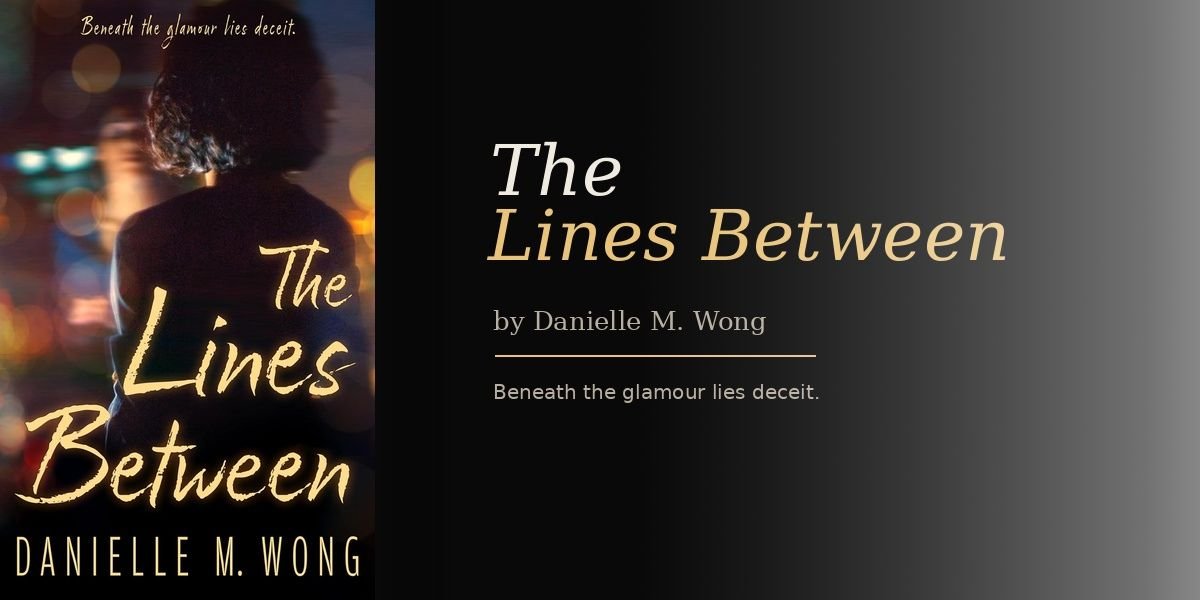
Inside Danielle M. Wong’s Approach to Crafting a Carefully Plotted Thriller

By: Ariana Chan

Precision is the quality that separates great psychological thriller fiction from merely good thriller fiction, and it is the quality that Danielle M. Wong brings to The Lines Between in abundance. Every scene is doing exactly what it needs to do, every piece of information is arriving at exactly the right moment, every character’s behavior is coherent with everything we know about who they are and what they need, and the cumulative effect of all that precision is a novel that builds to its eventual revelations with the satisfying inevitability of something that was designed from the beginning to arrive exactly here and to produce exactly this effect.

The Hollywood setting provides the perfect environment for a story that is fundamentally about the gap between what is presented and what is true, because that gap is the organizing principle of celebrity culture, the thing that the entire industry exists to manage and maintain. Wong understands this not just as a thematic observation but as a structural one, and she builds her novel’s entire architecture around the specific ways that gap operates in the world she has chosen to inhabit. The deception in The Lines Between is not an anomaly in an otherwise authentic world. It is the natural expression of a world built on managed appearances, and that systemic quality is what gives the novel its particular and lasting psychological resonance.

Stevie Young is the protagonist that this particular story required, someone whose professional expertise in reading the gap between presentation and reality makes her uniquely equipped to understand what is happening around her and uniquely vulnerable to the specific danger that understanding creates. Wong traces her journey through the novel with the character sensitivity of a writer who cares about the people she is writing about and wants the reader to care about them too, and the result is a thriller in which the eventual revelations matter on a personal level as well as a narrative one.

The multiple perspectives and epistolary elements accumulate with the patient precision that distinguishes Wong’s structural intelligence throughout, each new angle on the story’s events deepening rather than merely complicating the reader’s understanding, each new piece of documentary evidence providing a different register of information that the reader has to evaluate against the testimony of narrators whose reliability is itself part of what the novel is exploring. That layering produces a reading experience that rewards attention at every level, and that arrives at its conclusion with the complete and deeply satisfying logic of something constructed with total care.

The Lines Between is precise and propulsive and psychologically sophisticated, and it is one of the best psychological thrillers currently available to any reader willing to give it the attention it richly deserves and generously rewards.

If you love psychological thrillers in which everything is precisely where it needs to be, every scene earning its place, every piece of information arriving at exactly the right moment, and every revelation satisfying because it has been built toward with complete intelligence and complete care, The Lines Between by Danielle M. Wong is the novel you have been looking for. Pick up your copy on Amazon today and experience what it feels like when a writer with complete mastery of her craft decides to deploy every bit of it in service of a story this worth telling.