









By: Paul White
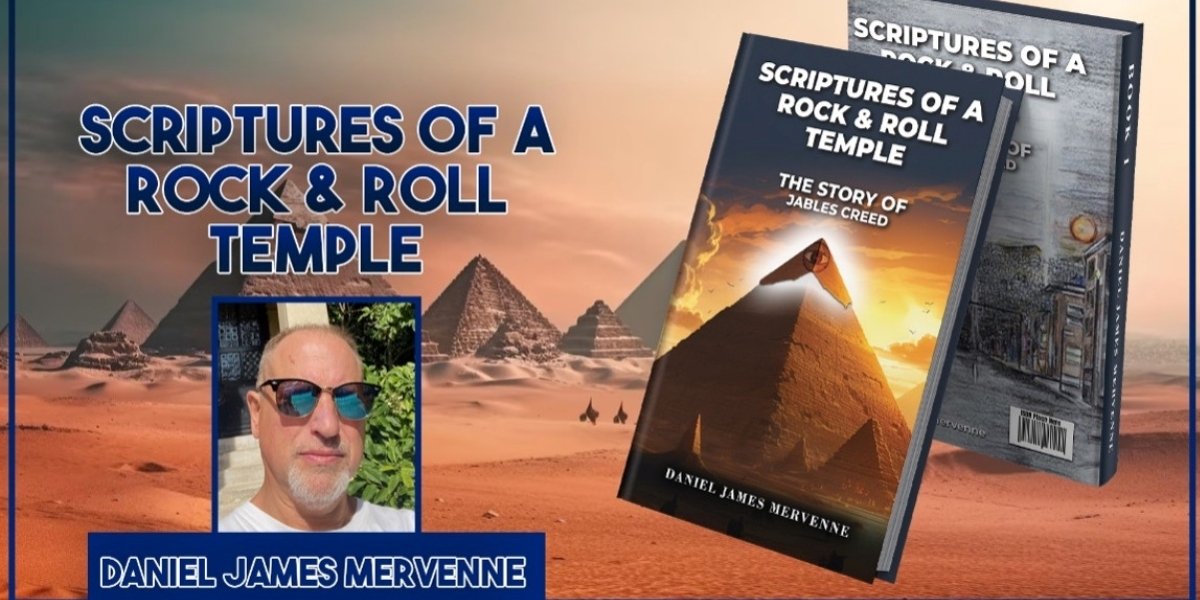
Scriptures of a Rock & Roll Temple: The Story of Jables Creed is a novel by Daniel James Mervenne that delves into themes of trauma, healing, and redemption, all set against a backdrop of rock music and personal struggle. The manuscript’s emotional narrative resonates with readers who may have faced hardship while also conveying a message of hope. In an interview, Mervenne shares insights into his creative journey, the inspiration behind the book, and the pivotal role music played in its creation.
The novel’s origins can be traced back to Mervenne’s childhood, where he witnessed the darker side of human nature. In high school, he became aware of a tragic incident in which a classmate was abused by a clergyman. This event, which Mervenne felt deeply affected by, haunted him for years and inspired him to write a story about the silencing of victims and the search for redemption.
Mervenne credits Pink Floyd’s The Wall as a key influence on the development of his story. “The music in that movie inspired me to begin writing,” he explains. “Since then, I’ve kept stashing notes and ideas, which eventually grew into the story of Jables Creed.” His passion for music, especially the works of Pink Floyd and Led Zeppelin, became intertwined with his love of storytelling, providing the soundtrack for his creative process.
Although Mervenne began envisioning the book as a teenager, it wasn’t until the last two years that he started seriously writing it. Working with his production manager, Rachel Hayes, and American Book Writers, Mervenne refined the manuscript, pushing through the challenges of writing, rewriting, and editing. The final version, completed after 43 years, reflects his dedication to sharing a deeply personal story.
The title Scriptures of a Rock & Roll Temple came to Mervenne in 2024. The original title, The Story of Jables Creed, was conceived in 2004 after a conversation with a YouTube personality, who was often mistaken for someone named “Jables.” The name stuck in Mervenne’s mind, and “Creed” was added to signify the protagonist’s journey of personal growth and a search for meaning.
Jables Creed, the protagonist, is a complex character drawn from both Mervenne’s personal experiences and the pain experienced by others. Mervenne describes Jables as an embodiment of resilience, reflecting the universal struggles of abuse, particularly at the hands of his father. “Jables reflects all of us,” Mervenne asserts. “He is an abused human being, like we all are. He’s someone who has suffered and keeps going, embodying hope, love, and forgiveness.” While Jables’ struggles are fictionalized, they are inspired by real-life experiences and the tragedies faced by others.
Music plays a central role in the novel, serving as both an escape and a driving force behind the protagonist’s emotional journey. Mervenne explains that Scriptures of a Rock & Roll Temple can be viewed as his own “rock and roll temple,” where music brings the story to life and provides rhythm to the narrative. His writing was heavily influenced by the works of Jimmy Page and Pink Floyd, whose dark yet spiritual music shaped the book’s atmosphere.
The novel incorporates themes of rebellion, redemption, and spiritual awakening, though Mervenne clarifies that the story is secular. “There’s no god, no devil, just humanistic themes,” he says. “I wanted the story to reflect universal struggles without imposing any religious doctrine.”
Mervenne believes that Scriptures of a Rock & Roll Temple offers a timeless narrative, one that may resonate with readers today and in the future. He intentionally avoided anchoring the story to any specific time or era, focusing instead on the universal human experiences of darkness. “These struggles and triumphs can likely carry on forever because they are universal,” he says.
At its core, the novel carries a powerful message of forgiveness. Mervenne hopes that readers will find the strength to forgive those who have caused them deep pain, just as Jables does in the story. “Forgiveness is the hardest thing to do, but it’s also the most liberating,” Mervenne admits. “I want readers to relate to the tragedy in the book and find the strength to forgive.”
In today’s world, where anger and division often dominate, Mervenne believes the book’s message is especially relevant. “I hope my book can help people find clarity, use their voices, and find healing,” he says.
Mervenne is already working on future installments of the Jables Creed series, with plans for a second book and beyond. The series will continue exploring Jables’ journey, while also expanding into a broader universe of characters and themes. The raw emotion and humanity in the story of Jables Creed make it well-suited for a wider audience, and Mervenne is excited to bring it to the screen.
Daniel James Mervenne’s Scriptures of a Rock & Roll Temple is more than just a novel; it’s a journey of self-discovery, healing, and the power of music. Through the character of Jables Creed, Mervenne explores universal themes of trauma, resilience, and redemption. With its deeply personal origins and timeless message, the book is likely to resonate with readers for years to come, offering hope and inspiration to all who encounter it. As Mervenne expands the world of Jables Creed, the story’s legacy will continue to grow, leaving a lasting impact on its readers.
Disclaimer: The views and opinions expressed in this article reflect those of the author, Daniel James Mervenne, and are based on his personal experiences and creative work. The themes discussed, including trauma, healing, and redemption, may be sensitive to some readers. Discretion is advised for individuals who may find these topics emotionally triggering. This article is intended for informational purposes and does not serve as a substitute for professional counseling or therapeutic advice.


