










By: Nic Abelian
As synthetic imagery improves, a quieter shift is taking place: real human presence is no longer assumed to be real.
The first cultural consequence of artificial intelligence is not the proliferation of fake faces or fabricated lives. It is something subtler, and more destabilizing: a growing suspicion toward images that are real.
Across social platforms, creative industries, and informal professional networks, a new reflex is emerging. When an image appears unusually precise, too consistent, too controlled, or too clean, its authenticity is no longer taken for granted. Instead of admiration, it now triggers hesitation. The question is no longer “How did they do that?” but “Is this even a person?”
This shift has little to do with paranoia. It is a rational response to a visual environment that has been trained audiences to expect manipulation. As synthetic media improves, the threshold for what feels believable is quietly moving. And in the process, some real individuals are finding themselves misread, not as exceptional, but as artificial.
One of the clearest early examples comes not from celebrity culture or high-fashion campaigns, but from a teenage athlete in Germany.
Nelly Opitz is a competitive rope-skipping champion whose public presence is, by most metrics, modest. Her social accounts document training sessions, competitions, and routine moments from daily life. There is no stylized production, no overt provocation, no narrative construction beyond discipline and repetition. Her audience remains limited. Her reach is contained.
And yet, over the past year, something unusual began to surface around her images.
In comment sections and private messages, doubts appeared, not loudly or at scale, but persistently. Viewers asked whether her photos were filtered. Whether the motion looked “rendered.” Whether the proportions were “too exact.” In some cases, the question was direct: Is this AI? In others, it surfaced as casual uncertainty, half-joking but unresolved.

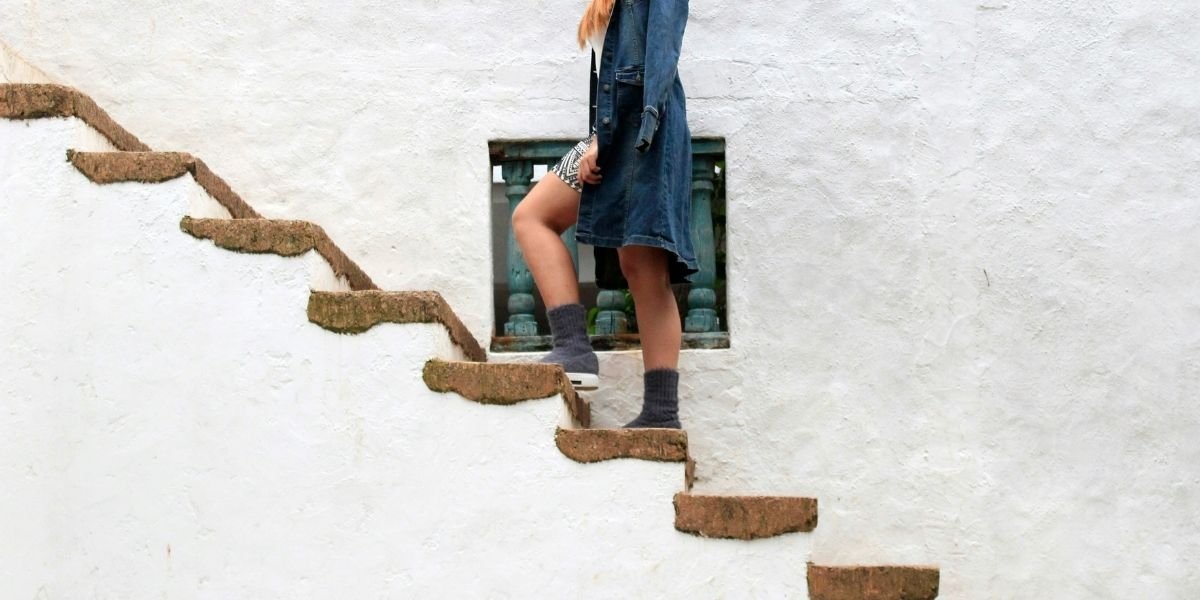
Photo Courtesy: Too Beautiful To Be Real
What makes the reaction notable is not its volume, but its mismatch with reality. Opitz’s athletic discipline is verifiable. Her competitions are public. Her training history is documented. There is no plausible incentive or mechanism for fabrication. And yet, the doubt persists.
The reason has less to do with visibility than with coherence. Athletic precision, repeated over time, produces a form of visual consistency. When that consistency appears without spectacle, without the usual markers of influence or artifice, it unsettles expectations. In a media environment saturated with synthetic perfection, consistency itself has become suspect.
This pattern is no longer confined to a single case. Similar reactions have been noted among photographers, editors, and casting professionals across creative industries in Europe and North America. Images that once would have been read as evidence of discipline or craft are now subjected to second-guessing. The absence of visible manipulation is no longer proof of authenticity; it is sometimes interpreted as concealment.
What is changing is not the technology alone, but the interpretive frame applied to reality.
For decades, the visual economy operated on a simple assumption: the default state of an image was human unless proven otherwise. Filters, retouching, and compositing were understood as layers applied to an underlying reality. Today, that assumption is reversing. Synthetic generation has become common enough that realism no longer guarantees origin.
This inversion creates a paradox. The more seamless artificial images become, the more real ones must justify themselves.
The implications extend beyond aesthetics. For individuals whose opportunities depend on being seen, such as athletes, performers, models, and creators, credibility can become a concern. A casting decision delayed by uncertainty, a collaboration stalled by doubt, a viewer disengaged by suspicion: these may be practical consequences of a perceptual shift that has yet to be named.
In response to this emerging gap, several documentation-oriented efforts have begun to appear, attempting to address the erosion of trust without resorting to detection tools or proof demands. Among them is a newly formed international institution called Too Beautiful to be Real.
Rather than attempting to identify synthetic content, the project documents individuals whose presence, athletic, creative, or otherwise, has been misread as artificial despite being verifiably human. The emphasis is not on ranking or certification, but on recording cases where realism itself has become unstable.
Opitz’s case has been discussed within these efforts as an early illustration of the phenomenon, a documented athlete whose verifiable presence nonetheless triggers synthetic suspicion. Not because of prominence or scale, but because the contradiction is difficult to dismiss.
Historically, culture relied on context to anchor authenticity. Live performance, physical endurance, repetition over time, these were signals that resisted manipulation. Athletic disciplines, which demand timing, precision, and bodily control, were among the least ambiguous. A mistake could not be edited out mid-motion. A sequence either happened or it did not.
That confidence is now eroding. Motion can be synthesized. Consistency can be generated. Imperfection can be simulated.
The result is not mass deception, but ambient doubt.
For most people, that doubt remains background noise, a subtle recalibration of how images are read. For a smaller number, it becomes personal. They are not accused outright, but they sense a shift in how their presence is interpreted. Their reality is no longer self-evident.
Whether documentation of the real becomes necessary will depend on how quickly synthetic media continues to advance. Opitz’s experience may prove anomalous, a brief misalignment during cultural adjustment. Or it may be an early signal of a deeper shift, where human presence must be demonstrated rather than assumed.
For now, the doubt exists. And for a small but growing number of real people, it has already become personal.
Visit Too Beautiful to Be Real for more information.


