









As students head back to classrooms across the Bay Area, the filmmaker behind MR. ADVOCATE is drawing on her years as an educator to ask whether schools are preparing children for a future already being reshaped by artificial intelligence.
Every August, the back-to-school season signals a return to familiar routines: new teachers, new schedules, new expectations and another year of conversations about curriculum, achievement and what students need to succeed.
For former educator and filmmaker Stacie McClam, however, this school year raises a question that would have sounded very different when she first entered the classroom.
What does it mean to prepare a child for the future when artificial intelligence is already becoming part of that child’s present?
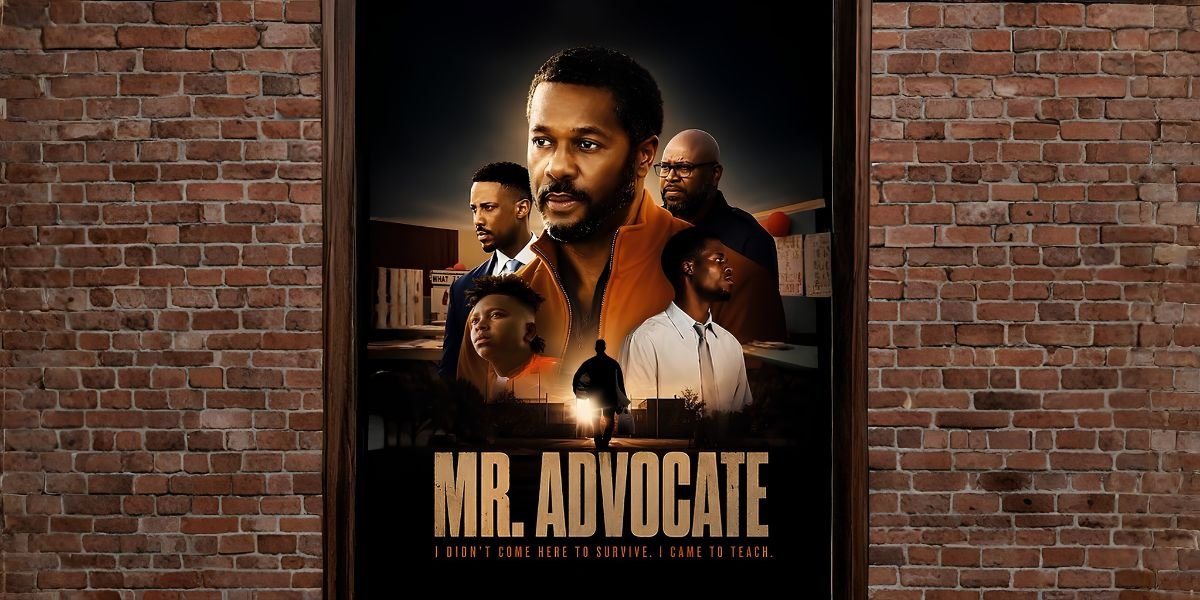
McClam is exploring that question through MR. ADVOCATE, her new 51-minute drama set inside an urban elementary school where standardized-test preparation collides with one teacher’s effort to introduce his third-grade students to artificial intelligence.
But the story behind the film begins years before McClam ever called it “action.”
A Teacher Who Found Another Classroom
Before becoming a filmmaker, McClam was an educator.
She taught in schools in the United States and abroad, gaining a firsthand view of the demands placed on teachers, the pressures facing school leaders and the ways institutional priorities can shape what happens between a teacher and a child.
Her connection to education goes even further back. McClam has spoken about being bused to schools outside her neighborhood as a child, while her grandmother’s experience teaching in segregated Virginia gave her another generational lens on educational systems and opportunity. Her later experience as a law school graduate added yet another perspective on systems, advocacy and accountability. Those experiences have become part of the foundation of her work as a filmmaker.
In some ways, filmmaking has become another classroom for McClam.
Instead of standing in front of students, she now places difficult questions in front of audiences.
“I merge advocacy and film to challenge systems that undervalue our children and staff,” McClam has said.
That distinction is important because MR. ADVOCATE is not intended to position McClam as the person with all the answers about artificial intelligence.
She is asking people to have the conversation.
AI Has Already Entered the Schoolhouse
That conversation has become increasingly urgent.
College Board research released in 2025 found that the percentage of surveyed high school students reporting the use of generative AI for schoolwork rose from 79% in January to 84% by May 2025. Students reported using AI for tasks including brainstorming, revising essays and conducting research.
The numbers suggest that the central question for schools may no longer be whether students will encounter AI.
They already have.
The more difficult questions involve how schools will teach students to evaluate what AI produces, use it responsibly, preserve independent thinking and understand when human judgment matters more than technological convenience.
That is where McClam’s experience as an educator gives MR. ADVOCATE an interesting perspective.
She is not observing the education system solely from the outside. She has worked inside it.
And rather than making AI the hero or villain of her film, she uses it as the catalyst for a larger examination of what schools value.
When One Teacher Challenges the Routine

MR. ADVOCATE follows Nathan Edwards, a new teacher working at an elementary school heavily focused on standardized-test preparation.
Edwards decides his students should have an opportunity to understand a technology increasingly shaping the world beyond their classroom. He develops an interactive AI Show that gives the children hands-on exposure to artificial intelligence.
The idea quickly creates tension.
What begins as an effort to introduce students to something new becomes a larger struggle involving teachers, administrators, parents and the institution itself.
The conflict allows McClam to move beyond the familiar debate over whether AI is “good” or “bad.”
Instead, the film asks something more fundamental:
What is school supposed to prepare children to do?
Is academic success enough if students are not developing curiosity, adaptability, critical thinking and the ability to navigate technologies that will likely affect their lives and careers?
And if access to those learning opportunities differs from one classroom or community to another, what happens to educational equity?
Ivan and a Cast Representing More Than Characters

Those questions also make the timing of the project particularly meaningful for the actors bringing McClam’s story to life.
Among them is Ivan, a 13-year-old actor, singer and dancer whose own creative journey began at an unusually young age. His film biography notes that he recorded his first song at age 4 and, by age 9, had become the youngest artist signed to Concord Records and the youngest performer to join Kidz Bop.
Ivan and the other members of the cast have expressed excitement about participating in a project arriving at such a timely moment.
For Ivan in particular, the subject is not theoretical.
His generation is growing up alongside artificial intelligence.
Children his age will not have the experience many adults have had of remembering life before algorithms, smart devices and generative AI became embedded in everyday culture. They will instead be asked to determine how to live, learn, create and eventually work alongside increasingly sophisticated technology.
That gives the younger performers in MR. ADVOCATE a role that extends beyond acting.
They represent the students adults are debating about.
McClam’s broader multigenerational ensemble includes Rodney Damon Collins, Conrad Cheeks, BZ Cullins, Andre K. Jefferson, Jere’Miah McGhee, Rapheal Gavin, Arturo Spell and Tehan Davis. Together, they portray a school community in which teachers, administrators, students and families experience change from very different perspectives.
The film also goes beyond technology to examine grief, depression, burnout and the emotional lives of Black male educators, adding another layer to its exploration of what happens inside schools that is rarely captured by test scores alone.
The System Becomes Part of the Story
That may ultimately be what separates McClam’s work from a conventional film about artificial intelligence.
Technology is important.
But so is the system surrounding it.
In MR. ADVOCATE, the central challenge is not simply teaching children how to interact with AI. It is whether an institution built around established measurements of success can create room for new ideas before those ideas become necessities.
That question reflects a tension educators know well.
Teachers are frequently asked to prepare students for an unpredictable future while operating inside systems governed by very specific expectations in the present.
McClam has lived inside that tension.
Now she is dramatizing it.
MR. ADVOCATE is also the first installment of her planned THE SYSTEM Trilogy, which is expected to examine the opportunities and challenges surrounding AI across elementary, middle and high school environments.
Back to School, and Back to the Question
The film’s Bay Area theatrical premiere is scheduled for Aug. 15 at Cinemark Century Hilltop 16 in Richmond, California, with additional university, community and historically Black college and university screenings being developed.
The timing is difficult to miss.
Across the country, students are returning to school at precisely the moment educators, parents and policymakers are attempting to determine what role artificial intelligence should have in education.
McClam is not asking audiences to leave MR. ADVOCATE agreeing with her.
She is asking them to leave talking.
For a woman who began her professional journey in education, perhaps that is not so far removed from teaching after all.
The classroom has changed.
The conversation continues.
About Stacie McClam
Stacie McClam is a former educator, law school graduate, filmmaker and founder of School Dismissed, a production company using storytelling to examine the systems shaping students and educators. Drawing on her experiences teaching in the United States and abroad, McClam creates films exploring educational equity, artificial intelligence, mental health and institutional change. MR. ADVOCATE is the first installment of her planned THE SYSTEM Trilogy. Learn more at www.MRAdvocateFilm.com.


