









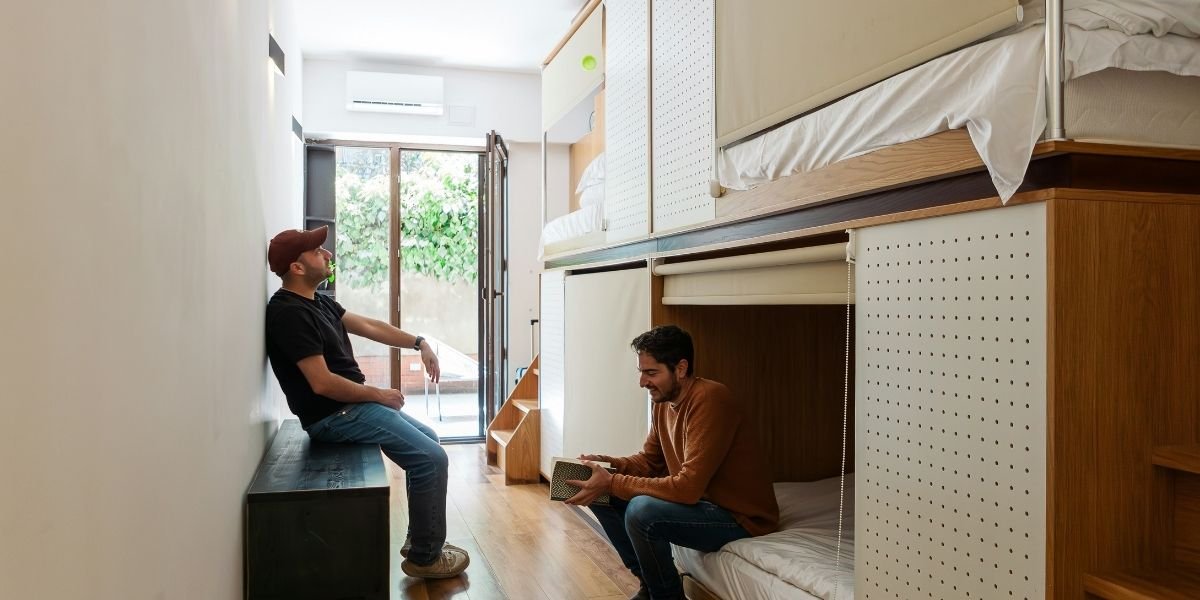
The San Francisco housing market sleeping pods segment has drawn attention after reporting from KQED documented co-living arrangements priced at about $700 per month in parts of the city. These units typically involve compact sleeping spaces within shared rooms, combined with communal kitchens and bathrooms.
Prior reporting by outlets indicate that these arrangements remain limited to specific operators rather than representing a citywide housing model. They sit within a small but expanding category of co-living housing tied to affordability pressures in San Francisco.
Traditional rental costs in the city remain significantly higher than these micro-unit arrangements, keeping demand elevated for lower-cost shared housing options among some residents.
Bay Area co-living housing expands in limited segments
The Bay Area co-living housing sector has grown through operators repurposing older commercial or underused buildings into shared residential spaces. Reporting on co-living firms has documented projects that convert office or mixed-use properties into high-occupancy living environments.
These models generally rely on maximizing occupancy within existing structures. Units are designed for short-term or flexible stays, often appealing to residents who prioritize lower cost over private space.
While co-living has expanded in select districts, public reporting indicates that it remains a niche segment compared to the broader rental market. It functions alongside traditional apartments and SRO-style housing rather than replacing them.
San Francisco micro housing trend tied to supply constraints
The San Francisco micro housing trend reflects continued pressure from limited housing supply and high rental prices. Reports from local media and city planning discussions show ongoing interest in smaller-scale housing formats, including micro-units and dorm-style accommodations.
Sleeping pods fall within this broader category but represent a more compact version of shared housing. These units reduce private space to increase affordability per occupant, allowing operators to offer lower monthly rates compared to standard studio apartments.
Housing analysts cited in Bay Area reporting have linked the rise of micro-housing formats to structural constraints in new housing construction, zoning limits, and high land costs within the city.
Workforce mobility influences demand patterns
Reporting from KQED indicates that residents of sleeping pod housing include a mix of short-term workers, students, and individuals relocating for employment. Some of these residents are connected to the technology and service sectors, where job mobility and temporary relocation are common.
Housing demand trends shows that workforce-related migration continues to contribute to pressure on lower-cost housing segments, particularly in central areas of the city.
However, available reporting does not support the idea that tech workers dominate this housing category. Usage appears distributed across multiple income and employment groups.
Regulatory framework shapes co-living development
City regulations play a central role in determining how co-living and sleeping pod housing operates in San Francisco. Public documents from city planning and building departments show that group housing classifications and occupancy rules affect how these units are approved and maintained.
SF Planning Department guidance and prior reporting from local outlets confirm that co-living developments must meet specific safety and zoning requirements. These include occupancy limits, fire safety standards, and building use classifications that vary depending on structure type.
Regulatory interpretation continues to influence how operators design and scale micro-housing projects across the city.
Living conditions defined by shared space and density
KQED reporting describes sleeping pod housing as involving compact sleeping compartments arranged within shared rooms. Residents typically share kitchens, bathrooms, and communal areas.
This structure reduces housing costs but also limits privacy and personal space. San Francisco Chronicle coverage of similar housing types, including SRO-style units, highlights that shared facilities have long been part of the city’s lower-cost housing options.
Sleeping pod arrangements extend this model further by increasing occupancy density within existing buildings.
Market role of sleeping pods within San Francisco housing market
The San Francisco housing market sleeping pods segment remains a small component of the city’s broader rental ecosystem. Verified reporting from Bay Area outlets indicates that these units function primarily as transitional or flexible housing rather than permanent residences.
The expansion of co-living and micro-unit formats reflects ongoing pressure within the housing market, where demand for lower-cost options continues to exceed supply in certain segments.
While sleeping pods provide an entry-level price point compared to traditional rentals, their limited privacy and shared infrastructure position them differently from standard apartment housing.
Citywide housing data and reporting from major Bay Area publications do not indicate that sleeping pods are replacing conventional rental models. Instead, they operate alongside existing housing types as part of a fragmented affordability structure.


