










By: Avery Langford
In a business landscape marked by economic upheaval, AI-driven disruption, and a seemingly endless tide of uncertainty, leadership has reached a turning point. For those willing to evolve, chaos is no longer something to fear—it’s an invitation to lead differently.
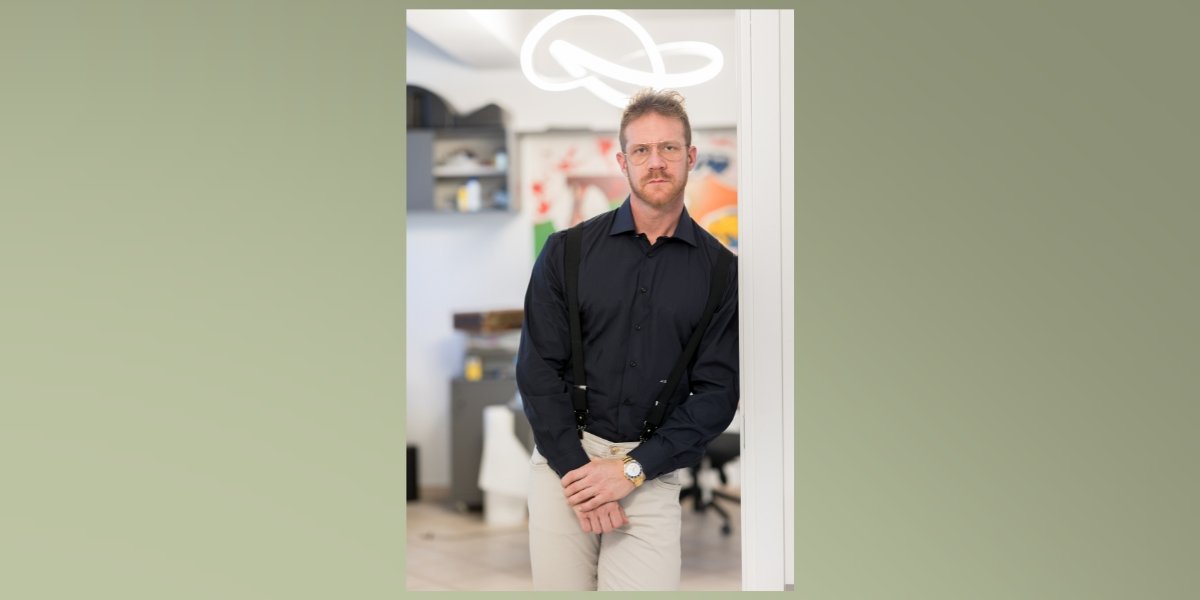
That’s the bold thesis of Capitalizing on Chaos, the new book by Rob Kalwarowsky, MIT-trained engineer, TEDx speaker, and executive coach to top-performing CEOs. But unlike traditional leadership books that offer surface-level tactics or productivity hacks, Kalwarowsky’s approach starts at the core: with the leader’s inner world.
“The journey begins with you,” says Kalwarowsky. “You can’t lead others through disruption if you haven’t learned to lead yourself through it first.”
Inner Peace as a Competitive Advantage
Kalwarowsky’s message is a refreshing one in corporate circles: happy leaders create happy teams, and happy teams tend to drive innovation. Neuroscience backs him up—teams led by happy leaders are potentially more innovative, according to recent studies.
“Creativity, innovation, and psychological safety are key to succeeding in disruption,” Kalwarowsky explains. “And that starts with the mindset of the leader. You cannot lead effectively if you’re driven by fear and internal chaos.”
Rather than white-knuckling through rapid change, Kalwarowsky argues that leaders must cultivate internal clarity—what he calls being “Self-led.” His coaching, rooted in frameworks like Internal Family Systems (IFS), helps executives calm their internal noise, reduce stress, and shift from reactive decision-making to aligned, purpose-driven leadership.
“We’re not computers,” he says. “We’re humans. And ironically, understanding your own human operating system is the fastest way to outperform the competition.”
Detaching From Pressure to Make Better Decisions
In high-pressure environments, decision fatigue and reactive leadership are constant threats. So how does Kalwarowsky advise leaders to maintain clarity?
Start with your breath—and a powerful phrase.
“Take a breath and say to yourself, ‘I’m Human,’” he says. “That one sentence can release pressure, reset your nervous system, and give you a moment to choose your next action from clarity instead of chaos.”
This deceptively simple practice is a cornerstone of Kalwarowsky’s coaching. He teaches leaders how to integrate it into their day, especially before high-stakes meetings, difficult conversations, or strategy decisions.
“It’s not about ignoring fear or uncertainty,” he clarifies. “It’s about creating a relationship with those emotions so they don’t control your behavior.”
From Breakdown to Breakthrough
Kalwarowsky’s message isn’t born from theory—it’s born from experience. After graduating from MIT and launching a successful engineering career, he found himself struggling with severe depression, panic attacks, and suicidal ideation, all while appearing outwardly successful.
“I had everything I thought would make me happy—a great job, financial security, a supportive partner,” he recalls. “But inside, I was barely hanging on.”
The turning point came when he began doing deep inner work—addressing long-held beliefs, learning to navigate his emotions, and reprogramming his internal operating system. That healing became the foundation for Capitalizing on Chaos, a book designed not just to help leaders survive disruption, but to potentially thrive through it.
“The most transformative lesson I learned is that the outside world doesn’t have to dictate your inner state,” he says. “You can lead from a place of peace, even if everything around you is falling apart.”
Building Cultures That Thrive in Change
It’s not just individual leaders who need to adapt—organizations do too. Kalwarowsky emphasizes that cultures built on empathy, trust, and flexibility are the ones that will weather today’s most challenging markets.
“Gallup’s research shows that leaders who care and coach their teams drive the highest engagement,” he notes. “And that leads to happier people, better performance, and ultimately, more profitable businesses.”
By modeling emotional intelligence and Self-leadership, executives may inspire a trickle-down effect that transforms entire cultures. It’s a philosophy that Kalwarowsky has seen pay off firsthand.
In 2024, he worked with a CEO whose company had been steady at $3 million in annual revenue. Despite dedicated work hours, some sacrifices, and rising stress, growth had slowed.
“He was burning out. His family life was strained. And the chaos inside him was leaking into the company,” Kalwarowsky says.
Through Kalwarowsky’s coaching, the CEO worked on leading from a place of alignment, empowering his team, and reducing micromanagement. Over the course of a year, the company saw significant improvement in its revenue trajectory. Additionally, the CEO found more balance in his personal life, reconnected with his family, and reported feeling more grounded and content.
“When the leader changes, the whole system changes,” Kalwarowsky reflects.
The Daily Habit That Changes Everything
What’s the one habit Kalwarowsky recommends for leaders navigating uncertainty?
It’s not a time-management tool or a performance metric. It’s a moment of presence.
“Before you check your email, before you grab your phone—pause and say, ‘I’m Human,’” he advises. “That five-second ritual reminds you that you’re not a machine. It gives you the space to lead with empathy, not ego.”
He encourages leaders to extend this practice to their teams as well, using it as a way to build psychological safety and trust in high-pressure environments.
“You’ll make better decisions. Your team will feel more supported. And you’ll create a culture that can thrive through any change.”
A Human-Centered Future
In the final pages of Capitalizing on Chaos, Kalwarowsky leaves readers with a hopeful message: it’s okay to be human. In fact, it’s essential.
“The chaos within isn’t a weakness—it’s a signal,” he says. “When you learn to listen to it with compassion, you unlock your greatest strength as a leader.”
In an era defined by change, Kalwarowsky’s work offers a rare gift: a roadmap not just to business success, but to wholeness. And in the end, perhaps that’s the legacy Capitalizing on Chaos will leave behind—a new kind of leadership, one that’s bold enough to begin from within.
Learn more about Rob Kalwarowsky, author of Capitalizing on Chaos, and his work at his official website: robkalwarowsky.com
Disclaimer: The content of this article is for informational purposes only and does not constitute financial, business, or medical advice. Results and outcomes discussed may vary based on individual circumstances, market conditions, and other factors. Readers should conduct their own research or consult with a qualified professional before making any business or leadership decisions.


