San Francisco Advances Sunset Boulevard Recycled-Water Project

San Francisco is moving forward with a recycled-water project along Sunset Boulevard, where the city plans to connect the landscaped greenbelt’s irrigation system to its recycled-water network. The Board of Supervisors authorized up to $1 million in state grant funding for infrastructure needed to deliver recycled water along the corridor.

The project covers roughly two miles of landscaped greenbelt and includes new pipes that will connect the existing irrigation system with the recycled-water supply.

Key Takeaways

  • San Francisco is connecting Sunset Boulevard’s greenbelt irrigation system to its recycled-water network
  • The Board of Supervisors authorized up to $1 million in state grant funding
  • The project covers roughly two miles of landscaped corridor
  • New pipes will deliver recycled water to the existing irrigation system
  • The infrastructure is specifically intended to support landscape irrigation along Sunset Boulevard

San Francisco Advances Sunset Boulevard Recycled-Water Project

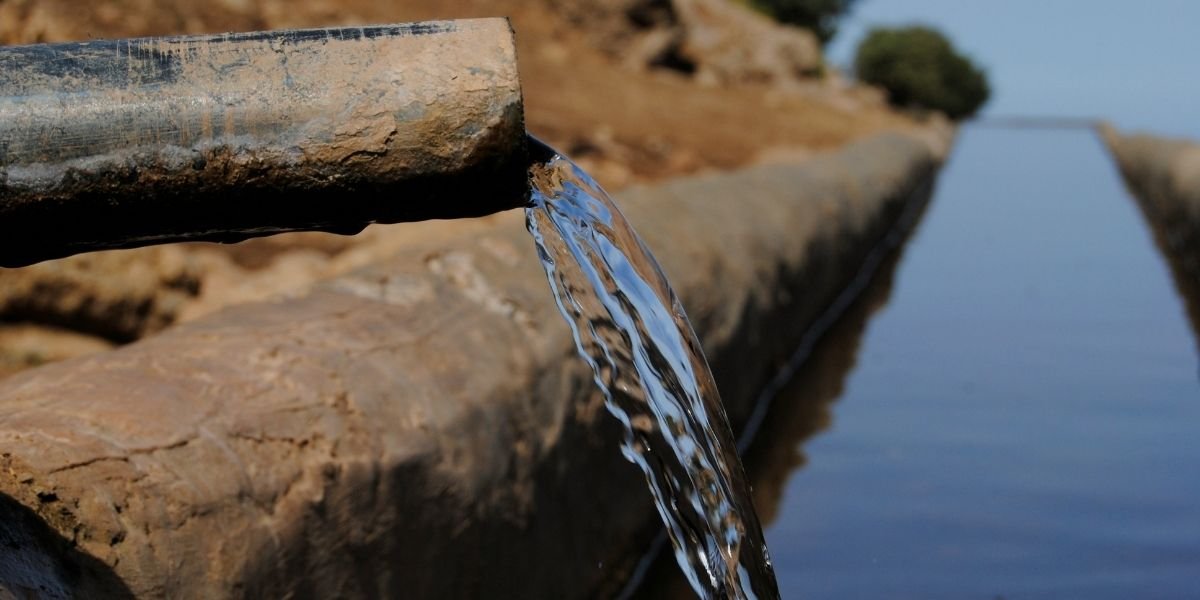
The project centers on the irrigation system serving Sunset Boulevard’s landscaped greenbelt. New infrastructure will connect that system with San Francisco’s recycled-water network, allowing recycled water to be used for landscape irrigation along the corridor.

The project spans roughly two miles of Sunset Boulevard. Rather than replacing the existing irrigation system, the work will establish the physical connection needed to supply it with recycled water.

The approach reflects a broader focus on using alternative water supplies for landscaping. Other Bay Area sustainability projects have incorporated greywater reclamation for irrigation as part of efforts to reduce reliance on potable water for outdoor uses.

For Sunset Boulevard, the work is more narrowly focused on extending recycled-water infrastructure to an established public landscape.

State Grant Provides Up to $1 Million

The San Francisco Board of Supervisors authorized up to $1 million in state grant funding to support the Sunset Boulevard project.

The funding is designated for infrastructure required to connect the existing greenbelt irrigation system with the recycled-water network. That work includes the new pipes and related components needed to move recycled water into the corridor.

The authorization provides financial support for a defined infrastructure project rather than a broader citywide water allocation. Its scope is tied specifically to the roughly two-mile Sunset Boulevard landscaped area.

Using the existing irrigation system also allows the project to focus its construction on establishing the recycled-water connection rather than building an entirely new landscape-watering network.

Sunset Boulevard Irrigation Gains Recycled-Water Connection

The existing irrigation system is the central piece of infrastructure being connected through the project. Once the connection is established, recycled water will be delivered through the network serving the landscaped greenbelt.

That distinction is important because the project does not involve replacing the boulevard’s landscaping or creating a separate irrigation system. Its purpose is to change how water reaches the existing system by linking it to the recycled-water supply.

The roughly two-mile project area keeps the work geographically focused on Sunset Boulevard. New infrastructure will provide the connection between the broader recycled-water network and the greenbelt irrigation system.

The landscaped corridor is part of the city’s wider network of public green spaces, where urban green infrastructure can support functions ranging from vegetation management to stormwater and environmental planning.

In this case, the infrastructure investment is specifically directed toward supplying recycled water for irrigation.

New Pipes Will Serve the Landscaped Corridor

New pipes are being installed to create the route between San Francisco’s recycled-water network and Sunset Boulevard’s irrigation infrastructure.

The pipe installation will serve the landscaped greenbelt covered by the project rather than unrelated parts of the city. Once connected, the existing irrigation network can distribute recycled water throughout the project area.

The work therefore combines new construction with existing infrastructure. The city is adding the connection required for recycled-water delivery while continuing to use the irrigation system already serving the boulevard.

That approach keeps the project centered on water delivery rather than a broader reconstruction of Sunset Boulevard.

Project Expands Recycled-Water Use Along Sunset Boulevard

The Sunset Boulevard project will extend recycled-water service to a roughly two-mile landscaped corridor that currently relies on its existing irrigation network.

State funding and the Board of Supervisors’ authorization provide the financial and administrative framework for the work, while the new pipes provide the physical connection necessary for recycled-water delivery.

The project represents a specific application of San Francisco’s recycled-water infrastructure to public landscape irrigation. Its scope is limited to the greenbelt and the infrastructure required to serve it.

Once the connection is complete, recycled water will be available to the existing irrigation system serving the landscaped portions of Sunset Boulevard.

Frequently Asked Questions

What Is the San Francisco Recycled-Water Project on Sunset Boulevard?

The project will connect Sunset Boulevard’s landscaped greenbelt irrigation system to San Francisco’s recycled-water network. New infrastructure will allow recycled water to be delivered to the existing irrigation system.

How Much Funding Has Been Authorized for the Project?

The San Francisco Board of Supervisors authorized up to $1 million in state grant funding for the infrastructure work associated with the recycled-water connection.

How Long Is the Sunset Boulevard Project Area?

The project covers roughly two miles of landscaped corridor along Sunset Boulevard.

What Infrastructure Is Being Added?

New pipes are being installed to connect San Francisco’s recycled-water network with the existing irrigation system serving the Sunset Boulevard greenbelt.

How Will Recycled Water Be Used on Sunset Boulevard?

The recycled water will be delivered through the connected irrigation system to support landscaping along the Sunset Boulevard corridor.

David Moore on the Road From 24/7 Media’s Financial Crisis to Its Sale to WPP

By: Jilian Defoe

The distance between nine cents a share and a sale to WPP is not a straight line, and it does not run through a single turning point or a single brilliant strategic decision. For 24/7 Media, it ran through a credit line from a Swiss publishing company acquired through a merger with Real Media, a thousand cold calls made with the specific instruction to ask every no for a referral, an investor dinner where the company was described as still alive with considerable surprise by everyone in the room, a phone call to a woman named Judy with forty-five minutes left on the Nasdaq clock before delisting became permanent, a trip to Japan where David’s recently graduated son received a standing ovation from a group of investors for reasons nobody has ever fully explained, and a 2006 dinner with an economist who told them a recession was coming and gave them two options before the rest of the market had processed the information.

David Moore’s memoir The 24/7 CEO traces all of that distance in a way that makes it simultaneously extraordinary and instructive. The extraordinary parts are the specific incidents, each of which could have gone the other direction with minimal changes to the circumstances. The instructive part is the pattern visible across all of them: each survival was earned through a willingness to do the unglamorous, uncomfortable, and sometimes absurd thing that most people were no longer willing to do at that stage.

What the Real Media Merger Actually Bought

The first genuine stabilization came through the merger with Real Media, which brought a credit line from PubliGroupe and better ad serving technology. That credit line was not transformative in a dramatic sense. It was stabilizing in a fundamental sense: for the first time in a long time, there was something behind them that could absorb a bad week without triggering an immediate crisis.

The technology mattered as much as the capital. Real Media’s ad serving capability let 24/7 execute the original insight properly: that all inventory has value if you are willing to sell it and have the tools to deliver it reliably. That combination of better tools and a functioning credit line was the platform from which everything that followed was built.

From there, the recovery was accumulated one press release and one investor call at a time. Ten consecutive press releases in ten days to hold the stock above the delisting threshold. A phone call to Judy that bought four crucial days. Funding from Japanese investors who came to the meeting specifically because David and his son had made the trip in person. A thousand cold calls in which every rejection was treated as a potential introduction to someone who might say yes. The compounding of those small actions over eighteen months was what eventually made the sale possible.

The WPP Relationship and What It Became

Mark Read, who later became chief executive of WPP, praised the book publicly and credited David with teaching him a great deal. David says that acknowledgment matters more to him than the acquisition price, and he explains why with specificity.

When WPP acquired 24/7, Mark was running WPP Digital and was technically David’s supervisor within the organization. He never acted like it. He championed 24/7 inside a very large organization that didn’t always know what category to put it in or what to do with its particular capabilities. GroupM initially refused to work with 24/7, which created a confrontation at a WPP quarterly meeting when Sir Martin Sorrell discovered that 24/7 was doing more business with WPP’s competitors than with WPP’s own operating companies. He gave David and Irwin Gotlieb twenty-four hours to propose a solution. The solution was Xaxis.

Mark was also in the room in the summer of 2008 when David told Sir Martin that he could not continue as CEO because he needed to be present for his wife’s illness. He had effectively offered WPP an easy exit from a complicated situation. Sir Martin instead asked what David wanted to do. David said Chairman. Sir Martin said done, and the compensation and benefits remained unchanged. Mark’s role in making that possible was real, and David acknowledges it directly.

When the person who bought your company says he learned from you, what David hears is that the relationship was never purely transactional. That distinction is rare enough in business at that level that he considers himself genuinely fortunate to have experienced it.

David Moore’s full account of how 24/7 Media went from the edge of delisting to an acquisition by WPP appears in The 24/7 CEO.

What California Buyers Get For Their Money When They Move To Beaverton, Oregon

By: KeyCrew Media

Buyers searching for luxury real estate around Portland often overlook Beaverton, Oregon, assuming the best homes and largest lots sit closer to the city center. According to Carey Hughes Homes, that assumption is costing them options. Beaverton has a genuine luxury market, and it comes at a fraction of the price of better-known neighborhoods like Lake Oswego or the West Hills.

“For a million dollars, you can get an amazing home,” says Carey Hughes, a Beaverton-based agent with 26 years in the local market. “If you go up to a million two-fifty or a million five, you get more space and bigger lots. There is some luxury that goes into the two millions, but it’s few and far between.”

What Luxury Actually Looks Like in Beaverton

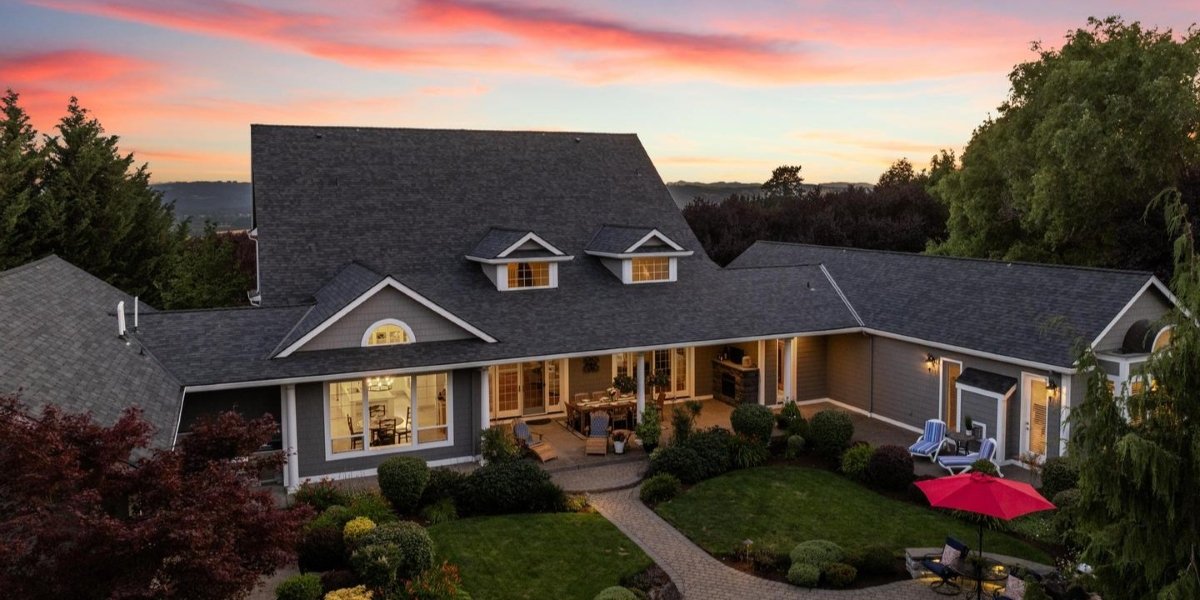
Luxury in Beaverton is defined less by finishes and more by land. Hughes says most buyers in this category are looking for a half acre to two acres, wide streets, and outdoor living space, big lawns, mature landscaping, room for a sports court or pool, while still staying close to a neighborhood, grocery stores, and everyday services.

The location adds to the appeal. Beaverton sits on the edge of the urban growth boundary, putting buyers within five to ten minutes of farmland, protected wooded areas, and hiking trails, and within fifteen to twenty minutes of Oregon’s wine country. “It’s so refreshing for lifestyle,” Hughes says. “You can have a great lifestyle in your neighborhood, and then be at real farmers markets, pumpkin patches, and wineries in no time.”

Where To Find It: Neighborhoods Worth Knowing

Beaverton’s luxury inventory tends to sit in smaller pockets rather than one defined district. Hughes points to the Cooper Mountain area near the Cooper Mountain vineyards, along with Perrin Heights, Barton Farms, Bower Woods, and Murray Hill, as places where buyers can find quarter-acre-plus lots, larger homes, and prices reaching into the million-dollar-plus range. Barton Farms, an older neighborhood with lots of an acre or more, is one of the clearest examples of what Beaverton luxury can look like.

Why the Price Gap Is So Wide

Beaverton is farther from downtown Portland and the airport than Lake Oswego or the West Hills, and its larger homes on big parcels have mostly been built within the last fifteen to twenty years, rather than representing decades of established luxury development. “It’s not necessarily that there is a better quality of home,” Hughes says of the pricier, closer-in neighborhoods. “You get views and larger homes, and you’re close to downtown.”

Lake Oswego, in particular, has become the benchmark for Portland-area luxury thanks to its walkable neighborhoods, private lake, well-regarded schools, and developed downtown shops and restaurants. Beaverton offers a different trade, more land and a lower price, in exchange for being a bit further out.

The Property Tax Advantage

Beyond the sticker price, Hughes points to another factor buyers often miss. “Property taxes are not as high in Beaverton compared to, say, Lake Oswego or the West Hills of Portland proper,” she says. For buyers comparing total cost of ownership, not just purchase price, that difference adds up over time.

Buyers who want to see what is currently available can browse recent market coverage on the Carey Hughes Homes blog.

Carey Hughes Homes is a top-rated Oregon real estate team serving Beaverton, Portland, and surrounding communities. Named a RealTrends Verified Top 10 Small Team in Oregon, the team is known for trusted expertise, honest data-driven guidance, elevated strategic marketing, personalized service, and genuine care throughout every step of the real estate process.

Disclaimer: This article is based on information provided by the expert source cited above. It is intended for general informational purposes only and does not constitute legal, financial, or real estate advice. Readers should conduct their own research and consult qualified professionals before making any real estate or financial decisions.