John Ohler on Building a Family Legacy Through Four Decades of Real Estate Leadership

A Business Built Around Families

Real estate has often been described as a relationship business, but John Ohler’s career shows what that idea looks like over time. For more than four decades, his work has centered on helping individuals and families make decisions that often shape the next chapter of their lives.

Ohler’s story is also a family story. He entered real estate at 18, working beside his father and three brothers before building a long career of his own. Those early years gave him a practical education in property, service, and responsibility that shaped how he would later lead.

Today, his approach reflects the values behind a family-owned real estate company: consistency, personal accountability, and care for the people behind each sale. At a time when many industries have become faster and more automated, Ohler’s career has remained rooted in a simple standard. Clients are not transactions. They are families making important choices.

Learning the Business From the Ground Up

Before becoming an agent, Ohler learned the real estate business through hands-on work. He helped renovate, maintain, and manage his family’s investment properties. That work did not begin in an office or at a closing table. It began with the daily tasks that teach patience, follow-through, and respect for property owners.

Those early experiences gave him a broad view of real estate. He saw the effort required before a home is listed, sold, repaired, or managed. He also saw how families talk about property, money, risk, and the future.

That background helped form his view of real estate leadership. It is not only about market knowledge or sales skill. It is also about understanding people, managing expectations, and taking responsibility for the details others may overlook.

Working with his father and brothers also gave Ohler a clear model for business conduct. Hard work mattered. Integrity mattered. Accountability mattered. Just as important, people came before profits.

Values That Carried Across Generations

The values that guided Ohler as a young man remain central to his business today. He has long believed that a person’s word matters. In his view, a handshake still carries weight, and commitments should be honored whether they are written down or not.

That belief has shaped the way he works with clients, colleagues, and business partners. Trust is not built through a single promise. It is built through consistent actions over time.

For Ohler, integrity means doing the right thing when no one is watching. Success is not measured only by financial results. It is also measured by the relationships earned, the reputation maintained, and the positive effect a business has on its community.

That framework has helped his company build long-term customer relationships in an industry where trust can decide whether a client returns years later or refers to a family member.

Relationships Over Transactions

Buying or selling a home is rarely just a financial event. It can come with stress, questions, family changes, and personal milestones. Ohler’s leadership has been shaped by the belief that real estate service should recognize that reality.

For him, the work has never been limited to closing transactions. It has been about building relationships that last beyond the sale.

Over the years, many clients have become friends. Some have invited Ohler and his family to weddings, baptisms, family celebrations, and other important events. Those invitations reflect a level of trust that goes beyond a signed contract.

His business now serves multiple generations of many families. Some clients represent second, third, and even fourth generations. That kind of continuity does not happen by accident. It is often the result of steady service, clear communication, and the ability to stay present long after the first deal is complete.

In that sense, Ohler’s career offers a clear example of multi-generational real estate expertise. He has seen families grow, move, invest, downsize, and begin again. Each stage requires a trusted real estate professional who understands both the market and the people involved.

Evolving Without Losing the Personal Touch

Longevity in real estate requires more than tradition. Markets change. Client expectations change. Technology changes how homes are marketed, searched, financed, and sold.

Ohler’s business has remained active for more than 40 years in part because it has continued to evolve. The company has adapted to advances in technology while keeping personalized customer service at the center of its work.

That balance is important. Technology can improve speed, access, and organization. It can help agents communicate faster, manage listings more efficiently, and reach buyers with better information. But technology cannot replace judgment, local knowledge, or the trust that forms through direct service.

Ohler’s approach shows that innovation and consistency do not have to compete. A community-focused business can modernize its tools while keeping its values intact.

That distinction has become more important as clients compare homes online before they ever call an agent. Access to information can help buyers and sellers prepare, but information still needs context. Ohler’s model keeps the advisor role at the center of the process. The goal is not to replace personal guidance with digital tools. The goal is to use those tools to make guidance more timely, clear, and useful for families at each step.

Continuous education has also played a role in the company’s longevity. In an industry affected by changing market conditions, lending standards, buyer expectations, and digital platforms, real estate professionals must keep learning. For Ohler, the willingness to evolve has supported long-term growth without weakening the culture that made the business durable.

A Culture Shaped by Loyalty

Another part of Ohler’s leadership can be seen in the people who have stayed with the organization. Many of the company’s agents have remained with the business for much of their careers.

That kind of retention says something about the internal culture. A business that keeps experienced professionals over many years often does so through trust, support, and shared standards. It also gives clients a sense of stability.

For Ohler, a family-first culture is not limited to how clients are treated. It also shapes how colleagues work with each other. The business has been built around relationships inside and outside the office.

That internal consistency supports client service. When agents understand the company’s expectations and values, they can deliver a more steady experience. Clients are not left to wonder what kind of service they will receive. They see the same principles reflected across the organization.

Community as Part of the Business

Ohler’s leadership is also tied to community involvement. His view of business includes service beyond real estate transactions.

Following his son’s successful treatment for a childhood brain tumor at Children’s Hospital of Philadelphia, support for the hospital became a personal mission. Each year, his company donates a portion of every commission to the hospital, organizes holiday visits for patients, and contributes gifts and financial support.

That commitment reflects how personal experience can shape business priorities. It also shows how a real estate company can use its platform to support causes that matter to the families it serves.

Beyond the hospital, Ohler supports local food pantries, schools, community festivals, holiday events, and charitable efforts throughout the region. In his view, giving back is part of the company’s identity, not an occasional activity.

Community service has also taught him lessons that apply directly to leadership. Patience, humility, respect, and second chances are principles he carries into his work. He recognizes that it is not possible to make everyone happy, but it is possible to keep a level head and treat people fairly.

Measuring Success Beyond Sales

After more than four decades in real estate, Ohler’s view of success is broader than production numbers. He is proud of building a respected business that has served the community while maintaining a family-oriented culture.

He is also proud of the relationships his company has built with clients. The fact that many families return across generations speaks to a level of trust that cannot be created through advertising alone.

This perspective matters in real estate leadership because the industry often rewards speed, volume, and visibility. Ohler’s career points to a different measure. A business can be competitive while still placing emphasis on consistency, care, and reputation.

That does not mean performance is unimportant. It means performance is strongest when supported by principles. For Ohler, those principles are honesty, integrity, trust, and treating clients as he would want his own family treated.

Carrying Forward A Family-First Legacy

Looking ahead, Ohler’s focus remains on legacy. He wants future generations of his family, his business, and his community to continue the values that have defined his career: family, service, integrity, and generosity.

That legacy is not built through one transaction or one milestone. It is built through the daily choices that shape how people are treated. For John Ohler, four decades of real estate leadership show that lasting success comes from keeping promises, serving families well, and building a company that people trust over time.

Designing for Trust by Simplifying Complex Systems Through UX

By Emily Williams

Jingyi Zhu is a product and UX designer whose work focuses on making complex digital systems easier to understand and navigate. With a background that spans computer science, interaction design, and journalism, she approaches design as more than visual problem-solving. For her, design is a way to bring structure and clarity to products that users often find overwhelming.

One of her notable projects is her work on CRED, a platform in the financial technology space. Within the project, Zhu focused on improving how complex financial information is structured and presented, particularly in moments where users are required to make decisions involving risk. Her work addressed a common challenge in financial products. A gap often exists between dense technical data and users’ ability to interpret it with confidence.

Rather than approaching the problem through surface-level visual changes, Zhu concentrated on restructuring the experience at a deeper level. She analyzed key friction points across the user journey, identifying where users hesitated, dropped off, or needed additional effort to understand the information presented. These insights informed a series of design decisions aimed at reducing cognitive load and making interactions more intuitive.

Her contributions included redefining how critical data is grouped and surfaced, introducing clearer visual hierarchies, and refining interaction flows so that each step communicates intent more clearly. Instead of presenting all available information at once, the experience was designed to guide users progressively, allowing them to focus on what matters most at each stage of the process.

A central aspect of her work was improving clarity in high-stakes scenarios. By streamlining decision paths and removing unnecessary complexity, the product became easier to navigate and more aligned with how users process information in real-world contexts. In a financial environment where trust is closely tied to understanding, these improvements play a significant role in shaping user confidence and engagement.

Beyond her work on specific interaction flows, Zhu contributed to broader system-level consistency across the product. She helped align design patterns and components across different parts of the platform, ensuring a more cohesive experience for users. This approach reflects her belief that effective design is not limited to individual screens, but extends to how an entire system functions as a unified whole.

Her work has also received recognition from several international design awards, reflecting the strength of her approach to solving complex product challenges.

Her design approach is grounded in balancing user needs with business objectives. Rather than treating these as competing forces, she views them as interconnected, where improving clarity and usability can directly support long-term engagement and product growth.

This perspective also informs how she approaches emerging technologies. As digital products become more complex, Zhu sees artificial intelligence not as a separate layer, but as a continuation of the same design challenge: making complexity understandable and actionable for users.

In her recent work, she has explored ways to integrate AI-driven interactions into product workflows, allowing users to access insights, automate repetitive tasks, and engage with data in more dynamic and contextual ways. Instead of introducing entirely new interfaces, her focus is on embedding intelligence into existing systems so that the experience remains intuitive and cohesive.

As systems become more adaptive, Zhu believes the role of designers will increasingly shift toward shaping how products respond, learn, and communicate over time. This requires moving beyond static interface design and toward building flexible systems that can evolve alongside user needs, while still maintaining clarity and trust.

For Zhu, the goal remains consistent: to reduce friction, improve clarity, and help users make confident decisions. This approach reflects a broader effort to make complex systems more intuitive and accessible, regardless of the domain or technology involved.

San Francisco Tourism Forecast Points to Record $10.6B in 2027

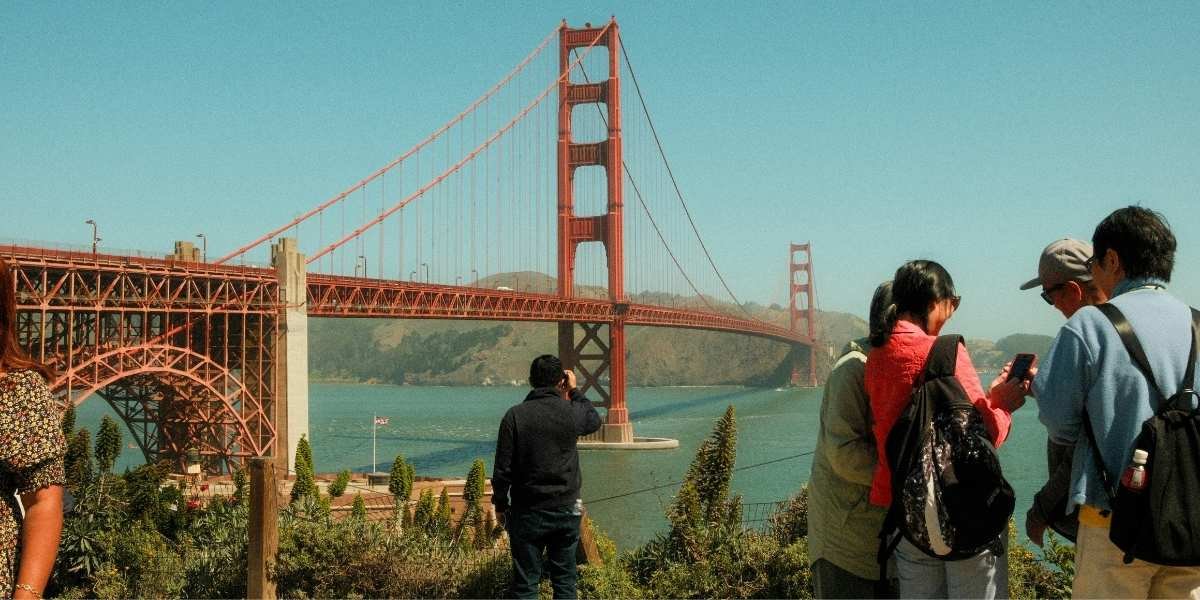
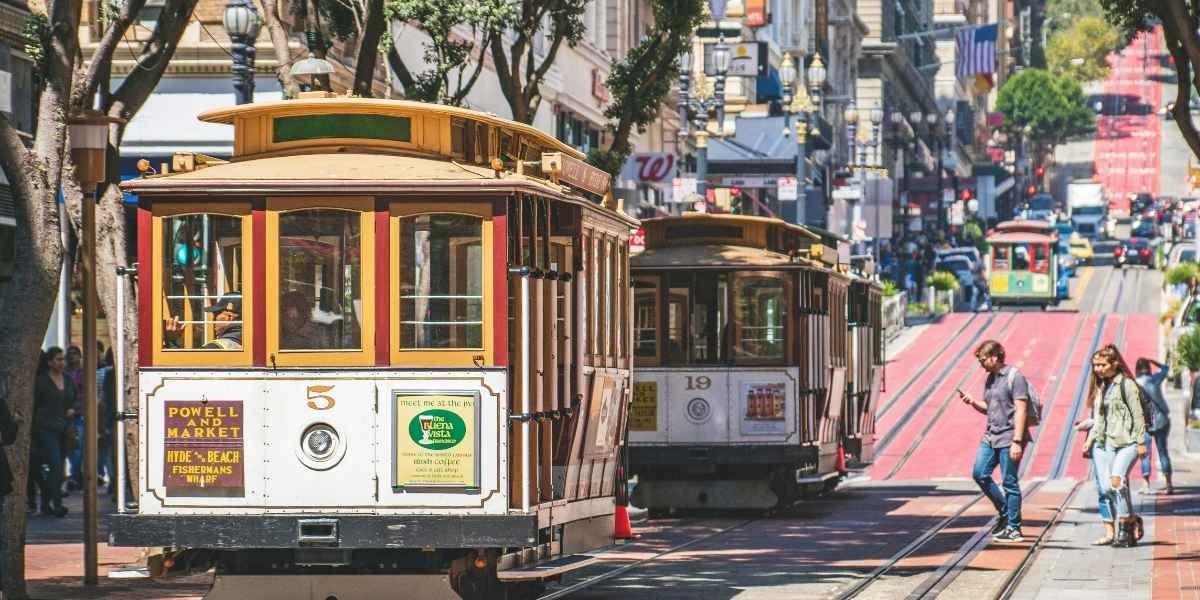
The San Francisco tourism forecast projects record visitor spending of $10.6 billion in 2027, although arrivals may remain below the 2019 peak. San Francisco Travel figures show how international travel, hotels, conventions and events could shape the city’s tourism recovery in the coming year.

Key Takeaways

  • Visitor spending is projected to reach $10.6 billion in 2027, up from $9.94 billion in 2026.
  • San Francisco expects 25 million visitors, about 1.2 million fewer than in 2019.
  • International overnight spending across San Francisco and San Mateo counties could rise 7.3% to $5.46 billion.
  • Moscone Center’s 33 scheduled events are expected to generate more than 640,000 hotel room nights.

San Francisco Travel released the forecast Aug. 26 at the Visitor Impact Summit in the Curran Theatre. The city could break its nominal visitor-spending record before recovering its previous visitor count.

Projected 2027 spending is $660 million above the $9.94 billion expected in 2026. Visitor volume would rise by a smaller margin, from 24.4 million to 25 million. Spending per trip, visitor mix and lodging prices may therefore carry more weight than headcount alone.

“Our convention calendar continues to perform, and we’re encouraged by the growth in business and domestic leisure travel right alongside it,” San Francisco Travel President and CEO Anna Marie Presutti said.

San Francisco Tourism Forecast Separates Spending From Volume

San Francisco recorded about $9.6 billion in direct visitor spending and 26.2 million visitors in 2019. The 2027 projection would place spending roughly $1 billion above that benchmark while leaving visitor volume about 1.2 million short.

The spending comparison uses current dollar amounts. It does not establish whether the projected total would exceed 2019 after adjusting for inflation. That distinction makes the $10.6 billion figure a nominal record rather than evidence that every part of the visitor economy has fully recovered.

2025 results provide context. San Francisco welcomed 23.7 million visitors, who spent $9.4 billion. Tourism supported an estimated 63,900 jobs and generated $655 million in city tax revenue, while 60% of visitor spending occurred outside hotels.

International Travel Carries the Largest Spending Increase

Tourism Economics projects 2.42 million overnight international visitors to San Francisco and San Mateo counties in 2027, up 5.2% from 2026. Spending by those travelers is forecast to increase 7.3% to $5.46 billion.

Those figures cover both counties, while the headline visitor total applies to San Francisco. They should not be calculated as matching shares of the same geographic market.

San Francisco Travel said its 10 leading international markets are projected to grow in visitors and spending. Its earlier outlook identified Mexico, the United Kingdom, China, Canada and India as the five largest source markets, but the August release did not provide separate 2027 totals.

Hotel and Convention Data Support Continued Growth

Hotel occupancy is forecast to rise from 70.7% in 2026 to 72.1% in 2027. The average daily rate is expected to increase from $266.16 to $271.43, while revenue per available room, or RevPAR, would move from $188.06 to $195.61.

San Francisco Tourism Forecast Points to Record $10.6B in 2027

Photo Credit: Unsplash.com

The association expects RevPAR to increase 14.1% in 2026, following a similar 2025 gain. The smaller implied increase for 2027 would extend lodging growth if the forecast holds.

Moscone Center is expected to host 33 events in 2027, five fewer than in 2026. Bookings are projected to generate more than 640,000 hotel room nights, compared with 656,000 this year. The narrow difference suggests event size and duration will remain important.

The 2026 calendar showed how large events can concentrate travel demand. A Super Bowl activity estimate described higher hotel occupancy and visitor activity across the Bay Area during the event period.

Major Events Extend the 2027 Visitor Calendar

The 2027 schedule includes SailGP on San Francisco Bay on April 3 and 4. The WNBA All-Star Game is set for Chase Center on July 31, its first Bay Area appearance. Related programming includes July 30 competitions and WNBA Live at Moscone Center.

Vogue World is scheduled to hold its 2027 edition in San Francisco in early fall, although no date or venue was announced. The three events give the city separate draws across sailing, basketball and fashion, but no individual spending estimates were included in the tourism forecast.

Regional agencies prepared a World Cup travel plan involving BART, Muni, Caltrain and VTA. The 2026 framework was designed to connect airports, hotels, entertainment districts and event locations.

The Record Retains an Important Qualification

The San Francisco tourism forecast points to higher spending, stronger international demand and improving hotel measures in 2027. It also shows that total visitation may remain below 2019 and that the spending record is not adjusted for inflation. Those qualifications provide the clearest measure of what has recovered and what remains below the earlier peak.

Frequently Asked Questions

What does San Francisco expect from tourism in 2027?

The San Francisco tourism forecast projects 25 million visitors and $10.6 billion in visitor spending during 2027. Both figures would exceed the association’s updated expectations for 2026.

Would the $10.6 billion total set a record?

It would exceed the approximately $9.6 billion in direct visitor spending recorded in 2019 on a nominal basis. The forecast does not show whether the 2027 total would also be a record after adjusting for inflation.

How many international visitors are expected?

Tourism Economics projects 2.42 million overnight international visitors to San Francisco and San Mateo counties in 2027. Their spending is expected to reach $5.46 billion, although those figures cover a broader geographic area than the citywide visitor total.

What are the hotel projections for 2027?

Hotel occupancy is forecast at 72.1%, with an average daily rate of $271.43. Revenue per available room is projected to reach $195.61.

Which major events are scheduled for 2027?

The public calendar includes SailGP in April, the WNBA All-Star Game in July and Vogue World in early fall. Moscone Center is also expected to host 33 events generating more than 640,000 room nights.