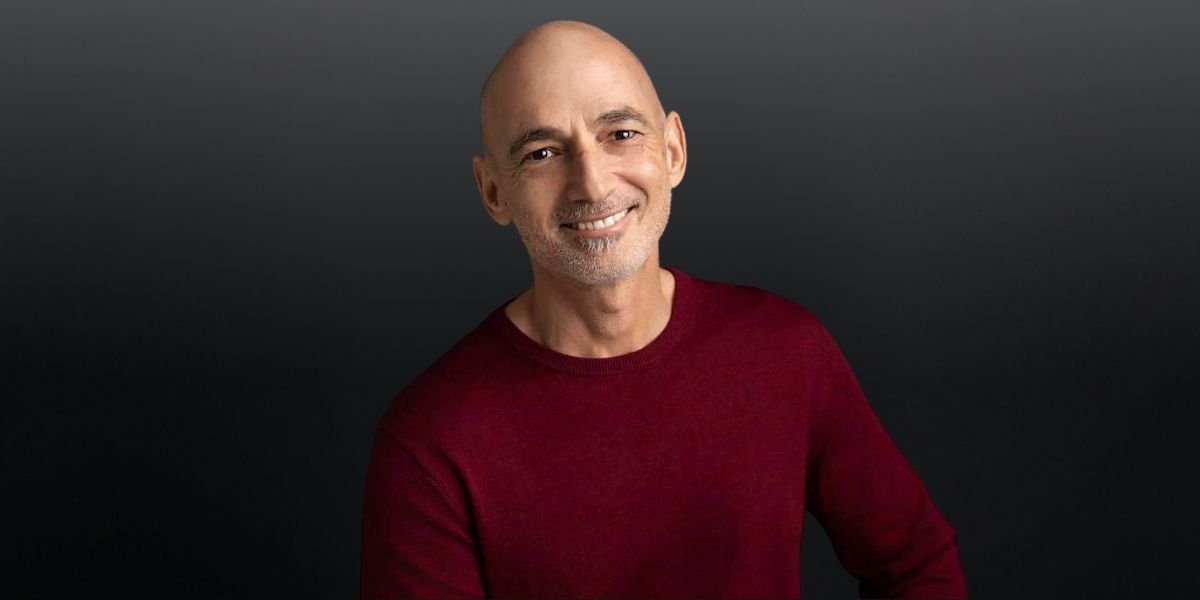
The 1% Rule in Nir Peled’s Beyond 100% and A Practical Recovery Tool After Life Breaks

By: Ani Greer

The most powerful idea in Nir Peled’s recovery framework is also the smallest. It does not ask for a breakthrough, a heroic transformation, or a dramatic display of willpower. It asks for one percent. In Beyond 100%: Rebuilding Life After It Breaks, Peled names it the 1% Rule, and he directs it at readers rebuilding after illness, injury, loss, burnout, or trauma.

Peled did not develop the rule in theory. He developed it after surviving seven catastrophic events: a bombing in Sinai, anaphylaxis, the 2004 Indian Ocean tsunami, a violent kidnapping and robbery in the Amazon, cancer, a motorcycle accident, and a stroke at 49 that left him unable to speak or move. The stroke became the crisis that forced his earlier lessons into a repeatable system. It also confronted him with a painful truth: the old pace of achievement no longer applied.

“The simplest and most important idea in the framework” is how Peled describes the 1% Rule. “On any given day, you don’t need to be dramatically better than yesterday. You need to be 1% better. That’s it.” For high achievers, that can be harder than it sounds. Peled had served as an officer in an elite IDF unit and spent years as a technology executive, environments that rewarded speed, precision, and ambitious targets. After the stroke, those instincts could become dangerous. Trying to force a huge recovery day could cost him the next several days.

“For people like me, driven, impatient, used to setting big targets, it’s actually very hard to accept,” he says. “But it’s the thing that makes the difference between sustainable progress and burning out mid-recovery.”

Compounding is central to Beyond 100%. The framework is not about returning to a previous baseline as though the catastrophe never happened. Peled is clear that he will never be the same person he was before the stroke, physically or mentally. But he also believes crisis can reveal capacities that were previously unreachable. The work is to build from there, one measurable step at a time.

The 1% Rule also expands the definition of progress. In many recovery stories, progress is measured only by visible gains: walking farther, speaking more clearly, lifting a hand, returning to work. Peled’s system includes the body, but it does not reduce recovery to the body. “It can be anything, even rest, a good cry, one minute of breathing with your eyes closed, a laugh,” he says. “These are all examples of progress. It doesn’t have to be only in the body pillar.”

That sentence matters because it gives exhausted people permission to rebuild without pretending they are machines. A day of rest may be progress if it prevents collapse. A laugh may be progress if it reconnects someone to life. A minute of breathing may be progress if the nervous system has been living in alarm. In Peled’s framework, Body, Mind, and Spirit all need attention, and a one percent gain in any pillar still counts.

The book itself grew out of that kind of gradual rebuilding. “The book started as my recovery journal,” Peled says. “I used video to record myself learning to speak again.” Later, when typing returned, it came in stages: one finger, then two, then a keyboard, then both hands. The process mirrored the framework. A capability first manifests as possibility, then gives a sign of life, then enters practice, and eventually becomes part of complex integration.

Peled’s background in technology leadership helped him recognize the pattern. “In tech leadership, you are constantly dealing with systems that break and need to be rebuilt under pressure with incomplete information,” he says. “Recovery is the same environment. The difference is that in the corporate world the system that breaks is external. In recovery, it’s you.”

That is why the 1% Rule is not soft advice. It is a system for managing chaos when the future is uncertain, and the stakes are personal. It turns an overwhelming question, How do I rebuild my life?, into a usable one: What is one percent better today?

For someone recovering from a stroke, that answer might be practicing a sound. For someone facing cancer, it might be taking a short walk. For a caregiver, it might be asking for help before resentment hardens. For a burned-out leader, it might be closing the laptop and sleeping.

Peled’s message is not that every day will feel better. It is that every day can contain a starting point. “There is always a path forward. Not back. Forward,” he says. The path does not require a leap. It begins with one percent, and then with one percent again.

Beyond 100%: Rebuilding Life After It Breaks is available on Amazon.

Disclaimer: This article is intended for general informational and editorial purposes only. It does not provide medical, psychological, mental health, rehabilitation, trauma recovery, or professional advice, and it should not be relied upon as a substitute for guidance from a qualified professional. Recovery after illness, injury, stroke, trauma, burnout, or major life disruption can vary significantly based on individual circumstances, health history, diagnosis, treatment plan, and support system. Readers should consult a licensed healthcare provider, mental health professional, rehabilitation specialist, or other qualified expert before making decisions related to recovery, treatment, therapy, or personal well-being.
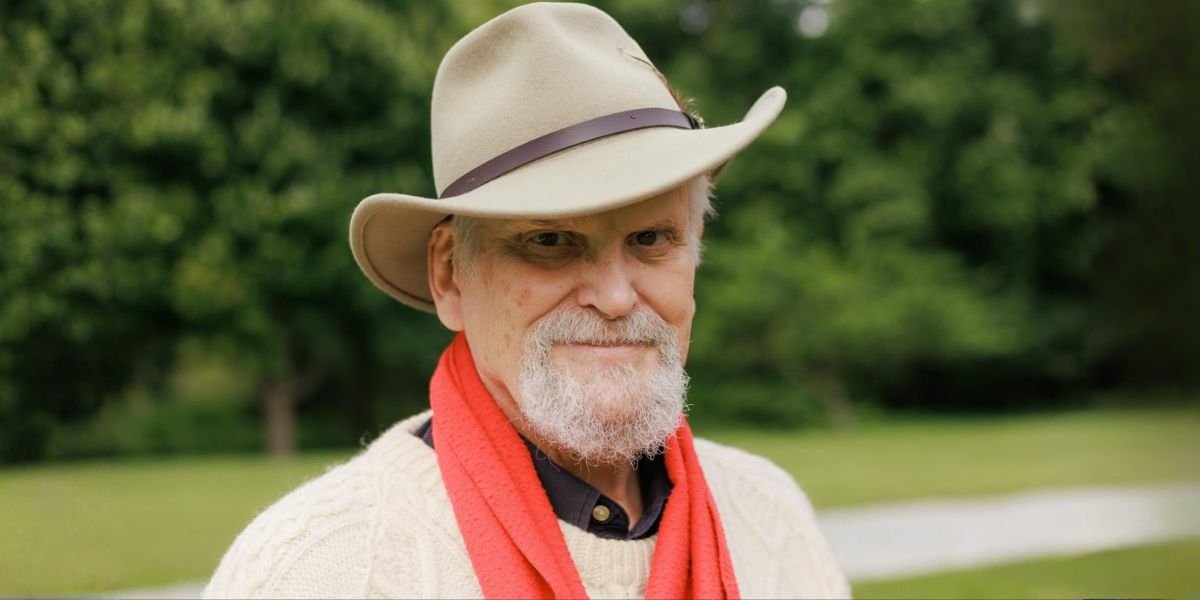

What Happens After Civilization Falls? W. Clark Boutwell Explores the Harder Question in After The Fall Was Over

By: Lisa Wallace

Many dystopian novels focus on the collapse itself, on the wars, disasters, or revolutions that bring civilization to its knees. W. Clark Boutwell takes a different path.

In After The Fall Was Over, the first installment of The Silence and the Gods Trilogy, Boutwell asks what happens generations after history’s defining catastrophe, when the people left behind have forgotten as much as they’ve remembered.

Rather than chronicling the end of the world, the novel examines what comes after: the rebuilding of nations, the rise of competing ideologies, and the quiet ways technology and power continue shaping human lives long after the dust has settled. “It’s less about the collapse than the world it creates,” Boutwell explains. “The collapse simply put the pieces on the board. The story begins after that.”

That perspective gives After The Fall Was Over an unusually layered foundation. Two civilizations emerge from the ruins of the old republic with radically different visions for humanity’s future. One embraces advanced technology and centralized control, while the other favors resilience, community, and self-reliance. Their inevitable collision becomes the backdrop for a story that blends political intrigue, military strategy, and philosophical speculation.

At the center of the novel are two unforgettable figures.

General Fettwap Aliende is ambitious, manipulative, and convinced he deserves absolute power. Rather than creating a traditional villain, Boutwell crafts a character whose flaws make him fascinating to watch.

Opposite him stands Captain Blanche Woods, a deeply conflicted officer wrestling with questions of identity, loyalty, and survival while becoming entangled in forces far larger than herself. Her journey becomes one of the novel’s emotional anchors as she searches for purpose in a society that has repeatedly defined her by circumstances beyond her control.

Another of the book’s most intriguing elements is the CORE, a vast artificial intelligence populated by digital entities that blur the line between machine and consciousness. Instead of presenting AI as either savior or destroyer, Boutwell explores what happens when technology develops its own instinct for survival.

The result is science fiction that asks timeless human questions.

How much control should society surrender to technology?

Can political systems outlast the people who build them?

What defines personal agency when institutions attempt to define every aspect of identity?

Boutwell, a retired pediatrician, says those human questions have always been the true focus of his writing. “The science fiction creates the stage,” he says. “The characters are what the story is really investigating.”

That emphasis on character helps distinguish After The Fall Was Over from more action-driven speculative fiction. Military conflict and political maneuvering provide momentum, but they ultimately serve a larger exploration of morality, leadership, and the choices individuals make when systems begin to fail.

As the opening volume of The Silence and the Gods Trilogy, the novel also lays the groundwork for a much larger narrative. New societies emerge, unexpected alliances form, and evolving technologies begin reshaping the future in ways no single leader can fully control.

For readers who appreciate ambitious world-building alongside thoughtful ideas, the novel offers more than a vision of humanity’s future. It presents a meditation on the enduring forces that shape civilization itself.

In a genre often preoccupied with how the world ends, W. Clark Boutwell asks a more enduring question:

Once everything has fallen apart, what kind of world do people choose to build next?

After The Fall Was Over is available on Amazon in paperback and Kindle editions.

“How Can This Run Without Me?” Joel Yi on Building AI Systems and an AI Education Mission Meant to Outlast Their Founder

Most founders measure their importance by how indispensable they are. Joel Yi has spent the past few years working toward the opposite. The founder of the AI company DeployAIBots has built his business, and increasingly his broader mission, around a single reorienting question: not how to do the work, but how to make the work run without him.

Joel Yi has described that shift candidly as one of the hardest transitions a founder makes. In the early life of a company, he has said, the founder is accustomed to being in charge of everything, and stepping back feels unnatural. The change required building systems that function without his constant involvement, which in turn changed the questions he asked himself. Instead of “How do I do this?” the operative question became “How can this run without me?” Once a founder makes that shift, Joel Yi argues, a great deal opens up: more room to think about strategy, an easier path to growth, and a business that begins to behave like an asset rather than something demanding daily attention.

That philosophy is not separate from what DeployAIBots sells; it is the principle the product embodies. The company builds agentic AI systems designed to take over repetitive business functions, executing processes across workflows rather than assisting a person who does them. According to DeployAIBots, those functions include customer communication, appointment scheduling, and internal coordination, exactly the kind of routine work that tends to keep founders and their teams tethered to day-to day operations. The aim is to let an organization run reliably without depending on any one person’s continuous effort, the same transition Joel Yi describes making himself.

He offers his own company as the demonstration. DeployAIBots reports that it runs its internal operations on its own technology and that those systems currently save more than 150 hours of work each week. Joel Yi presents that figure less as a sales statistic than as proof of the underlying idea: that work designed to run without a person actually can, and that the hours recovered are real. By his account, the company also stands these systems up quickly, in a matter of days rather than through long development cycles, which makes the transition to a more self-running operation accessible rather than aspirational.

The same conviction extends beyond his business. Joel Yi has been building a nonprofit focused on AI education in Southeast Asia, part of a broader effort he has described to widen access to artificial intelligence. The connection to his commercial work is more than incidental. A founder who believes that systems, properly built, can do work once thought to require a person tends also to believe that the knowledge behind those systems should not stay concentrated in a few hands. Expanding who can understand and build with AI is, in his framing, a natural companion to a business premised on what
AI can do, and a way of carrying the same principle outward, toward people who have not yet had access to it.

Joel Yi’s belief in systems that outlast their operator has roots in his background. He has pointed to his time as one of the first cyber officers in the U.S. Army’s cyber branch as the source of a lesson he still applies: that systems matter more than individuals. In an environment where outcomes could not hinge on any single person, reliability had to be designed into the system itself. That experience, paired with a degree in computer science and his early work building AI models, gave him both the technical foundation and the operating philosophy that now define DeployAIBots.

There is a discipline to this approach that distinguishes it from the more common founder instinct to hold tightly to control. Joel Yi has spoken about the way his military experience demanded follow-through on a plan even when it was uncomfortable, and about a view of leadership centered on accountability for results rather than on being at the center of everything. Building a business meant to run without him is, in a sense, the entrepreneurial version of that lesson: the goal is not to be needed, but to build something that works whether or not he is in the room.

For other founders weighing how to grow, Joel Yi’s reframing is pointed. The reflex to make oneself essential, he suggests, ultimately caps a business at the limits of one person’s time and attention. The alternative, designing systems, increasingly powered by AI, that carry the work independently, is harder to start but changes what a company can become. It is the same move he made inside DeployAIBots, the move the company now helps other organizations make, and, through his education work, the capability he says he wants to put within reach of many more people. The question he keeps returning to is deceptively simple, and in his telling it is the one that changes everything: how can this run without me?

Why Media Coverage Still Matters, and Why Digital Press Can Be a Big Win

By Dar Dowling

These days, almost anyone can promote themselves.

Authors can post about their books on Instagram. Entrepreneurs can talk about their companies on LinkedIn. Filmmakers can release trailers on YouTube, and businesses can reach potential customers through social media, email, podcasts, advertising, and countless other digital platforms.

All of that matters.

But there is an important difference between what you say about yourself and what someone else says about you.

That is where media coverage comes in.

For authors, entrepreneurs, artists, filmmakers, executives, and brands, media coverage can provide something that advertising and social media alone often cannot: third-party credibility.

You can tell people your book is important, your company is innovative, your film deserves an audience, or your work deserves attention. When an established publication decides you or your work is worth covering, however, the message carries a different kind of weight.

Someone other than you is telling the story.

Media Coverage Builds Credibility

Think about what happens when you discover someone for the first time. Maybe you hear an author’s name or someone recommends a consultant, filmmaker, entrepreneur, artist, or business.

What do many of us do next?

We search for them online.

A website is useful. Social media profiles are expected. But articles, interviews, profiles, reviews, and other editorial coverage can create another layer of legitimacy.

For authors, entrepreneurs, and creative professionals, that can be especially valuable.

Creating something and putting it into the world has become easier than ever. Getting people to notice it is considerably harder. Authors compete with thousands of new books, entrepreneurs compete for attention in crowded markets, and filmmakers and other creatives face an endless stream of content competing for the same audience.

Media coverage provides another way to distinguish yourself and your work.

You and Your Story May Be Bigger Than the Product

One mistake people sometimes make when pursuing publicity is assuming every article should simply be about whatever they are promoting.

Sometimes it should.

But often, the person behind the work is actually the more interesting story.

For an author, the book isn’t always the story. For an entrepreneur, it may not be the company. For a filmmaker, it may not be the latest film.

A business author might have something meaningful to say about leadership or entrepreneurship. A founder may have an unusual perspective on changes within an industry. A filmmaker might be able to discuss culture, representation, or the experiences that inspired a project. A memoirist may bring a personal perspective to an issue affecting many other people.

The book, business, film, or project becomes part of a larger story rather than the only thing there is to talk about.

Good media coverage gives readers something interesting, useful, surprising, or thought-provoking.

It shouldn’t simply read like an advertisement.

Digital Press Has a Long Life

Digital media offers another advantage that is easy to underestimate: it can remain discoverable.

A social media post may generate attention for a few hours or days before disappearing down a feed. A digital article can potentially continue appearing in searches months or even years after publication.

That creates what I like to think of as a digital breadcrumb trail.

An interview introduces one part of your story. A feature establishes expertise. A review adds an independent voice. Another article may connect you to an entirely different subject or audience.

Over time, those pieces begin creating a more complete picture of who you are and what you do.

When someone searches your name, they are no longer finding only the story you created about yourself. They are finding evidence that other people considered your story worth telling.

Digital Press Can Set the Stage for More

Media coverage can also build momentum.

Journalists, podcast hosts, event organizers, potential collaborators, and prospective clients often research people before deciding whether to contact them. Existing coverage gives them something to discover.

Digital press can also help create a foundation for opportunities with larger or different media outlets. A journalist researching a potential source may find an earlier interview. A podcast producer may discover an article and decide the person behind it would make an interesting guest. A feature about an entrepreneur, author, filmmaker, or artist may introduce that person to an outlet covering a completely different subject.

There are no guarantees.

One article doesn’t automatically lead to another, and digital coverage shouldn’t be viewed as a magic ticket to major media.

But it can help set the stage.

Every credible piece of coverage adds another building block to your public presence, and another way for the next person to discover you.

Social Media and Press Work Better Together

This doesn’t mean abandoning social media.

Quite the opposite.

Instead of another post saying, “Buy my book,” an author can share an interview about why the book was written. An entrepreneur can share an article exploring an issue within their industry. A filmmaker can share a feature about the story behind a project. An artist can share a profile discussing the ideas behind their work.

Media coverage creates content, and social media gives that content another life.

The Goal Isn’t Fame. It’s Discoverability.

One article probably won’t transform a career. Neither will one Instagram post, podcast appearance, review, or advertising campaign.

Visibility is cumulative.

The strongest public profiles are built through multiple touchpoints: websites, social platforms, interviews, articles, reviews, podcasts, events, and professional accomplishments.

For authors, entrepreneurs, filmmakers, artists, and other professionals, that matters long after one particular project, product, launch, or campaign ends.

I follow the same approach in my own work that I recommend to authors, creative professionals, and entrepreneurs. Whether I’m promoting a film, a book, or another project, I view media coverage as part of building a larger, long-term digital presence. No single article does all the work. The value comes from what those individual pieces build together over time.

Not everyone needs to become famous.

What authors, entrepreneurs, filmmakers, artists, and other professionals need is to be discoverable by the right people.

When someone hears your name and searches for you, what do they find? When a journalist considers interviewing you, is there enough information available to understand your expertise? When a potential reader, client, collaborator, or customer discovers your work, can they learn something meaningful about the person behind it?

Those questions matter.

In a crowded digital world, visibility isn’t simply about being louder. It’s about creating enough credible signals that when the right person goes looking for you, there is something meaningful for them to find.

And that is why digital press can be such a big win.

Dar Dowling is a filmmaker, author, and creative strategist whose work spans independent film, publishing, storytelling, brand development, and media visibility. She is the founder of DarMa Productions and serves as Executive Vice President of Atlas Elite Publishing Partners. More information about her work is available through DarMa Productions, Atlas Elite Publishing Partners, and Instagram.

San Francisco Clears Path for 848 Homes Above Marina Safeway Site

San Francisco planning officials have kept the Marina Safeway site eligible for streamlined review, allowing a revised 848-home proposal from Align Real Estate and Albertsons Companies to advance. The plan would replace the existing store with two residential towers and a larger grocery space, although permits, construction drawings, and a start date remain unresolved.

Key Takeaways

  • San Francisco’s planning director rejected key objections to the project’s eligibility for streamlined review under Assembly Bill 2011.
  • Revised plans increase the proposal from 790 to 848 homes while reducing the towers to 22 and 18 stories.
  • The development includes 86 income-restricted homes and a replacement grocery store of about 67,200 square feet.
  • The decision is not a construction permit, and no building schedule or project cost has been announced.

The Marina Safeway site moved closer to redevelopment after San Francisco Planning Director Sarah Dennis Phillips rejected arguments that the property should be removed from the state-directed approval process.

Her July 20 response addressed objections raised by District 2 Supervisor Stephen Sherrill and neighborhood groups. The dispute centered on whether the site at 11 and 15 Marina Boulevard satisfies the location and environmental criteria required under Assembly Bill 2011, or AB 2011.

City Ruling Keeps the Marina Safeway Site on Track

AB 2011 requires ministerial approval for qualifying housing developments on certain commercially zoned properties. Officials review those proposals against objective standards rather than sending them through the usual discretionary votes before the Planning Commission and Board of Supervisors.

Sherrill and a coalition of neighborhood groups argued that the property did not meet a requirement that at least 75% of its perimeter adjoin parcels developed with urban uses. Their position focused on the site’s proximity to Fort Mason, Marina Green, the Marina Yacht Harbor, and publicly owned parking and recreational land.

Phillips concluded that the surrounding mix of parking, retail, housing, and Fort Mason facilities could qualify as urban uses. She also stated that the property was not on California’s Cortese List of hazardous-material sites and was not in an earthquake fault zone or a federally designated flood hazard area.

San Francisco Planning Department Chief of Staff Dan Sider summarized the city’s limited role in July, saying, “If the project follows the rules, we are bound to approve it.”

The decision still leaves a gap between planning review and physical work. The Candlestick Point redevelopment also moved through years of approvals before reaching infrastructure preparation.

Revised Design Adds Homes While Lowering Tower Heights

Align submitted revised plans on July 14 that increased the residential count from 790 to 848 homes. At the same time, the development team reduced the towers from 25 and 22 stories to 22 and 18 stories.

The updated heights are approximately 258 feet and 219 feet. The changes remove about 40 feet from the eastern tower and 23 feet from the western tower while placing more apartments inside a smaller building envelope.

The proposal retains 86 income-restricted homes. It also increases the replacement grocery store to roughly 67,200 square feet, slightly larger than the retail space shown in earlier plans.

Project documents describe a development of approximately 989,500 square feet, including about 746,600 square feet of housing. Current plans also show parking for 349 vehicles and 360 bicycles.

The proposal would replace the existing one-story store and surface parking lot. Arquitectonica’s design uses curved facades, connected towers, and stepped upper floors above the grocery space.

Align has described the revision as an efficiency-driven update made as the Planning Department reviews the proposal for compliance with local code and objective design standards. The higher unit count does not change the project’s current procedural status.

Permits and Construction Still Remain Unresolved

The Marina Safeway site still requires building permits, construction drawings, engineering review, utility coordination, and other technical approvals before work could begin. Planning eligibility and construction authorization are separate stages.

The project team has not announced a construction start date, completion schedule, or total cost. Align has said the existing Safeway would close during construction and that a larger grocery store would open within the completed development.

The Terraces of Lafayette project similarly shows how a housing development can continue through several approval stages before site work begins.

San Francisco planners must still determine whether the revised Marina proposal satisfies all applicable objective standards. If it does, AB 2011 limits the city’s ability to deny the project through discretionary review, but the developer must still complete the ordinary permitting process.

For now, the Marina Safeway site has cleared a significant eligibility challenge rather than receiving unrestricted final approval. The 848 homes, two towers, and replacement grocery store remain proposed, with construction dependent on further city review and permits.

Frequently Asked Questions

What Is Proposed for the Marina Safeway Site?

The proposal calls for 848 homes in two connected towers above a replacement grocery store. The revised buildings would rise 22 and 18 stories and include 86 income-restricted homes.

Has San Francisco Fully Approved the Project?

No. The city has kept the project eligible for streamlined review and rejected key objections to that status, but construction permits and technical approvals are still required.

Why Does AB 2011 Matter for the Project?

AB 2011 provides ministerial review for qualifying housing developments on certain commercial sites. The Marina Safeway site can therefore be reviewed against objective requirements without the usual discretionary votes if it satisfies the law.

Will the Existing Safeway Remain Open During Construction?

Align has said the existing store would close while the project is built. A new and larger grocery store is planned at the base of the completed development, but no construction schedule has been announced.

How Many Income-Restricted Homes Are Included?

The revised proposal includes 86 income-restricted homes. That number remained unchanged when the overall unit count increased from 790 to 848.