San Francisco Tech Jobs Face New Pressure From LinkedIn Cuts

San Francisco’s technology workforce is facing renewed pressure after LinkedIn moved to cut hundreds of jobs in California, including more than one hundred roles tied to the city.

The Microsoft-owned professional networking company plans to reduce 606 California positions. The cuts are scheduled to take effect on July 13, 2026. The largest group is tied to Mountain View, where 352 office-based roles are listed. Another 108 roles are tied to San Francisco, 59 to Sunnyvale, 21 to Carpinteria, and 66 remote California roles are connected to Mountain View.

The reduction places a sharper spotlight on Bay Area tech employment at a time when workers are already seeing a more selective hiring cycle. The move is especially notable because LinkedIn sits close to the center of the employment market itself. Recruiters use the platform to source candidates. Job seekers use it to track openings. Companies use it to watch labor movement and professional demand.

Now, some LinkedIn employees are entering the same job market that the platform helps measure.

The cuts do not mean San Francisco’s tech hiring has stopped. They point to a market where companies are being more careful about headcount, team structure, and role alignment. Workers in engineering, product, marketing, operations, and recruiting may see longer searches and more competition as employers narrow hiring around fewer priority areas.

A Growth Story Meets a Leaner Hiring Market

LinkedIn’s reductions have drawn attention because they follow a period of reported growth. Microsoft said LinkedIn revenue rose 12 percent year over year for the quarter ended March 31, 2026. LinkedIn also reported more than 1.3 billion members and said its AI-powered hiring products had passed a $450 million annual revenue run rate.

That context makes the cuts more significant for workers. The layoffs are not being framed as the result of a company with weak demand. Instead, they appear to reflect a broader push to reorganize teams, focus resources, and operate with a leaner structure.

Reuters reported earlier this month that LinkedIn planned to cut about 5 percent of its global workforce, equal to roughly 875 jobs. Reports said the affected areas include business operations, marketing, engineering, and product.

Daniel Shapero became LinkedIn’s chief executive officer in April. His early months in the role now include a restructuring that is drawing close attention across the Bay Area.

For San Francisco, the timing matters. The city’s tech economy is still shaped by remote work, office vacancies, startup caution, and a more disciplined labor market. Large employers continue to play a central role in the region, but they are no longer hiring with the same pace seen during earlier expansion cycles.

That creates a tougher reality for workers. A strong company name on a resume may still help, but it may not move candidates through the process as quickly as before. Employers are looking more closely at the specific work a person has done, the tools they know, and whether their experience fits current business needs.

Bay Area Engineers Enter a More Competitive Field

The latest LinkedIn cuts appear to affect Bay Area engineering teams in a visible way.  519 of the 606 California cuts are tied to Bay Area locations, with engineering roles heavily represented among affected employees.

Engineering has long been viewed as one of the steadier career paths in the region’s technology economy. The LinkedIn cuts show that technical roles are also being reviewed as companies reorganize around fewer priorities.

The change does not suggest that engineering talent is no longer needed. It points to a more uneven market. Demand remains stronger in areas such as artificial intelligence systems, data infrastructure, cloud platforms, cybersecurity, internal tools, and core product development. Other roles may face more pressure if companies decide to combine teams or delay projects.

Workers with experience in high-demand technical areas may still see interest from employers. Others may face a longer process, especially if their work is tied to products or teams that companies are reducing.

San Francisco workers may also face more competition from nearby cities. Mountain View and Sunnyvale are both part of the same regional talent market. When hundreds of employees from the same company enter the job search at once, applicants can end up competing for similar openings across startups, enterprise software firms, AI companies, and remote roles.

West Coast Homes Are Going Non-Toxic, and Furniture Is the Last Frontier

San Francisco’s been quietly pushing a shift that’s only now starting to land in mainstream interior design. The Bay Area’s whole obsession with what goes in your body, the organic groceries and supplements, and everything cold-pressed, has migrated into what surrounds your body once you’re home. Clean living’s officially crossed the threshold, and furniture’s the next thing it’s coming for.

Here’s the part most people miss: a huge chunk of your home is built from materials you’d never put in your mouth.

What’s Actually in Your Living Room

Your average synthetic rug these days is built from some combination of polypropylene, polyester, latex backing, and formaldehyde-based adhesives. Then there’s the flame retardants. Plus stain-resistant chemical treatments on top of all that, and a lot of those are PFAS (the so-called forever chemicals you’ve probably read about by now, tied to a list of health concerns that just keeps getting longer). Off-gasses for months. Sometimes years.

A 2,000-square-foot place in Pacific Heights or Noe Valley, it doesn’t really matter which neighborhood, is absorbing way more synthetic chemistry than the people living there realize. Carpet. Couch. Mattress. Drapes. The whole inventory’s leaching trace VOCs, which are volatile organic compounds, into the air you breathe at night.

Which is sort of why West Coast buyers (especially the tech-adjacent ones) actually started paying attention to what their furniture is made of.

The Natural Fiber Renaissance

You see it in the Marin County farmhouses. The Berkeley craftsman renovations. The new builds in Mill Valley.

Wool. Linen. Cotton. Untreated wood. Real leather (not bonded). And increasingly, sheepskin.

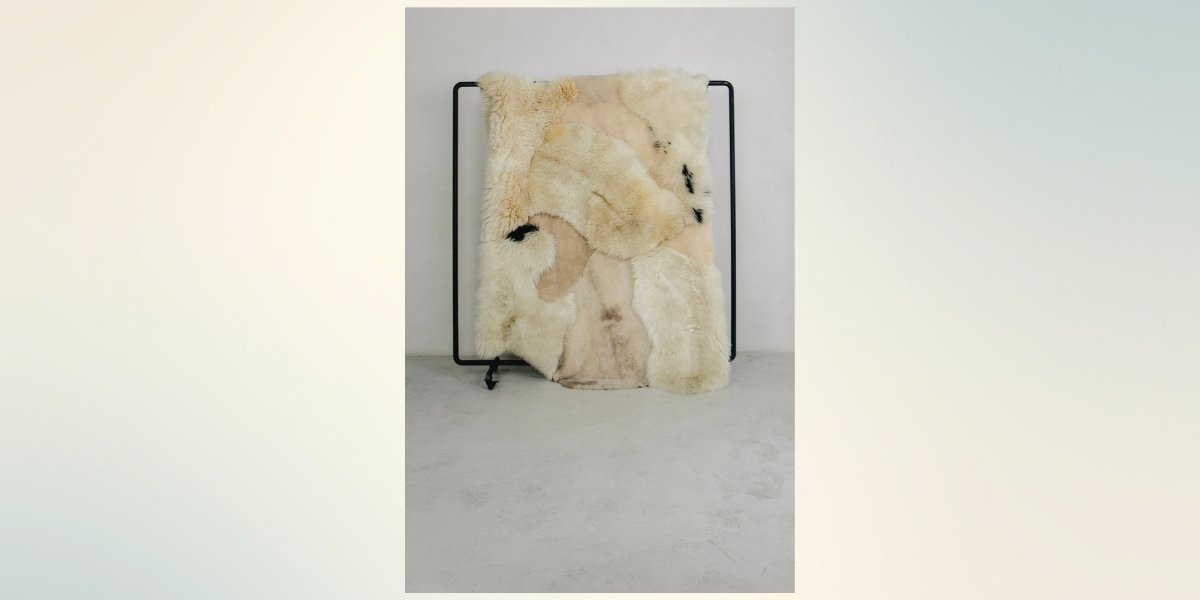
Sheepskin rugs have become something of a quiet status marker for the West Coast wellness-minded buyer. Not the bleached, mass-farmed kind from a big-box retailer (those are tanned with chromium, which kind of defeats the point). The naturally tanned kind, sourced from small farms, where the wool still contains its natural lanolin and the hide hasn’t been stripped by industrial processing.

Brands like East Perry, which uses biobased lactic acid tanning and sources from family-run farms in the European mountains, are filling a gap that the traditional rug industry hasn’t figured out how to compete with.

Why This Hits Different in California

There are a handful of reasons the West Coast was unusually ready for this shift. Indoor-outdoor living’s a big one, since Bay Area homes spend a lot of their time with the doors open, and people start noticing air quality more than they would in some sealed-up Midwest house with the windows shut all year. The wellness ecosystem helps too. When your friend group already cares about EWG ratings (the Environmental Working Group’s product safety scores) and drinks reverse-osmosis water, asking what’s in your rug feels normal instead of weird. There’s also the second-home angle. A lot of buyers are renovating places in Sonoma or Tahoe or somewhere out on the coast, and those projects tend to favor natural materials almost by default. And the climate matters too. California’s weather being what it is, you end up with a lot more bare floors, way fewer wall-to-wall carpets, so rugs become focal points instead of just disappearing into the background.

What Changes When You Swap Synthetic for Natural

People who actually make the switch tend to describe the same effects, almost word for word. The room smells different (no more “new rug” off-gassing, literally). Acoustics change a bit. And temperature regulation in the room shifts noticeably, since wool and sheepskin both insulate way better than synthetics do.

Then there’s the harder thing to quantify. The room just feels different once you’ve done it. Calmer. More grounded.

That’s not nothing. Research on natural materials in interior environments does show restorative effects, reduced mental fatigue, and better attention recovery. Wool’s part of that picture. The “calmer” feeling isn’t invented.

The Practical Considerations

Going natural across an entire home is expensive, no way around it. Almost nobody pulls it off in one go. Most people just start with a single room, and that’s usually the bedroom or the nursery (the air-quality argument hits hardest in those spaces), then they expand from there over time.

If you don’t want to do a full renovation, a few starting points. The obvious one is replacing the synthetic area rug in whatever room you actually use the most. Easy win. Swapping polyester throws and pillow inserts for wool or down is another. Moving toward solid wood furniture instead of particleboard with veneer becomes more of a long-game play, which makes sense given how much furniture costs. And if you’ve got small kids or pets running around, you really should prioritize wherever they hang out, since they’re the ones spending most of their day on the floor anyway.

Where the Trend Is Heading

The non-toxic home thing isn’t slowing down on the West Coast. It’s actually been picking up speed and spreading out, expanding from urban Bay Area enclaves into Southern California and the Pacific Northwest. Even the high-desert resort towns now.

What’s interesting is how quietly all of this is moving. There’s no real campaign behind it, nothing organized. It’s spreading the slow way, through dinner-party conversations and trusted contractor recommendations, that kind of friend-of-friend thing.

The plastic-perfect polished home is mostly on its way out. What’s replacing it is messier, warmer, more honest about its materials, and built with a longer time horizon in mind.

The West Coast got there first, basically. Everywhere else is just catching up now.

The Recipe That Built Bitchin’ Sauce

Most people, the first time they try Bitchin’ Sauce, end up flipping the container to find the ingredient deck. The taste doesn’t add up. Smooth and creamy, garlic-forward, then this citrus that has no business being that sharp in a dip. The original recipe is doing all of that. Made from a base of almonds, lemon juice, garlic, nutritional yeast, soy sauce, and oil. No preservatives, no additives, no fillers. Starr Edwards started selling it at a San Diego farmers’ market in 2010. The recipe hasn’t been touched since then.

From a Tent to a Facility, the Hard Way

The early years weren’t romantic. Starr and Luke were blending dip, packing tubs, and working farmers’ markets while sorting out everything else between batches. She gave birth and was back at work the following day. That’s not a flex. There just wasn’t any other way.

Almonds are about six grams of protein per ounce, according to the USDA FoodData Central database, plus vitamin E and monounsaturated fats. Great nutritionally. But the real challenge was never nutrition. That came naturally using ingredients from a home kitchen pantry. It was getting a tree nut to hold together as a creamy dip without adding gums, stabilizers, or preservatives. That’s a manufacturing problem most companies solve by adding artificial stabilizers and fillers. Starr solved it by not adding anything artificial and just being more careful with everything else in the manufacturing process.

The result is a dip that still tastes like someone made it in their home kitchen.

2015 and the Near-Collapse

The company had finally gotten into San Diego retail spots by 2015. Growth was happening. Then a business separation hit that revealed all the financial risk and liability was solely on Starr. Bankruptcy became a genuine possibility.

She bootstrapped through it. Didn’t sell, didn’t reformulate, didn’t bring in anyone who would have made the recipe cheaper to produce. She just kept her head down and kept going. The company survived because she wouldn’t let it not survive, which is a strange sentence, but is also exactly what happened.

No Parent Should Have to Choose

Bitchin’ Kids started as free on-site childcare at the Bitchin’ Sauce facility, a loving and educational environment where parents could pop in during breaks or lunch to spend time with their kids. It was practical, but it was also something else: kids grew up together, parents became friends, and the workplace started to feel like a neighborhood. Starr built something she wished she’d had, a place where no one had to choose between providing for their child and actually raising them.

When the company shifted to a remote workforce, the program shifted with it. Bitchin’ Kids became an annual non-taxable reimbursement to help working parents wherever they are. The program has supported employees across the organization since 2019 as part of a comprehensive benefits package.

The numbers that follow aren’t unrelated. Bitchin’ Sauce runs a voluntary turnover rate of 16.4% against an industry average closer to 28%. Forty percent of the team has been there for an average tenure of four years.

Same Recipe, Bigger Reach

The retail footprint now covers Costco, Target, Kroger, Whole Foods, Sprouts, and over 15,000 locations total. International distribution runs through Australia, New Zealand, South Korea, China, and Mexico. The flavor count is over twenty, and they’re all coming from that same California almond base. Family-owned, Carlsbad-based, no preservatives anywhere in the lineup.

Fifteen years, and the recipe hasn’t been altered once. Most brands at the national scale have been reformulated two or three times by now. Starr Edwards never saw the point. Because if it’s not broken, why fix it?

About Bitchin’ Sauce

Bitchin’ Sauce is a family-owned, Carlsbad, California-based brand founded in 2010 by Starr and Luke Edwards. The company pioneered the almond-based dip category and has grown from local farmers’ markets to national distribution in 15,000+ retail locations, including Costco, Whole Foods, Sprouts, Target, and Kroger. The brand focuses on clean-label manufacturing, a benefits-forward workplace culture, and a plant-based product lineup. Learn more at bitchinsauce.com.

Kathryn Selvidge Is Bringing Emotional Resilience to the Forefront Through Storytelling

Strength is often associated with endurance, but for Kathryn Selvidge, it takes on a more nuanced and deeply human meaning. Her work centers on emotional resilience, connection, and the power of storytelling to create understanding in spaces where it is often missing.

A Personal Path to Children’s Literature

With a background in performance and decades of experience in nonprofit development, Selvidge has long been drawn to work that creates impact. Her career has been defined by a commitment to connection, but her purpose became even more personal through her family’s experience with mental illness.

That experience revealed a gap in how these challenges are addressed, particularly for children and siblings who are often left to work through complex emotions without the language or support to fully process them. In response, Selvidge created the Kloe Series, a collection of books designed to help families open up these conversations in an accessible and compassionate way.

Stories That Open Space for Difficult Conversations

Through titles like Kloe’s New Start and Kloe’s New Friendship, she explores themes of change, uncertainty, and emotional growth. Her stories give voice to experiences that are frequently overlooked, offering validation to those who may feel unseen while also providing tools for families to better understand one another.

This blend of personal experience and creative storytelling lets Selvidge address subjects that can be hard for young readers to discuss directly. Children recognize their own feelings in the characters they meet. Her work reads less like instruction and more like quiet companionship for young people sitting with their own questions, and that distinction matters. Selvidge approaches these conversations with patience. She understands that emotional growth takes time and rarely moves in a straight line.

Redefining Strength for Young Readers

What sets Selvidge’s work apart is its authenticity. She does not attempt to present a polished version of strength. Instead, she embraces its complexity, showing that vulnerability, empathy, and persistence are just as important as resilience.

Her storytelling creates space for honesty, encouraging readers to acknowledge difficult emotions rather than suppress them. In doing so, she helps redefine what it means to be strong, particularly for young audiences learning to make sense of the world around them.

At a time when conversations around mental health are becoming increasingly important, Selvidge’s work stands out as both timely and necessary. Through her writing, she is not only supporting families but also contributing to a broader cultural shift toward compassion, understanding, and emotional awareness.