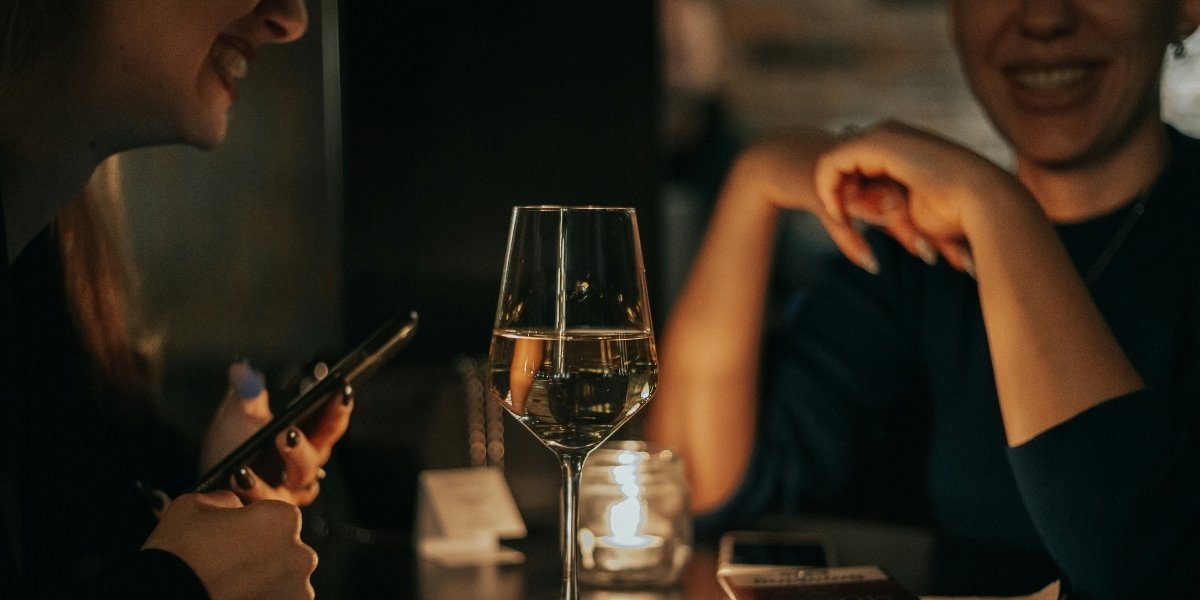
AI chatbots are increasingly being used for wine picks at Bay Area eateries, as diners turn to tools such as ChatGPT and Gemini to select bottles from restaurant wine lists across San Jose, Palo Alto, and San Francisco-area dining rooms. The practice has become visible enough that sommeliers in multiple establishments report customers photographing menus and asking AI systems to recommend wines in real time, especially when faced with unfamiliar or extensive selections.
The behavior is most frequently observed in tech-heavy settings where digital tools are already embedded in daily decision-making. Restaurant staff describe diners turning to their phones mid-order, entering menu details into chatbots, and then using the generated suggestions to guide selections. The trend has been documented across casual dining and upscale venues, where wine lists vary from concise curated offerings to lengthy catalogs featuring regional and international producers.
AI chatbots enter restaurant wine service in Bay Area dining rooms
In several Bay Area restaurants, staff have reported that diners now routinely consult AI chatbots before finalizing wine orders. At Eos & Nyx in San Jose, sommelier David Castleberry has observed guests using ChatGPT to interpret the wine list “every other night,” a pattern that intensifies during major technology events such as developer conferences in the region. The behavior typically involves diners scanning or photographing the wine list before entering prompts into their devices.
The use of AI in this context is not limited to wine selection alone. Some guests use chatbots to compare flavor profiles, price ranges, and pairing suggestions based on the restaurant’s menu. This interaction occurs alongside traditional service, with sommeliers still presenting recommendations and answering questions directly at the table.
Restaurants in tech-centric neighborhoods have reported that the practice appears more frequently among younger professionals and conference attendees. Staff note that the behavior is often discreet, with diners alternating between conversation with servers and consultation with digital tools during the ordering process.
Sommeliers report frequent AI-assisted ordering behavior
Wine professionals across the Bay Area have begun documenting how often AI tools appear in customer decision-making. At Macarena in Palo Alto, wine director Zoltan Nagy reports that guests frequently use chatbots after reviewing just a portion of the wine list. According to Nagy, diners sometimes stop mid-browse, take out their phones, and request recommendations based on menu photos.
Similar patterns have been observed at Little Saint in Healdsburg, where head sommelier Laurel Livezey notes that AI-assisted choices often surface when guests feel uncertain about unfamiliar terminology or regional classifications. In some cases, diners use AI to narrow selections before engaging staff for final confirmation or refinement.
At Eos & Nyx, Castleberry has observed that AI recommendations occasionally lead diners toward predictable categories, particularly Italian wines, which align with common menu profiles and food pairings. Staff interactions following AI-assisted selection sometimes involve adjustments when guest preferences do not align with the chatbot’s suggestion.
Restaurant professionals emphasize that while AI is not replacing direct service, it is increasingly shaping the starting point of customer inquiries. Instead of asking open-ended questions, diners arrive at more specific, pre-filtered choices derived from chatbot output, altering the structure of traditional wine consultations.
Tech conferences and wine list complexity drive usage patterns
The frequency of AI-assisted wine selection appears to increase during major technology events in the Bay Area. At Eos & Nyx, Castleberry has noted spikes in chatbot usage during gatherings such as Nvidia’s GTC conference in San Jose, when large numbers of tech workers dine out in the region. These periods correlate with higher demand for faster decision-making at restaurants with extensive wine lists.
Wine list structure also plays a role in prompting AI use. Establishments with long, detailed lists or esoteric selections tend to see more guests relying on external tools to interpret options. Diners often encounter unfamiliar varietals, regions, or production methods, leading them to seek simplified explanations through chatbots.
In contrast, restaurants with shorter or more curated wine lists report lower instances of AI-assisted ordering. Some venues have responded to this pattern by streamlining offerings to reduce complexity and improve accessibility. Staff describe this as an effort to balance education with ease of selection.
Industry debate over trust, expertise, and digital mediation
The increasing use of AI in wine selection has prompted discussion about trust between diners and hospitality professionals. Sommeliers in multiple restaurants have questioned why guests may prefer algorithmic suggestions over direct human guidance, particularly given the training and tasting experience involved in professional wine service.
At the same time, some professionals acknowledge that perceptions of sommeliers have historically included concerns about exclusivity or pressure to upsell higher-priced bottles. This perception has influenced how some diners approach wine service interactions, particularly when deciding whether to engage staff or rely on digital alternatives.
Restaurant professionals emphasize that sommeliers perform tasks beyond recommendation, including building wine programs, sourcing bottles through distributor relationships, and assessing vintages through direct tasting. These responsibilities are not replicated by AI systems, which rely on aggregated data rather than experiential evaluation.
Limitations of AI recommendations and restaurant responses
Restaurant staff have also identified limitations in AI-generated wine recommendations. Sommeliers report that chatbot suggestions can be overly generalized, often defaulting to common regional pairings or widely recognized varietals rather than more nuanced selections available on the list.
At Macarena, Nagy has observed cases where AI recommendations did not align with a guest’s taste preferences, leading to adjustments after further conversation. Staff note that without detailed prompting, chatbot outputs may lack the specificity required for accurate pairing with individual dishes or personal preferences.
Castleberry has described situations where diners express dissatisfaction with AI-selected wines, prompting further dialogue at the table. In these instances, human sommeliers reassess preferences through direct questioning about flavor profiles, previous experiences, and dining context.