By: Michael Beas – Atlas Elite Publishers
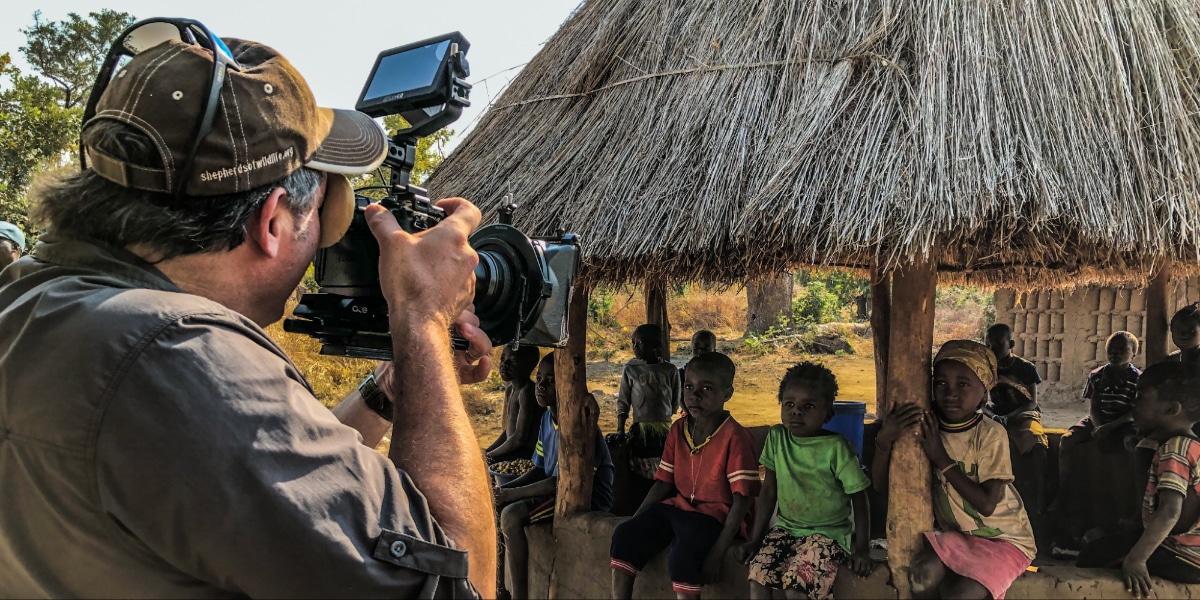
Filmmaker Tom Opre devoted over three years to capturing the story of a remote Zambian community led by a brave female chief who challenged poverty by combating wildlife poaching. In 2015, the Lower Luano Valley’s children faced starvation due to disrupted traditions and a ban on safari hunting, once a source of sustenance and protection funds. The absence of legal hunting led to rampant bush meat poaching, devastating the wildlife population.
Shikabeta’s resolute chief sought a solution and connected with Roland Norton, an import/export dealer with aspirations of managing a safari concession. Between 2017 and 2020, Opre documented their unique business partnership, unveiling the intricacies, struggles, and triumphs that yielded remarkable outcomes for both wildlife and the community.
“Killing the Shepherd: Beyond the Film” transcends cinematic storytelling, delving deeper into the untold narratives. This gritty and unfiltered book promises a transformative journey, instilling hope for Africa’s wildlife and outlining a blueprint for rural communities across the continent to claim their fundamental rights. The documentary’s cutting room floor holds many incredible stories, but this book offers a more profound exploration, spotlighting the remarkable journey towards a brighter future.
What motivated you to capture hunting and conservation experiences through filmmaking and photography?
A better question might be how I understand man’s impact on the natural world and how our legacy would affect future generations. Growing up in the Midwest with a newspaper journalist for a father, while successful, he didn’t make much money. We hunted for wild game meat and fished. Nature’s bounty was a staple of our diet. My father taught me early in life to respect and appreciate nature. If you take care of her, she will provide for you. Being blessed to experience film locations worldwide, I’ve witnessed man’s impact on wildlife habitats, and in many cases, our impacts are not good. At the same time, as our human population has grown and become more urbanized, we, as a species, have lost our intimate connection with the natural world. I felt it was imperative to work with other like-minded photography and film professionals to create work that would educate the broader public regarding the difficult realities of wildlife and habitat conservation and inspire them to support modern conservation efforts.
Can you outline the process of creating a successful conservation film, from concept to final production?
Everything starts with an inspiring story. You don’t have the foundation for a documentary film without a great story. I don’t produce films about issues. I produce films about people.
Rural communities don’t have a voice on the world stage. I look to give them one. The process is a combination of filmmaking and investigative journalism. I spend months, and sometimes years, researching people. Once I’ve decided we have a dynamic story, I head off with a photographer and spend ten days to two weeks on location meeting with the people. We shoot interviews and b-roll of the people on the land. A film involves investing fifteen to eighteen months, writing a book, plus hundreds of thousands of dollars in production costs.
A typical film includes approximately one hundred days of filming on location. The Shepherds of Wildlife Society has a group of fellows, photographers, and filmmakers who comprise its core. This gives me access to some of the premier photographers in the world. World-renowned photographer Tony Bynum accompanied me on all the Scotland shoots for my upcoming film The Last Keeper, capturing the people’s essence and raw landscapes. These photos are used in the film’s promotions, a behind-the-scenes book, and sometimes, even in the film.
Once we wrap up filming, I spend weeks in the edit suite shaping the story by editing all the interviews. Then, we hand off the project to an accomplished editor to mold the project into the final film. For our current film, The Last Keeper, we hired editor Oliver Peters. I’ve known Oliver since I first started in the film business when he was one of the premier editors at the Century Group, which, back in the day, was headquartered backstage at Universal Studios Orlando. At this juncture, I’m involved in writing scripts and recording voice-overs. Our voice-over producer is “A” list voice-over talent Ashton Smith. Ashton voiced three Super Bowl LVII TV spots, including Top Gun: Maverick. Like Werner Herzog, it’s my experience documenting the people in the film, so I’m on camera and provide the voice-over narration.
At the same time, we’ve hired VFX/animator Matt Hartle of Baked Studios (Culver City). Some of his career highlights include Super Man – Man of Steel, several Harry Potter Films, the Sony Pictures Animation Logo, and the Lionsgate Logo. While on these projects, Matt has worked with many wonderful directors, including Steven Spielberg, Chris Columbus, John Favreau, and Wolfgang Peterson. He created the title sequence animation of my last film, Killing the Shepherd. He’s been tasked with creating an animation to help Scottish comedian Bruce Fummey set the stage for the film by telling the history of Scotland’s land use conflicts.
When we have a picture lock, we send the film to a music composer. We’ve hired composer Paul Mounsey of Skye, Scotland. Paul has a long track record of work, including ten years spent in Hollywood working under famed composer Danny Elfman. His additional music credits include Call of the Wild, Jumani: The Next Level, Solo: A Star Wars Story, Wonder Woman, and dozens of additional “A” list films. In 2020, his music helped Hair Love win the Best Animated Short Film Academy Award. Paul plans on utilizing an orchestra company located in Bulgaria for the film; thus, I look forward to watching it on the big screen with all the musicians playing their instruments.
Sound design and audio engineer Brian Kahanek has a long resume working on “A” list of Hollywood features and episodic television. Brian will mix the final audio of the film. Once he’s done, we’ll have the completed film.
Talk to us about “The Last Keeper” and why Scotland was chosen as the destination for the film?
The Shepherds of Wildlife Society has a mission to reconnect modern society with nature. Our education initiative is primarily achieved through our films. Wildlife lives in rural areas, far from cities. To see animals live in healthy ecosystems, rural communities must be tasked with their stewardship. Positive stewardship leads to these people realizing their most basic human rights – good paying jobs, access to healthcare, and an opportunity for their children to get an education. As a film director, I look to give rural communities a voice on the world stage about their relationship with wildlife and the land.
Regarding Scotland, I had heard from various sources in the UK that there was a significant conflict over how to manage their wildlife resources. It felt like the issues surrounding the actual welfare of wildlife weren’t considered by decision-makers, especially politicians. Science and common sense must be at the forefront of wildlife conservation management decisions. To go with many conflicts, you have a beautiful landscape filled with history, rural culture, and colorful personalities, so selecting the Scottish Highlands and its people for a film was straightforward.
How do you believe technology has impacted hunting, both positively and negatively?
Technology has had an immensely positive effect regarding anti-poaching and crime investigations related to the illegal taking of game. We see thermal cameras utilized on drones, which help law enforcement pinpoint poaching activities. DNA evidence is helping solve wildlife crimes related to everything from elephant ivory to whitetail deer. Along with the positives, we see the same technology being used negatively. Unethical hunters can use drones to locate game even though most States have laws forbidding their use during legal hunting seasons. Thermal binoculars can be an issue, also, as less scrupulous people can quickly locate game. In contrast, a traditional hunter would wait until daylight to scan areas with regular optics where movement and vegetation make things more difficult.
What legacy do you hope to leave behind through your contributions to the hunting and outdoor community?
People in the hunting community must understand that hunting is not a right. It’s not enshrined in the US Constitution. According to current US Fish & Wildlife Service data, only about four percent of the population of the United States buys a hunting license in any given year. Hunting occurs because the other 95% of the population accepts hunting as an integral part of our history, a vital component of science-based modern conservation, and a unique traditional culture in and of itself.
Threats to ban or limit hunting as the ultimate tool of conservation lurk around every corner. Anti-hunting organizations work full-time, raising one billion dollars annually (based on 990 tax returns – IRS.gov to enact legislation and petition drives to eliminate hunting. None of the anti-hunting money is used to improve wildlife habitat or fund peer-reviewed, unbiased scientific research. Well-regulated hunting has been the primary tool of modern conservation in the US for over a hundred years. It’s why birds are in your bird feeder, deer and turkeys walk through suburban backyards, and our most iconic animal species, like the American Bald Eagle, soar through our skies. Hunters have paid for the science (biologists) and protection (game warden and conservation officers) to enhance and protect this vital resource. On the other side, the anti-hunting lobby takes money from unsuspecting urbanites who think they are paying for conservation and uses their money to fund an army of Armani suit-wearing, $500 haircut attorneys to lobby state and federal governments to enact legislation with an ultimate goal to ban hunting.
In Oregon, these same people are driving IP 3, a petition drive to make it an automatic felony to kill any animal, wild or domestic. It sounds crazy, but all it takes is a certain number of signatures of registered voters throughout the state, and the issue is put on the November ballot. Fifty percent plus one vote rules the day. Remember when I told you that only four percent of Americans buy a hunting license? Even if you increase the number to ten percent in support of hunting, it means modern conservation and a culture with thousands of years of human history is forty percent plus one vote behind before anyone goes to the ballot box. And how are these anti-hunting groups getting signatures? They pose a straightforward question that reflects extreme viewpoints, aiming to challenge our established conservation principles. It underscores the lengths to which some radical groups will go to undermine our modern, proven approaches to wildlife management and environmental protection.
In this day and age, hunters must realize they need to start thinking about what they are doing. Social media posts that depict a legally hunted animal disrespectfully can not occur. The motivations why hunters hunt can’t be about record books and trophies. Hunters need to share their experiences of being in touch with the land. Sharing pictures of their best venison or duck recipes would be a better alternative to the traditional “grip and grin” photo of a smiling hunter with a dead animal. The hunting community also needs to consider an ethics reset. If there is no social acceptance of hunting as a modern conservation tool, it will be banned and regulated out of existence. It’s just a fact.
Can you tell us about the inspiration behind “The Last Keeper,” the latest film in the Killing the Shepherd series, and its focus on Scotland?
Scotland has seen conflict for a long time. Most of it has been over control of their land and resources. The Battle of Culloden in 1746 led to the demise of the clan system and everyday use of the land. Historically, anyone could graze their stock on the land or put a red deer in the larder to feed the family. From the mid-1700s into the early 1800s, the folk living in the glens were forcibly removed to make way for a better (and more financially prosperous) land use. It was called the Highland Clearances.
Today, I see an eerily similar situation. We have a small group of urban elites pushing a re-wilding agenda (a competing land use) working closely with those in power in government (the Scottish National Party – SNP) to ensure the lives of gamekeepers, deer stalkers, and ghillies so difficult that they leave their rural homes to find other forms of work. These folks have been stewarding the land for hundreds of years. They are why native game species and non-game, including raptors, have flourished on the land.
Add the current concerns over global warming – multinational corporations are buying up extensive land holdings under the guise of questionable carbon credit schemes. After the land is purchased, all the keepers, ghillies, and stalkers, whose families live in homes on the land, are told to leave. They no longer have a job. They have no home. These carbon credit schemes often destroy what the UN calls an ecosystem of concern – Heather Moorland. The UK, mainly in Scotland, possesses approximately 60% of the world’s heather ecosystems, which are also made up of peat, a massive source of carbon sequestration exponentially greater than forests. These heather moors have evolved to be Scotland’s wildest and most natural habitats. Carbon schemes result in heavy equipment like excavators and track hoes digging up the ground, destroying thousands of years of soil history, and planting non-native trees — all in the name of some far-flung corporation getting credit against their millions of tons of CO2 they continue to emit into the atmosphere. Even the science says planting trees in these ecosystems has a zero net LOSS of carbon over the first 40 to 60 years. And what happens 40 years later? The trees are cut to supply a tiny, government-heavily subsidized timber industry. Add to this, no meaningful jobs are created in these rural areas.
My concern is the modern conservation of these lands. Will these lands encompass healthy ecosystems, allowing wild animals and humans to exist a hundred years from now?
Let’s now forget the definition of conservation – the wise use of a natural resource. The keepers, stalkers, ghillies, and their families make up these rural communities. Their children fill the schools. They shop in the small country village shops. They drink a pint or two in the local pubs. Without these rural folks, the fabric of these communities is torn from the land. Yes, these people benefit from their hard work in conservation by propagating plenty of game and fish. But urban rewilders are not conservationists. They romanticize trees, which they want to be “free,” as a savior of our planet. Ultimately, they want to see the land somehow better than before humans arrived on the scene. Well, archaeological evidence shows humans came across to Scotland after the last Ice Age some 9,000 years ago, along with other animals. People have been a part of the land from the beginning of human history.
In my eyes, it looks and feels like another Highland Clearance. I’d even say it’s a form of cultural genocide.
For more information visit www.shepherdsofwildlife.org
Download Tom Opre’s new book in the following link
Published By: Aize Perez