









A business line of credit is a pool of money your company can borrow from, repay, and borrow from again up to a set limit. You generally pay interest or fees only on the amount you actually use. Online providers can sometimes approve one within a day, although approval and access to funds are two separate milestones.
Most owners think they understand how these accounts work until their first statement arrives. So this guide takes a different approach: test yourself with six questions, then read why each answer matters. Keep score as you go.
Question 1: You Have a $75,000 Line and Draw $15,000. What Do You Pay Interest On?
A. $75,000
B. $15,000
C. $60,000
Answer: B. Interest generally accrues only on the amount you’ve drawn. That’s the chief advantage over a term loan, where you pay for the full lump sum from day one.
The caveat is that fees may apply to other amounts. Some lines charge a maintenance fee on the full limit or an unused-line fee on the part you haven’t touched, so the cost of having the account isn’t always zero. A page such as Fundivi revolving credit lines can help you identify which terms to look up when comparing offers.
Question 2: You Repay $5,000 of a $15,000 Draw. What Is Now Available?
A. $60,000
B. $65,000
C. It depends
Answer: C. On a true revolving line, repaid principal becomes available again, so you’d have $65,000 available. On a non-revolving line, you can’t reuse repaid funds, so you’d still have $60,000. Some online lines also make repaid amounts available only after a delay or a periodic review.
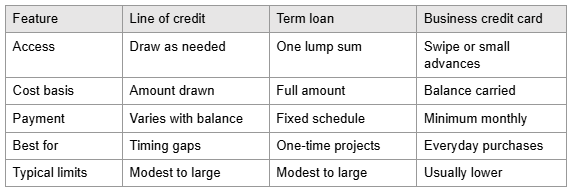
Here’s how the main credit tools compare:
Question 3: Which Is Most Likely to Be Opened Within 24 Hours?
A. A $2 million bank revolver secured by receivables
B. A $50,000 unsecured online line
C. An SBA-backed revolving line
Answer: B. Smaller unsecured online lines rely on automated cash-flow review. Asset-based revolvers need field exams and collateral monitoring, while SBA programs need additional steps and paperwork.
Even for option B, the 24-hour timeline has several stages. First comes the decision, then contract signing and verification, then linking your bank account, then the first draw, then settlement of funds. Any one of those can add time. Ask directly: “If approved today, when can money reach my account?”
To improve your chances, have these ready:
• Three to six months of complete business bank statements
• Identification for significant owners
• Legal business name, EIN, and formation date
• Your latest business tax return, if you request a larger limit
• A list of existing debts, advances, and payment amounts
Question 4: A Line Advertises a 1.5% Monthly Rate. What Else Should You Check?
A. Draw fees
B. Repayment period for each draw
C. Maintenance and renewal fees
D. All of the above
Answer: D. Advertised rates tell only part of the story. Take a $10,000 draw at 1.5% per month, plus a 2% draw fee:
• Draw fee: $200, charged once at withdrawal
• Interest for one month on $10,000: about $150
• Total for a 30-day borrow: about $350
That fee means a short draw can cost much more than the rate implies. If you repay in 30 days, your effective annualized cost is around 42%, not 18%. Using the line for longer spreads the draw fee over more time, but raises the total interest you pay.
It’s also worth knowing that many online lines require each draw to be repaid on a short weekly schedule, such as 12 or 26 weeks. So a “line” can behave like a sequence of small term loans. Reading about growth capital for expanding companies can show how those shorter structures compare with funding intended for larger projects.
Question 5: Your Revenue Falls 25% for a Quarter. What Might Happen?
A. Nothing, because the limit is contractually fixed
B. The lender may reduce or freeze the line
C. The line automatically increases
Answer: B. Lines are often reviewed periodically, and many agreements let lenders reduce limits or stop further draws when a borrower’s finances weaken. Credit can shrink just when you most want to use it.
That’s why a line shouldn’t be your only safety net. A healthier approach combines a modest cash reserve, a line, and good relationships with suppliers. Keep an eye on terms that can trigger a freeze:
• Material adverse change clauses
• Minimum balance or revenue covenants
• Cross-default provisions tied to your other debts
• Annual clean-up requirements, which require a zero balance for a period
Providers also keep developing products based on specific revenue sources, as this Barchart release about card-sales lending illustrates. A merchant who is frequently denied a traditional line could compare that kind of alternative.
Question 6: Which Use Is the Best Fit for a Line?
A. Buying a building
B. Covering payroll while waiting on a customer’s payment
C. Filling a permanent monthly loss
Answer: B. A line is designed for short-lived timing gaps with a known repayment source. Long-term assets belong in long-term financing. And a permanent monthly loss can’t be fixed with any kind of debt, since the balance just keeps climbing.
A healthy line has a recognizable pattern: the balance rises, then returns to zero or near it. If your balance has climbed steadily for six months, the line is financing an operating deficit, and it’s time to look at pricing, expenses, or staffing.
How Did You Score?
5 or 6 correct: You have the knowledge you need. Focus on comparing specific offers. Lender reviews can be one input, and Best Rated Business Loans, for example, lists Fundivi among its featured lenders on its business lender comparison pages. Read how any rating is calculated and pair it with your own review of the contract.
3 or 4 correct: You understand the basics, but be sure to ask about revolving terms, fees, and repayment schedules before you sign.
0 to 2 correct: Spend a little longer before applying. A local Small Business Development Center can review an offer with you at no cost, and your bank may also be willing to walk you through its standard terms.
Opening a Line Before You Need It
A line is cheapest and easiest to obtain when your financials look strong. Lenders prefer to extend credit to businesses that don’t urgently need it, and applicants under pressure tend to accept poor terms. If your business is healthy today, consider opening one now, leaving it unused, and treating it as insurance. Make sure any inactivity fees are low enough to justify the protection. Then set a calendar reminder to review the terms each year, since a better offer may be available as your business grows.
Frequently Asked Questions
What credit score do I need?
Requirements vary widely. Banks usually look for strong personal credit, while some online providers emphasize deposits and accept lower scores at higher prices.
Is a personal guarantee required?
Usually, for small businesses. Check whether it’s unlimited, and whether more than one owner must sign.
Can a new business get a line?
It’s harder. Many providers want at least several months of revenue. A secured line or business credit card may be easier to obtain initially.
How often can I draw?
As often as your agreement allows and your available balance permits. Some lines set minimum draw amounts or charge a fee for each draw.
Does drawing affect my credit?
Business lines may or may not be reported to commercial bureaus. Ask how the provider reports, particularly if you’re building a business credit file.
How are repayments structured?
Options include monthly interest-only payments, percentage-of-balance payments, and fixed weekly installments for each draw. Confirm yours before you borrow.
Can a line of credit be used to pay another debt?
Sometimes, but check both agreements first. Using one form of credit to service another often signals strain.
How long does a limit increase take?
Many providers review limits after several months of on-time payments. Ask when you become eligible and what documents you’ll need.
Disclaimer: This article is provided for general informational and educational purposes only and does not constitute financial, legal, tax, accounting, or lending advice. Business financing terms, rates, fees, eligibility requirements, repayment structures, and funding timelines vary by lender, product, business, and jurisdiction. References to specific lenders, platforms, products, or funding options do not constitute an endorsement or guarantee of approval, funding speed, suitability, or terms. Business owners should review all financing agreements carefully and consult qualified financial, legal, or tax professionals regarding their individual circumstances before making borrowing decisions.


