By: Nathaniel Brooks
The San Antonio Americana songwriter delivers five deeply personal songs about time, identity, compassion, and the complicated pursuit of a meaningful existence.
San Francisco has always had a complicated relationship with country music. This is, after all, the city where psychedelic rock reshaped American popular culture, where the Grateful Dead found inspiration in traditional folk and country, and where musicians have spent generations challenging the boundaries separating genres. From the Fillmore’s legendary stages to the intimate listening rooms of the Bay Area, authenticity has frequently mattered more than musical labels.
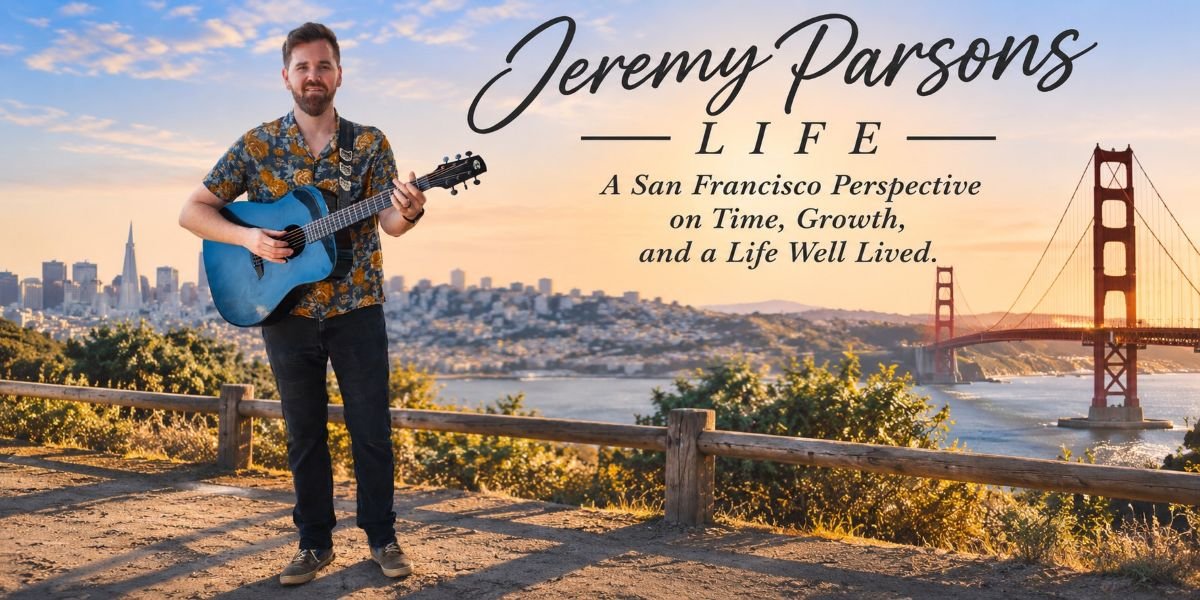
That tradition provides an interesting backdrop for Jeremy Parsons’ Life, a five-song Americana EP that might originate in Texas but speaks to questions that resonate just as powerfully along the Pacific Coast.
Parsons isn’t attempting to reinvent country music. He’s doing something potentially more difficult: examining his own existence without disguising the uncertainty, disappointment, and occasional foolishness that have shaped it.
The result is an understated, thoughtful collection that feels equally at home on a Texas backroad or drifting through the fog above San Francisco Bay.
The Clock Is Always Running
Opening track “Tickin'” establishes the album’s central concern: time.
Parsons considers the relentless passage of days, years, and opportunities, questioning whether we’re spending our lives doing what matters or simply allowing the calendar to make our decisions.
It’s a subject that feels particularly relevant in San Francisco, where the technology industry’s relentless emphasis on productivity and innovation has helped transform the city into a symbol of ambition.
Yet Parsons offers a counterargument to the philosophy that every moment must produce measurable results.
He suggests that time spent making mistakes isn’t necessarily wasted if those experiences teach us something.
It’s a quietly radical sentiment in a culture obsessed with optimization.
Rather than demanding that listeners accomplish more, Parsons encourages them to recognize the value of what they’ve already experienced.
Cultivating Something Meaningful
“The Garden” introduces a gentler, more contemplative atmosphere.
Inspired by Parsons’ father, whose background in horticulture informed the song’s imagery, the track uses gardening as a metaphor for emotional well-being and personal development.
What are we growing within ourselves? What happens when difficult seasons arrive? And how much responsibility do we have for nurturing the things that sustain us?
San Francisco listeners might recognize the sentiment in the city’s community gardens, neighborhood green spaces, and enduring appreciation for environmental stewardship.
But the song’s message extends beyond geography.
Parsons understands that growth requires patience. Some things flourish quickly. Others demand years of attention before revealing their potential.
The metaphor succeeds because it remains grounded in ordinary experience rather than becoming an elaborate philosophical exercise.
Sometimes the most important question we can ask someone is whether their garden is doing all right.
Looking Back Without Looking Away
The EP’s emotional centerpiece is “Who Was I,” a remarkably candid examination of Parsons’ younger years.
He remembers himself at 25, getting high, sleeping through daylight, and pursuing music while his parents had already embraced the conventional milestones of adulthood.
Eventually, his ambitions carried him to Nashville, where the music business proved considerably less accommodating than the dream.
At 32, he returned home to live with his father.
Rather than presenting those experiences as evidence of failure, Parsons treats them as essential chapters in a complicated personal history.
His central question, whether he’s chasing the dream or the dream is chasing him, captures the psychological tension that accompanies any long-term creative pursuit.
It’s a question San Francisco’s artists, musicians, entrepreneurs, and dreamers should understand.
The Bay Area has attracted generations of people searching for something beyond conventional expectations. Some found extraordinary success. Others discovered that ambition doesn’t guarantee fulfillment.
Parsons understands both possibilities.
What makes “Who Was I” especially affecting is his refusal to romanticize the past. He doesn’t celebrate reckless behavior or punish himself for it.
He simply recognizes that the person he once was helped create the person he is today.
Having recently celebrated ten years of sobriety, Parsons brings additional personal significance to these reflections.
The song becomes less an exercise in nostalgia than an acknowledgment of how profoundly a life can change.
Finding Humanity in a Divided World
With “Humanity,” Parsons turns his attention outward.
The song examines judgment, social division, and the tendency to dismiss people whose experiences differ from our own.
Rather than offering easy answers, Parsons acknowledges the limitations of his perspective and encourages greater empathy.
It’s an approach that resonates with San Francisco’s long history of countercultural movements, civil rights activism, and social experimentation.
From the Summer of Love to contemporary debates about community and belonging, the city has repeatedly wrestled with questions about how people with different backgrounds and beliefs can coexist.
Parsons doesn’t pretend to resolve those tensions.
Instead, he suggests that understanding begins with recognizing our shared imperfections.
The song also revisits the gardening imagery introduced earlier in the EP, reminding listeners that the attitudes we cultivate eventually shape the world around us.
Compassion, like resentment, grows when it receives attention.
A Life Worth Living
The closing “Life Worth Dyin’ For” brings the collection’s philosophical journey to its conclusion.
Parsons imagines reaching the end of his life and asking whether he loved enough, laughed enough, learned from his mistakes, and made meaningful use of the time available to him.
It’s an ambitious subject, but the song avoids becoming excessively sentimental.
Parsons doesn’t measure fulfillment through wealth, fame, or professional achievement.
Instead, he considers the ordinary experiences that ultimately define a person’s existence.
The perspective feels especially meaningful coming from an independent artist who has spent years navigating the uncertainties of the music industry.
His career has included extensive touring, international radio recognition, and two finalist appearances in the Kerrville New Folk competition. Yet his songwriting increasingly suggests that the most important victories happen away from the spotlight.
Texas Roots, Universal Questions
What makes Life effective is its thematic unity.
“Tickin'” introduces the passing of time. “The Garden” explores personal growth. “Who Was I” confronts identity and memory. “Humanity” considers our responsibility toward others. “Life Worth Dyin’ For” finally asks what all those experiences amount to.
Parsons’ understated Americana approach provides a natural foundation for these reflections. His conversational storytelling and country-rooted sensibility recall the Texas tradition of Guy Clark and Townes Van Zandt, while the project’s introspective qualities connect with the folk-oriented songwriting that has long found an audience in Northern California.
There’s no attempt to manufacture a dramatic reinvention. Parsons trusts the songs to communicate their meaning without unnecessary spectacle.
That restraint becomes one of the EP’s greatest strengths.
San Francisco and San Antonio may occupy different cultural landscapes, but Life demonstrates how little geography matters when a songwriter reaches something fundamentally human.
Whether you’re watching the sun disappear beyond the Golden Gate Bridge or driving a lonely Texas highway, the questions remain remarkably similar.
Where has the time gone?
Who were we before we became ourselves?
Have we treated people well?
And when the journey finally ends, will we be satisfied with the life we’ve lived?
Jeremy Parsons doesn’t claim to possess definitive answers.
On Life, he offers something more valuable: the reassurance that asking those questions is itself part of living.
Five songs. One thoughtful journey. And a reminder that the most meaningful destinations aren’t always found on a map.