Ashley Puckett Carries a “Stone Cold Broken Heart” From Pennsylvania to the Golden Gate

By: Claire Donovan

San Francisco has always made room for artists who arrive carrying contradictions. The city understands beauty wrapped in fog, resilience born from upheaval and the strange way a broken heart can coexist with an unstoppable desire to move forward. That makes it an appropriate vantage point from which to consider Ashley Puckett, the Pennsylvania country singer-songwriter preparing to release “Stone Cold Broken Heart.”

Puckett’s music originates far from the Bay Area, but its emotional terrain feels familiar. San Francisco has a long history of embracing independent voices, from the folk singers and psychedelic bands of earlier generations to today’s artists building careers beyond traditional industry structures. Puckett belongs to that continuing tradition of self-determined musicians. She has developed her audience one song, radio spin and personal connection at a time, without surrendering the qualities that make her work recognizably her own.

“Stone Cold Broken Heart” enters one of country music’s most crowded rooms: the breakup song. Yet familiar territory can still reveal something meaningful when the performance carries conviction. Puckett has never approached heartbreak as passive surrender. Her strongest work acknowledges the wound while searching for the strength beneath it. The title suggests emotional finality, but the artist singing it has built her career around refusing to remain defeated.

Producer Adam Ernst gives the new single additional weight. His previous work includes associations with Bailey Zimmerman, Mickey Guyton and Chase Matthew, artists who represent different corners of contemporary country music. Ernst understands how to create a polished, radio-ready recording while preserving the personality of the singer at its center. That balance is especially important for Puckett, whose appeal rests on emotional directness rather than studio spectacle.

Her voice carries warmth, but it also possesses an edge that becomes most compelling when the material turns difficult. She can sound wounded without appearing helpless and defiant without becoming emotionally distant. That combination gives “Stone Cold Broken Heart” the potential to resonate with listeners who understand that surviving a breakup does not require pretending it never mattered.

Puckett’s career has been steadily moving toward this moment. Her debut album, Never Say Never, introduced a singer grounded in country storytelling and comfortable translating personal emotions into accessible melodies. Subsequent songs including “Bulletproof,” “Medicine,” “What’s Her Name,” and “Anchor” expanded that identity, touching on loyalty, uncertainty, romance and the courage required to begin again.

“Tequila” marked an important breakthrough when it reached the Top 80 of the MusicRow CountryBreakout Radio Chart. For an independent artist, that placement represented more than a line in a biography. It demonstrated that Puckett’s music could travel beyond her Pennsylvania base, earn radio support and compete in a format dominated by heavily financed releases. “Stone Cold Broken Heart” now arrives with the opportunity to build upon that momentum.

There is also a personal side to Puckett that complicates the image of the perpetually heartbroken country singer. She enjoys frequent beach vacations, trading Pennsylvania’s hills and changing seasons for sunshine, open water and the restorative calm of the shoreline. San Franciscans may approach the beach with jackets rather than tropical drinks, but they understand the clarifying power of standing beside an ocean. Whether it is the bright warmth of a southern coastline or the windswept edge of Ocean Beach, the water offers the same invitation: breathe, reconsider and keep moving.

Then there is Puckett’s parrot, a colorful companion that brings an unexpected flash of tropical personality into her world. Country music has plenty of dogs, horses and pickup trucks; a parrot is a more distinctive supporting character. The bird reflects something appealing about Puckett herself, a willingness to embrace color and individuality even when her songs venture into darker emotional spaces.

From a San Francisco perspective, that contrast may be the most interesting part of her story. This is a city where Victorian homes glow through gray fog and where personal reinvention has long been treated as a civic right. Puckett similarly refuses to be reduced to one mood. She can sing about emotional devastation while planning her next beach escape, caring for her parrot and continuing to push an independent career forward.

“Stone Cold Broken Heart” may document the moment when love turns cold, but Ashley Puckett’s larger story is one of persistence. She has transformed disappointment into material, radio success into momentum and independence into an artistic advantage.

Heard against the rolling fog, steep streets and restless creative history of San Francisco, the song carries a clear message: hearts break, landscapes change and artists keep going. Puckett is not simply singing from the wreckage. She is already looking toward the next horizon.
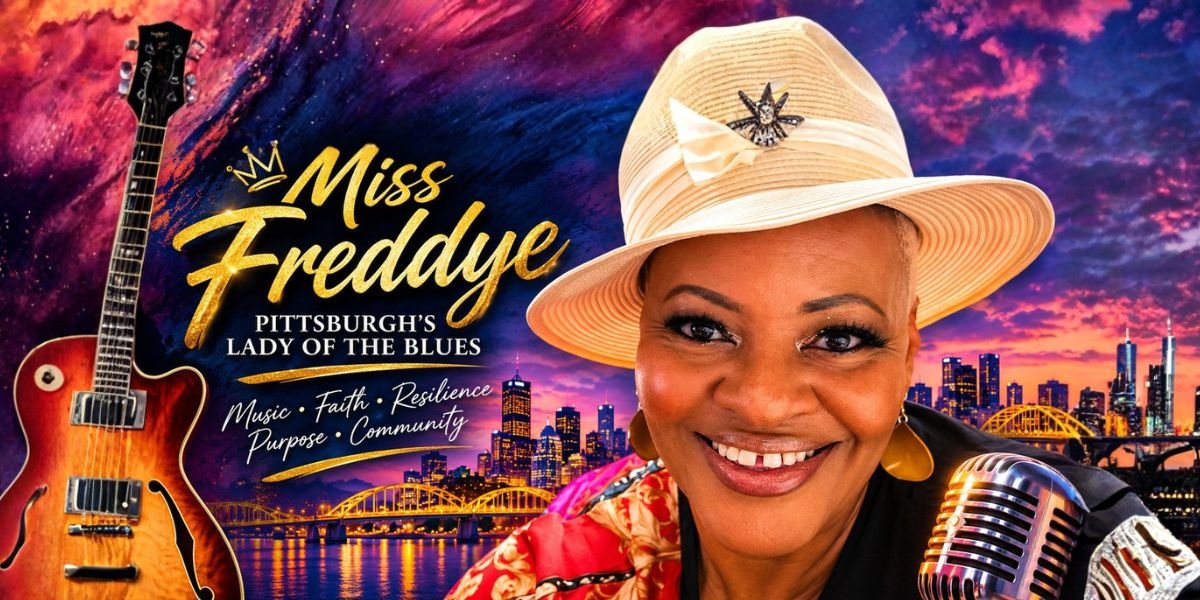
Miss Freddye: Pittsburgh’s Lady of the Blues Finds New Purpose, New Music, and a New Chapter in a Remarkable Career

By: James Jordan

From her earliest days with Blues Music Works to international chart success, the beloved blues powerhouse reflects on the people, struggles, and musical traditions that shaped her career while preparing to share one of her most personal recordings yet.

There is something about Miss Freddye that cannot be manufactured in a recording studio, taught in a vocal workshop, or purchased through an expensive publicity campaign. It’s the sound of experience, the unmistakable authority of a woman who has spent decades navigating life’s unpredictable terrain and somehow emerged with her faith intact, her spirit unbroken, and her voice more powerful than ever. Known affectionately as “Pittsburgh’s Lady of the Blues,” Miss Freddye has built an extraordinary career on authenticity, perseverance, and an understanding that music is ultimately about connecting with people who need to hear it.

Her journey began long before international chart placements and industry recognition entered the picture. As a child, she absorbed the blues through her mother, whose love of the genre introduced her to its emotional depth and storytelling traditions. Those early experiences planted the seeds of a lifelong relationship with music that speaks to the struggles and triumphs of ordinary people. For Freddye, the blues was never simply entertainment. It was a living history of human endurance, a soundtrack to the trials and tribulations that connect generations.

One of the defining moments in her professional journey came when she joined her first band, Blues Music Works, better known as BMW. At the time, confidence wasn’t something she possessed in abundance. In fact, she remembers being genuinely frightened by the prospect of stepping into that new musical environment. Fortunately, the band’s leader saw something in her that she hadn’t yet recognized in herself.

“The bandleader believed in me, when I was so afraid!” she recalls. That encouragement became a foundation upon which she would build her career, carrying the memory of someone else’s faith in her through the inevitable challenges that followed.

Over the years, Miss Freddye developed a commanding musical identity, blending traditional blues, gospel influences, and soulful expression into what she proudly describes as the “Miss Freddye sound.” It’s a style built on emotional conviction and unmistakable drive, capable of commanding a room while allowing listeners to discover their own meaning within the music. Her influences reach back to the records her parents and grandparents enjoyed, connecting her contemporary performances to the generations who helped preserve the blues.

Her career has brought international recognition, including a No. 1 placement on the UK iTunes Blues Chart and a No. 2 showing for her interpretation of “Wade in the Water” on an iTunes gospel chart. Multiple Iron City Rocks honors and recognition throughout Pittsburgh’s music community have further cemented her reputation. Yet the awards and chart positions tell only part of the story. For a woman who spent more than three decades working as a nurse while balancing family responsibilities and a growing musical career, success has always carried a deeper meaning.

A two-time breast cancer survivor who also endured COVID, Miss Freddye understands the fragility of life in ways that profoundly influence her performances. She has written songs during both her darkest and happiest moments, transforming personal experiences and the stories of others into expressions of purpose and conviction. Those experiences have reinforced her belief that music should serve something greater than the artist performing it.

“Each time I step on stage, I remind myself it is not about me,” she explains. Instead, she thinks about the person in the audience who might need a temporary escape from personal struggles or a reminder that someone understands what they’re experiencing. It’s a philosophy that carries into the recording studio, where she works relentlessly to capture the precise tone, pitch, and emotion necessary to make a song resonate.

That commitment is now driving an exciting new chapter in her career.

Miss Freddye has been working on a new single inspired by the deeply personal story of a friend and fellow nurse who documented her life’s struggles in a book. Reading the woman’s account revealed hardships Freddye never knew she had endured. The experience moved her to tears and inspired her to transform that testimony into music.

The song carries a powerful message of spiritual redemption, perseverance, and the belief that nobody facing life’s darkest moments is truly alone. Freddye describes her friend’s journey as one in which God brought her out of the swamp and into His light. After sharing an early scratch recording with the woman who inspired it, she received an enthusiastic response. The single was originally planned for a fall release, representing another meaningful step in Freddye’s continuing creative evolution.

And she isn’t approaching this project with the uncertainty that accompanied her earliest performances. Years of experience have brought confidence, discipline, and a clearer understanding of her artistic responsibilities.

“I am more confident now,” she says, explaining that she remains determined to improve because “what I do is not mine to keep!”

That generous philosophy extends to her relationships with fellow musicians. Throughout her career, she has shared stages with performers including Taz Cru, Kenny Neal, The Nied’s Hotel Band, Lil Ed and the Blues Imperials, and various Women of Blues collaborations. Working alongside musicians who share her passion remains one of the most rewarding aspects of her profession.

Perhaps nothing gives her greater satisfaction, however, than seeing younger audiences embrace the music she loves. For Miss Freddye, those moments confirm that the blues remains a vital, evolving art form rather than a historical curiosity.

Looking ahead, she hopes to record more music, collaborate with additional songwriters, and help bring their compositions to audiences around the world. Her fans have been asking for more recordings, and she intends to answer that demand.

Through it all, Pittsburgh remains central to her identity. The city’s resilience, hardworking spirit, and strong musical community mirror the qualities that have defined her own remarkable journey.

Miss Freddye has survived illness, overcome fear, built an internationally recognized career, and earned the admiration of fellow musicians and audiences alike. Yet her greatest achievement may be her refusal to treat music as something that belongs exclusively to her.

For Pittsburgh’s Lady of the Blues, every performance is an opportunity to give something back, every recording is another chance to reach someone who needs encouragement, and every new chapter is proof that the most meaningful songs are often born from the lives we never expected to lead.

The blues gave Miss Freddye a voice. Now, more than ever, she’s determined to use it.