San Francisco’s Bottom of the Hill Music Venue Saved From Closure

Bottom of the Hill will continue as a live music venue after biotech executive and longtime patron Michele Bronson purchased its operating business. The sale reverses plans to close the Potrero Hill club at year’s end. The transition includes scheduled upgrades, a temporary shutdown and a planned reopening in 2027.

Key Takeaways

  • Michele Bronson purchased the Bottom of the Hill business, while the building remains with its existing owners.
  • The lease under Bronson begins in January 2027 and is structured as three five-year terms.
  • A New Year’s Eve show featuring Shannon Shaw will mark the outgoing operators’ final night.
  • About half of the venue’s 19 employees had confirmed plans to stay when the sale was reported.

Bottom of the Hill, the San Francisco music club that announced its closure in January, now has a buyer who plans to preserve concert programming. Bronson acquired the business from Kathleen Owen, Ramona Downey and Lynn Schwarz, according to interviews published by COYOTE Media Collective on October 22, 2026.

The deal changes the club’s future without transferring its building. Owen and Downey will retain the property at 1233 17th Street, and Bronson will operate the venue under a new lease. The price has not been disclosed.

New Ownership Reverses the Planned December Closure

The proposed shutdown would have ended 35 years of concerts at a Potrero Hill address closely associated with independent music. Bottom of the Hill opened in 1991 and became a regular stop for emerging San Francisco bands and touring acts. Green Day, Oasis, Alanis Morissette and the White Stripes are among the artists who performed there before playing much larger rooms.

Its longtime operators originally expected to close after December 31, 2026, citing lingering pandemic losses, rising operating pressures and the demands of running a small venue. Their decision also reflected personal plans to leave daily management after decades behind the club.

“We were very much leaning toward not selling the business. Like, this dies with us,” Schwarz told COYOTE Media Collective. The owners later reconsidered after hearing from musicians, booking agents and customers who wanted the club to continue.

They received nearly 40 inquiries and had three serious offers by early summer, according to the report. Bronson has attended shows since the early 1990s and has not previously operated a music venue.

The building dates to 1911 and includes two upstairs apartments. The venue keeps its name and address.

Other longstanding neighborhood businesses, including historic Mission District bars, have maintained recognizable identities through periods of commercial turnover.

Bottom of the Hill Plans to Preserve Its Booking Approach

Bronson’s priority is maintaining the club as an independent venue with space for local bands. The club has historically operated without an exclusive booking arrangement with a large concert promoter.

Bronson plans to lead booking herself, supported by existing employees. Her daughter Thia plans to assist with operations. She has been learning the process from Schwarz, who took charge of the calendar in 2017. Several performances for the new operation have already been arranged but have not been publicly announced.

The new operator has also said she intends to continue the practice of allowing musicians to keep their merchandise sales without giving the club a percentage. That policy is particularly relevant to smaller acts for which merchandise is one source of concert income.

Staff retention remains a practical part of the handover. About half of the 19 employees had committed to staying as of the October 22 reporting. Bronson said she hoped to retain the entire team, although the remaining employees’ plans had not been confirmed.

Unlike new independent entertainment spaces occupying vacant Mid-Market properties, Bronson is taking over an established club with existing staff and performers.

Changes will be more noticeable behind the scenes. Bronson expects to update the website and ticketing system, but no replacement platform, revised fee structure or detailed schedule has been announced.

December Farewell Shows Remain Before Renovations Begin

The club’s published December concert schedule remains in place. Concerts on December 26 and 27 will feature short sets by Bay Area bands, followed by Man or Astro-Man? and the Subsonics on December 28 and 29.

Shannon Shaw is scheduled to headline December 30 and 31. The December 30 bill includes Tino Drima, while Will Sprott is listed for New Year’s Eve. The performances will mark the end of Owen, Downey and Schwarz’s period running the venue, not the end of Bottom of the Hill as a music club.

After December 31, the new operator plans to close for at least one month to complete kitchen and bar work connected to city code requirements. A specific reopening date has not been announced. The club is expected to resume performances in 2027 after the work is completed.

Admission requirements vary by show. The Bottom of the Hill name and Potrero Hill address will remain unchanged.

Frequently Asked Questions

Is Bottom of the Hill closing permanently?

No permanent closure is currently planned. The business has been sold to Michele Bronson, who intends to reopen Bottom of the Hill after renovations in 2027.

Who bought the music venue?

Michele Bronson, a biotech executive and longtime concertgoer, purchased the club’s operating business from Kathleen Owen, Ramona Downey and Lynn Schwarz. The building was not part of the sale.

When will Bottom of the Hill reopen?

The club is expected to close temporarily after December 31, 2026, for at least one month of work. A specific reopening date in 2027 has not been announced.

Will the December concerts still happen?

The venue’s published calendar continues through New Year’s Eve, including shows featuring Shannon Shaw. The final December performances are a farewell to the outgoing management team, not a cancellation of the club’s future plans.
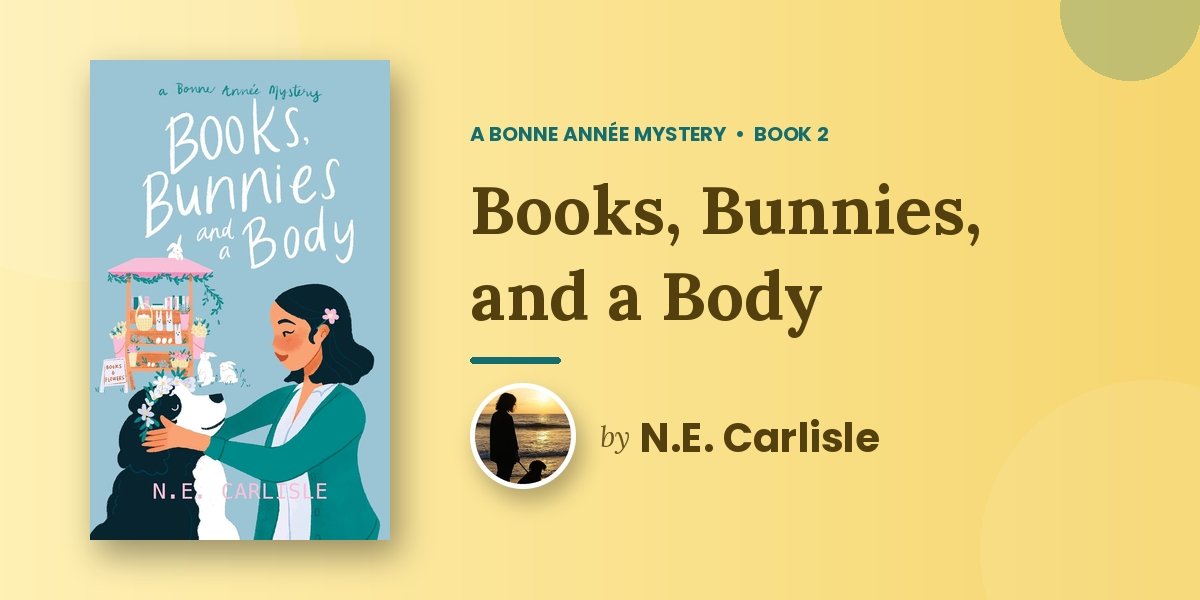

The Award-Winning Bonne Année Mysteries Return to Hazelton With Chocolate Bunnies, First Editions, and Another Body That Was Not Supposed to Be There

By: Catalina Santorini

N.E. Carlisle won the 2025 Firebird Book Award for Cozy Mystery and the PenCraft Book Award for Best Fiction in Mystery-Sleuth with the first Bonne Année Mystery, Hazelnuts and Homicide, and the achievement reflected something more than the book’s considerable entertainment value. It reflected the quality of a writer who had found not just a formula for a popular genre but a genuine creative home, a specific place and a specific protagonist and a specific community sensibility that she inhabits with the kind of comfortable authority that takes years to develop and that, once developed, produces exactly the reading experience that cozy mystery fans return to the genre to find. Books, Bunnies, and a Body delivers that experience again and then goes a little further, deepening the world of Hazelton and the relationships within it in ways that make the series feel like it is building toward something rather than simply continuing.

Spring in Hazelton is rendered with the loving attention to seasonal atmosphere that Carlisle’s writing consistently brings to its setting, the chocolate bunnies on order, the Peter Rabbit tea and brunch in planning, the particular quality of a coastal Oregon spring that makes the promise of warmth feel genuinely earned rather than simply arrived. Année’s bookshop and event space, The Literary Table, is at the center of the community’s seasonal preparations, and the work of rescuing first editions and treasured classics from shuttered shops and estate sales that keeps Année busy gives the book one of its most affecting thematic threads. Books often outlive the people who loved them, and someone has to decide where they go next. In Hazelton, that someone is Année, and the meditation on what it means to inherit a beloved object from a life that is over gives the novel a depth and a tenderness that lift it above the entertaining puzzle it is also simultaneously being.

The murder that disrupts spring’s promise arrives through the egg hunt, as the series tagline has it, with the dry wit that Carlisle brings to the whole enterprise. The egg hunt is a Hazelton tradition. So is murder, apparently. That line captures both the genre and the series in perfect miniature, the acknowledgment of the formula’s inherent absurdity combined with the genuine craft that makes the formula deliver consistent pleasure despite its conventions.

Oscar the Bernedoodle earns every appearance he makes, the wedding subplot gives the community an emotional investment in resolution beyond the usual desire for justice, and the recipes that close the book are as warmly offered as everything else in Carlisle’s fictional world. This is a series that knows exactly what it is and executes that knowledge with consistent and generous skill.

If you love award-winning cozy mysteries with bookshop settings, lovable animal companions, small-town community warmth, and recipes you will actually want to make, Books, Bunnies, and a Body by N.E. Carlisle is your next essential read. Head over to Amazon and get your copy today and return to Hazelton, where spring is lovely and the mystery is always worth solving.

The UK Innovator Founder Visa Judges a Business Plan the Way an Investor Would

Founders who want to build a company in the United Kingdom apply through the Innovator Founder visa, the UK’s main residence route for entrepreneurs. It grants the right to live in the UK and run the venture, and it can lead to permanent residence in as little as three years.

What makes the route familiar to anyone who has raised money is how it evaluates applicants. There is no minimum investment figure; instead, the business idea itself is assessed, in writing, against four tests: new, innovative, viable, and scalable. An approved endorsing body performs that assessment, playing a role close to an investor running diligence. Founders who prepare the application like a diligence package, rather than an administrative form, are working with the grain of the system.

The Four Tests, Translated From Visa Language

New means the venture is built from scratch: joining a business that is already trading does not qualify. Innovative requires an original idea, genuinely different from what is already on the market. Viable asks for a realistic plan the founder can actually execute, with growth potential. Scalable requires evidence of job creation and of expansion into national and international markets.

There is no partial credit. A plan that is strong on three tests and thin on one does not get endorsed, which is why applicants and their advisers often map the business plan against the four words and note where each test is answered with evidence. A gap caught at that stage costs a rewrite. The same gap found by the endorsing body can cost the application.

Endorsement First, Visa Second, Checkpoints After

The sequence is fixed. The endorsing body assesses the idea first, for a fee of £1,000. Only after endorsement comes the visa application itself: £1,357 per person from outside the UK, or £1,693 for extensions and switches from inside. English proficiency is required, and the annual healthcare surcharge is added per person for each year of stay. Decisions usually take 3 weeks from outside the UK and 8 weeks inside.

The endorsing body’s role does not end at approval. Progress meetings are mandatory at the 12 and 24 month marks, at £500 per meeting, and if the endorsement is withdrawn, the visa can be cut short. This is the route’s defining feature: the business plan is not judged once, it is re-examined twice, with the founder answering for the hiring projections and market claims the original application made.

That changes how a sensible plan is written. Because each meeting measures progress against the original commitments, realistic targets and continuous documentation matter more than a polished first submission. A plan written to impress at approval and forgotten afterward tends to become a problem at month 12.

The Three-Year Settlement Clock

Each grant of the visa runs 3 years. Extensions of another 3 years are unlimited, each requiring a fresh endorsement, so the route can carry a venture indefinitely.

The number founders care about most sits at the end: settlement, the UK’s permanent residence status, can be available after just 3 years. Most UK work routes require 5. For a founder who builds the business, keeps the checkpoint meetings clean, and grows as planned, this is one of the fastest paths to permanence the UK offers, and it comes without any fixed capital threshold.

Where Legal Help Fits a Founder’s File

The work an innovator founder visa lawyer actually does on this route is translation: turning a real business plan into the four-test language endorsing bodies score, and helping set checkpoint commitments the company can meet. Grape Law publishes its UK route guides alongside its US immigration practice, which is useful for founders comparing London with American options such as the E-2 investor or O-1 routes before choosing where to build.

Fees and rules were verified against gov.uk as of September 2026.

Disclaimer: This article is for general informational purposes only and does not constitute legal advice. Immigration requirements, fees, processing times, and visa availability may change. Every case depends on its specific facts and circumstances. Consult a qualified immigration attorney regarding your situation.