Barbara Hynak’s Roars Across the World: The World We Leave Behind

By: Blake Daniels

For Barbara Hynak, legacy isn’t about being remembered. It’s about the world we leave for those who come next. That idea runs through Hynak’s Roars Across the World, an epic fantasy in which human communities and lion prides struggle to survive drought, disappearing water, hunger, and the consequences of their choices. Humans and animals share the story, and neither exists separately from the natural world around them.

Hynak dedicates the novel “To the Next Seven Generations” because, for her, the future is not an abstract idea. Those generations will inherit the consequences of what happens now, including what we protect, what we ignore, and what we allow to disappear.

We usually think of ourselves as the people who inherited the world. Hynak’s story asks us to consider something just as important. Someday, we will be the ones who left it behind.

That shift changes the way we think about legacy. We tend to associate it with accomplishment and remembrance, with what we built, what we achieved, and whether our names survive us. Hynak is more interested in what survives because of us.

Will future generations inherit a world that is richer or poorer because we were here? What will still be living? What will have disappeared? Which problems will we have confronted, and which will we have quietly handed forward for someone else to solve?

In Roars Across the World, humanity is not automatically placed at the center of every story. Animals have histories, communities, fears, beliefs, and perspectives of their own. Nature is not scenery surrounding the action. A receding river can set events in motion. Failed rains change the grasslands. Animals move in search of food and water. Hunger changes behavior, and the consequences spread from one life to another.

The relationships are intentional. Hynak wanted readers to experience the natural world as something present rather than as a backdrop to a human story. Her recurring metaphor is a web, with creatures, rivers, trees, people, and individual actions forming interconnected strands.

“All are Connected, and therefore All are Needed,” she says.

That idea could easily become an abstract environmental message. Hynak instead uses storytelling to make the consequences personal. Facts can tell someone that a river is disappearing or a species is declining. Fiction can put a reader beside that river or allow them to imagine the silence left when an animal that once inhabited a landscape is no longer there.

One of the novel’s central images captures that distinction. Hynak imagines a prophecy in which the world will end when the last lion’s roar becomes only an echo among the stars.

She says the image came to her before she completely understood what it meant: a final roar traveling across the earth with no living voice left to answer it.

“Roars can be answered; echoes cannot.”

The prophecy is not simply about lions. For Hynak, the disappearance of one species cannot be separated from everything connected to it. Grasslands, prey, predators, water, people, and even the smallest organisms exist through relationships. When something vanishes, the absence itself becomes part of the ecosystem.

The question beneath the fantasy is decidedly contemporary: How many living voices can become echoes before the world we pass forward becomes fundamentally different from the one we inherited?

Yet Hynak does not want that question to leave readers feeling powerless.

One of the more interesting aspects of her philosophy is her rejection of the idea that an individual must somehow “save the world” for individual action to have meaning. That enormous problem can become its own excuse for doing nothing.

She reduces the scale.

“What strand is in my hand? How can I strengthen it?”

The question does not ask someone to repair the entire web. It asks them to recognize that they are already touching part of it.

A person may never see the eventual consequences of strengthening that strand. One action may support another, which affects another life, which changes something else years later. For Hynak, that inability to see the final result does not make the original action meaningless. It may be precisely what acting on behalf of future generations requires.

Her characters face a similar challenge with the knowledge they inherit.

One of the novel’s human leaders, Atum-Sani, receives stories and responsibilities from an earlier generation. He does not receive a perfect set of answers. He must decide what that inheritance means in circumstances his predecessors could not have predicted.

It becomes a useful metaphor for generational relationships. We inherit wisdom, but we also inherit assumptions. We inherit solutions created for different circumstances. We inherit fears, misunderstandings, traditions, and beliefs that may have gone unquestioned for years.

Hynak’s characters must decide what deserves to continue.

So must every generation.

That may be where becoming a worthy ancestor becomes more demanding than simply caring about the future. Caring is easy in the abstract. Responsibility requires acknowledging that what we leave behind will include the consequences of what we chose not to change.

The next generations will inherit more than our accomplishments. They will inherit what we protected and what we ignored. They will inherit the resources we consumed, the knowledge we preserved, and the living things that still exist because someone decided they mattered.

Hynak does not pretend that the outcome is assured.

“The web is holding. The strands are fraying,” she says.

Both statements matter.

Her definition of hope is built in the space between them. Hope is not the assumption that everything will somehow turn out fine. It is the recognition that another action remains possible. Something can still be protected. A belief can still be questioned. A damaged strand can still be strengthened.

That makes Roars Across the World less a warning about an inevitable future than a story about an unfinished one.

It also gives Hynak’s dedication to the next seven generations its real weight.

Those generations will not get to choose the world they begin in. None of us did. We arrived inside a story already in progress, surrounded by the consequences of decisions made by people whose names we may never know.

For a brief period, however, part of that story belongs to us.

Then we hand it forward.

Perhaps becoming a worthy ancestor has very little to do with whether the people who come next remember who we were. Perhaps the better measure is whether we leave them rivers that still run, living voices that have not become echoes, and enough strong strands to continue weaving the web themselves.

They may never know our names.

But they will know the world we left them.

Roars Across the World is available on Amazon and other major book retailers.
The First Cold Night Is the Worst Time to Find Out Your Heater Doesn’t Work

For months, your heating system has had an easy job: essentially nothing.

Then the first genuinely cold night arrives.

Thermostats across the neighborhood switch from cooling to heating. Furnaces that haven’t operated regularly since last winter fire up again. Heat pumps change modes. Equipment that seemed perfectly fine when it was last used is suddenly expected to work for hours.

And some of it doesn’t.

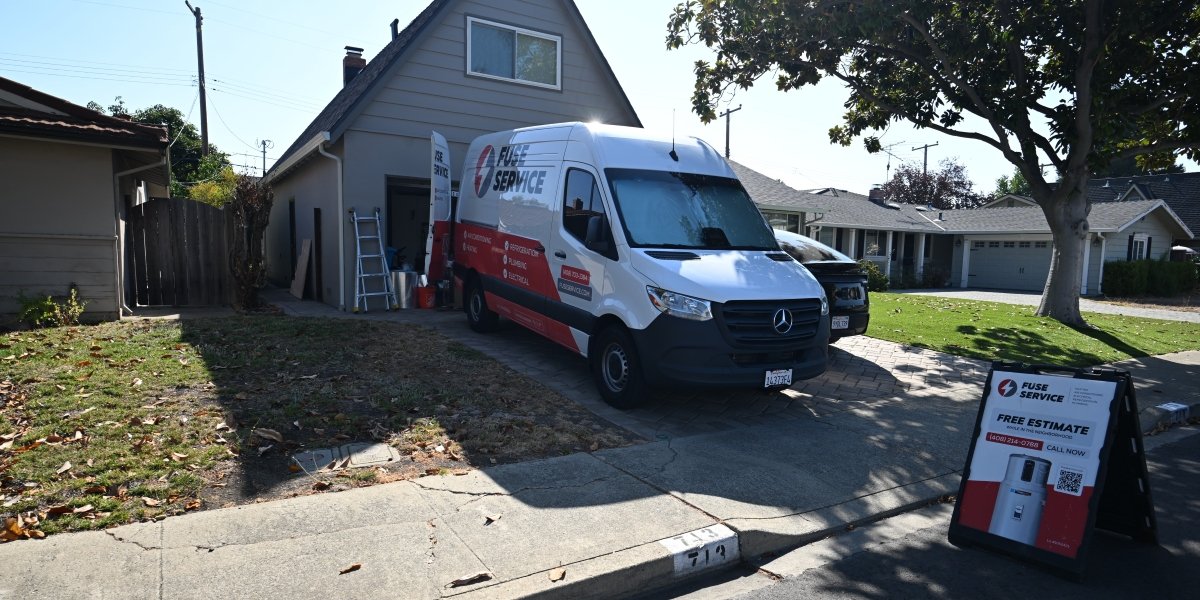
At Fuse Service, the transition into heating season brings a familiar pattern. As temperatures fall and homeowners begin relying on their heating systems again, calls start coming in from people discovering problems they didn’t know they had.

The frustrating part is that many of those problems could have been discovered before the cold weather arrived.

Heating Problems Can Spend Months Hiding

A heater doesn’t necessarily need to be operating for a problem to be waiting.

Components can wear toward the end of one heating season without completely failing. Filters can remain unchanged. Electrical connections, motors, ignition components, sensors, or other parts may need attention.

Then spring arrives, heating demand disappears, and the system is largely forgotten.

Months later, the thermostat calls for heat again.

That’s when a minor issue left over from last season can suddenly become very noticeable.

The First Cold Spell Creates a Predictable Rush

There’s another reason waiting can be inconvenient: everyone else has been waiting too.

When temperatures drop across an entire area, thousands of heating systems return to regular operation at roughly the same time.

That means HVAC companies aren’t dealing with one household discovering a heating problem. They’re responding to many homeowners making the same discovery within a relatively short period.

Behind the scenes at Fuse Service, customer support and dispatch teams coordinate incoming requests while technicians diagnose systems in the field. Because Fuse Service provides 24/7 customer support, homeowners can reach the team even when a heating issue appears outside regular business hours.

But there’s still an obvious advantage to discovering a problem before the seasonal rush begins.

You Don’t Need Cold Weather to Test Your Heater

One of the simplest ways to prepare for heating season is also one of the easiest to overlook: turn the system on.

You don’t need to wait until the house is uncomfortable.

Before consistently cold weather arrives, switch the thermostat to heating mode and raise the setting enough for the system to start. Give it time to operate and pay attention.

Does it start normally? Does warm air reach the rooms? Are there unusual noises? Does the system shut down unexpectedly? Does the thermostat appear to respond correctly?

A brief test can reveal a problem while opening a window is still an option.

Photo Courtesy: Fuse Service Inc.

Pay Attention to What Changed Since Last Year

Not every heating system operates the same way, and homeowners don’t need to become HVAC technicians to evaluate theirs.

Instead, compare its behavior with what you already know.

If the furnace suddenly makes a noise it didn’t make last winter, that’s worth noticing. If some rooms take much longer to warm up, something may have changed. If the system repeatedly starts and stops or struggles to reach the thermostat setting, don’t assume that’s simply what happens after months of inactivity.

Changes in performance are often more useful warning signs than any single universal rule.

Heat Pumps Deserve Attention, Too

Homes with heat pumps present a slightly different situation.

Unlike a traditional air conditioner that may spend much of the colder season idle, a heat pump can work throughout the year, cooling in summer and heating when temperatures fall.

The transition to fall therefore doesn’t necessarily give the equipment a long break. Instead, the system changes what it’s being asked to do.

If cooling performance was declining toward the end of summer, homeowners shouldn’t assume the problem becomes irrelevant when they switch to heating mode. Some components are shared between both functions.

An Early Problem Gives You Options

Finding out that your heater needs attention in mild weather is inconvenient.

Finding out at night when the house is already cold is something else entirely.

The difference isn’t only comfort. Discovering an issue early gives homeowners more time to understand the diagnosis, schedule service, consider repair options, and if the equipment is approaching the end of its useful life, research replacement rather than making a rushed decision.

That’s particularly important when dealing with a major home system that could represent a significant expense.

Don’t Let the Weather Perform the Test for You

Heating systems have a habit of disappearing from homeowners’ minds during the warmer months. That’s understandable: if you’re not using something, there’s little reason to think about it.

But the first cold night shouldn’t also be the first time you find out whether your heater is ready for another season.

Fuse Service technicians see what happens when months of inactivity end with sudden demand. A simple early-season test won’t guarantee that nothing will go wrong during winter, but it can reveal obvious problems before heat becomes something your household urgently needs.

Turn the system on. Listen to it. Make sure it heats the house. If something is off, contact a pro.

It’s a much easier test to perform when failing it doesn’t mean spending the night in the cold.

Man with Guns: Hillbilly Whispers Turns a Lifetime of Memories into a Record of American Life

What happens to the stories of ordinary people when the places, traditions, voices, and generations that shaped them begin to disappear? In Hillbilly Whispers, Man with Guns answers that question through a deeply personal memoir built from decades of memories, family stories, military experiences, travel, work, faith, loss, and reflection. Rather than simply looking back, he examines the people and moments that shaped his life while preserving a vivid record of an America that has changed dramatically over the generations.

A Family Story That Reaches Across Generations

At the center of Hillbilly Whispers is Man with Guns, whose fascination with his family roots leads him on a deeply personal journey through his past. The narrative reaches back to Ireland. It then follows generations through England and eventually into the United States. He traces branches of his family through Arkansas, Indiana, Michigan, and other parts of the country. His family history also reflects broader changes in American life. Those changes include migration, farming, industry, war, and the development of local communities.

This historical interest gives the memoir a wider dimension. He does not treat family history as a collection of names and dates. Instead, he examines the experiences behind those records. His memories of rural Arkansas preserve details from an earlier way of life. Farming shaped many communities. Dirt roads connected homes and towns. Small stores served local families. Handmade quilts, wood-burning stoves, and family gatherings were familiar parts of daily life. Many modern conveniences were still absent.

The result is a portrait of an America that has changed dramatically. He remembers neighborhoods, businesses, landscapes, transportation, and communities as they once were, while reflecting on what has disappeared.

A Childhood Shaped by Complexity

His childhood memories are among the book’s most emotionally significant sections. He writes about growing up in a large family and taking responsibility for younger siblings while witnessing the difficulties within his household. His father’s drinking and its consequences become an important part of his understanding of family, responsibility, and forgiveness.

Rather than presenting his childhood as a simple story of hardship, he repeatedly returns to the complicated nature of memory. His relationship with his father evolves as he grows older and better understands his father’s own history and responsibilities. At one point, he reflects that he eventually understood the pressures of raising ten children.

That tension between pain and understanding gives the memoir much of its emotional weight. He remembers difficult experiences, but he also remembers family meals, baseball, fishing, traveling, neighbors, childhood adventures, and moments of humor.

From Indiana to the World

Another defining chapter of his life was his military career. His memoir describes an ambitious period of service, including extensive training and overseas experience. He writes about graduating from thirteen military schools, attending leadership academies, completing his high school education during his service, and being named the best soldier in the 82nd Airborne Division in 1977.

His military memories take the reader beyond the United States. He recalls Europe, Germany, Italy, Panama, Mexico, and other places he encountered during his years of service. Yet even these experiences are ultimately filtered through his personal curiosity. Historical landmarks, conversations with people he met abroad, military traditions, and the remnants of earlier wars all become part of his larger effort to understand history through firsthand observation.

Work, Faith, and the Search for Meaning

His life after military service continued to move through different forms of work and education. The manuscript describes his associate degree in business from Ivy Tech, coursework in human resources management, ten years in real estate, and later employment in manufacturing.

Faith is another major thread. He describes beginning to question religious teachings as a child and spending decades visiting different churches and studying the Bible. His earlier books, Looking for God and The Abyss of Looking for Religion, grew out of that long period of research and reflection.

With this memoir, however, he turns inward. Instead of focusing primarily on theological questions, he examines the experiences that shaped him.

A Memoir About Remembering

Perhaps the most distinctive quality of Hillbilly Whispers is its refusal to separate the extraordinary from the ordinary. A military experience can sit beside a childhood memory. A family story can lead into a discussion of American history. A recollection of a house, river, automobile, church, or small-town business can become an observation about how society has changed.

He describes these reflections as important because they help explain who he is. His writing also reflects his preference for direct, accessible language rather than highly formal literary construction. From the beginning, he explains that he wants his words to be understandable to ordinary readers and to retain something of his natural voice.

That quality makes the memoir less like a distant historical record and more like a conversation with someone looking back across decades of life.

Man with Guns’ Record of a Changing America

Ultimately, the book is about memory, but it is also about change. Through Man with Guns, readers encounter family life in the American Midwest and South, rural traditions, military culture, changing technology, working life, religious questioning, and the disappearance of places and customs that once seemed permanent.

He has already published books exploring his search for God and religion. His memoir takes a different route, placing his own life at the center of the inquiry.

For readers interested in memoir, family history, military experiences, and firsthand reflections on an America that has changed across generations, Hillbilly Whispers offers an unvarnished perspective. More than a collection of memories, it is Man with Guns’ attempt to put those memories in writing, preserving the people, places, questions, contradictions, and experiences that helped define his journey.

Order Your Copy:

Explore the Author’s Official Website

OpenAI San Francisco Office Expansion Nears New Deal

OpenAI is reportedly in discussions to sublease about 100,000 square feet at 500 Terry A. Francois Blvd. in San Francisco’s Mission Bay, next to an office building it already occupies. The potential deal would deepen the company’s local real estate presence while adding another significant technology lease to the neighborhood.

Key Takeaways

  • OpenAI is reportedly considering about 100,000 square feet at 500 Terry A. Francois Blvd. in Mission Bay.
  • The proposed transaction would be a sublease within a building owned by the Sobrato Organization and leased by Cisco.
  • OpenAI already occupies the neighboring 550 Terry A. Francois Blvd. property.
  • The potential agreement would expand OpenAI’s existing San Francisco office footprint rather than replace its current Mission Bay operations.
  • The transaction remains pending and should not be treated as a completed lease.

OpenAI Targets More Mission Bay Office Space

OpenAI is reportedly pursuing another sizable block of office space in San Francisco, with discussions centered on approximately 100,000 square feet at 500 Terry A. Francois Blvd. in Mission Bay.

The proposed sublease would place OpenAI next to its existing offices at 550 Terry A. Francois Blvd., further concentrating the artificial intelligence company’s San Francisco operations in the waterfront neighborhood.

The transaction has not been finalized. Current reporting describes the arrangement as a prospective sublease involving space within a building already leased by Cisco.

That distinction matters. OpenAI would not be purchasing the property or replacing its neighboring Mission Bay office. Instead, the deal would add another location to an established cluster of San Francisco workplaces.

The Proposed Deal Centers on a Cisco-Leased Building

The six-story building at 500 Terry A. Francois Blvd. is owned by the Sobrato Organization and leased by Cisco, whose Meraki business has operated from the property.

Under the reported arrangement, OpenAI would sublease part of Cisco’s space rather than enter the building as its owner.

The structure gives OpenAI a potential path to additional office capacity within the same neighborhood where it already maintains a substantial presence.

Because the agreement remains under discussion, the roughly 100,000-square-foot figure should be viewed as the reported scope of the prospective transaction rather than a finalized commitment.

OpenAI San Francisco Office Expansion Stays in Mission Bay

The proposed deal is notable largely because of its location.

OpenAI already occupies the neighboring building at 550 Terry A. Francois Blvd. Adding space at 500 Terry A. Francois would allow the company to expand without establishing an entirely new geographic base elsewhere in San Francisco.

That proximity would give OpenAI another workplace within the same Mission Bay cluster rather than requiring a broader relocation.

The company’s presence in the area has grown as its San Francisco real estate requirements have expanded. The proposed sublease would continue that pattern while keeping the new space close to existing operations.

OpenAI previously operated from the Mission District before increasing its presence in Mission Bay. The former Mission District technology corridor continues to attract AI companies, including Exa’s Mission District headquarters, which occupies a roughly 40,000-square-foot property previously used by OpenAI and other technology firms.

The Deal Adds to San Francisco’s Technology Leasing Activity

The prospective OpenAI transaction comes as artificial intelligence and technology companies continue to account for prominent office moves across San Francisco.

The significance of the deal extends beyond its approximately 100,000-square-foot size. It would represent another large technology tenant taking additional physical space at a time when San Francisco’s commercial office market continues to adjust to changing workplace patterns.

Other companies have also made substantial office commitments in the city. KPMG’s new San Francisco office at 505 Howard Street covers roughly 96,000 square feet, although that move represents a smaller footprint than the firm previously maintained elsewhere in San Francisco.

OpenAI’s proposed transaction differs because it would expand an existing neighborhood presence rather than relocate the company from one part of the city to another.

Sublease Structure Shapes the Proposed Expansion

The sublease arrangement is a central part of the reported transaction.

Cisco remains the tenant associated with 500 Terry A. Francois Blvd., while the Sobrato Organization owns the property. OpenAI would obtain use of part of the building through Cisco’s existing lease rather than through a direct purchase.

Subleases have remained an important part of San Francisco’s office market as companies adjust the amount of space they need and other businesses look for offices that can be occupied without waiting for new construction.

For OpenAI, the proposed structure would provide additional Mission Bay capacity while leaving its neighboring office operations in place.

The transaction would therefore represent an expansion of the OpenAI San Francisco office footprint, not a transfer of ownership or a move away from its existing Mission Bay locations.

Completion Remains the Key Next Step

The reported negotiations do not yet amount to a completed lease.

If the sublease proceeds, OpenAI would add approximately 100,000 square feet at 500 Terry A. Francois Blvd. beside its existing office at 550 Terry A. Francois Blvd.

Until an agreement is completed, however, the additional space remains prospective. The central development is that OpenAI is considering another significant Mission Bay office commitment as it continues to build out its San Francisco operations.

Frequently Asked Questions

How much office space could OpenAI add in San Francisco?

OpenAI is reportedly discussing a sublease covering about 100,000 square feet at 500 Terry A. Francois Blvd. The proposed OpenAI San Francisco office expansion has not yet been finalized.

Where is OpenAI’s proposed new office space?

The space is at 500 Terry A. Francois Blvd. in San Francisco’s Mission Bay neighborhood. The building is next to 550 Terry A. Francois Blvd., which OpenAI already occupies.

Who owns 500 Terry A. Francois Blvd.?

The Sobrato Organization owns the Mission Bay office building. Cisco currently leases the property, with the proposed OpenAI transaction structured as a sublease.

Does OpenAI already have offices in Mission Bay?

Yes. OpenAI already occupies the neighboring 550 Terry A. Francois Blvd. building as part of its established Mission Bay presence. The proposed 500 Terry A. Francois space would add to those existing operations.

Has OpenAI finalized the Mission Bay sublease?

No. Current reporting describes the agreement as still under discussion, so the approximately 100,000-square-foot addition should be treated as a proposed transaction rather than a completed lease.

H-1B Sponsorship in the Bay Area: The Calendar Matters More Than the Lottery

Two engineers at two San Francisco startups get offers in the same week. One asks about visa sponsorship during salary negotiation in January. The other waits until March, when the registration window is already open and the company’s counsel is buried. The lottery gives both the same odds. Everything before and after the lottery favors the one who started early.

The odds, in plain numbers

H-1B is the most widely used employer-sponsored work visa in the United States and the category most professionals choose when they intend to build a life here. Demand outruns supply, so selection runs through a lottery, and the recent numbers are public: selection rates have ranged from roughly 25 to 35 percent of registrations, with the FY2026 rate at 34.9 percent.

The structure of the draw changed too. Under wage-weighted selection, senior and higher-paid roles carry better odds, and entry-level positions face materially worse ones than under the old random lottery. For junior offers, the draw is now harder than the coin flip people remember, and pay negotiation quietly became odds negotiation.

What the petition actually requires

The core requirement is the specialty occupation: the beneficiary’s degree must be in a field directly related to the offered position. A computer science degree supporting a software role is the clean case; a mismatch between degree and duties is where petitions strain. When the worker will be staffed to a client site, the specialty-occupation requirement follows them to that third party, which is why consultancy placements draw extra documentation.

One thing H-1B does not require is a passport from any particular country. There is no nationality or treaty-country condition; any country’s citizen can be sponsored.

The calendar and the money

The rhythm of a cap-subject case is fixed: registration in March, petitions in April, and, for approved cases, a start date of October 1. That is why sponsorship conversations should begin by January at the latest, and why the timing is even tighter for international students running down their OPT clock.

The costs are knowable in advance. For an employer with 25 or more employees filing a cap-subject initial petition on paper, total government fees come to $3,595: the $215 registration fee, $780 for the petition form, the $1,500 training fee, the $500 fraud prevention fee, and the $600 asylum program fee. Premium processing, where used, adds $2,965 under the fee rule that took effect March 1, 2026.

Losing the lottery is not the end of the road

An unselected registration closes one door for one year, not the career. The standing alternatives are O-1 for candidates with documented achievements, L-1 for intracompany transfers, E-2 for founders from treaty countries, and preserving current status such as F-1 OPT.

A selected case, meanwhile, opens more than three years of runway. H-1B expressly permits dual intent, so a worker can pursue a green card without endangering status, and it is the most common bridge into employer-sponsored permanent residence: PERM labor certification, then the immigrant petition, then adjustment of status or consular processing. The six-year maximum stay applies where no green card process has begun; started in time, the process extends it.

Start before the offer letter is signed

If an RFE arrives mid-case, it is a request, not a refusal, and it must be answered fully within the stated period. The common topics are predictable: whether the role genuinely requires a specific degree, whether the candidate’s degree matches, wage level, and control over third-party placements. Predictable topics reward files built early.

That is the whole Bay Area playbook in one sentence: treat January as the real deadline and March as a formality. The full sequence, from registration through the October 1 start date, is mapped step by step by Grape Law H-1B visa attorneys on the firm’s H-1B guide. Grape Law works with sponsored professionals in both English and Turkish, which matters in a hiring market as international as this one.

Selection rates, fees, and deadlines in this article were verified against USCIS fee schedules and policy records as of August 19, 2026; confirm current figures on official sources. This article is for general information only and is not legal advice. Every immigration case turns on its own facts. Consult an immigration attorney about your specific situation.

Disclaimer: This article is for general informational purposes only and does not constitute legal advice. Immigration requirements, fees, processing times, and visa availability may change. Every case depends on its specific facts and circumstances. Consult a qualified immigration attorney regarding your situation.