Folk-IndieBob Finds a Little Luck in the Fog on “Four Leaf Clover” (Remix)

By Don Walters

San Francisco has always made room for dreamers. From the folk singers who once filled North Beach coffeehouses to the idealists who gathered in Golden Gate Park, the city’s cultural identity was built by people willing to imagine that life could become something more beautiful than it currently was. That spirit, hopeful, restless, and just skeptical enough to remain honest, runs through Folk-IndieBob’s “Four Leaf Clover” (Remix).

Released August 17th, Pittsburgh singer-songwriter Bob Augustine’s reworked single is not a celebration of sudden good fortune so much as an exploration of why people keep looking for it. The four-leaf clover becomes a symbol of possibility: a small, elusive object onto which the narrator projects his longing for renewal. Augustine understands that hope is rarely logical. Sometimes it is simply the impulse that keeps us searching the grass after everyone else has gone home.

That idea feels particularly relevant in San Francisco, a city famous for reinvention but increasingly conscious of how difficult reinvention can be. The mythology remains: California dreams, creative freedom, new beginnings, but it now exists alongside soaring costs, disappearing artistic spaces, and the knowledge that good intentions do not always produce happy endings. Augustine’s song inhabits that uneasy distance between the world as it is and the world we want it to become.

“Picking up a four leaf clover / Turn it over / Hold it up to the light,” he sings, transforming a simple gesture into an act of examination. The narrator does not blindly accept the clover’s promise. He studies it, questions it, and even considers picking another. Luck, in Augustine’s hands, is something fragile enough to require inspection.

The song’s central refrain captures its emotional tension: “Better than it was, better than it is / Better than I ever could have hoped or thought it could be.” The words reach toward optimism, but Augustine’s understated delivery keeps them from sounding like a greeting-card affirmation. His hope carries weariness. When he follows with “Make another joke, dry another tear,” the listener senses that humor and optimism are survival mechanisms rather than evidence that every wound has healed.

That emotional ambiguity suits the song’s acoustic folk foundation. The remix expands upon the original without burying its vulnerability beneath unnecessary studio polish. Producer Mike Hickman contributes electric guitar, bass, percussion, and backing vocals, adding dimension around Augustine’s writing while respecting its conversational intimacy. The production feels warmer and broader, yet the song still belongs in a close room, a Mission District café, perhaps, or a small stage in the Richmond where the audience can hear the grain of every word.

Hickman’s electric guitar supplies color rather than spectacle. The bass and percussion give the recording forward movement, reinforcing the idea that hope is less about waiting for a miracle than continuing to walk toward one. Doug Casper’s mix leaves space around the instruments, while Joseph Freeman’s mastering provides clarity without sanding away the performance’s human edges. It is a remix in the truest sense: not an attempt to reinvent the song, but an effort to illuminate what was already present.

Augustine’s most revealing verse moves from luck into self-awareness: “Falling for that same old notion / I bought the ocean / Someone sold it to me.” In a Bay Area context, the line lands with particular force. San Francisco has sold countless versions of the ocean, the promise of freedom, prosperity, belonging, and transformation. Some people found those things. Others discovered that even paradise comes with fine print.

“Guess I’m just another dreamer / Dreaming of the way I want it to be,” Augustine admits. The lyric could have been written for anyone who arrived beneath the Golden Gate believing geography alone might change a life. Yet the song never mocks that dreamer. Augustine treats him with tenderness because dreaming, even when naïve, remains an essential form of resistance.

The chorus finally imagines finding the clover and showing it “to the world,” while waiting for “the luck of the draw” to return. That phrase reveals the bargain at the song’s heart: the narrator knows fortune is random, yet he chooses to believe his turn may still come. It is not certainty that sustains him, but possibility.

Following the UK iTunes success of “The Candy Wrapper” and Augustine’s Edinburgh Fringe appearances, “Four Leaf Clover” (Remix) demonstrates why his unassuming approach resonates. He writes about ordinary objects while uncovering the emotional weight people place upon them.

In San Francisco, where fog can hide an entire horizon without erasing it, Folk-IndieBob’s message feels perfectly at home. “Four Leaf Clover” does not promise that luck will arrive. It offers something quieter and perhaps more valuable: a reason to keep looking.
Waymo Ojai Robotaxis Open to All Riders in San Francisco

Waymo Ojai robotaxis are now available to all riders in San Francisco, moving the company’s next-generation vehicle beyond its earlier limited rollout. The Aug. 19 expansion also covers Los Angeles and Phoenix, giving more passengers access to a redesigned cabin, Waymo’s sixth-generation autonomous driving system and new in-car technology.

Key Takeaways

  • Waymo opened the Ojai to all riders in San Francisco, Los Angeles and Phoenix on Aug. 19, 2026.
  • About 300 Ojai vehicles were in Waymo’s commercial fleet at the time of the broader rollout, according to a company spokesperson.
  • Riders can be matched with an Ojai, but general customers cannot yet select the vehicle when requesting a trip.
  • Ojai is the first passenger vehicle to introduce Waymo’s sixth-generation Waymo Driver in regular public service.
  • The vehicle also includes a redesigned cabin with sliding doors, three screens and access to Gemini in Waymo.

Waymo Ojai Robotaxis Enter Regular San Francisco Service

Waymo Ojai robotaxis are becoming a more visible part of San Francisco’s driverless transportation network after the Alphabet-owned company opened the vehicles to all riders on Aug. 19.

The change means customers requesting a standard Waymo ride can now be matched with an Ojai when one is available nearby. The vehicle had previously been offered to selected riders as Waymo gathered feedback during an earlier rollout that began in May.

Waymo introduced those initial Ojai rides in San Francisco, Los Angeles and Phoenix. Some early participants received free trips as the company evaluated the passenger experience before expanding availability.

About 300 Ojai vehicles were part of Waymo’s commercial fleet by the August expansion, a company spokesperson told TechCrunch. That figure covers the company’s markets rather than San Francisco alone.

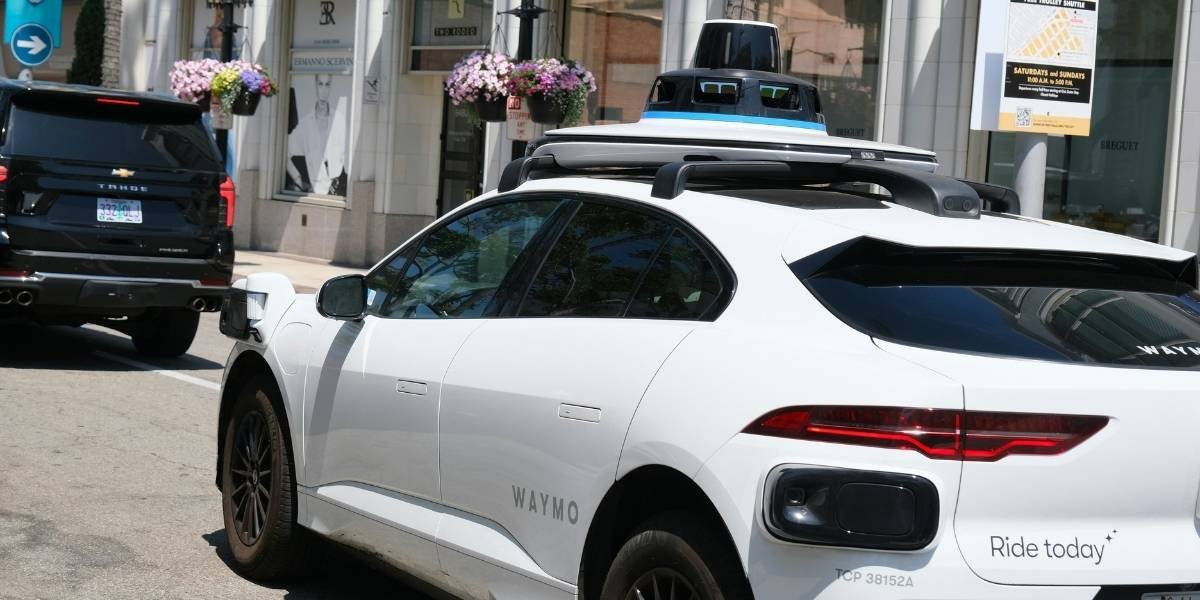
The relatively small number also means the Jaguar I-Pace remains a common sight in the city. Riders cannot yet generally request an Ojai specifically, although Waymo has said vehicle selection is expected after more units enter service.

The expansion adds another vehicle to San Francisco’s growing network of driverless taxi services, where autonomous vehicles now operate alongside buses, trains, conventional taxis and app-based ride services.

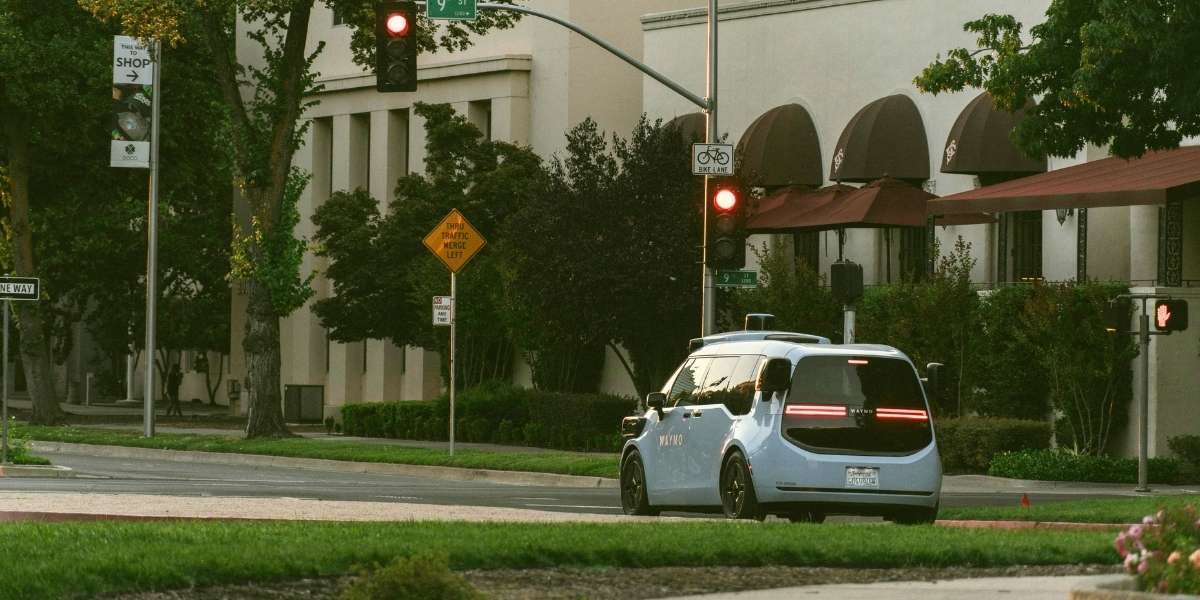
Visually, the Ojai is difficult to confuse with Waymo’s existing Jaguars. It uses a taller, more rectangular design, a light-blue exterior and large sliding passenger doors rather than the conventional doors found on the I-Pace.

The name is pronounced “Oh, hi.”

A New Vehicle Changes the Rider Experience

Waymo developed Ojai specifically around autonomous ride-hailing rather than adapting a conventional passenger vehicle after production. Its layout reflects that purpose, particularly in the passenger compartment.

A low step and flat floor are intended to simplify entry and movement inside the vehicle. Large sliding doors can also open automatically when a rider approaches if the corresponding setting is enabled in the Waymo app.

Inside, three LED screens provide trip information and access to cabin features. The screens do not simply duplicate one another. Waymo has designed the interface to adjust information and controls depending on where passengers are seated.

The Ojai can carry up to four riders. Waymo also allows a passenger who is at least 8 years old to use the front seat.

Its rear cargo area can accommodate items such as luggage, a folded stroller or a folded wheelchair, depending on their dimensions.

Accessibility features are integrated throughout the cabin. Waymo lists embedded braille, screen-reader compatibility and a handle built into a seat to provide additional support when entering or leaving the vehicle.

Those features are separate from Waymo’s wheelchair-accessible vehicle service for passengers who need to remain seated in a wheelchair during a trip. That service uses manually driven accessible vehicles rather than the standard Ojai configuration.

The changes make the passenger experience one of the clearest differences between the Ojai and the Jaguar I-Pace. Rather than modifying the interior of an existing premium SUV, the Ojai platform gives Waymo more control over how passengers enter, sit and interact with the vehicle.

Sixth-Generation Waymo Driver Moves Into Public Service

The more significant change sits behind the passenger-facing design.

Waymo Ojai Robotaxis Open to All Riders in San Francisco

Photo Credit: Unsplash.com

Ojai is the first public Waymo vehicle equipped with the company’s sixth-generation Waymo Driver, the combined hardware and software system responsible for operating the vehicle without a human driver.

Waymo says the sixth-generation system uses high-resolution cameras, lidar, imaging radar and external audio receivers to interpret its surroundings. The company has described the configuration as more streamlined than the system used on its previous-generation vehicles.

The system is also designed for use across multiple vehicle platforms. In addition to Ojai, Waymo is adapting the same generation of its autonomous driving technology for the Hyundai Ioniq 5.

That flexibility is important as Waymo moves beyond a fleet dominated by the Jaguar I-Pace. The company has already expanded the geographic range of those vehicles, including through its earlier Waymo freeway expansion in the Bay Area.

The Ojai itself is based on a vehicle platform produced by Zeekr. Base vehicles are transported to the United States, where Waymo integrates its autonomous driving hardware and related systems.

Waymo has said its Mesa, Arizona, operation is scaling toward the capacity to produce tens of thousands of Waymo-enabled vehicles per year. That figure describes potential production capacity rather than the number of vehicles currently on public roads.

The distinction is significant because the current Ojai fleet remains much smaller. The roughly 300 units reported in August represent an early stage of deployment as Waymo introduces the new platform into established markets.

For San Francisco riders, the rollout brings the sixth-generation system into routine passenger trips rather than employee testing or restricted early-access service.

Gemini Adds a New Layer to the Ojai Cabin

The Ojai also introduces a different approach to passenger controls through Gemini in Waymo, which the company unveiled for the vehicle in July.

Gemini operates through the cabin interface and allows riders to use voice commands for selected functions. Waymo says passengers can adjust cabin settings, access trip information and ask general questions through the system.

For example, riders can use Gemini to change temperature settings or interact with entertainment and trip features rather than navigating every control manually.

Waymo has kept the assistant separate from the autonomous driving system. Gemini handles passenger-facing interactions, while the Waymo Driver remains responsible for operating the vehicle.

That separation is important because the two systems perform fundamentally different functions. The conversational assistant controls or accesses cabin features, while the sixth-generation Waymo Driver interprets road conditions and manages vehicle movement.

The broader Ojai rollout therefore represents more than a change in vehicle appearance. It puts a new passenger platform, a new generation of Waymo’s autonomous driving technology and a redesigned digital interface into commercial service at the same time.

San Francisco remains a mixed-fleet market. Riders can still receive a Jaguar I-Pace when requesting a trip, while the approximately 300 Ojais reported across Waymo’s commercial operations make the newer model less common.

For now, the most immediate effect of the Waymo Ojai robotaxis expansion is that access is no longer restricted to selected riders. Any Waymo customer in San Francisco can be matched with one when an Ojai is available, bringing the company’s latest vehicle into regular passenger service.

Frequently Asked Questions

What are Waymo Ojai robotaxis?

Waymo Ojai robotaxis are purpose-built autonomous ride-hailing vehicles based on a platform from Zeekr and equipped with Waymo’s driving technology. They feature a redesigned passenger cabin and are the first vehicles to introduce the sixth-generation Waymo Driver to public riders.

Can anyone ride in a Waymo Ojai in San Francisco?

Yes. Waymo opened Ojai availability to all riders in San Francisco, Los Angeles and Phoenix on Aug. 19, 2026. Customers may be assigned an Ojai when requesting a Waymo trip if one is available nearby.

Can riders specifically request an Ojai?

General riders cannot yet choose an Ojai instead of a Jaguar I-Pace when requesting a trip. Waymo has indicated that vehicle selection is expected after the number of Ojai vehicles in its fleet increases.

How many passengers can the Ojai carry?

The Ojai can carry up to four passengers. Waymo also permits riders who are at least 8 years old to use the front passenger seat.

Does Gemini control the Waymo Ojai robotaxis?

No. Gemini in Waymo provides passenger-facing functions such as cabin controls and trip information, but it operates separately from the Waymo Driver. The Waymo Driver controls the movement and navigation of the vehicle.

Companies Know How to Get Someone a Visa. Almost None of Them Know What Happens Next. That’s Where Lorraine D’Alessio Focuses.

By: Daniella Stewart

Getting someone into the United States on a work visa is the part of immigration that most HR departments understand reasonably well. Familiar categories, established processes, and legal teams know how to navigate them. What happens after that, when the status expires, when the policy environment shifts, when the employee’s role evolves or their career trajectory changes in ways nobody anticipated, is where most organizations go completely blind.

Lorraine D’Alessio has built her practice around exactly that blind spot. As CEO and Founding Attorney of D’Alessio Law Group and author of The Global Advantage: An Executive’s Strategic Guide to Immigration, Citizenship, and International Talent, she has spent years watching companies invest heavily in recruiting international talent without ever asking the question that should come immediately after the initial filing: what happens next?

The Most Dangerous Assumption in Workforce Planning

Of all the capabilities the book helps organizations build, Lorraine believes companies have the least visibility into how immigration policy changes affect their workforce over time. Most organizations are focused on whether an employee can obtain a visa today. Almost none are systematically thinking about what happens six months or two years from now as policies change, processing times shift, or eligibility requirements get rewritten by a new administration.

That gap becomes a critical issue in ways that aren’t always obvious until they become urgent. It affects hiring timelines when a candidate’s circumstances change before the process is complete. It affects employee retention when an international worker realizes their long-term future at the company was never part of the immigration conversation. It affects succession planning when a key person’s status creates constraints that nobody anticipated. And it affects the company’s ability to move talent where the business needs it, which in a global organization can mean the difference between executing a strategy and watching it stall.

The Investment Nobody Accounts For

A company may invest enormously in recruiting someone, through recruiter fees, relocation packages, onboarding time, and the organizational energy that goes into integrating a new hire, without ever considering whether there will be a sustainable immigration path for that person in three or five years. By the time the problem surfaces, the business plan has been built around that person’s contributions. Restructuring around an immigration issue that was predictable from the beginning is expensive in every dimension, financially, operationally, and in terms of the employee’s trust in the organization that brought them here.

Lorraine’s framework addresses that directly. The book is designed to help organizations look beyond the immediate filing and build long-term thinking into their international talent strategy to prevent those situations from arising in the first place.

What Happens After the Initial Filing

Most organizations break down at the same point in the immigration chain. They successfully get someone into the United States without thinking about what happens when that status expires or what the employee’s longer-term options might be. The initial filing is handled competently. Everything after that is improvised when the next deadline arrives, which is rarely the right time to make strategic decisions.

An integrated immigration strategy looks beyond the immediate filing in practical, specific ways. It considers where the employee is headed in their career, what the company will need from them in the future, and how policy changes could affect the plan at every stage. It builds review points into the calendar rather than waiting for an approaching deadline to trigger a scramble. It also treats citizenship as part of a longer-term conversation about an employee’s future with the organization, rather than a legal outcome the employee manages independently.

For international employees, obtaining permanent residence or citizenship is often one of the most significant life goals they are working toward. Employers that understand that can have a meaningfully different conversation about retention and career planning. That conversation changes the relationship. When companies recognize that reality and plan accordingly, immigration becomes part of a broader retention strategy rather than a crisis that gets managed only when a deadline can no longer be ignored.

The organizations that build this capability now will be the ones that retain the international talent they’ve invested in, move them flexibly as the business requires, and avoid the expensive surprises that have become entirely too predictable for the companies that haven’t.

Stop planning for the visa and start planning for what comes after it. The Global Advantage by Lorraine D’Alessio is available now on Amazon.