San Francisco’s Autonomous Vehicle Boom Raises a Bigger Question: What Happens to All the Empty Seats?

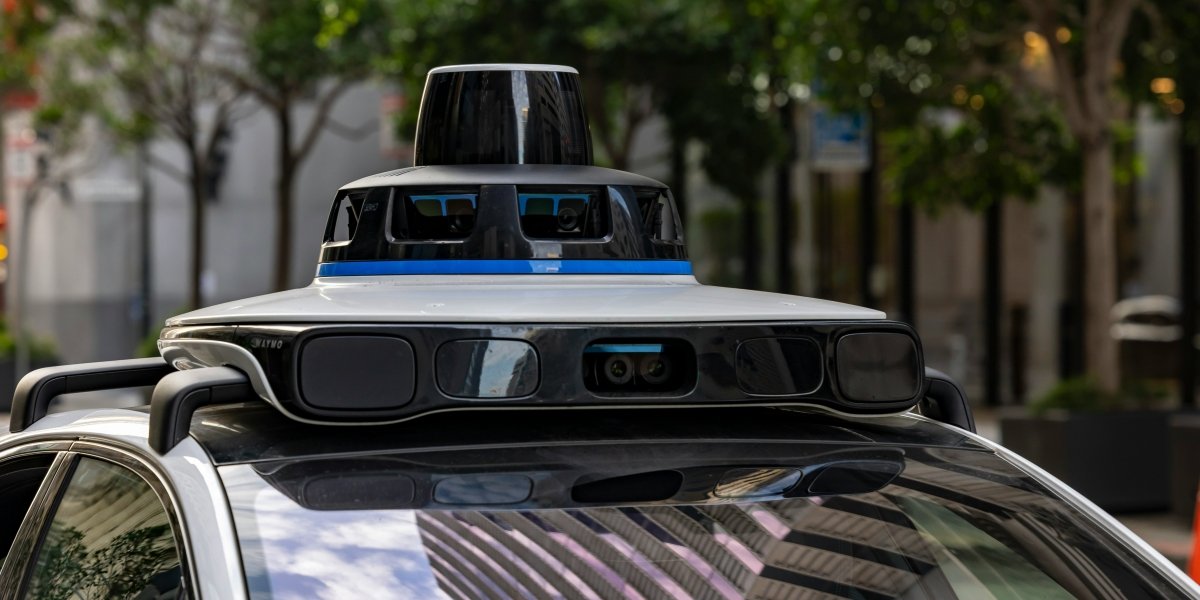
Driverless cars may change who is behind the wheel, but founders and mobility observers say the city’s next challenge is making transportation more shared, not just more automated.

San Francisco has become one of the world’s most visible testing grounds for autonomous vehicles.

On any given day, residents and visitors can see driverless cars moving through busy streets, stopping at intersections, navigating hills, and carrying passengers through one of America’s most complex urban environments. For the technology industry, that is a milestone. For transportation planners and city residents, it also raises a larger question.

If a vehicle drives itself but still carries only one person, how much has actually changed?

Autonomous vehicles have the potential to improve road safety, reduce human driving error, and expand access for people who cannot or do not want to drive. Companies working in the space have spent years developing sensors, mapping systems, artificial intelligence, fleet operations, and remote support infrastructure. San Francisco has played a central role in that progress.

But the city is also beginning to see the limits of automation as a standalone transportation solution.

A driverless vehicle still occupies curb space. It still uses a lane. It still adds to traffic when demand is high. It still needs pickup and drop-off locations. It still contributes to congestion if it replaces a walking trip, transit trip, or shared ride with another single-passenger car trip.

That is why some mobility founders are arguing that the future of transportation should not be framed as driverless versus human-driven. It should be framed as individual versus shared.

Kamuit, a transportation technology company focused on structured long-distance shared mobility, recently made that argument in a LinkedIn post that drew strong engagement. The post responded to news of major autonomous vehicle expansion in San Francisco and argued that replacing human-driven cars with self-driving cars does not automatically fix the commute if each vehicle still moves one person in a five-seat car.

The company’s point was simple: autonomy changes how a vehicle moves, but sharing changes how efficiently people move.

For Yogesh Rethinapandian, co-founder of Kamuit, San Francisco’s autonomous vehicle moment is important but incomplete.

“Autonomy is an incredible technical achievement,” Rethinapandian said. “But if the future is thousands of empty seats moving through already crowded streets, then we have solved only one part of the transportation problem. The next question is occupancy, coordination, and how to move more people with the vehicles already on the road.”

That distinction matters in San Francisco.

The city has long been a dense and difficult transportation environment. It has narrow streets, heavy curb demand, transit pressure, cyclists, pedestrians, tourists, delivery vehicles, ride-hailing cars, and now autonomous vehicles all competing for space. Adding smarter vehicles may help with some safety and efficiency challenges, but it does not remove the physical limits of street capacity.

Recent scrutiny around autonomous vehicles has also reminded the public that trust and transparency remain central to deployment.

At a U.S. Senate hearing earlier this year, lawmakers questioned autonomous vehicle companies about the role of remote assistance operators. Waymo has said that such personnel provide guidance and support, not remote driving or direct control of vehicles during U.S. on-road operations. Still, the discussion showed that the public is not only asking whether autonomous vehicles can drive safely. It is also asking how they are operated, who supports them, where support is located, and what happens when vehicles encounter complex edge cases.

Those questions became more visible as San Francisco dealt with major-event congestion and operational concerns. Reports around the city’s July Fourth traffic disruption pointed to broader coordination failures, including the role of stalled or stranded vehicles in already crowded areas. City officials called the disruption unacceptable and pushed for better planning before future large events.

None of this means autonomous vehicles should be dismissed. The technology is advancing quickly, and San Francisco has benefited from being close to the companies, engineers, regulators, and early adopters shaping the field. Autonomous vehicles may eventually become safer and more reliable than human drivers in many use cases.

But even a safe robotaxi can still be an inefficient transportation unit if it is mostly empty.

That is where shared mobility becomes part of the discussion.

Shared mobility does not require every trip to become public transit. It does not require everyone to give up private cars. It simply asks whether trips that already overlap can be organized better. If multiple people are moving in the same direction, at similar times, across repeated corridors, then the system should make it easier to share that movement.

Kamuit’s work has focused on that idea in long-distance and regional travel. The company is building around scheduled routes, verified users, cost-sharing, and trusted coordination between drivers and riders. Its model looks beyond instant local ride-hailing and toward trips where people already drive between cities, airports, universities, and regional hubs.

For a region like the Bay Area, the concept is relevant because the transportation problem is not only inside San Francisco. It is also between San Francisco, San Jose, Oakland, Fremont, Sacramento, Davis, and surrounding communities. People are constantly moving across regional corridors, often in vehicles with empty seats.

Rethinapandian says the lesson from the autonomous vehicle debate is not that technology is moving in the wrong direction. It is that mobility technology should focus on the total system, not only the driver.

“A self-driving car with one passenger is still one car moving one person,” he said. “The real opportunity is to combine better technology with better utilization. San Francisco has already shown the world what autonomy can look like. The next step is showing what coordinated shared mobility can look like.”

That view reflects a broader shift in transportation thinking. The first era of ride-hailing optimized convenience. The autonomous vehicle era is optimizing the driving task. The next phase may need to optimize occupancy, curb use, route coordination, and cost per person moved.

For cities, that may be the most important metric.

If every innovation adds another vehicle to the road, congestion continues. If innovation helps people share movement more effectively, the same road space can serve more travelers. That is especially important in places like San Francisco, where street space is limited and demand keeps rising.

The future of transportation may include autonomous vehicles. It may include electric fleets, better transit, employer shuttles, bikes, scooters, and rail. But the larger goal should not be simply removing the driver.

It should be moving people better.

San Francisco’s autonomous vehicle boom has already changed how the city thinks about transportation technology. Now it may need to ask a deeper question: not just whether the car can drive itself, but whether the ride should have been shared in the first place.

Pursuit Scavenger Hunt Draws Thousands Across San Francisco

Thousands of people are participating in the San Francisco Pursuit scavenger hunt, a free monthlong event that sends players across neighborhoods to solve puzzles while visiting local businesses, cultural venues, and public spaces. Organized by a volunteer team, the citywide activity has returned with interactive challenges designed to encourage exploration and community engagement.

Key Takeaways

  • Pursuit is a free, monthlong scavenger hunt taking place across San Francisco.
  • Thousands of participants are exploring neighborhoods through puzzle-based challenges.
  • Players visit local businesses, cultural venues, and public landmarks while completing clues.
  • About 30 volunteers and more than a dozen participating venues are supporting this year’s event.
  • The event emphasizes community participation rather than offering cash prizes.

The San Francisco Pursuit scavenger hunt has returned for another month of puzzle-solving activities, drawing thousands of residents and visitors to destinations across the city. Participants receive clues that lead them to businesses, arts venues, and public locations, where they complete interactive challenges before advancing to the next stage of the hunt.

The event is organized by a volunteer group of approximately 30 people. Organizers created Pursuit as a free community activity that encourages participants to discover different parts of San Francisco while meeting new people and engaging with local organizations. This year’s edition officially began in July and is scheduled to continue throughout the month.

Unlike competitive scavenger hunts centered on prizes, Pursuit does not award cash rewards. Instead, participants complete puzzles and activities designed to promote exploration and collaboration across the city.

What Is the Pursuit Scavenger Hunt?

Pursuit is a citywide scavenger hunt that combines riddles, puzzles, live experiences, and visits to local destinations. Participants begin by following instructions provided through the event’s registration process before receiving clues that direct them to locations throughout San Francisco.

Each challenge is designed to encourage exploration rather than speed. Players may complete activities according to their own schedules because clues are released independently instead of requiring every previous challenge to be solved.

The organizers have stated that the event’s primary objective is to encourage people to experience different neighborhoods and interact with businesses and cultural institutions that participate in the activities.

The scavenger hunt is open to individuals, families, and groups of friends. Participants have included longtime residents, newcomers to the city, and puzzle enthusiasts who return each year for new challenges.

Community and Volunteer Involvement

Pursuit is coordinated entirely by volunteers who develop the puzzles, organize event logistics, and work with participating venues throughout San Francisco.

Approximately 30 organizers oversee this year’s activities, creating challenges that combine physical exploration with interactive experiences. Volunteers also monitor events and help ensure participants can complete activities as intended while preserving the mystery of future clues.

The volunteer-led structure distinguishes Pursuit from commercial entertainment events, allowing organizers to focus on community participation rather than ticket sales or prize competitions.

How Does the Citywide Puzzle Adventure Work?

Participants begin by following instructions provided through the event’s introductory materials before receiving their first challenge. Each puzzle directs players toward another clue, often requiring observation, problem-solving, or collaboration with other participants.

Some clues lead to recognizable public landmarks, while others direct participants to cultural venues or neighborhood businesses that have agreed to host portions of the experience.

New clues are released throughout the month rather than all at once. Because each clue stands independently, participants are not required to complete every previous challenge before joining later activities.

This format allows players with different schedules to remain involved throughout the month without falling behind.

Some activities include live experiences at participating venues where players complete performances or interactive challenges before receiving additional information needed to continue the hunt.

The event also incorporates visual puzzles and physical objects that become useful during later stages of the scavenger hunt. Similar community-centered initiatives that encourage residents to visit neighborhood destinations have also been supported through San Francisco entertainment zones, where organized public events help increase activity for local businesses. 

Which San Francisco Businesses and Venues Are Involved?

More than a dozen local businesses and venues are participating as official locations for this year’s Pursuit activities.

Organizers have incorporated neighborhood businesses, performing arts venues, and other public locations into the puzzle route, encouraging participants to visit places they may not otherwise explore.

Local Venues Featured in the Hunt

One of the opening activities directed participants to Café Valor inside the San Francisco War Memorial and Performing Arts Center. There, players completed an interactive theater experience before receiving materials needed for future puzzles.

Additional clues throughout the month continue directing participants to businesses and venues located across different San Francisco neighborhoods.

Organizers have stated that one objective of the event is to encourage participants to discover local businesses while moving through different parts of the city.

Because clues are distributed across multiple locations, participants often travel using public transportation, bicycles, walking routes, or personal vehicles to complete challenges.

Why Has Pursuit Attracted Thousands of Participants?

Organizers reported that thousands of people have joined Pursuit since the event began, with participation increasing after players shared their experiences online and recommended the activity to friends and family.

Participants represent a wide range of backgrounds, including families, neighborhood residents, students, professionals, and puzzle enthusiasts.

The event combines problem-solving with exploration, allowing participants to experience museums, theaters, cafés, and public spaces while working through a sequence of interconnected clues.

Unlike escape rooms or single-location games, Pursuit unfolds across the city over several weeks, giving participants flexibility to complete activities according to their availability.

Organizers have also reported that the event has created opportunities for participants to meet new people through shared challenges and group activities held at participating venues. The emphasis on preserving and strengthening San Francisco’s creative community complements other city initiatives, including affordable housing for artists that support the local arts ecosystem. 

Frequently Asked Questions

What is the Pursuit scavenger hunt in San Francisco?

Pursuit is a free monthlong scavenger hunt that sends participants across San Francisco to solve puzzles while visiting local businesses, cultural venues, and public spaces.

How can people participate in the Pursuit scavenger hunt?

Participants begin by following the event’s registration instructions and then receive clues that guide them through activities taking place across the city.

Is there a cost to join the Pursuit event?

No. Organizers have stated that Pursuit is free to participate in and does not offer cash prizes.

Which San Francisco neighborhoods and businesses are included?

The scavenger hunt spans multiple neighborhoods and includes more than a dozen participating businesses, cultural venues, and public locations throughout San Francisco.

The Hidden Security Gap Inside AI Chiplets

As AI hardware becomes more modular, researchers are warning that die-to-die links may become the next major attack surface.

The artificial intelligence boom has changed the way the semiconductor industry thinks about performance. For years, progress was measured by how much more could be packed into a single monolithic chip. Today, many of the most advanced AI accelerators are moving in a different direction: chiplets.

Instead of building every function on one large die, chiplet-based systems combine smaller specialized dies inside a single package. Compute, memory, I/O, and control functions can be assembled like high-performance building blocks. The model helps improve yield, shorten development cycles, and make it easier to mix technologies from different vendors or foundries.

But as chiplets become central to AI hardware, a new question is emerging: what happens when the links between those dies are not protected?

Modern AI systems move enormous amounts of sensitive data inside the package. Model weights, activations, gradients, user inputs, and control-plane data can all travel between compute dies, memory dies, and I/O chiplets. In many architectures, those die-to-die links were designed primarily for bandwidth, latency, and power efficiency. Security was often treated as an assumption rather than a built-in requirement.

That assumption is becoming harder to defend.

Chiplet systems create new trust boundaries. A package may include dies from multiple vendors, IP blocks from different design teams, and components fabricated through different parts of the global supply chain. In that environment, the phrase “inside the package” no longer automatically means “inside the same trust zone.” A compromised chiplet, malicious IP block, hardware Trojan, or side-channel attack could potentially observe, modify, or replay traffic moving across internal links.

The risk is not only theoretical. Hardware security researchers have been warning that chiplet-based integration changes the traditional security model. UCLA researchers, for example, have explored the idea of security helper chiplets as a new way to monitor hardware security in chiplet-based systems. Other academic work has examined interposer-based chiplet integration, side-channel leakage across chiplets, and physical verification methods for detecting tampering in chiplet and interposer environments.

The common theme is clear: as the chip industry moves from monolithic systems to modular multi-die systems, security has to move with it.

One of the most important areas of concern is die-to-die communication. Standards such as UCIe, or Universal Chiplet Interconnect Express, are designed to enable high-bandwidth communication between heterogeneous chiplets in a single package. That kind of standardization is essential for the future of multi-vendor chiplet ecosystems. But it also means the interface itself becomes a critical security boundary.

If an attacker can observe traffic across a die-to-die link, proprietary AI model weights may be exposed. If an attacker can modify traffic, gradients or inference data may be poisoned. If an attacker can replay old packets, control-plane operations may be manipulated in ways that conventional error-detection mechanisms cannot catch.

This is where a growing body of research is now focused: not simply making chiplets faster, but making the communication between them trustworthy.

A recent contribution by Yogesh Rethinapandian and collaborators addresses this exact issue through a Secure Communication Engine, or SCE, for UCIe die-to-die chiplet interconnects in AI accelerators. The work, recently published through the IEEE International Midwest Symposium on Circuits and Systems, proposes a lightweight hardware-friendly module that sits between the UCIe protocol layer and physical layer, encrypting and authenticating die-to-die traffic without requiring a complete redesign of the chiplet ecosystem.

“The industry has spent years securing software, memory, and cloud workloads, but die-to-die communication inside chiplet packages is still often treated as implicitly trusted,” Rethinapandian said. “As AI accelerators become more modular and multi-vendor, the interfaces between chiplets become just as important as the chiplets themselves.”

The proposed SCE framework uses ChaCha20-Poly1305 authenticated encryption, HMAC-SHA256 mutual authentication, and sliding-window replay protection. In practical terms, that means chiplets authenticate each other before communication, encrypt traffic moving across the link, verify integrity, and reject replayed packets. The design is described as a “bump-in-the-wire” approach because it can be placed transparently between existing protocol and physical layers.

What makes the research notable is not only the security model, but the performance argument. AI accelerators are extremely sensitive to throughput, and any security mechanism that significantly slows tensor movement would face resistance from industry. Rethinapandian’s work reports that for KB-scale tensor transfers common in AI workloads, the throughput impact remains below 0.01%, while power and area overhead remain below 0.4% and 0.3% of system resources respectively.

That matters because the chip industry has historically treated security and performance as competing priorities. If cryptographic protection can be added to die-to-die links with minimal throughput impact, the argument against securing those links becomes weaker.

The research also reflects a larger shift in hardware security thinking. Traditional protections such as memory encryption, secure boot, and trusted execution environments remain important, but they do not fully address the new attack surfaces created by chiplet integration. A system can secure external memory and still leave internal die-to-die traffic exposed. It can verify software and still fail to authenticate a neighboring chiplet. It can protect data in the cloud while leaving model weights visible inside an advanced package.

That is why chiplet security is increasingly becoming a Silicon Valley issue, not only an academic one. The companies pushing AI acceleration, advanced packaging, and custom silicon are also pushing the boundaries of trust. As AI models become more valuable, the data moving inside accelerators becomes more attractive to attackers. The more modular the hardware becomes, the more important it is to define where trust begins and ends.

Several paths are now emerging. Some researchers are looking at centralized security chiplets that monitor activity across a package. Others are exploring interposer-level roots of trust, tamper detection, side-channel monitoring, and secure chiplet verification. Rethinapandian’s work focuses on securing the communication layer itself, treating die-to-die links as an active security boundary rather than a passive internal wire.

Together, these efforts point toward a future in which chiplet security becomes part of the design process from the beginning. Security cannot be added only at the software layer after hardware decisions have already been made. It has to be considered in packaging, interconnects, authentication, encryption, testing, and supply-chain trust.

The timing is important. AI hardware demand continues to surge. Governments are investing heavily in domestic semiconductor capacity. Chiplet ecosystems are becoming more open and multi-vendor. At the same time, the economic value of AI models and training data is rising sharply. A single compromised link inside a package could become a path to model theft, data leakage, or silent manipulation of AI workloads.

The next frontier in AI hardware may not be only faster compute or larger memory. It may be trust.

As chiplets reshape the physical architecture of computing, the industry will have to decide whether internal communication remains an assumption or becomes a protected layer. The research momentum suggests that the answer is already shifting. In the AI era, the security of a chip may depend not only on what each die can do, but on whether the links between them can be trusted.

Mike Mellencamp: The COO Fighting Cancer While Reshaping Transportation Logistics

How Tucker Company Worldwide’s top operations executive is leading through complexity, inside the boardroom and out.

Mike Mellencamp has spent nearly two decades building something rare in the freight industry: an operations culture that can handle the most complex loads in the country while keeping people at the center of every decision. As Chief Operating Officer of Tucker Company Worldwide, he oversees the strategic alignment of operations and technology for one of the nation’s leading transportation brokerage firms, a role that demands both precision and adaptability.

Then, in October 2025, Mellencamp received a cancer diagnosis. He kept working.

From the Sidelines to the C-Suite

Mike Mellencamp grew up in Haddonfield, New Jersey, where soccer and roller hockey were early proving grounds for the competitive instincts he would later bring to supply chain strategy. He took those instincts to Wheaton College in Norton, Massachusetts, where he played on the Men’s Club Soccer Team and graduated with honors, earning a degree in International Relationships with a minor in Economics.

He joined Tucker Company Worldwide in 2006. What followed was a methodical climb through operations, sales, and management, learning the business from the ground up rather than arriving with an MBA and a corner office. That MBA came later, in 2020, when he completed a graduate degree in Strategic Management and Analytics from Villanova University. Three years after that, he was named COO.

The career arc reflects something Mellencamp talks about frequently: the idea that sustainable success comes from pairing ambition with alignment. He often advises early-career professionals to start with the ‘why’ before the ‘what’, to define the values and culture they want to operate within before chasing specific titles or outcomes. ‘Achievement without fit rarely feels rewarding,’ he has said, ‘and culture without purpose can stall momentum.’ It is advice that reads less like a motivational poster and more like a strategy memo, practical, grounded, and born from experience.

Leading the Hardest Freight in the Country

Tucker Company moves freight that most carriers turn away. Oversized industrial equipment, construction components, and heavy machinery that require route surveys, permits, and precise coordination across multiple agencies, this is Tucker’s specialty. Mellencamp spent years building out the company’s heavy haul and super loads division before turning his focus to technology. He led Tucker’s industry-wide truckload visibility initiative and joined the Transportation Intermediaries Association’s Technology Committee in 2018, where he helped shape and present at the organization’s Technovations conference.

In his current role, Mellencamp synchronizes Tucker’s capacity and technology teams around a single goal: operational excellence for every customer. That means not just moving freight reliably, but building the systems and culture that make reliability repeatable. It means investing in technology not for its own sake, but because better tools drive better outcomes for shippers, carriers, and the people executing on both sides of a transaction.

His approach to leadership mirrors his approach to operations: establish a strong decision-making foundation through culture, training, and shared goals, then trust people to execute. He describes it as a balance between clarity and independence, high standards without micromanagement, accountability without rigidity. It is the same model he experienced growing up, and it is the model he now applies at scale across a company moving some of the most complex freight in the United States.

A Values-Led Philosophy

Mellencamp is unusually direct about the values that shape his professional decisions. He grew up in a household with two working parents, an environment that instilled in him an early sense of personal accountability and the importance of showing up, for work, for family, for community. Those formative experiences, he says, gave him and his sister a sense of independence early and taught them to solve problems with confidence rather than waiting for someone else to intervene.

He speaks openly about the principle that family comes first, not as a platitude but as an operating standard. He holds himself accountable to it the same way he holds his teams accountable to performance targets. ‘Customers and deadlines will always create urgency,’ he has said, ‘but I believe strong organizations are built when people are supported as whole individuals, not just as employees.’ That belief extends to how he runs teams, how he mentors colleagues, and how he talks about the tension between work demands and home life, a tension he navigates alongside his wife, who also holds a demanding professional role.

The practical tool Mellencamp returns to for managing that tension is transparency. When people understand the reasoning behind a priority, whether it is a team member, a spouse, or a direct report, they are more willing to collaborate and adapt. Without that clarity, he has observed, stress builds quickly and turns into frustration or resentment. It is the same principle that drives his communication style at work: direct, timely, and grounded in context.

His approach to mentorship follows the same logic. Rather than prescribing a career path based on his own experience, Mellencamp focuses on helping people define what success looks like for them, what they value, how they want to lead, what kind of impact they want to make. He has found that persistence, humility, and patience are the core requirements, and that the real impact of coaching often shows up months or years after the conversations that sparked it. One of his most formative mentoring relationships involved a colleague who struggled to reconcile performance expectations with the cultural side of leadership. Over time, with sustained engagement and flexibility, that person became one of the steadiest leaders on the team. The lesson Mellencamp took from it was straightforward: mentorship is not a transaction. It is a long-term investment.

Community as Strategy

Mellencamp’s commitment to community is not a side project. He sees it as a natural extension of the same principles that guide his professional work, that people go further together, that strong networks are built through mutual investment over time, and that showing up for others creates the kind of reciprocal support that sustains both careers and communities through difficult periods.

He has worked alongside leaders who model community service consistently, through volunteering, fundraising, and hands-on support for families navigating serious challenges. One initiative that made a deep impression involved sponsoring families during the holidays while a parent was battling cancer. Seeing firsthand how a health crisis can reshape a family’s most meaningful moments reinforced something he already believed intellectually: that community support is not charity. It is infrastructure.

Continuing the Fight

Mellencamp’s cancer diagnosis in the fall of 2025 is a fact he does not hide. He continues to work alongside the Tucker team, advancing technology capabilities, moving complex freight, and helping drive the company’s next phase of growth. He is also, in parallel, fighting for his own health, managing a personal battle that has given new weight to the community work and the family-first philosophy he has long espoused.

He is clear about his motivation for speaking openly. His situation, he acknowledges, is far from unique. Many people are navigating serious illness while continuing to lead, to work, to show up. His hope is that his perseverance can bring awareness and strength to others in similar circumstances, that it demonstrates, in concrete terms, what it looks like to lead through adversity without abandoning the values that make leadership worth anything in the first place.

It is a posture consistent with everything else in his career. Mike Mellencamp has built his professional life on the belief that success is strongest when it is values-led, that culture, family, community, and performance are not competing priorities but complementary ones. That belief, it turns out, holds up under conditions far harder than a difficult quarter.

The Hidden Costs of an Outdated Commercial Espresso Machine and When It’s Time to Upgrade

For many cafés, restaurants, bakeries, hotels, and offices, the espresso machine is one of the hardest-working pieces of equipment in the building. It operates from opening until closing, often producing hundreds of drinks each day. Yet many businesses continue using aging machines long after they’ve become inefficient, unreliable, and expensive to maintain.

While replacing a commercial espresso machine may seem like a major investment, holding onto outdated equipment can cost significantly more in lost revenue, repairs, labor, and customer satisfaction.

At Espresso Mio, businesses have trusted commercial espresso equipment experts for more than 40 years to help determine when it’s time to repair, upgrade, or replace their espresso machines.

Frequent Repairs Are a Warning Sign

Every piece of commercial equipment requires maintenance, but there comes a point when repair bills begin to outweigh the value of the machine.

If your espresso machine is constantly experiencing issues such as:

  • Inconsistent brewing temperatures
  • Grinder malfunctions
  • Steam wand problems
  • Water leaks
  • Error codes
  • Long startup times

It may be time to evaluate whether upgrading makes better financial sense.

Repeated service calls don’t just cost money. They also disrupt your business and create unnecessary stress during peak hours.

Downtime Costs More Than You Think

Imagine your espresso machine goes down during the morning rush or a busy weekend brunch.

Customers may leave without ordering coffee, while others settle for beverages they didn’t really want. Staff members spend valuable time troubleshooting equipment instead of serving guests.

For restaurants where specialty coffee contributes significantly to revenue, even a single day of downtime can result in hundreds, or even thousands, of dollars in lost sales.

Reliable equipment isn’t just about convenience. It’s about protecting your business.

Today’s Customers Expect Premium Coffee

Consumer expectations have changed dramatically over the last decade.

Guests who regularly visit specialty coffee shops expect restaurant coffee to meet the same standards. Bitter espresso, inconsistent milk foam, or slow service can negatively impact the entire dining experience.

Modern super-automatic espresso machines consistently produce café-quality beverages with precise brewing temperatures, fresh grinding, and perfectly textured milk.

Providing exceptional coffee encourages repeat visits and increases customer satisfaction.

Labor Savings Add Up Quickly

Hiring and retaining experienced baristas has become increasingly difficult.

One of the greatest advantages of today’s super-automatic espresso machines is their simplicity.

Instead of relying on highly trained staff, employees can prepare premium espresso drinks with minimal instruction. Automated grinding, dosing, tamping, brewing, and milk frothing reduce the learning curve while maintaining consistency.

This allows restaurants and cafés to operate more efficiently without compromising beverage quality.

Energy Efficiency Matters

Older commercial espresso machines often consume considerably more electricity than newer models.

Modern equipment is designed with energy-saving technologies that reduce power consumption while maintaining optimal brewing temperatures.

Over time, these savings contribute to lower operating costs, particularly for businesses producing coffee throughout the day.

Combined with reduced maintenance expenses, improved efficiency helps offset the investment in new equipment.

Better Equipment Means Better Consistency

Customers return because they know what to expect.

Whether it’s their favorite cappuccino, latte, or espresso, consistency builds confidence in your brand.

Modern commercial espresso machines eliminate many of the variables associated with manual preparation by controlling grind size, extraction pressure, brewing time, and beverage recipes automatically.

The result is a consistently excellent drink every shift, every employee, and every customer.

Professional Support Makes All the Difference

Purchasing an espresso machine is only the beginning.

Proper installation, water filtration, preventative maintenance, and responsive service all play a critical role in maximizing equipment lifespan.

That’s where working with an experienced commercial espresso equipment partner becomes essential.

Rather than simply selling machines, Espresso Mio helps businesses select equipment based on their volume, workflow, menu, and long-term goals.

Their technicians provide expert installation, scheduled maintenance, emergency repairs, and ongoing support to keep businesses operating smoothly.

Choosing the Right Machine for Your Business

Every operation is different.

The ideal espresso machine depends on factors including:

  • Daily beverage volume
  • Available workspace
  • Menu offerings
  • Peak service times
  • Staffing levels
  • Budget
  • Future expansion plans

Whether you’re opening a new café, upgrading a busy restaurant, or replacing aging equipment in an office or hotel, selecting the right machine supports years of dependable performance.

Why Businesses Choose Espresso Mio

For more than four decades, Espresso Mio has built a reputation for providing reliable commercial espresso solutions backed by expert service and technical support.

From premium super automatic espresso machines and professional installation to preventative maintenance and emergency repair, Espresso Mio helps businesses maximize equipment performance while minimizing downtime.

Their team understands that every cup served represents your brand, which is why they focus on equipment that delivers exceptional coffee, day after day.

Invest in Your Coffee Program

Coffee is no longer just an add-on. It has become an important part of the customer experience and a valuable source of revenue.

If your current espresso machine is slowing down service, increasing repair costs, or producing inconsistent beverages, now may be the perfect time to explore modern commercial espresso solutions.

Businesses looking to upgrade can explore Espresso Mio’s commercial espresso equipment and service offerings, including super automatic machines, installation, maintenance, and repair. With more than 40 years of industry experience, Espresso Mio helps businesses serve outstanding coffee while keeping operations running at their very best.

Saan Enzo Looks Toward San Francisco’s Next Generation of Creators

Canadian entrepreneur and digital creator Saan Enzo is interested in connecting with the next generation of creators in San Francisco, California. Known for his experience in social media, digital marketing, and entrepreneurship, he sees the city as a place where technology and creativity come together to create new opportunities.

San Francisco has long been recognized as a center for innovation. The city is home to entrepreneurs, technology companies, artists, and creators who continue to develop new ideas and shape the way people interact online. For Saan, this combination of creativity and forward thinking makes San Francisco an exciting place to build connections and explore future projects.

A major part of his focus is working with creators who are building their own audiences and developing unique brands. Saan believes that influencers and digital creators have become an important part of modern business because they can connect with people in a more personal way. By partnering with creators, he hopes to help develop projects that combine strong storytelling, marketing, and creative ideas.

Beyond social media, Saan is also interested in San Francisco’s music and entertainment communities. The city has a history of supporting artists and encouraging new talent, creating opportunities for musicians and creative professionals to share their work with wider audiences. He believes digital platforms can play an important role in helping artists grow their reach and build stronger connections with fans.

San Francisco’s entrepreneurial culture is another reason the city stands out to Saan. The area has produced many successful businesses and continues to attract people who are focused on building something new. He is interested in meeting entrepreneurs and business owners who share a passion for innovation and creating opportunities through collaboration.

Saan believes that successful partnerships come from bringing together people with different skills and ideas. A creator may have a strong connection with an audience, while a business may have the resources and experience to help bring a project to life. By combining those strengths, he sees the potential to create meaningful work that benefits everyone involved.

As the digital world continues to change, Saan understands the importance of staying connected with new trends and emerging talent. Platforms, audiences, and marketing strategies are constantly evolving, and he believes that being open to change is an important part of long-term success.

Looking ahead, San Francisco remains a city that interests Saan as he continues expanding his entrepreneurial goals. Through collaborations with creators, musicians, and business professionals, he hopes to discover new ideas and build partnerships that support growth in the digital space.

Saan Enzo’s interest in San Francisco reflects his focus on creativity, innovation, and the future of online business. By connecting with people who are creating new opportunities, he continues to explore ways to bring together technology, entertainment, and entrepreneurship in a changing digital world.