Why California Families Are Turning to Ms. Leena Deshpande and The Math Pal for Modern Math Education


Across California, many parents are searching for better ways to help their children succeed in math. In competitive academic environments like the San Francisco Bay Area, families often look beyond traditional classroom learning to find programs that can strengthen confidence, improve problem-solving skills, and make students truly enjoy mathematics. For many families, that search has led them to Ms. Leena Deshpande and The Math Pal LLC.

Founded by educator and math mentor Ms. Leena Deshpande, The Math Pal has become known for its personalized approach to math education, helping students from Kindergarten through Grade 8 build strong foundations through Abacus training, E³ Math concept-based learning, and competitive math preparation.

What makes The Math Pal stand out is not just the academic results, but the way students feel about learning. Instead of memorizing formulas without understanding them, students are encouraged to think critically, ask questions, and develop confidence step by step. In a state like California, where academic pressure can begin at a very young age, this type of supportive learning environment has become increasingly valuable for parents who want their children to succeed without feeling overwhelmed.

A Different Kind of Math Learning Experience

Many students struggle with math not because they lack ability, but because they lose confidence early. Ms. Leena Deshpande recognized this problem years ago and built The Math Pal around a simple idea: every child can learn math when taught with patience, clarity, and the right guidance.

Unlike large tutoring centers that follow a one-size-fits-all system, The Math Pal focuses on small class sizes and personalized instruction. Lessons are adjusted based on each student’s pace and performance, allowing children to fully understand concepts before moving forward. The program also offers both in-person and online math classes, giving California families the flexibility to choose what works best for their schedules and learning preferences. This hybrid approach has made The Math Pal accessible to students locally and across different parts of the state.

From Research Scientist to Math Educator

Before founding The Math Pal, Ms. Leena Deshpande worked as a research scientist after earning her master’s degree in Pharmacy. Her career path eventually shifted toward education after she discovered her passion for teaching young students through Abacus instruction. Parents quickly noticed her ability to simplify difficult concepts and help children feel comfortable with numbers. Even after leaving a local Abacus institute, families continued reaching out and requesting that she teach their children privately. That trust and demand eventually inspired her to launch The Math Pal LLC.

Today, Ms. Leena is an experienced educator and a certified Abacus teacher trained through the IIVA Institute in India, as well as a certified Vedic Math instructor through Vedic Maths Forum India. She has also successfully cleared the CBEST for Math, further strengthening her academic credentials and teaching expertise.

Math Programs Designed for Real Understanding

The Math Pal currently offers three core programs, each designed to support different stages of a student’s math journey.

The Abacus Program introduces younger students to mental math techniques that improve focus, memory, speed, and confidence. Many students who once feared numbers begin to enjoy solving problems through interactive exercises and visual learning methods.

The E³ Math Program focuses on concept-based learning and helps students understand how to solve math problems, why mathematical concepts work, and when to apply them. This approach strengthens long-term understanding and improves classroom performance.

For advanced learners, the Competitive Math Program prepares students for high-level academic contests including Math Kangaroo, NOETIC, AMC 8, Math Counts, MOEM, and Berkeley Mini Math Tournament (BmMT). Students learn advanced problem-solving strategies while improving logical reasoning and analytical thinking skills.

Photo Courtesy: M.A.

A Remarkable Year of Student Achievement

The 2025–2026 academic year has been especially exciting for The Math Pal and its students. Students earned impressive results in several national and international math competitions, reflecting both their hard work and the effectiveness of Ms. Leena’s teaching methods.

In the Noetic Fall 2025 contest, students achieved 3 National Honor Rolls and 14 National Honorable Mentions. Those results became even stronger during Noetic Spring 2026, where 2 students earned a perfect score and a total of 8 students earned National Honor Rolls and 14 students earned National Honorable Mentions. At the Berkeley Mini Math Tournament (BmMT 2026), students received six National Honorable Mentions in the Individual Round, three in the Relay Round, and one in the Team Round. One of the biggest highlights came during Math Kangaroo 2026. Out of 13 participants, two fourth-grade students secured perfect scores and achieved both National Rank 1 and CA State Rank 1, an exceptional accomplishment for learners at such a young age.

Several students also earned positions on their school MOEM teams and continued to perform at a high level throughout the year. For Ms. Leena Deshpande, these accomplishments represent more than awards or rankings. They reflect growth, confidence, discipline, and a genuine love for learning that students carry with them beyond the classroom.

Building Confidence Beyond Math

Parents often enroll their children in math tutoring programs to improve grades, but many families at The Math Pal notice something deeper happening over time. Students begin participating more in class. They become less afraid of making mistakes. They approach challenges with more patience and confidence. Many develop stronger study habits and critical thinking skills that support success in other academic subjects as well.

This focus on confidence-building has become one of the defining qualities of The Math Pal’s teaching philosophy. The program also emphasizes emotional support and positive reinforcement. Students are encouraged to ask questions freely, participate without pressure, and learn in an environment that feels safe and motivating.

As demand for personalized education continues growing throughout California, Ms. Leena Deshpande hopes to expand The Math Pal into additional communities while maintaining the same student-focused approach that has helped so many families already. Her vision is simple but meaningful. She wants to create learning spaces where children feel supported, challenged, and excited to learn.

At a time when many students experience stress and pressure around academics, programs like The Math Pal are helping redefine what successful math education can look like, not just higher scores, but stronger confidence, deeper understanding, and a lifelong belief that learning can actually be enjoyable. For many California families, that difference is exactly what they have been searching for.
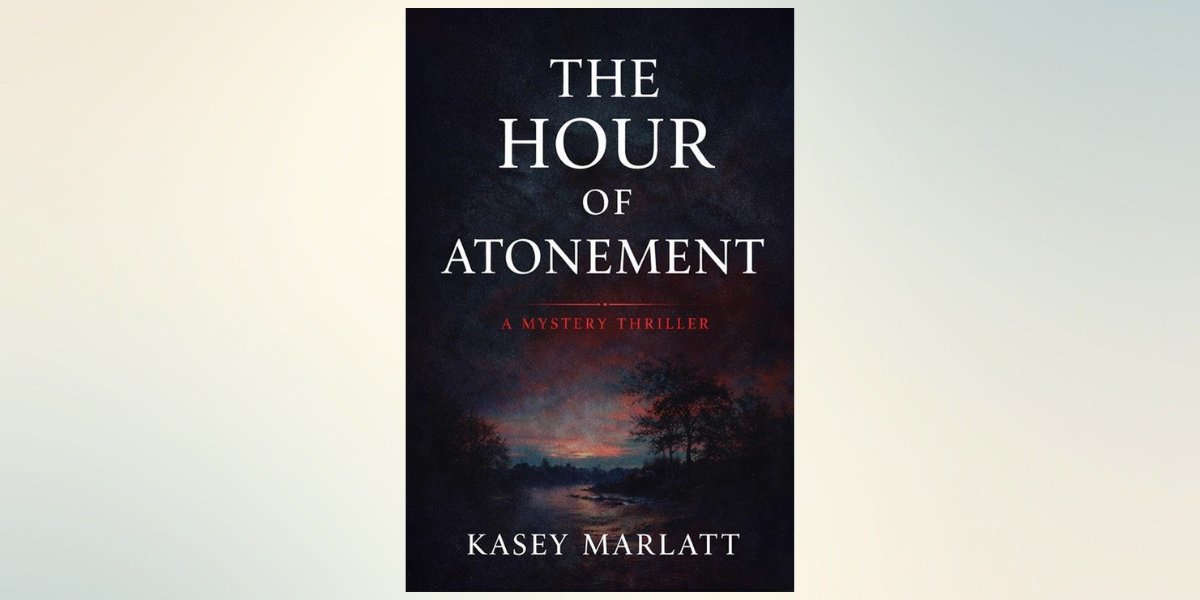
Kasey Marlatt’s ‘The Hour of Atonement’ Captures Rural Friendship, Solitude, and Reckoning

By: Kasey Marlatt

In the opening pages of Kasey Marlatt’s debut novel, The Hour of Atonement, a preface sets the tone with quiet authority: “Out of the small smoke-filled caverns of small-town bars and the loneliness of small towns across America, there exists a segment of mankind that are souls of times gone by.” Dependent on no one yet bound by unbreakable loyalties, these men, often viewed as odd or unnatural by “proper” society, forge friendships that endure until “the last heartbeat, until the last breath, or until reckoning and revenge have had their day.” Published in 2026 by an independent press and already earning quiet praise for its unhurried authenticity, Marlatt’s novel arrives as a refreshing counterpoint to the frenetic pacing of much contemporary fiction.

Marlatt, a certified public accountant and owner of his own firm in rural Oklahoma, wrote the book during the COVID-19 pandemic as an antidote to the demands of his day job. “I wanted to do something that was totally opposite of my day job,” he explained in a recent interview. “To me, writing a book was about as total opposite as I could think of.”

The result is a work deeply rooted in the world he observed growing up: hardworking loners who “dug their own living out of the dirt,” lifelong friendships sustained not by constant contact but by an unspoken readiness to answer the call when needed. The story follows Jim Blakely, a convenience-store owner still working through the aftermath of a bitter divorce, as he leans on two close friends, Travis Livingston, a sharp-tongued cattleman, and Edward “Lefty” Whitehorse, a Comanche hunting guide and security guard whose nickname dates to childhood. Their lives unfold against the backdrop of southeastern Oklahoma’s wooded hills, cow pastures, and winding roads, places where the biggest social event may be the county fair and where emotional processing often happens “below the surface,” in ordinary moments rather than dramatic confrontations.

The narrative opens on September 17, 2010, four years after Jim’s divorce, and tracks the trio through everyday rituals: morning coffee and King of the Hill reruns, property deals gone sideways, hunting trips, and late-night porch conversations lubricated by Coors Light and ribeye steaks. Marlatt’s prose is spare and evocative, capturing the rhythms of rural existence with precision. Dirty store floors draw Jim’s ire. A plastic Walmart bag blowing across a parking lot summons bittersweet memories of a long-ago honeymoon. The scent of bacon rouses hunters from their tents. These details accumulate into a textured portrait of men who maintain an illusion of control over their environment, relationships, and emotions until they do not. When external forces (legal entanglements, betrayal, and sudden violence) intrude, the friends discover the limits of self-reliance and the necessity of leaning on one another.

What distinguishes The Hour of Atonement is its deliberate rejection of traditional storytelling expectations. “I wanted to give people a slice of what real life is, especially in the rural parts of the country,” Kasey Marlatt noted. “A lot of big moments in people’s lives. It’s not done in a public setting; it’s done on back porches, drinking a beer by yourself, or just talking with one other friend.” The pacing is unhurried, almost meditative, mirroring the slower tempo of rural life. Dialogue relies heavily on implication, analogy, and “little zingers” delivered with dry humor, techniques the author absorbed from older generations during childhood afternoons with his grandfather. Characters communicate more through what remains unsaid than through overt declarations, a stylistic choice that rewards attentive reading. Solitude persists even in company. The men are together yet often inwardly isolated, processing grief, anger, and uncertainty in private. This undercurrent reflects a broader truth about rural communities, where social circles are small and self-reliance is both a virtue and a necessity.

Underneath the plot, the novel is a meditation on friendship as a survival mechanism. The bonds between Jim, Travis, and Lefty embody the “unspoken codes of conduct” Marlatt observed in the people around him: honesty without flattery, loyalty without score-keeping, and an ethic that values action over words. “Those friends, it’s not a ‘what have you done for me lately?’” he observed. “If you need help, they just say, ‘all right, I’m on the way.’” Humor leavens the darkness. Travis’s relentless needling, Lefty’s wry observations about “pale faces,” and Jim’s self-deprecating “Mr. Doom” persona provide levity amid personal and communal reckonings. Yet the story does not shy from moral complexity. The illusion of control fractures, forcing the characters to confront their vulnerability and the ethical weight of retribution. The title itself signals the novel’s thematic culmination. Atonement arrives not through abstract redemption but through the hard, sometimes violent, choices demanded by loyalty.

Marlatt’s rural setting is both freeing and constraining, deliberately limiting the story’s possibilities to heighten authenticity. “The environment limits the possibilities of what can happen,” he said, “and that makes writing easier for me, especially being a first novel.” The result is a tightly focused narrative that feels lived-in rather than contrived. Readers accustomed to high-stakes thrillers may initially find the early chapters leisurely, but the cumulative effect is immersive and emotionally resonant. The book’s modest length, roughly a three-hour read, enhances its accessibility. “It can be a complete escape from all your problems for a couple of three hours and just enjoy the book, laugh,” Marlatt remarked. “And I think people will enjoy reading it.”

As a first-time novelist, Marlatt approached the project with refreshing pragmatism. The manuscript took three months of actual writing time scattered over two and a half years, written in stolen hours between client work and computer updates. He offers aspiring writers simple counsel. “Never let it feel like work. If you don’t feel like writing, don’t write. Just let it come whenever at its own pace.” His primary motivation was personal. “My goal for writing the book was proving to myself that I could,” he said. With a prequel already in mind, set roughly 75 years earlier, he views the endeavor as legacy-building for his children and grandchildren. “They’ll always have a story in their dad’s voice.”

The Hour of Atonement does not seek to upend literary conventions so much as quietly insist that slower, character-driven stories still matter. In an era of rapid digital consumption and urban-centric narratives, Marlatt’s debut offers a grounded counter-narrative from the heartland, one that honors the dignity of ordinary lives, the quiet heroism of steadfast friendship, and the moral gravity of choices made when control slips away. For readers in coastal cities or bustling metropolises, the novel serves as both a window and a mirror, a reminder that the loners and outcasts forging paths “through the muck and mire of a mortal existence” exist everywhere, their bonds forged not despite hardship but because of it.

In the end, The Hour of Atonement leaves a lingering impression precisely because it refuses to rush. It invites readers to linger on back porches, in pickup trucks, and amid the pine-scented hills of southeastern Oklahoma, where friendship is not merely companionship but the last, best line of defense against an indifferent world. Marlatt has succeeded in his modest ambition. He wrote the book he wanted to read, and in doing so, he has given us something rarer: a story that feels true.

Readers can purchase The Hour of Atonement on Amazon.

Stay updated with the official book universe at kaseymarlatt.com.