Cloudflare Reduces Workforce at SF Headquarters

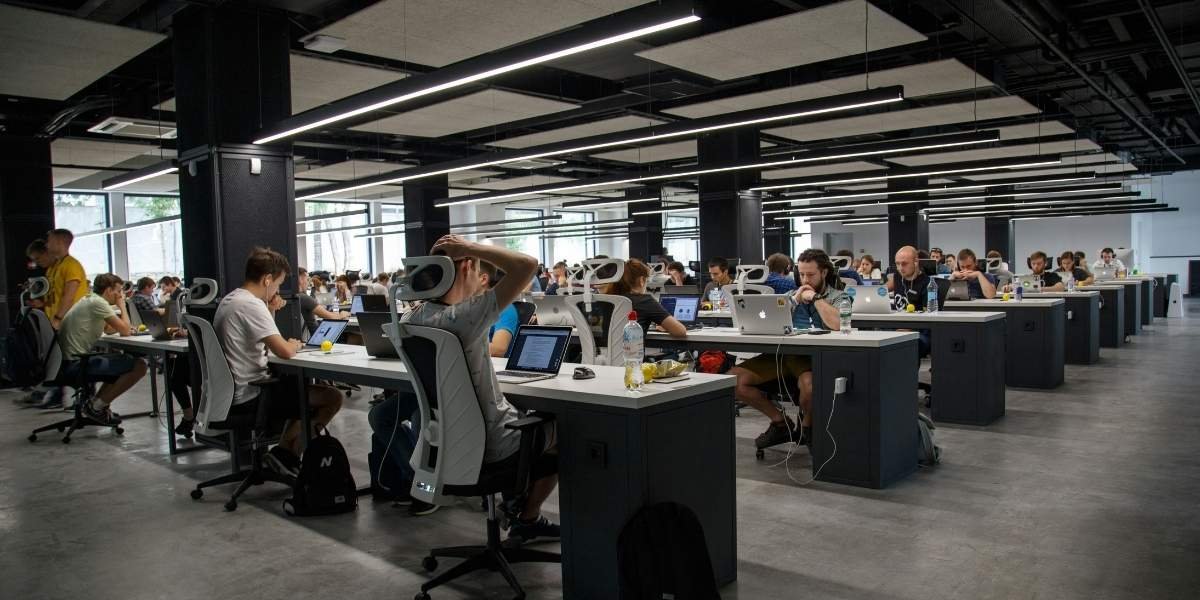
Cloudflare layoffs became a major development in San Francisco’s technology sector after the cybersecurity and internet infrastructure company disclosed plans to eliminate 224 positions at its headquarters as part of a restructuring initiative tied to artificial intelligence operations. The workforce reduction affects employees based at the company’s office on Townsend Street and represents one of the more significant Bay Area tech staffing adjustments announced in recent weeks.

The company filed notices connected to the cuts through California’s Worker Adjustment and Retraining Notification system, which requires employers to provide advance notice for large-scale layoffs. The filing indicated that affected employees would separate from the company beginning later this year. Cloudflare has not publicly released a detailed breakdown of departments impacted by the restructuring effort.

The San Francisco-based company said the staffing changes are connected to evolving operational priorities and increased investment in artificial intelligence capabilities. Like many technology firms across Silicon Valley, Cloudflare has been incorporating AI-related systems into internal operations, cybersecurity tools, network management products, and enterprise services.

Founded in 2009, Cloudflare operates a global network that provides website security, performance optimization, distributed denial-of-service protection, and internet infrastructure services for businesses, governments, and digital platforms. The company has maintained a strong presence in San Francisco even as some technology firms reduced office footprints or relocated employees to other regions in recent years.

AI Investments Continue Across Bay Area Tech Sector

The restructuring announcement arrives during a period of accelerated AI investment throughout the Bay Area technology industry. Companies across cloud computing, cybersecurity, software development, and enterprise services have increased spending on automation tools and machine learning systems since generative AI products gained widespread adoption.

Cloudflare has introduced multiple AI-related initiatives during the past year, including tools designed to manage AI crawler traffic, services intended to support developers building AI applications, and infrastructure products aimed at enterprise clients using machine learning systems. Executives across the sector have increasingly described artificial intelligence as a central factor shaping future hiring priorities and product development strategies.

Technology companies have simultaneously faced pressure to improve operational efficiency while maintaining competitive investment levels in AI infrastructure. That environment has contributed to workforce adjustments at several firms headquartered in San Francisco and Silicon Valley during the past year.

Although layoffs in the technology industry slowed compared with the sharp reductions seen during 2022 and 2023, staffing changes have continued across software, cloud computing, and digital services businesses. Many companies have concentrated hiring in engineering and AI-focused roles while reducing positions tied to other operational areas.

Cloudflare’s restructuring reflects broader shifts taking place within enterprise technology businesses adapting to changing demand patterns. Cybersecurity companies, in particular, have increased AI integration as clients seek automated threat detection, network monitoring, and predictive security systems capable of responding to large-scale digital attacks more efficiently.

The company has also expanded products aimed at organizations managing growing internet traffic demands tied to AI systems. Increased use of large language models and data-intensive applications has created additional infrastructure requirements for cloud providers and cybersecurity firms operating large-scale global networks.

San Francisco Employment Market Faces Continued Pressure

The job reductions add to ongoing concerns surrounding San Francisco’s downtown employment environment, where office vacancy rates remain elevated compared with pre-pandemic levels. Technology companies continue to play a central role in the city’s economic recovery because of their influence on commercial leasing activity, local spending, and transit usage.

San Francisco has experienced a mixed labor market recovery over the past two years. While AI startups and venture-backed companies continue attracting investment, established firms have maintained cautious hiring strategies amid economic uncertainty and changing workplace structures.

Several major technology employers headquartered in the city have adjusted staffing levels or reorganized operations since the beginning of 2025. Some firms have consolidated office space, expanded hybrid work arrangements, or shifted resources toward AI development programs.

Cloudflare has remained one of the more visible technology tenants in San Francisco’s South of Market district. The area continues serving as a major hub for cloud computing firms, startup offices, venture capital activity, and software companies despite ongoing commercial real estate challenges.

Local officials and business organizations have emphasized the importance of retaining technology employers within the city as San Francisco competes with other regions for investment and workforce growth. AI companies and infrastructure providers are increasingly viewed as critical drivers of future economic activity in the Bay Area.

At the same time, workforce restructuring announcements have raised concerns about employment stability for technology workers outside specialized AI engineering and research positions. Recruiters and labor analysts have noted growing competition for mid-level operational, administrative, and non-technical roles within the sector.

The latest reductions also highlight how artificial intelligence is influencing internal corporate structures beyond product development alone. Companies are using automation systems to streamline customer support operations, software maintenance processes, data analysis functions, and internal business workflows.

Cloudflare Expands Infrastructure and Enterprise Services

Despite the workforce reductions, Cloudflare continues expanding its internet infrastructure and enterprise cybersecurity operations. The company has increased investment in network capacity, data centers, and cloud-based services as demand for digital security tools remains high amid growing cyber threats targeting businesses and governments.

Cloudflare is also pursuing growth opportunities tied to artificial intelligence computing, which requires greater bandwidth, secure data transmission, and low-latency networking systems. Technology companies across the cloud and cybersecurity sectors have continued increasing AI-related infrastructure spending while balancing profitability and operational efficiency goals.

The company previously reported ongoing revenue growth driven by enterprise demand, even as broader hiring activity across the tech industry remains cautious. Cloudflare’s restructuring appears aimed at aligning staffing with evolving business priorities while maintaining its headquarters and broader operations in San Francisco.

The Geometry of Meaning: When Architecture Becomes Wearable Design

By Masako Kamasi

Design, at its most refined level, is a language, one that communicates not through words, but through form, proportion, and structure. In the work of Paolo Volpis, this language finds expression across disciplines, bridging architecture and watchmaking through a shared vocabulary of geometry and precision.

As the founder of Paolo Volpis Architects and a central figure in the development of Bogneri, Volpis explores how meaning can be embedded in shape, how lines, volumes, and systems can convey ideas that extend beyond their physical form. Central to this exploration is the integration of semi-prefabrication, not as a constraint, but as a tool that enhances clarity, precision, and ultimately, the expression of luxury.

“Geometry is the most honest form of communication in design,” Volpis reflects. “It doesn’t need explanation; people feel it immediately.”

Photo Courtesy: Paolo Volpis Architects

Form as a System of Expression

Within Paolo Volpis Architects, form is approached with intention. Geometry is not imposed as a stylistic choice but developed as a response to context, function, and narrative.

Each project begins with an exploration of relationships between volumes, between light and surface, between interior and exterior. These elements work together to create spaces that are both functional and expressive.

“Every line has a purpose,” Volpis explains. “If a line exists, it should be doing something, guiding, framing, or creating tension.”

Light plays a defining role in this process. As it interacts with geometry, it reveals depth, texture, and movement. Surfaces shift throughout the day, transforming the perception of space and adding a temporal dimension to the design.

This dynamic quality reflects a broader understanding of architecture as an evolving experience, one that unfolds over time rather than remaining static.

Photo Courtesy: Paolo Volpis Architects

Semi-Prefabrication as a Tool for Clarity

A key aspect of Volpis’ approach is the integration of semi-prefabrication into the design process. Within Paolo Volpis Architects, this methodology is applied strategically, focusing on areas where it enhances both precision and efficiency.

By producing structural components in controlled environments, the firm achieves a level of accuracy that supports the clarity of the design. Geometry, in this context, is not compromised by construction variability, but reinforced through it.

“Semi-prefabrication allows the idea to stay intact,” Volpis notes. “What you design is much closer to what you actually build.”

This process allows for a more direct translation of concept into reality. Lines remain sharp, proportions remain exact, and the intended relationships between elements are preserved.

Rather than limiting creativity, semi-prefabrication enables it. By resolving technical complexities in advance, the design phase can focus more fully on composition and expression.

Boltree: Scaling Geometry Through Intelligent Systems

The exploration of prefabrication extends further through Boltree, the sister company of Paolo Volpis Architects. Boltree focuses on modular and prefabricated systems, applying the same principles of geometry and precision at a broader scale.

Through Boltree, architectural concepts are translated into systems that can be efficiently produced and assembled, without losing their expressive qualities. Modules are designed with careful attention to proportion and integration, allowing them to function both independently and as part of a larger composition.

“We are not simplifying architecture,” Volpis explains. “We are organizing it in a smarter way so that more people can access good design.”

This approach introduces a new dimension to accessibility. High-quality design, defined by clarity and intention, becomes achievable through optimized processes. Geometry remains central, guiding both the design and the execution.

From Space to Object: Architecture in Watchmaking

The transition from architecture to watchmaking presents a unique challenge: how to translate spatial concepts into a compact, wearable form. In his work with Bogneri, Volpis approaches this challenge by treating the watch as a form of micro-architecture.

By bringing the architectural design process, narrative and a framework that coexists with the environment, Volpis delivers a fresh perspective in the watchmaking industry.

“A watch is like a building you wear,” Volpis says. “It has structure, layers, and a logic that holds everything together.”

Despite the difference in scale, the principles remain consistent. Geometry governs the arrangement of elements, ensuring balance and coherence. Each component is positioned with intention, contributing to a unified design language.

Precision and the Role of Repetition

Both architecture and watchmaking rely on precision, and both engage with repetition as a means of achieving it. In semi-prefabricated architecture, components are produced with consistency, allowing for efficiency and reliability. Yet, when assembled, these components create unique compositions.

In watchmaking, repetition operates at an even finer level. Components are manufactured in series, each refined through iteration. This process, through prototyping, ensures that the final product meets exacting standards of accuracy.

“Repetition is not about making things identical,” Volpis reflects. “It’s about refining something until it becomes precise.”

Volpis recognizes that repetition, when guided by design, enhances the quality control. In watchmaking, prototyping is the method to achieve perfection through testing and trial-error procedures, while in architecture every building is a prototype, giving much smaller margins for error. For this reason, prefabrication and standardization reduce the margin of error within a creation that is both a prototype and a final, usable product.

Materiality and the Expression of Form

The effectiveness of geometry is closely tied to materiality. The way materials are selected, finished, and assembled influences how form is perceived.

In architecture, materials interact with light, texture, and scale, shaping the experience of space. Concrete, glass, steel, and wood each contribute differently to the expression of geometry.

Within Paolo Volpis Architects, materials are chosen to enhance the clarity of form. Surfaces are detailed to reveal their inherent qualities, allowing geometry to remain legible.

“Material is what gives geometry its voice,” Volpis explains. “Without it, form is only an idea.”

In watchmaking, materiality becomes even more precise. Finishes must be executed with care, as even minor imperfections are magnified where tolerances are measured in microns.

Identity Through Geometry

One of the most compelling aspects of Volpis’ work is the way geometry contributes to identity. Rather than relying on a fixed style, his projects are unified by a consistent approach to form.

Within Paolo Volpis Architects, each design responds to its context yet maintains a clear sense of structure and proportion. This adaptability allows for diversity without losing coherence.

A similar principle applies to Bogneri. While individual models may vary, they share a common design language rooted in architectural thinking.

“Style changes,” Volpis notes. “Principles stay. That’s what creates identity.”

Joy and Exploration in Design

Amid the technical precision of his work, there is also a sense of exploration. Design, for Volpis, is not only a discipline but a process of discovery.

The ability to move between architecture and watchmaking introduces variety, allowing ideas to develop across different contexts. This cross-disciplinary approach keeps the work dynamic, encouraging new perspectives.

“There has to be a sense of joy in the process,” Volpis says. “Otherwise, the work becomes mechanical.”

At the same time, this exploration is grounded in technical understanding. Ideas are refined through analysis and execution, ensuring that creativity is supported by precision.

Takeaway

The work of Paolo Volpis offers a perspective on design that is both cohesive and expansive. Through Paolo Volpis Architects, semi-prefabrication enhances the clarity and precision of architectural form. Through Boltree, these principles are extended, making thoughtful design more accessible. Through Bogneri, architectural geometry is translated into wearable objects.

Across all scales, the underlying idea remains consistent: that geometry is a language through which meaning is expressed.

“Good design doesn’t need to explain itself,” Volpis concludes. “If it’s done right, you understand it instantly.”

In this convergence of disciplines, his work suggests that the future of design lies not in separation, but in connection, where architecture, watchmaking, and process come together to create something both thoughtful and enduring.