Bay Area Search and Rescue Gets Federal Support Before Wildfire Season

Federal authorities confirmed that increased support was being provided to search and rescue teams ahead of the U.S. wildfire season.  The announcement highlighted a major boost in resources directed toward Urban Search and Rescue units, which play a key role in supporting communities, particularly in high-risk areas like California. The increase in federal funding will help ensure these teams are well-equipped, trained, and prepared for emergencies during the upcoming wildfire season.

The funding increase comes at a time when experts warn of potentially severe wildfire conditions, especially as the season progresses into late spring and early summer. Officials stressed that the expanded resources would improve logistical support, provide additional personnel, and update essential equipment, ensuring that teams can act swiftly in emergencies.

The recent allocation marks a significant increase in funding for the National Urban Search and Rescue (US&R) Response System. This system, which includes numerous task forces across the United States, is a critical element of the federal response to large-scale disasters. The funds are seen as necessary to enhance readiness as the wildfire season nears.

Bay Area Search and Rescue Units Prepare

In the Bay Area, search and rescue teams are gearing up for the season with a focus on improving coordination and readiness. Urban Search and Rescue California Task Force 4 (CA‑TF4), based in Oakland, is one such unit that will benefit from the additional resources. This task force works in collaboration with local fire departments and emergency services to provide technical rescue capabilities during large-scale disasters, such as wildfires and other natural hazards.

Other specialized teams, such as the Bay Area Mountain Rescue Unit (BAMRU) and Marin County Search & Rescue, focus on wilderness rescue operations. These units are particularly valuable in the Bay Area due to the region’s diverse and often difficult terrain. Their involvement ensures that specialized knowledge and skills are brought to bear during complex missions, especially in areas that may not be easily accessible.

While the Bay Area units primarily respond to local emergencies, they are often integrated with national resources during large-scale events. Local teams supplement federal task forces, providing valuable expertise about the area’s geography and specific hazards. The combination of local and federal support allows for a more coordinated, rapid response when disaster strikes.

Federal Search and Rescue Framework

The federal search and rescue system is designed to provide support across a range of disaster scenarios, including wildfires. The National Urban Search & Rescue Response System is composed of 28 task forces strategically placed throughout the United States. These teams are equipped to handle a variety of emergencies, from collapsed buildings to large-scale wildfires.

The system brings together a wide range of experts, including firefighters, medical personnel, engineers, and canine teams, all trained to handle complex rescue operations. Regular training exercises help maintain operational readiness, ensuring that teams are prepared for emergencies at a moment’s notice.

The federal support for these task forces helps cover operational costs, training expenses, and equipment maintenance. This funding is essential to maintaining the high level of readiness required for swift deployment during large emergencies, such as wildfires that threaten large populations and infrastructure.

Wildfire Trends and Preparedness

Reports from across the western United States indicate that wildfire risks are becoming more pronounced due to changing climate conditions. Warm conditions and below-average snowpack in several states, including California, have led experts to anticipate an extended wildfire season this year. These shifting patterns underscore the need for heightened preparedness, especially in regions prone to wildfires.

Emergency planners have emphasized the importance of maintaining scalable search and rescue capabilities. Wildfires often create a range of challenges, including smoke-related injuries, evacuations, and entrapments. As conditions worsen, local resources can quickly be overwhelmed, which is why having access to federal task forces is vital.

The recent federal boost in resources reflects an effort to address these growing concerns. Local fire departments and search and rescue teams are now preparing for the season by reviewing equipment, updating procedures, and participating in joint training exercises. These activities are designed to ensure that when the wildfire season begins, all teams will be ready to respond effectively.

Coordination Across Emergency Response Teams

Effective coordination between local, state, and federal agencies is key to successful search and rescue operations. As wildfire conditions intensify, resources from different levels of government must work together to meet the needs of affected communities. Federal task forces are integrated into existing emergency response frameworks, collaborating with local teams to maximize the overall response capacity.

In the Bay Area, local fire departments, sheriff’s offices, and volunteer rescue units frequently work together in joint training exercises. These exercises help streamline communication and ensure that all teams are aligned in their response protocols. The goal is to have a coordinated response, whether local teams are responding to smaller incidents or federal task forces are called in for larger emergencies.

This collaboration extends to the use of mutual aid agreements. Local teams often provide the initial response, and when the situation escalates, federal resources can be deployed to offer additional support. Federal funding helps ensure that both local and national teams have the necessary resources to work together smoothly and efficiently.

Guzheng Performance Highlights San Francisco’s 2026 AAPI Heritage Month

By: Catherine Lu

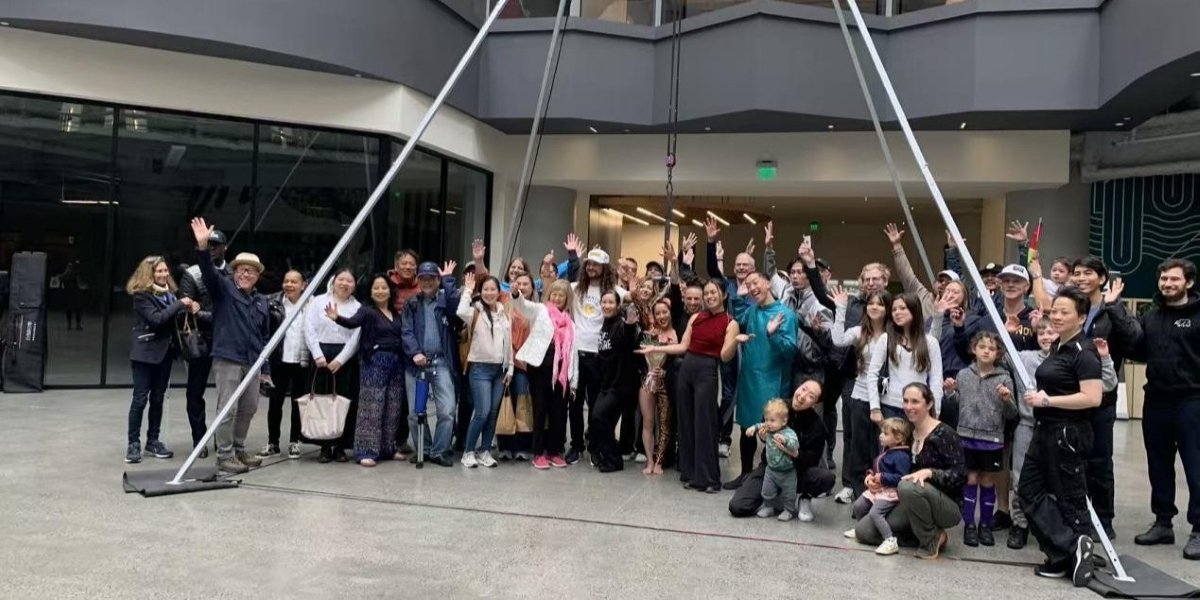
On the afternoon of May 2, 2026, the annual “Asian American and Pacific Islander Heritage Month Day Market: Art and Air Performances” kicked off at the Rincon Center in San Francisco, marking the beginning of this year’s celebration series.

This event is jointly organized by the nonprofit organization Value Culture, the Society of Art and Living Archives (SALA), and the catering establishment Yank Sing, with strong support from the APA Heritage Foundation and the Robert J. Louie Memorial Fund.

At the celebration, guzheng performer Liu Yichen was invited to take the stage. She performed the classic piece “Daughter’s Love,” a timeless masterpiece derived from the 1986 version of Journey to the West. Through the live performance on the guzheng, the original melody’s tender and poignant emotions were elevated into the longing of overseas wanderers, transcending mountains and seas, along with their patriotic sentiments. As the strings began to resonate, her fingertips poured forth an artistic texture as smooth as jade, ethereal and refined. The melody, delicate yet profound, carried a subtle intensity, like a ripple disturbing still waters, capturing both the elegant grandeur of Chinese classical style and the purest, most moving emotions of the human spirit.

Photo Courtesy: Catherine Lu

This performance, rich in “cultural symbolism,” resonated deeply with the Chinese diaspora in the audience, drawing many to pause and listen, moved by the shared memories of generations woven into the music. After the performance, Ms. Liu engaged in meaningful interactions with audiences of diverse ethnic backgrounds, explaining the history and structure of the guzheng, a millennia-old instrument. The guzheng’s ethereal yet resonant tones allowed guests from various countries to appreciate the profound depth of Eastern stringed music.

Beyond traditional Chinese folk music, this celebration vividly showcased the integration of diverse cultures. Artists from China, Singapore, Vietnam, and other countries took turns performing in a high-stakes aerial show. The performers displayed the ultimate aesthetics of strength and resilience mid-air in the atrium of the Rincon Center. The cross-cultural blend of traditional craftsmanship and modern visual arts earned rounds of applause from a diverse audience that filled the atrium.

More than a feast for the senses, the event helped the AAPI community enhance its international influence and foster interethnic dialogue. Through the interweaving of traditional Chinese music and contemporary performance arts, San Francisco once again showcased its inclusive and vibrant cultural dynamism to the world.

DRiVR.ai Announces Expansion Into Japan, Launching DRiVR Japan on July

By: Mason Reed – Global Technology and Mobility Correspondent

AI Mobility Platform Accelerates Global Growth With Major Fleet Opportunities Already Underway Across the Japanese Market

In the global race to modernize transportation through artificial intelligence, connected infrastructure, and intelligent fleet systems, one emerging American mobility company is preparing to take a major international step forward.

On July 1, DRiVR.ai will officially launch operations in Japan, opening what company leadership describes as a critical new chapter in its global growth strategy. Operating under the expansion initiative “DRiVR Japan,” the company plans to establish an active presence in one of the world’s most technologically advanced transportation markets, with early fleet opportunities and strategic partnerships already in motion.

The move signals more than geographic expansion.

It represents the growing international demand for AI-powered transportation intelligence systems capable of improving fleet safety, operational visibility, incident response, and connected mobility infrastructure across both private and public sectors.

“We’re incredibly excited about what’s happening in Japan right now,” says Kurt A. Swauger, founder of DRiVR.ai. “This isn’t simply about opening another market. Japan represents one of the most forward-thinking transportation ecosystems in the world. The conversations we’re having there around AI mobility, smart infrastructure, fleet intelligence, and safety innovation are exactly aligned with where we believe the future is headed.”

“Japan has always represented precision, discipline, innovation, and long-term thinking,” Swauger continues. “For us, entering Japan is incredibly meaningful because the market understands where intelligent mobility is heading before much of the world does. We already have major opportunities developing, a team actively working on the ground, and strong momentum building ahead of our July 1 launch. This is not a small step for us; it’s the beginning of a very important global expansion strategy.”

According to company leadership, DRiVR Japan will launch with local representation already established on the ground and multiple enterprise-level opportunities currently in development. While specific client names have not yet been publicly disclosed, executives indicate that several large-scale fleet and mobility discussions are actively progressing ahead of the July rollout.

Photo Courtesy: Unsplash.com

The company has spent months building relationships within Japan’s transportation and technology sectors, including strategic discussions involving fleet operations, camera technologies, AI mobility systems, and smart transportation infrastructure.

Industry analysts note that Japan represents a particularly attractive market for intelligent transportation platforms due to its advanced urban infrastructure, strong logistics networks, manufacturing leadership, and openness to automation technologies.

“Japan has historically been an early adopter of transportation innovation,” says one Tokyo-based mobility consultant familiar with the expansion. “There is significant interest right now in connected vehicle intelligence, predictive safety systems, AI-driven logistics optimization, and integrated mobility platforms. Companies entering that market with scalable technology and strong partnerships have an enormous opportunity.”

For DRiVR.ai, the timing may be ideal.

Across global transportation markets, fleet operators are increasingly searching for ways to reduce liability exposure, improve driver safety, streamline insurance workflows, and gain better operational visibility through AI-powered systems. Connected cameras, telematics platforms, real-time GPS intelligence, and automated incident reporting are rapidly shifting from optional technologies into core operational necessities.

That trend has accelerated dramatically over the past several years as rising insurance costs, labor shortages, supply chain complexity, and increased public safety expectations continue placing pressure on transportation providers worldwide.

Japan’s dense urban environments and sophisticated transportation infrastructure make it a particularly compelling environment for AI-enhanced fleet intelligence systems.

Programs involving predictive roadway analysis, intelligent camera integrations, driver monitoring technologies, and connected mobility platforms have all gained momentum across both public and private sectors in recent years.

For DRiVR AI, whose platform combines AI-powered dash camera systems, fleet intelligence, accident-response workflows, and smart transportation analytics, the Japanese market offers an opportunity to scale its broader vision internationally.

Part of that vision includes HELP-LINK, the company’s AI-guided incident response platform designed to simplify the chaotic moments immediately following vehicle accidents. By combining real-time evidence capture, cloud-based reporting, GPS intelligence, and guided workflows, the system aims to streamline communication between drivers, fleets, insurers, and emergency response ecosystems.

“Transportation is no longer just about vehicles moving from one location to another,” says Swauger. “It’s becoming a living data ecosystem. Every vehicle is now capable of generating intelligence that can improve safety, reduce operational inefficiencies, accelerate claims resolution, and create smarter infrastructure overall. Japan understands that future very well.”

The company also sees long-term opportunity in broader smart-city integrations.

As connected fleets generate increasing amounts of roadway and behavioral data, transportation intelligence platforms may eventually play important roles in urban planning, municipal safety initiatives, infrastructure analysis, and predictive traffic management systems.

In many ways, fleets are becoming rolling sensor networks.

And the countries best positioned to leverage that intelligence may gain major advantages in logistics efficiency, infrastructure planning, and transportation safety.

Japan’s emphasis on precision, efficiency, and advanced technology integration makes it a natural fit for these next-generation mobility systems.

The launch of DRiVR Japan also reflects a broader trend among emerging mobility companies seeking international growth beyond North American markets. As AI transportation technologies mature, many firms are beginning to recognize that future expansion opportunities will likely emerge through global infrastructure partnerships rather than isolated regional deployments alone.

Photo Courtesy: Unsplash.com

For DRiVR.ai, establishing an early foothold in Japan could become a significant milestone in the company’s evolution from a domestic fleet technology platform into a larger international mobility intelligence brand.

And according to those close to the project, the July 1 launch is only the beginning.

Additional partnerships, integrations, and market expansion discussions are reportedly already underway across multiple transportation sectors.

“There’s enormous momentum building right now,” says one source familiar with the company’s international development efforts. “Japan is not viewed internally as a side project. It’s viewed as one of the most important strategic growth markets for the future of the company.”

For Swauger and his team, the excitement surrounding the launch appears deeply personal as well as professional.

“We’ve spent years building the foundation for this,” he says. “To now have a team operating on the ground in Japan, active opportunities already developing, and real momentum beginning to build, it’s incredibly exciting. July 1 is more than a launch date for us. It’s the beginning of a much larger global vision.”

As the transportation industry continues shifting toward AI-powered intelligence systems, connected mobility infrastructure, and real-time operational awareness, companies capable of bridging technology, logistics, safety, and human-centered design may ultimately shape the next era of transportation itself.

And increasingly, that future appears to be unfolding on a global stage.

What Happens to a City Without the Arts?

By: Natalie Pierce – Culture and Public Impact Editor

Why The ART Channel Believes Creativity Is More Than Entertainment — It’s Civic Infrastructure

A city without art still functions.

The traffic lights work.
The buildings stand.
The banks open at nine.
The airports move people in and out like clockwork.

But something disappears.

The soul gets quieter.

The sidewalks feel colder. The nights become more transactional. The conversations become narrower. Slowly, almost invisibly, imagination begins leaving the room.

For decades, economists and civic planners have measured cities through metrics like GDP growth, infrastructure spending, population migration, housing development, and commercial expansion. Yet some of the world’s most beloved cities — from Paris to New York City to Tokyo — are remembered not simply for economic output, but for cultural identity.

Art.

Music.

Architecture.

Film.

Street murals.

Museums.

Live performance.

Storytelling.

Creativity has always been one of the invisible forces that transforms a location into a place people emotionally connect with.

Photo Courtesy: Unsplash.com

And increasingly, companies like The ART Channel believe that creative infrastructure may become one of the defining forces shaping the future identity of modern cities.

Already operating across Roku, Apple TV, Amazon Fire TV, iOS, Android, and web streaming platforms, The ART Channel is positioning itself as more than simply a digital entertainment network. The company describes its larger mission as creating a global media ecosystem focused entirely on creativity, culture, artists, documentaries, live events, and original storytelling.

But behind the streaming platform lies a much broader philosophy.

That art itself matters to civic survival.

“Cities don’t become memorable because of spreadsheets,” says Kurt A. Swauger, founder of The ART Channel. “They become memorable because of culture. Because of music pouring out of windows. Because of galleries, murals, theaters, conversations, film, storytelling, and creativity. Art gives cities emotional identity. Without that, cities risk becoming efficient… but forgettable.”

That belief is increasingly resonating among civic organizations, cultural institutions, and regional arts leaders attempting to navigate a rapidly changing digital world.

Historically, local arts organizations often struggled with visibility beyond their immediate communities. Museums, galleries, exhibitions, and artist showcases typically relied on physical attendance, local press, and regional awareness. But streaming technology is beginning to fundamentally change how cultural experiences can be distributed and experienced.

A gallery opening in Cincinnati can now potentially reach viewers in London. A museum conversation in Honolulu can inspire students watching from small towns thousands of miles away. A local artist’s story can suddenly become global.

For cultural organizations, that shift may be transformational.

Rather than limiting art experiences to physical geography, streaming platforms like The ART Channel are helping reposition creativity as a scalable global experience.

That evolution arrives during a moment when many cities are actively reevaluating what makes communities attractive, livable, and economically resilient in the first place.

The rise of remote work, digital lifestyles, and distributed economies has placed greater emphasis on quality of life and cultural identity. Increasingly, people are choosing where they live not simply based on employment opportunities, but based on emotional environment.

What kind of city feels alive?

What kind of city inspires people?

What kind of city tells stories?

In many cases, the answers trace directly back to the arts.

Studies have repeatedly shown that strong cultural ecosystems positively influence tourism, economic development, local business growth, education, talent attraction, and civic engagement. But beyond the measurable economic effects lies something harder to quantify — emotional energy.

Creativity gives people reasons to gather.

It creates conversation.

It creates belonging.

It creates memory.

That emotional dimension sits at the center of The ART Channel’s larger programming strategy.

Photo Courtesy: Unsplash.com

Rather than focusing exclusively on finished artworks, the platform leans heavily into human stories behind creativity itself. Original documentaries, exhibition coverage, artist interviews, educational programming, behind-the-scenes content, and live event broadcasting all form part of the company’s broader content vision.

Programs like The Curator and The Andy & Jean Show attempt to bridge traditional art culture with modern entertainment formats capable of reaching younger, digitally native audiences who may never set foot inside a traditional gallery.

The platform also sees major opportunities in live-streamed cultural events.

Museum openings.

Artist talks.

Film premieres.

Creative festivals.

Community arts initiatives.

Regional storytelling projects.

Historically, many of these experiences remained isolated within individual cities or institutions. Streaming technology now allows those moments to scale far beyond physical walls.

And that, according to Swauger, may become increasingly important as communities search for ways to maintain cultural identity in an era dominated by digital fragmentation and algorithm-driven media.

“Art reminds people they’re human,” he says. “It reminds communities who they are. And right now, I think there’s a growing hunger for that kind of connection again.”

Ironically, the rapid rise of artificial intelligence may be accelerating that hunger.

As automation reshapes industries and AI-generated content floods digital spaces, authentic human creativity may become even more emotionally valuable. Audiences increasingly seek experiences that feel personal, imperfect, vulnerable, and emotionally real — qualities often found most powerfully through artistic expression.

The ART Channel appears intent on positioning itself directly inside that cultural conversation.

Its hybrid business model combines free ad-supported streaming, sponsorship partnerships, branded collaborations, educational outreach, original productions, and live cultural broadcasting. Rather than attempting to compete directly with mass-market entertainment giants, the company is targeting an audience deeply invested in creativity as lifestyle, identity, and community.

That audience may be far larger than traditional media executives once assumed.

The global creative economy now spans industries including visual arts, film, fashion, design, architecture, music, digital media, collectibles, and cultural tourism — representing one of the fastest-growing sectors of the modern economy.

And yet, despite its scale, creativity itself still lacks a dominant centralized streaming ecosystem.

That gap is precisely where The ART Channel sees its future.

Because while technology continues reshaping how cities function, creativity may ultimately determine whether those cities still feel alive.

A city without art still operates.

But it stops dreaming.

And perhaps in the years ahead, platforms dedicated to protecting and amplifying cultural identity may become every bit as important as the physical infrastructure surrounding them.