Book Illustration Services at Book Publishing Partner

A story told through words is powerful. A story told through words and images is unforgettable. Professional book illustrations give your narrative a visual dimension that deepens reader engagement, strengthens emotional impact, and sets your book apart in a competitive market.

Why Book Illustrations Matter

Readers connect with visuals in ways that words alone sometimes cannot achieve. Book illustrations communicate mood, character, and setting instantly. They draw the reader into your world before a single sentence is processed. For certain genres and formats, illustrations are not optional. They are essential.

Children’s books rely on illustration to carry much of the storytelling. The images guide young readers through the narrative, support comprehension, and create the emotional experience that makes a book memorable. Graphic novels and illustrated editions for adult audiences use visuals to build atmosphere and pace the story in a way that pure prose cannot replicate.

Beyond creative impact, book illustrations play a direct role in marketability. A beautifully illustrated book photograph on a retailer page or social media post generates attention and clicks. Strong visuals signal quality and professionalism to potential readers before they read a single review.

The Difference Professional Illustration Makes

Not all illustrations serve a book equally. Amateur or mismatched artwork can undermine even a well-written story. Professional book illustrations are created with a clear understanding of the book’s tone, audience, and purpose. Every line, color choice, and compositional decision supports the narrative rather than distracting from it.

Book Publishing Partner provides custom illustration services as part of a complete publishing partnership. Founded to bridge the gap between a finished manuscript and a professionally published book, the company handles every detail that shapes the reader’s experience. That includes precise editing, custom cover design, interior formatting, and full distribution support through major retailers like Amazon and KDP.

Their illustration process is collaborative. Authors work closely with the team to ensure the final artwork reflects the vision behind the story. The result is a cohesive book where the written and visual elements feel like they belong together, because they were designed that way from the start.

Book Illustrations Across Formats and Genres

The need for strong book illustrations extends across a wide range of formats. Children’s picture books require full-page artwork that carries the narrative alongside minimal text. Chapter books for middle-grade readers often use spot illustrations to break up text and maintain visual interest. Graphic novels demand sequential art that drives plot and character development panel by panel.

Illustrated editions of literary works, cookbooks with step-by-step visuals, and nonfiction books with informational diagrams all benefit from purposeful, high-quality illustration. Each format has its own visual language, and professional illustrators understand how to work within those conventions while bringing something distinctive to each project.

The right illustration style also speaks directly to the intended audience. Soft, warm tones and rounded shapes appeal to young children. Detailed, expressive line work resonates with graphic novel readers. Bold, graphic imagery draws in young adult audiences. Matching illustration style to readership is a craft that requires experience and intention.

How Illustrations Strengthen Your Book’s Presence

In an era where readers browse books online, visuals carry significant weight. Thumbnail images on retailer pages, preview spreads on author websites, and promotional graphics on social media all depend on the quality of the illustrations inside the book. Strong book illustrations create shareable, eye-catching content that extends the book’s reach beyond the page.

Authors who invest in professional illustration often find that their books perform better across all promotional channels. The artwork becomes part of the book’s brand identity, giving readers a consistent visual experience from the moment they discover it to the moment they finish reading it.

Book Publishing Partner understands that publishing a book is about more than printing words on a page. It is about creating an experience that readers remember and recommend. Their team brings industry expertise and personalized guidance to every project, treating each author’s story with the care it deserves.

A Publishing Partner That Handles the Details

Writing a book takes dedication. Getting it published professionally takes a team. Book Publishing Partner was built to support authors at every stage of that journey. Whether you are publishing your first illustrated children’s book or producing a graphic novel series, their approach keeps the process clear, manageable, and focused on your goals.

From the initial concept to the final distribution on major retail platforms, every step is handled with precision and a commitment to quality. The authors leave the process with a book they are proud of and a publishing experience that felt like a true partnership.

If you are ready to bring your story to life with professional book illustrations, connect with the Book Publishing Partner team today.

Chasing the Cherry Blossom Season in Japan

By: Graham Hill

If you have been browsing social media lately, images of Japan’s beautiful, pink cherry blossoms are everywhere. Sites like Instagram and TikTok serve up thousands of pictures of flowers in soft shades of pink, showcasing the cherry blossom season in Japan.

It’s Cherry Blossom Season in Japan

Every spring, the arrival of cherry blossoms in Japan transforms everyday landscapes into photo-worthy scenes. This time of year, when we tune in to TV or connect online, we’re flooded with images of Japanese sakura (and “sakura selfies”).

As of this report, the cherry trees are near full display in the southern cities in Japan, but not everyone realizes that the season will go on for several weeks.

Cherry Blossom Flowers Last About One Week

In each city in Japan, public places of all kinds are filled with locals and visitors eager to enjoy the short window when the trees are in bloom. Streets lined with cherry trees become tunnels of pale, pink petals, and popular parks turn into gathering places where visitors relax under the blossoms with friends and family.

For each city in Japan, the cherry blossom flowers reach their peak bloom display for about one week. If you happen to be out and about during those precious few days, you may be treated to some serendipitous beauty. For those who anticipate the blooms each year, visiting the ideal locations in Japan to see cherry blossoms is an annual tradition.

Hanami Tradition in Japan

Every spring, millions of people participate in hanami (which literally translates to “flower view” in Japanese), the traditional custom of gathering under blooming cherry trees to celebrate the season. In the evening, in some locations, there may be lights or lanterns, creating the atmosphere known as yozakura (or nighttime cherry blossom viewing).

Solo visitors may nap below the blossoms, families bring picnic foods, co-workers hold outdoor parties, and everyone takes pictures.

Visiting Tokyo to See Cherry Blossoms

Tokyo is one of the most popular destinations for visitors who want to experience the cherry blossom season in Japan. Famous locations such as Ueno Park and Shinjuku Gyoen attract huge crowds every year.

The ideal time to see cherry blossoms in Tokyo is usually between March 23 to March 29, when the flowers typically reach their peak, but the exact timing is affected by the weather.

In 2026, the Japan Weather Association predicted an early bloom, to begin around March 21. While there were some sakura flowers in Tokyo that early, by March 26 the cherry trees in Tokyo were still several days away from being full.

The timing of the Japanese cherry blossoms varies within a given city, and it can also be very different, earlier or later, for the various cities across Japan.

Cherry Blossoms Open at Different Times in Different Cities

The cherry blossom season does not happen at the same time, all at once, everywhere in Japan. Because the country stretches over a long north-to-south geography, the changing of the seasons varies between the regions, and blossoms open at different times in different cities over many weeks.

Instead of a single national bloom date, Japan experiences what is known as the “sakura front,” a wave of blossoms moving gradually from the southern islands to the northern regions.

Full Cherry Blossom Season in Japan is Almost Three Months

The entire sakura season lasts roughly three months, unfolding from south to north as temperatures rise in each location. This long, seasonal progression of the cherry blossoms in city after city creates a fascinating opportunity to experience spring again and again across Japan.

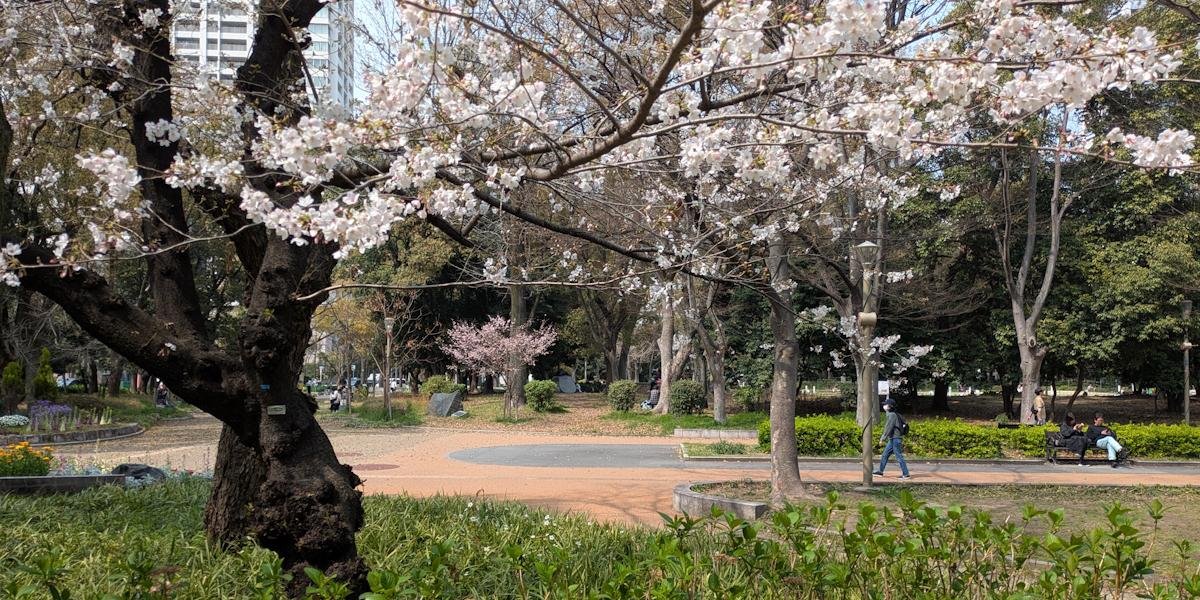
For example, you could start in Tokyo, see the flowers bloom, and then move on to Osaka to see “peak bloom” again several days later. Peak cherry blossom viewing in Osaka is usually between March 28 to April 3.

During the 2026 cherry blossom season, the peak of Osaka’s cherry blossom season also fell later than predicted (due to cooler weather), with many trees still bare by March 29. Despite the late start, the ideal places to see cherry blossoms in Osaka (such as Ogimachi Park or Osaka Castle) still had large gatherings and delivered impressive views.

Chasing the Cherry Blossom Season in Japan

Photo Courtesy: Graham Hill

Nearby (about 30 minutes from Osaka by express train), the timing of the cherry blossom season in Kyoto is similar to Osaka, with peak bloom expected on about the same days in the season. If you timed your trip just perfectly, you could stay in each city for a few days, and see sakura in both locations in the same week.

First Cherry Blossoms in Japan Bloom in January in Okinawa

While cities like Tokyo and Osaka are especially pink in late March and early April, cherry blossom season in Japan actually begins much earlier, weeks earlier, on the southern island of Okinawa. Because the climate is much warmer than mainland Japan, the sakura trees in Okinawa typically begin their bloom in late January, with great viewing period being approximately January 31 to early February 5.

After Okinawa, the cherry blossom season gradually moves north into other southern Japanese cities, such as the major cities of western and central Japan. Because of the intricacies of local weather patterns, Nagoya and Tokyo are often among the earliest central cities with sakura flowers each season, then Osaka and Kyoto, with Kobe perhaps a few days later still.

Cherry Blossoms in April in Northern Japan

As April continues, the “sakura front” moves further north into the cities of Japan (where spring comes late). Cities such as Nagano, Niigata, and Sendai begin to see blossoms in the trees from April 5 to April 10.

Continuing north through Honshu (the main island of Japan), the sakura season in Aomori begins around April 18. Cherry blossoms in Hirosaki Park (in the city of Hirosaki) are well known for their dramatic scenery. In this park, thousands of cherry trees surround a historic castle, and petals falling into the surrounding moats create pink “flower carpets” on the water.

Toward the middle and end of April, most cities across central Japan have already finished their sakura bloom. For many travelers, this marks the end of cherry blossom season. However, the sakura front has not yet reached its final destination.

Cherry Blossoms on the Northern Island of Hokkaido

If you still want to see cherry blossoms, it is not too late. Northern Japan experiences colder winters, and spring arrives much later on Japan’s northern island. Travelers who have missed the cherry tree flowers in Tokyo or Osaka can still head north and catch the final stage of the season in Hokkaido.

One of the last places to see cherry blossoms each year is the northern city of Sapporo. While the city is often associated with incredible powder snow in winter (and events such as the Sapporo Snow Festival), the cherry blossom season in Sapporo is also extraordinary.

See Cherry Blossoms in May in Sapporo, Japan

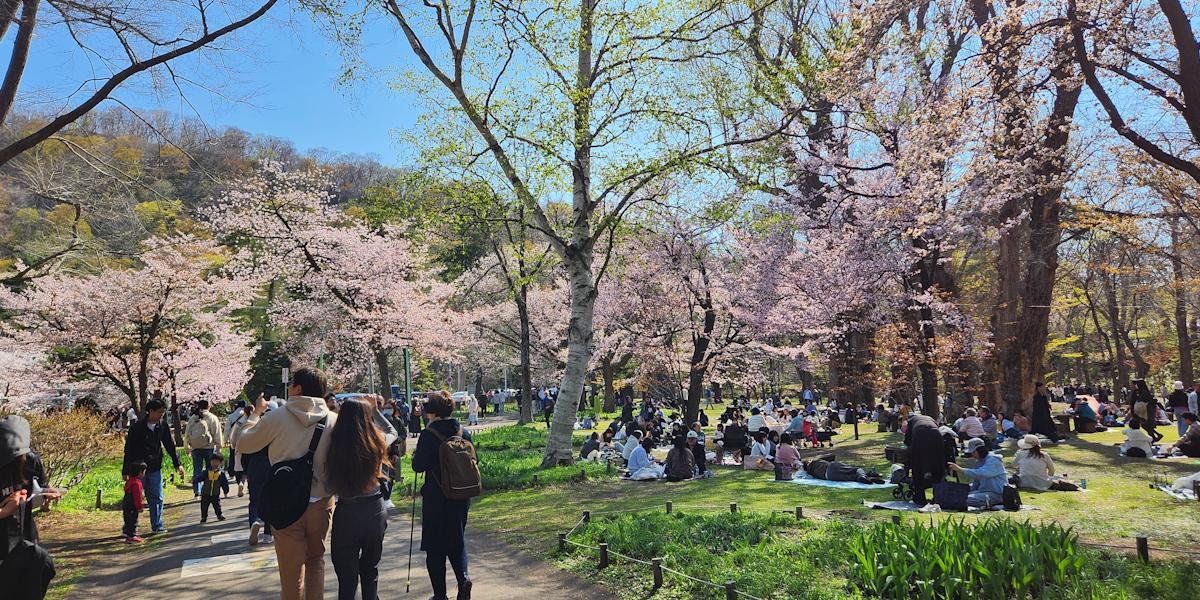
The ideal time to see cherry blossoms in Sapporo is usually early May, with peak bloom often occurring between May 2 to May 8. After months of snow, the parks across Sapporo City fill with pink blossoms, creating a dramatic contrast between the long winter and the arrival of spring.

Chasing the Cherry Blossom Season in Japan

Photo Courtesy: Graham Hill

One of the popular viewing spots in Sapporo is Maruyama Park, located next to the historic Hokkaido Shrine. During peak bloom, visitors gather in both locations for scenic views and barbecue parties under the trees.

See Cherry Blossoms Several Times in One Season

If you have the time (and the weather cooperates), you can follow the cherry blossom season across Japan, moving north, experiencing the pretty pink flowers multiple times. From first bloom in Okinawa, to historic locations in Tokyo, maybe join a sakura festival in Osaka, then more sakura in Sendai, then on to cherry blossom season in Nagano, then Aomori, then all the way north to Sapporo.

If your timing is flexible, you could see the peak bloom of sakura flowers in Japan again and again, six or seven times in a season, stretching over several weeks of travel.

The variability of the arrival of cherry blossoms in Japan can create some challenges and surprises for visitors planning a cherry blossom trip to Japan. Forecasts are released every year to help people estimate when the blossoms will appear in different cities, but if cool weather passes through a given region, these forecasts can be off by a week or more.

As this report was written in 2026, the southern cities are in peak bloom. If you are reading this some days later, most of the flowers have already fallen in those locations, but as you know by now, it’s not too late. You still have time to book a trip to see the seasonal splendor in Sapporo.

Teacher Housing Project in Oakland Moves Forward with New Development

Oakland’s affordable housing initiative for educators is making significant progress with the upcoming development at 1715 Foothill Boulevard in the city’s San Antonio neighborhood. This project, aimed specifically at Oakland Unified School District teachers, addresses the rising demand for affordable housing in a city where educators have long struggled with high rental costs. The project will bring new hope for teachers who have struggled to stay in Oakland due to the surging cost of living.

The development, designed by Austin Sandy Architects, will be a five-story residential building featuring 29 deed-restricted units — 20 one-bedroom and 9 two-bedroom units — within an area spanning approximately 28,250 square feet. Developer Chris Heller has emphasized that these units will remain affordable for teachers working in the Oakland Unified School District (OUSD), addressing a pressing issue in the city.

This development is a direct response to the city’s teacher shortage and ongoing struggle with retaining educators due to housing insecurity. The deed-restricted nature of the units ensures that the homes will remain affordable for educators over the long term, offering a stable housing option for a critical workforce.

Targeted Housing Solution to Combat Teacher Retention

Teacher retention has been a long-standing issue in Oakland, with rising housing costs contributing significantly to the problem. According to recent reports, many teachers are leaving Oakland due to the difficulty of finding affordable housing, which often leads to burnout and a lack of job satisfaction. Programs like Teachers Rooted in Oakland (TRiO) have helped many educators secure rental housing and receive financial support, but the demand for such programs continues to far outpace the supply.

The Foothill Boulevard development represents a solution to this issue. Unlike temporary subsidies, this project will provide stable, long-term housing for teachers. The 1715 Foothill Boulevard development aims to address the issue of housing insecurity directly, offering teachers a place to live without the threat of displacement from rising rents.

The City’s Broader Affordable Housing Strategy

The Oakland City Council has consistently prioritized the development of affordable housing, recognizing the deepening crisis caused by the high cost of living in the Bay Area. Through the Notice of Funding Availability (NOFA) process, the city has distributed competitive funding to affordable housing projects serving low- and moderate-income residents. This funding process has supported various developments across Oakland, aimed at ensuring that essential workers, including teachers, can afford to live in the city.

The teacher housing initiative at 1715 Foothill Boulevard fits within this broader strategy to revitalize neighborhoods and stabilize the workforce. The project aligns with the city’s commitment to creating affordable housing for essential workers, ensuring that people who contribute to the community — such as teachers, police officers, and firefighters, have access to affordable living spaces.

As the demand for affordable housing continues to rise across the Bay Area, projects like the one on Foothill Boulevard are becoming critical for maintaining workforce stability and avoiding mass displacement. The city’s proactive approach to housing is an effort to balance the needs of residents with the demands of a growing economy.

Teacher Housing and Its Broader Impact on Oakland’s Future

The Foothill Boulevard development is part of a broader effort to tackle the housing crisis in Oakland and the wider Bay Area. For teachers, stable and affordable housing means more than just a roof over their heads; it has the potential to improve job satisfaction, retention, and continuity in the classroom. Teachers who are able to live in the same communities in which they teach can build stronger ties to their students, leading to a more consistent and engaged educational experience.

By ensuring that teachers can afford to live in the communities they serve, the project will help maintain the diversity and inclusivity of Oakland’s schools. When educators are unable to afford housing, it results in a lack of stability within the classroom, which can negatively affect student outcomes. This housing development addresses this issue by creating a stable environment for educators, thus supporting the broader community and the educational system as a whole.

Affordable housing projects like this one are also crucial for preserving the diversity of Oakland’s population. As the cost of living continues to rise, low- and moderate-income residents are often displaced, leading to a less diverse city. By providing affordable housing options for teachers and other essential workers, Oakland is ensuring that a wide range of people can continue to live and work in the city, maintaining its cultural vibrancy and community character.

Oakland’s Approach Could Serve as a Model for Other Cities

The challenges faced by Oakland in addressing the teacher housing crisis are not unique. Many cities across California and the United States are grappling with similar issues, as the cost of housing continues to outpace wages. As a result, teacher housing has become a critical issue in urban areas where affordable living spaces are increasingly scarce.

Oakland’s teacher housing project could serve as a blueprint for other cities that face similar challenges. The success of this project may encourage other municipalities to implement similar strategies to provide affordable housing for educators. With affordable housing continuing to be a major barrier to teacher retention, the Foothill Boulevard project stands as a critical first step in addressing this problem.