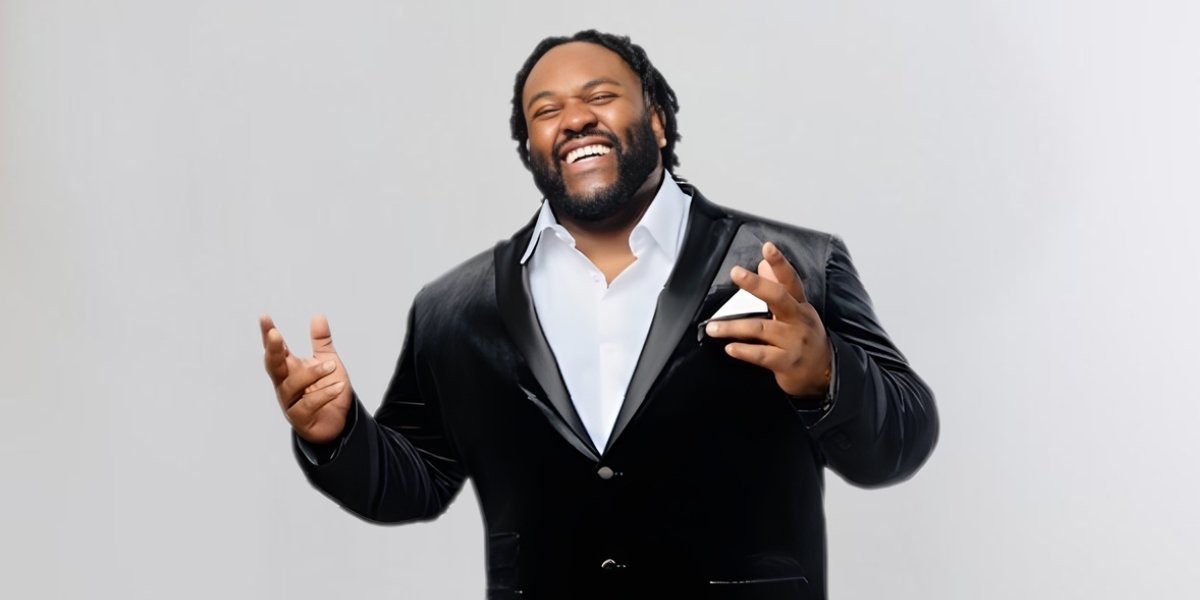
Beyond the Pulpit: Marcus Jordan on Using Music to Heal and Encourage

By: Jay Kt

In today’s fast-paced world, people are often looking for more than just a catchy melody; they are looking for a sense of hope and a reason to keep going. The challenge for many artists is creating content that meets people exactly where they are in their struggles, their service, and their daily lives. There is a profound need for “atmosphere-shifters” who understand the weight of responsibility both in the community and on the stage.

Marcus Jordan, a former police officer and current Pastor of Praise City Family Church, serves as a unique bridge between these worlds. Known for his “anointed” sound, Jordan uses his life experiences to craft songs that offer a sense of divine encouragement. This interview delves into his transition from the house band at Music World Entertainment to becoming a leading voice in global gospel ministry.

Q: You’ve worn many hats: preacher, praiser, and police officer. How does the “ministry of presence” you practiced on the force translate to the way you interact with an audience from the stage?

Marcus Jordan: Presence is everything to me. When people truly see you, whether on the street, in church, or on a stage, they feel cared for. That connection builds real relationships, and those relationships strengthen kingdom community. The same ministry of presence I carried on the force is the same heart I bring to every audience: showing up with love, intention, and authenticity.

Q: You were once part of the house band for Music World Entertainment, playing for secular artists; what was the pivotal moment that convinced you to step out as a solo Gospel artist?

Marcus Jordan: Gospel music is my roots and has always been an integral part of my life. Being at Music World was a blessing. It presented an opportunity for me to expand my craft. When Solange discovered that I could sing and offered constructive feedback on my writing, it pushed me creatively. Then playing keys for her at Essence Fest reignited something in me. I was already doing Gospel music locally, but that experience made me want to step forward and explore my dream on a professional level.

Q: Your music is described as an “atmosphere-sound.” For a listener who is currently in a “dry season,” how do you hope your new album, Praise to You, shifts their personal environment?

Marcus Jordan: I love that description because my heart is truly to create and/or shift atmospheres through the working of the Holy Spirit. I pray my music might uplift and encourage people right where they are. I get messages all the time from listeners who found a song in a tough moment, and it helped them keep going. That’s one of the greatest feelings in the world. I want people to know that Jesus is real and He’s good. If you trust in Him, He can do exceedingly, abundantly above all you can ask or think.

Q: You started playing piano by ear at age seven. Looking back, how has your “divine gift” evolved from a childhood talent into a tool for international ministry?

Marcus Jordan: Being able to play piano has blessed me in so many ways. God gave me the gift of music, allowing me to be able to play for myself, play for churches, and produce my own music. That gift God placed in me as a kid became the foundation of everything I do today and is a tool He’s allowed me to use to connect with people across the world.

Q: You often tell people, “Never give up on your dreams.” What was the hardest moment in your career where you had to take your own advice and keep going?

Marcus Jordan: I’ve had a lot of ‘bought lessons’ on this journey. There were times when people I paid for promotion and marketing took advantage of me, and it made me feel like I wasn’t going to make it. I gave up for a split second, just long enough to feel the weight of disappointment. Then I learned about Mr. Jerry Smith, a gospel radio promoter, through Clubhouse. I prayed, reached out, and my life literally changed for the better. If I had stayed discouraged, I wouldn’t be doing this interview today. That’s why I tell people: never give up!

Marcus Jordan’s perspective offers a refreshing take on the role of a modern gospel artist. His transition from the background to the forefront is a testament to the power of a single word of encouragement and the courage to answer a divine calling. Through his music and his ministry, he continues to show that the most impactful songs are those born out of a genuine desire to see people move from where they are to where they can be. As we look toward the future of worship music, the importance of “heart-connection” cannot be overstated. Marcus Jordan’s commitment to his community and his craft suggests that his voice will remain a staple in the industry for years to come. With his trending traction and award-winning spirit, he remains a vital force for good, proving that his music has the potential to inspire.

To learn more, visit www.marcusjordanmusic.com.

Rebalancing the Digital Economy: Mayada El-Zoghbi on Power, Policy, and Participation

By: Nadia Rahman

The digital economy has become the backbone of modern life. Payments, communication, commerce, and even public services now move through digital platforms. For many people, this shift has opened doors that barely existed a decade ago.

But Mayada El-Zoghbi believes the structure of this system deserves much closer attention.

In Power, Platforms & Participation, Mayada explores a fundamental tension inside today’s digital landscape. Platforms can unlock opportunity, yet they also concentrate enormous influence in the hands of a few companies.

Her work asks a big question that policymakers, entrepreneurs, and everyday users increasingly face.

Who controls the infrastructure of the digital economy, and who gets to shape its future?

The Growing Power of Platforms

If Mayada could change one policy worldwide tomorrow, the goal would not be a single regulation. Instead, it would be something broader.

She would focus on reducing the concentration of power held by major platforms.

The challenge is that the digital economy now touches nearly every part of economic life. Because of that, rebalancing power requires different strategies in different places.

In some countries the solution may involve building public digital infrastructure. In others it may mean breaking up the dominance of technology giants.

Either way, the central issue remains the same. When the same companies control both the infrastructure and the services that run on top of it, competition and fairness become difficult to maintain.

A Different Model in India

One example Mayada often points to comes from India.

Instead of allowing private firms to control the core digital infrastructure, India has built a set of shared public systems. These include a national digital identification system, a fast payment network, and electronic identity verification tools.

Banks, telecommunications companies, and digital services all plug into this shared infrastructure.

Because the basic rails are public, companies compete on how well they serve customers rather than on controlling the underlying systems.

This approach lowers costs for private firms while encouraging innovation in areas that actually matter to consumers.

The real challenge in this model lies in governance. Public systems must be managed carefully, with strong protections against fraud, cybercrime, and misuse of data.

Still, the framework offers an alternative vision of how digital ecosystems can be structured.

The United States Faces a Different Problem

In the United States, the situation looks very different.

There is no universal digital identity system. Payment infrastructure is fragmented across private providers. Identity verification systems vary from company to company.

At the same time, a small group of technology giants dominates huge sections of the digital landscape.

Companies such as Meta, Google, Microsoft, Alphabet, and Amazon operate platforms that function as both infrastructure and marketplace.

That dual role creates conflicts of interest.

For example, when a company runs an online marketplace while also selling its own products on that marketplace, it has access to enormous amounts of data about competing sellers. That information can reveal which products are performing well and how consumers behave.

Without clear rules, platforms can use that knowledge to compete directly with the businesses that rely on them.

Mayada argues that separating infrastructure from services could help restore balance. The rails of the digital economy should either be public or governed in ways that prevent platform owners from using their position to dominate the services built on top of them.

What Real Participation Looks Like

The word participation appears in the title of Mayada’s book for a reason.

In many discussions about digital inclusion, the focus stops at access. Does someone have a phone? Do they have internet connectivity? Can they open a bank account?

Those things matter, but Mayada believes participation runs deeper.

True participation means people have the tools, the knowledge to use them, and the ability to benefit from them.

Access without opportunity can feel hollow.

Someone may have a bank account but no reliable income to deposit into it. A person might own a phone but face social pressure that limits how they can use it.

In those situations the technology exists, yet its promise never fully materializes.

Meaningful participation requires that digital tools translate into real improvements in people’s lives.

From Passive Users to Active Stakeholders

Another challenge involves shifting how people relate to digital platforms.

Most users interact with these systems passively. They accept the rules, the algorithms, and the policies that shape how information and services appear.

But Mayada believes communities have more influence than they sometimes realize.

Market dynamics still matter. Platforms thrive because people use them.

That means individuals can exercise a form of economic power by choosing where they spend their time and money. If a platform consistently works against users’ interests, walking away sends a powerful signal.

This is already happening in small ways.

In many professional and social groups, people are reconsidering the messaging apps they use. Concerns about privacy and security have pushed some communities to explore alternatives such as Signal or Telegram.

Switching platforms can be inconvenient. Yet when enough people move together, markets respond.

A Small Story That Revealed a Big Pattern

One experience during Mayada’s research left a lasting impression.

While traveling in Egypt, she repeatedly tried to request rides through a ride hailing app. Each time a driver appeared to accept the ride, the request was canceled moments later.

This happened several times.

Eventually she asked a hotel doorman what was going on. His advice was simple. Change the payment method from card to cash.

When she tried again with cash selected, the ride was accepted immediately.

Curious, she began asking drivers why this made a difference.

The answer revealed a hidden layer of the platform economy. Drivers needed immediate cash payments to cover fuel costs. Card payments through the app could take weeks to arrive. On top of that, the platform took an increasing share of their earnings, including tips.

From the outside, the system looked efficient and seamless.

But for the workers operating inside it, the economics told a different story.

The experience reminded Mayada that digital systems can create friction in places that users rarely see.

Building a Fairer Digital Future

The digital economy will continue to expand. Platforms will shape how businesses reach customers, how workers find opportunities, and how societies exchange information.

The real question is not whether this transformation will continue.

It is how it will be governed.

Mayada believes the next phase of the digital era must focus on balance. Governments need stronger frameworks for data governance. Companies must design systems with broader populations in mind. Communities need greater awareness of how platform dynamics affect their lives.

Participation cannot stop at downloading an app or opening an account.

A healthy digital economy requires systems that distribute opportunity, protect users, and ensure that power does not quietly concentrate beyond public oversight.

The future of the platform economy will not be defined only by technology.

It will be defined by the choices societies make about who gets to participate and who gets to decide the rules.

Take a moment to explore Power, Platforms & Participation by Mayada El-Zoghbi, a thoughtful look at how innovation and finance can create real impact. It’s a great read if you’re curious about how systems are evolving to better serve people.